Our Location:
No. 99, Jiazi Road, Chengdu

 authorChris Lee
Dashilan is easy to underestimate. Walk only along its busy commercial street and it can feel touristy; turn into the surrounding hutongs and the experience changes. Centuries-old businesses, early Chinese cinema history, tiny alleys and everyday neighborhood life still overlap here. This Dashilan Beijing guide shows you what is worth seeing, what to skip, and how to build a 1–5 hour visit without wasting time.
Yes—especially if you are interested in old Beijing’s commercial culture rather than simply looking for a photogenic pedestrian street.
| Question | Quick Answer | Drawback / Trade-off |
|---|---|---|
| Is Dashilan free? | Yes. Public streets and hutongs require no admission ticket | Individual venues and performances may charge separately |
| How long do you need? | 1–2 hours for the main street; 3–5 hours for the deeper hutong route | The deep route involves considerably more walking |
| Best subway station | Qianmen for the east side; Zhushikou for a southern approach | Both require a short walk to the historic core |
| Best time | Morning for quieter streets; late afternoon into evening for atmosphere | Individual shops keep their own hours and some close earlier |
| Best for | Old Beijing culture, hutongs, food, photography and traditional brands | The main commercial street gets crowded on holidays |
| Main mistake | Walking only along Dashilan Street and leaving | You miss much of the surrounding historic neighborhood |
| Dashilan or Nanluoguxiang? | Dashilan for historic commercial culture; Nanluoguxiang fits a Houhai–Shichahai itinerary | Both get crowded during peak tourist hours; Nanluoguxiang leans more heavily on tourist retail |
As of September 2026, Dashilan Commercial Street remains a free public commercial street. Beijing’s official international portal describes Dashilar Commercial Street itself as approximately 275 meters long.[4] That figure refers to the main commercial street, not the much wider Dashilan historic neighborhood explored in this guide.
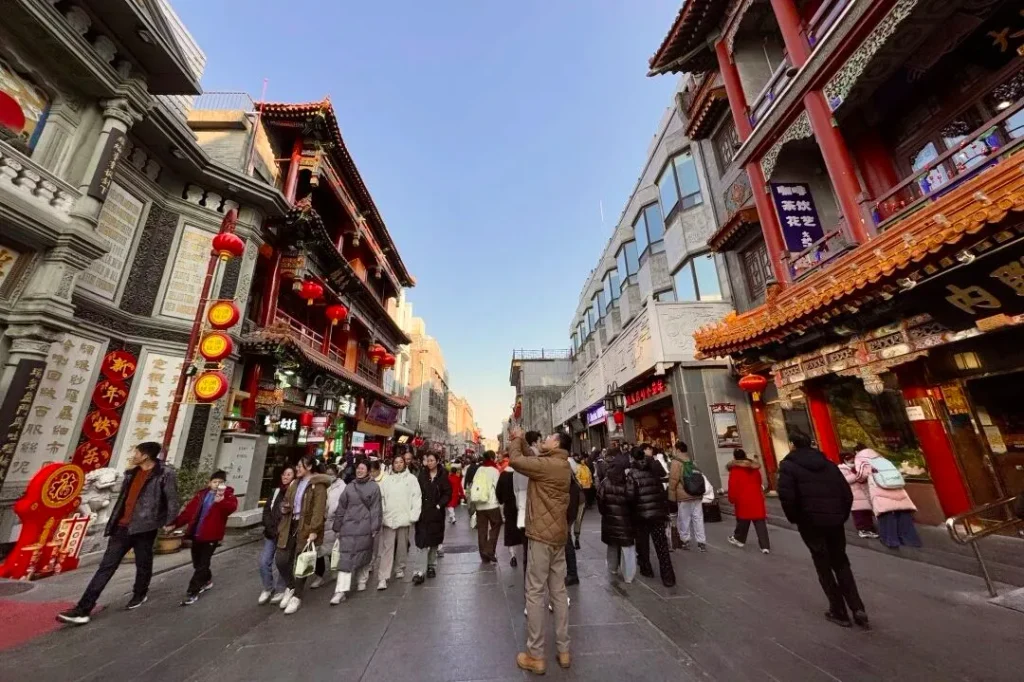
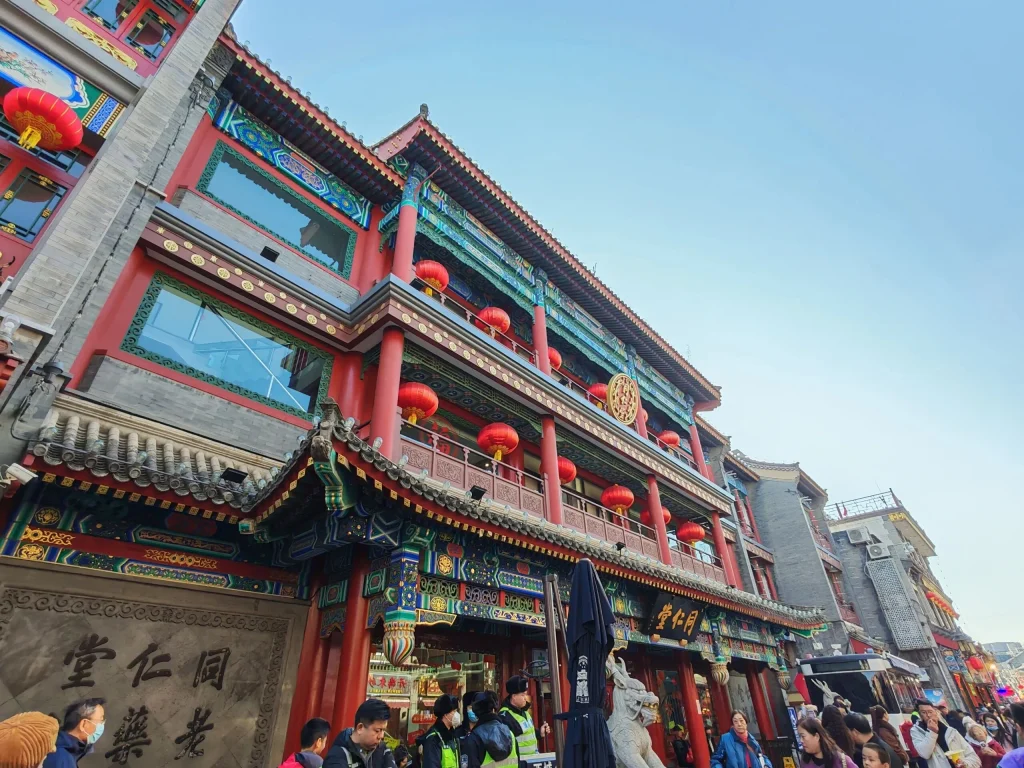
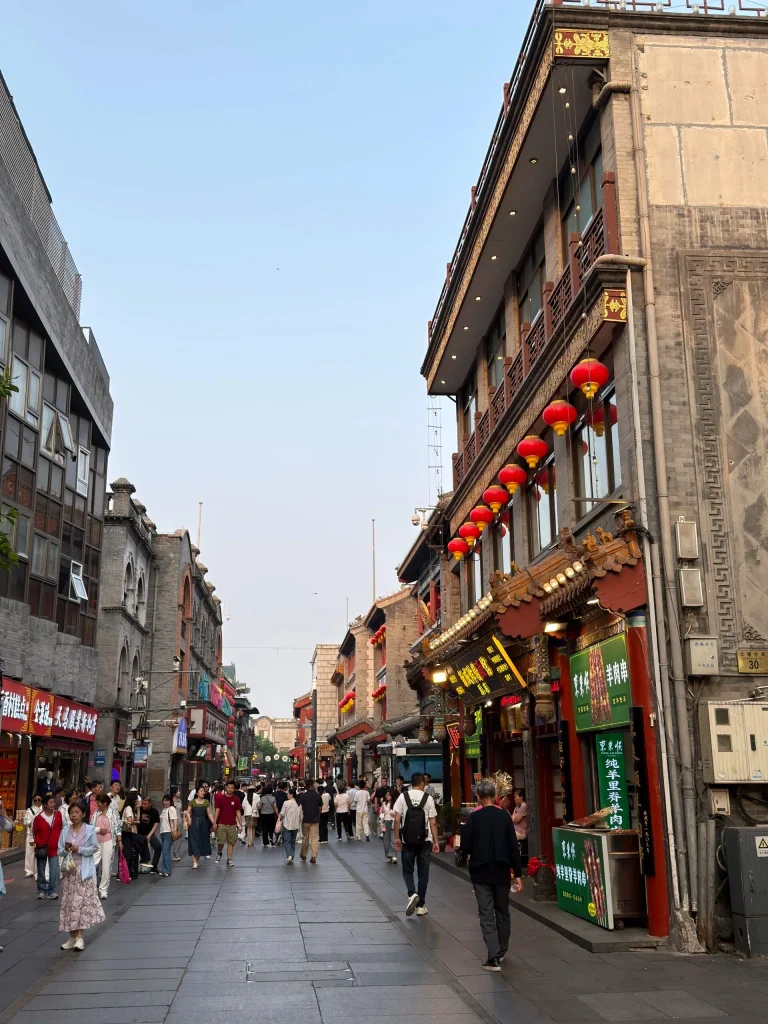
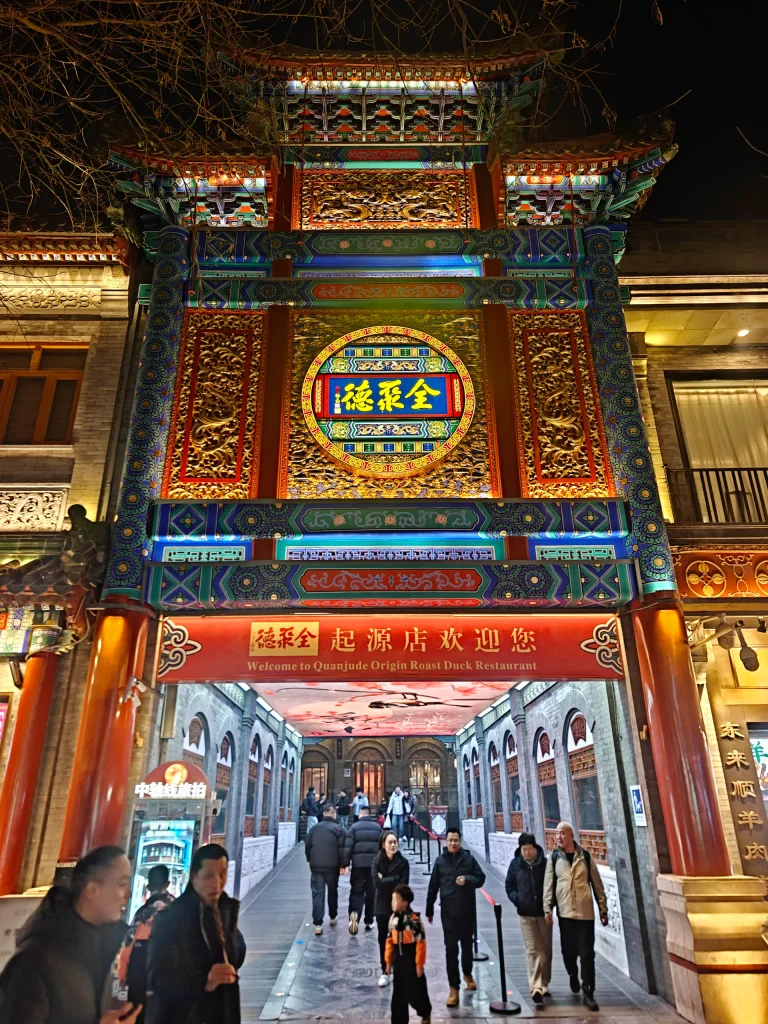
Here is a small detail that makes navigating the neighborhood easier.
Although 大栅栏 looks as though it should be read literally as “Dàzhàlán,” the traditional Beijing pronunciation is closer to Dàshílànr—roughly “dah-shee-lanr.”
You may also encounter the English spellings “Dashilar” or “Dashilanr” in official Beijing material. They refer to the same historic area.
Dashilan traces its commercial history back more than 500 years. Beijing government sources describe it as a traditional commercial district dating to the Ming period that later flourished during the Qing dynasty.
Its real distinction is not simply age.
Historic businesses are still part of the street’s identity. Zhangyiyuan sells tea. Tongrentang represents traditional Chinese medicine culture. Neiliansheng remains associated with traditional cloth shoes. Ruifuxiang is still known for silk and textiles.
Dashilan also forms part of the historic commercial landscape around the southern section of the Beijing Central Axis. The Beijing Central Axis itself was formally inscribed on the UNESCO World Heritage List in 2024.[1]
The important thing to understand is that Dashilan Commercial Street and the wider Dashilan historic area are not the same thing. The famous commercial strip is relatively short; a deeper visit extends into the surrounding lanes and historic blocks.
The two streets work for different itineraries.
| Dashilan | Nanluoguxiang | |
|---|---|---|
| Main appeal | Historic commercial Beijing | Hutong-style pedestrian street |
| Atmosphere | Traditional brands + busy local commerce | Cafes + snacks + tourist retail |
| Best nearby sights | Qianmen, Tiananmen area, southern Central Axis | Houhai, Shichahai, Drum & Bell Towers |
| Better for old brands | Dashilan | Limited |
| Side-street exploring | Excellent if you leave the main strip | Better for exploring broader surrounding hutong neighborhoods |
| Suggested time | 1–5 hours | 1–2 hours on the main lane |
| Best choice if… | You want historic commercial culture | You are already exploring Shichahai/Houhai |
If your idea of Beijing is grey-brick lanes, traditional shops, noodles, old cinemas and businesses that existed long before modern tourism, Dashilan is the more interesting fit.
If you specifically want residential lane culture rather than commercial heritage, TripChina’s guide to Beijing hutong walking routes goes much deeper.
For most first-time visitors, use Qianmen Station on Line 2 or Line 8.
From Qianmen, walk south toward Qianmen Street and the Dashilan commercial area. This is the easiest approach and works particularly well if you are combining Dashilan with sights around the southern Central Axis.
Zhushikou Station on Line 7 or Line 8 is another useful option if you are arriving from the south.
If Beijing’s subway gates, payment options and route planning are unfamiliar, read the Beijing subway guide for foreign travelers before your first ride.
You can, but there is little advantage during busy periods.
The historic core includes pedestrianized and congested streets, so a driver may not be able to drop you exactly where you expect. Use a recognizable destination such as Dashilan Commercial Street (大栅栏商业街) or Qianmen Street (前门大街) and expect to walk the final section.
Foreign visitors unfamiliar with Chinese ride-hailing can use this DiDi guide for foreigners in China.
Driving yourself is unnecessary for almost every international visitor. Central Beijing is much easier to explore here by subway and on foot.
There is no admission gate controlling the district, but individual businesses keep their own hours.
As of September 2026, you should not plan around one universal “Dashilan opening time.” Public streets remain accessible independently of shop hours, while restaurants, traditional businesses, cinemas and cultural venues operate individual schedules.
09:00–11:30: Best for quieter walking, architecture and photography.
Late afternoon: Best if you want shops, food and daylight during the same visit.
Early evening: Best for lanterns and a livelier pedestrian-street atmosphere.
Autumn is particularly comfortable for long walks. Summer can be hot and crowded, while winter is much colder but gives the old commercial streets a different atmosphere.
You can, but expect a very different experience.
The main Dashilan–Qianmen pedestrian area can become heavily crowded during major Chinese public holidays. If your priority is architecture, photography or quiet hutong exploration, arrive in the morning rather than at midday or early evening.
If your Beijing dates overlap Golden Week, Spring Festival or another major holiday, check the China public holiday crowd calendar before planning your route.
| Route | Time | What You See | Best For | Main Trade-off |
|---|---|---|---|---|
| Main Street | 1–2 hrs | Dashilan Street + major old brands | Tight schedules | Misses most side lanes |
| Deep Cultural Walk | 3–5 hrs | Main street + historic lanes + quieter hutongs | Culture-focused travelers | More walking and navigation |
| Food Route | 2–3 hrs | Noodles, snacks + Qianmen food stops | Food-focused travelers | Less architecture and hutong time |
| Late-Afternoon Route | 2–4 hrs | Daylight sightseeing + dinner + lantern views | Photographers, couples | Skips remote residential hutong lanes; focuses on main-area sightseeing, dinner and night views |
For a first visit with enough time, the Deep Cultural Walk gives the fullest picture of the district.
The Late-Afternoon Route serves a different purpose: stay around the main commercial and cultural streets, eat dinner nearby, then photograph Qianmen and Dashilan after the lights come on.
Begin from the Qianmen side.
The entrance gives you the classic commercial-street view. Take a few photographs, then continue into the historic businesses rather than spending too much of your visit around the entrance.
Allow about 10–15 minutes.
Ruifuxiang (瑞蚨祥) is one of the traditional textile names associated with Dashilan.
You do not need to shop. Step inside and look at the interior to understand how a historic commercial brand still functions within modern Beijing.
Allow around 15–20 minutes.
Neiliansheng (内联升) is famous for traditional Chinese cloth shoes and remains one of the businesses that gives Dashilan its distinctive commercial identity.
Even without buying anything, it is worth going inside to see how a Beijing time-honored brand operates today.
Allow 20–30 minutes, longer if a craft display or exhibition is open.
Do not walk past Daguanlou simply because you are not planning to watch a movie.
Beijing’s official tourism portal describes Daguanlou Cinema as the birthplace of Chinese cinema. In 1905, Dingjun Mountain, China’s first dramatic film, was screened here, marking the birth of Chinese cinema.[2]
Allow 10–15 minutes if you are only seeing the exterior.
Yangmeizhu Xiejie (杨梅竹斜街) has a noticeably different rhythm from the main commercial street. Historic architecture mixes with smaller cultural spaces, bookstores, studios and cafes.
Slow down here. Look at the shopfronts and courtyards where public access is clearly permitted, and notice how renovated spaces sit beside older residential fabric.
Allow roughly 30–45 minutes.
If this quieter side of Beijing interests you, you may also like TripChina’s guide to hidden hutong coffee shops in Beijing.
Continue toward lanes such as Tieshu Xiejie rather than immediately returning to the busiest commercial street.
The atmosphere becomes more residential: bicycles, grey-brick walls, smaller businesses and narrow passages replace the large signs of Dashilan Street.
These are real neighborhoods rather than film sets. Respect residents’ privacy and do not enter private courtyards for photographs.
Allow 20–30 minutes.
Qianshi Hutong (钱市胡同) is one of Beijing’s narrowest historic lanes and preserves traces of the city’s early financial trade.
Official sources differ on its exact narrowest width. Older Beijing tourism and Xicheng District records cite about 40 cm, while a 2025 Xicheng District heritage page gives 70 cm. Either way, the passage is extremely tight, and two people may struggle to pass comfortably in its narrowest sections.
Avoid stopping for photos in the narrowest stretch so you do not block foot traffic.
It is a tiny stop rather than a major attraction. About 10 minutes is enough.
Loop back toward the main commercial area in late afternoon.
This gives you time for dinner before photographing the Dashilan–Qianmen area after dark.
| Brand / Place | Known For | Why Stop | Shopping Necessary? |
|---|---|---|---|
| Ruifuxiang | Silk and textiles | Historic Beijing retail culture | No |
| Neiliansheng | Traditional cloth shoes | Craft and old-brand heritage | No |
| Daguanlou | Cinema | Early Chinese film history | No |
| Zhangyiyuan | Jasmine tea | Traditional Beijing tea brand | No |
| Tongrentang | Traditional Chinese medicine | Historic commercial culture | No |
| Liubiju | Pickled foods and condiments | Old Beijing food tradition | No |
Choose two or three that genuinely interest you and go inside. That usually tells you more about Dashilan than simply photographing every historic sign.
Dashilan and the wider Qianmen area contain plenty of traditional Beijing food, but a famous location does not automatically guarantee the best meal.
Zhajiangmian—noodles mixed with a fermented soybean-based meat sauce and vegetable toppings—is one of the most accessible old Beijing dishes for first-time visitors.
Fangzhuanchang No. 69 Zhajiangmian (方砖厂69号炸酱面) is a popular name, but expect queues at busy times.
Treat menu prices and branch information as changeable and check the current listing before going.
Beijing roast duck is not limited to the better-known hanging-oven style.
Bianyifang (便宜坊) is historically associated with menlu, or closed-oven roast duck. If you are already around Qianmen and want a full sit-down meal, it can be an interesting alternative.
For a wider comparison before spending money on duck, see TripChina’s Beijing roast duck restaurant guide.
Luzhu huoshao, douzhi and other traditional Beijing foods can have strong flavors or textures unfamiliar to first-time visitors.
Trying them can be part of the experience. You do not have to love everything.
For a broader look at where to eat, use the Beijing food streets guide rather than limiting your food search to one tourist district.
Traditional-brand products are generally more interesting than generic “Beijing” magnets.
Good possibilities include jasmine tea from an established tea shop, traditional pastries from a recognized brand, cloth shoes if you genuinely want them, and small locally made crafts from independent studios.
For packaged Daoxiangcun pastries, check the exact brand and store rather than buying solely because the packaging says “Beijing specialty.”
For expensive silk, tea, jade, antiques or traditional medicine, do not buy simply because a salesperson says an item is rare or historically valuable.
TripChina’s Beijing shopping guide explains where different types of souvenirs and higher-value purchases make more sense.
Six locations cover most of the visual story:
Early morning usually gives street photographers more visual space. Late afternoon lets you capture daylight and evening scenes during the same visit.
Dashilan itself is straightforward to visit. Most problems come from agreeing to tourist-facing offers before checking what they cost.
If a costumed performer or street entertainer invites you to pose, ask whether there is a charge first.
A simple “bú yào, xièxie” (不要,谢谢 — no, thank you) is enough if you are not interested.
Be skeptical if a stranger approaches you with an unsolicited invitation to a tea tasting, calligraphy demonstration or supposedly free private experience.
You never need to follow a stranger into a back room or another location.
This is not unique to Dashilan. Read the Beijing tourist scams guide if Beijing is your first stop in China.
For anything sold by weight, confirm the unit price before the vendor cuts, weighs or packages it.
You can ask:
“多少钱一斤?” — How much per jin?
If communication is difficult, have the seller type the price into your phone first.
A porcelain bowl, jade pendant or snuff bottle can make a fun souvenir.
That does not make it an antique.
Unless you have independent expertise, buy street-market objects because you like them—not because a seller claims they are valuable historic pieces.
Deyunshe and Guangdelou are well-known for xiangsheng (相声), or Chinese crosstalk.
If you want to see a performance, check the venue or operator’s current official booking channel in advance. Do not buy supposedly “sold-out” tickets from street scalpers or unofficial sellers at inflated prices.
Ticketing arrangements and same-day availability can change, so avoid assuming that walk-up tickets will be available.
As of September 2026, Alipay and WeChat Pay are among the most useful payment methods for international visitors in China, including at many shops and restaurants around Dashilan.
Official Chinese guidance confirms that foreign visitors can register for major mobile-payment services and link supported overseas-issued bank cards. Supported card networks, payment limits and other conditions vary by payment product, so check the current app instructions before traveling.[3]
Note: Binding a card successfully does not guarantee that every later transaction will succeed. Chinese government guidance notes that overseas-card binding requires verification by the issuing bank and advises travelers to contact the payment provider or issuing bank if verification fails.[3]
Do not rely on a single payment method. Keep a modest amount of RMB cash as backup. China’s official visitor guidance recognizes mobile payment, bank cards and RMB cash as available payment options.[3]
Before arriving in Beijing, set up payment using TripChina’s foreign visitor payment guide for China.
It is also worth installing essential digital tools before departure; the China travel apps guide covers navigation, translation, transport and payments.
The main commercial pedestrian area is the easiest part of Dashilan for wheelchairs, strollers and travelers with limited mobility.
The deeper hutong route is different. Older side lanes can be narrow, uneven and occasionally difficult to navigate, so families with strollers or travelers using wheelchairs may prefer the 1–2 hour Main Street Route rather than the full 3–5 hour walk.
Accessible facilities vary by individual building.
Public toilets are available around the wider Qianmen–Dashilan area, but accessibility varies by facility.
Travelers who specifically require an accessible restroom should look for facilities in larger modern commercial buildings rather than assume that toilets inside the older hutong lanes will be step-free.
Do not plan on finding public luggage lockers directly on Dashilan Commercial Street.
If you are arriving with suitcases, the safer strategy is to use luggage storage at your hotel, railway station or a verified commercial storage service before beginning the walk. Storage services around Qianmen can change, so verify availability on the day rather than building your itinerary around an unconfirmed locker.
Save the Chinese names of important places:
大栅栏 — Dashilan
前门 — Qianmen
杨梅竹斜街 — Yangmeizhu Xiejie
大观楼电影院 — Daguanlou Cinema
English transliterations vary between Dashilan, Dashilar and Dashilanr, so searching the Chinese characters 大栅栏 is usually the most reliable way to avoid ambiguity across Chinese navigation and ride-hailing apps.
Do not rely exclusively on Google Maps for detailed walking navigation in mainland China. For overseas travelers, Amap (Gaode Maps / 高德地图) is a useful alternative and now provides multilingual services, including English. Download and test it before your trip, and save important destinations in Chinese as well as English. Baidu Maps (百度地图) is another detailed local option, although its English-language experience may vary by app version.
If your phone loses data after landing in China, use TripChina’s no-internet arrival troubleshooting guide before heading out.
Yes, and geographically this is one of Dashilan’s biggest advantages.
It sits immediately around Qianmen and south of Tiananmen Square, so these sights fit naturally into the same central-Beijing day.
A realistic full-day sequence is:
Morning: Forbidden City → Tiananmen area → late lunch → Qianmen → Dashilan → dinner / evening photography
Do not make Dashilan the time-critical part of this itinerary. The Forbidden City and other controlled-access attractions have specific admission and reservation requirements, while Dashilan itself is flexible.
Allow roughly 2–3 hours for Dashilan at the end of a major sightseeing day rather than attempting the full 3–5 hour Deep Cultural Walk after an already long Forbidden City visit.
Check the Forbidden City ticket guide for foreign visitors before building the day around a museum reservation.
This article is part of the Beijing Travel Guide Hub.
Basic English signage exists around major commercial and tourist areas, but do not expect every small restaurant or hutong shop to have English-speaking staff. Keep a translation app ready and save Chinese place names before arriving.
Yes, particularly if you stick to the main commercial area. Families with strollers, older visitors and travelers with limited mobility should consider the shorter 1–2 hour route because the deeper hutongs can be narrow and uneven.
Yes. The public streets do not depend on a single attraction gate, so an early walk is possible. Many shops and restaurants will not yet be open, making early morning better for architecture and photography than shopping.
No. Dashilan is easy to explore independently if you save several Chinese place names and have a working navigation app. A guide adds more value if you specifically want detailed architectural, commercial-history or hutong interpretation.
Yes, but the experience becomes more shop-focused and the narrow lanes can be less pleasant for extended walking.
Beijing Fun (北京坊) nearby is a useful wet-weather backup, with bookstores, cafes, shopping and other indoor commercial spaces. Page One Bookstore at Beijing Fun is another option if you want to wait out heavier rain.
Do not assume that public luggage lockers are available on Dashilan Commercial Street itself.
Hotel storage is the simplest option. If that is not possible, check your railway station or a verified commercial luggage-storage service around Qianmen before arriving.
Avoid leaving bags with random street-side businesses that are not clearly operating a formal luggage-storage service.
The main Dashilan–Qianmen pedestrian area can become extremely busy during major national holidays. Visit in the morning and spend more time in the side streets if you cannot change your dates.
Yes, particularly for travelers interested in Beijing’s commercial and neighborhood history.
A short visit gives you the old brands and famous pedestrian street. With more time, add Yangmeizhu Xiejie and the surrounding lanes.
One to two hours works. Three to five hours reveals much more.
[1] UNESCO World Heritage Centre — Beijing Central Axis
[2] Beijing Municipal Government — Chinese Cinema Citywalk / Daguanlou
[3] State Council of the People’s Republic of China — Guide to Working and Living in China
[4] Beijing Municipal Government — Dashilar Commercial Street
This guide was reviewed and updated in September 2026 using Beijing municipal government tourism information, the UNESCO World Heritage Centre, and current Chinese government guidance for international visitors. Historical claims about the Beijing Central Axis and Daguanlou are tied to sources [1] and [2]; foreign-payment guidance is based on source [3], and the official 275-meter Dashilar Commercial Street figure on source [4]. Prices, shop hours, performance schedules, luggage storage and temporary events are treated as changeable and should be checked shortly before visiting. This guide avoids definitive claims about temporary commercial events, pop-ups and seasonal performances.
TripChina.me creates practical China travel guides shaped by real local experience, helping independent travelers navigate transport, payments, food, neighborhoods, and the cultural details that make traveling in China easier and more meaningful. Find the guide for your destination at tripchina.me.