Our Location:
No. 99, Jiazi Road, Chengdu

 authorChris Lee
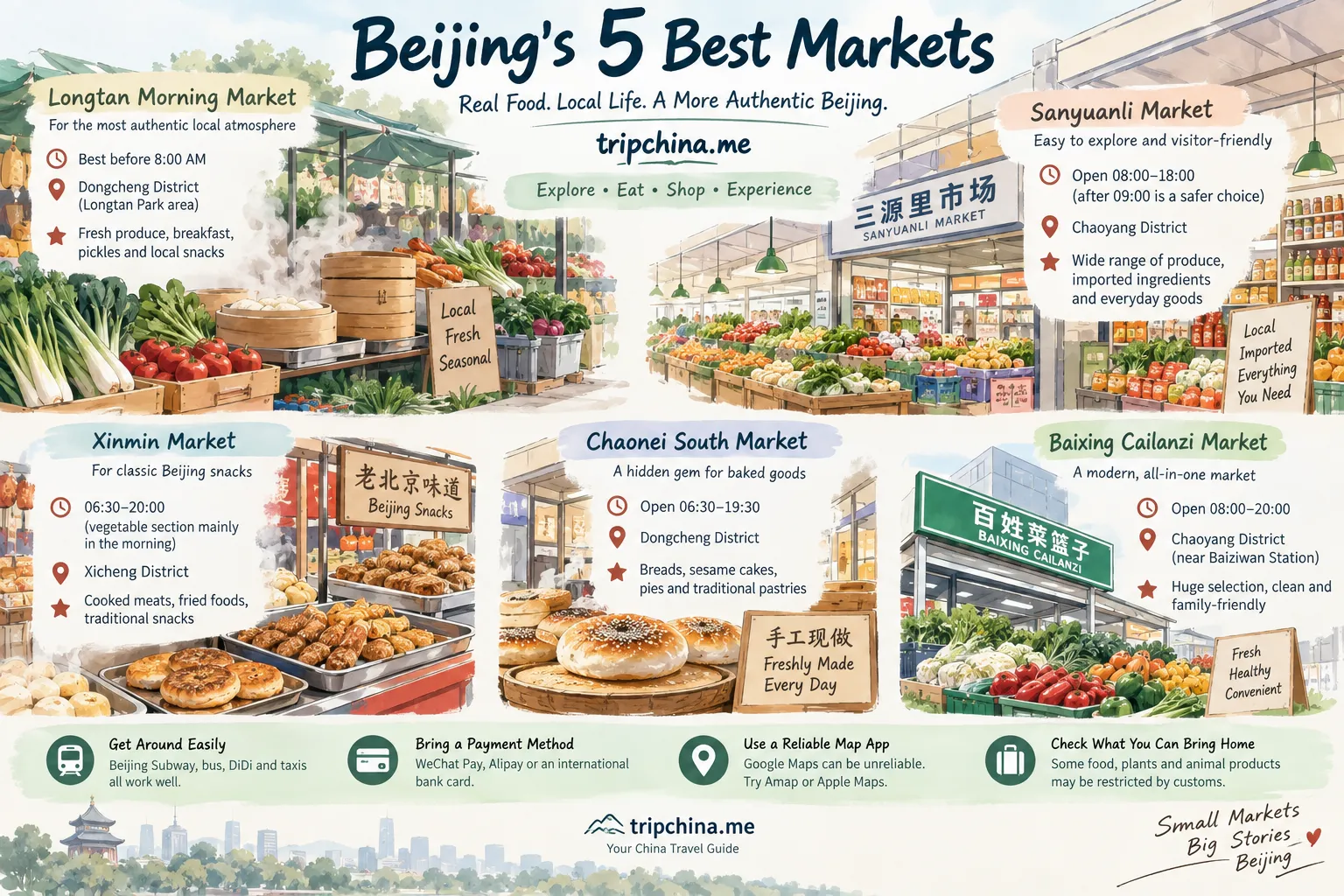
Beijing’s markets range from polished international food halls to early-morning neighborhood markets where breakfast steam, produce deliveries and bargaining locals fill the aisles. The right choice depends less on which market is “best” and more on what you want to see. This guide compares five very different Beijing markets for food, photography, local atmosphere and practical shopping—and explains when to go, what to buy and what foreign visitors should know before arriving.
If you have time for only one market:
| Market | Best For | Atmosphere | Price Level | Best Time | Main Trade-Off |
|---|---|---|---|---|---|
| Sanyuanli | First-time visitors, international ingredients, photography | Clean, cosmopolitan | Medium–High | Weekdays 09:00–11:00 | More polished and pricier |
| Longtan Morning | Local life, breakfast, produce, photography | Busy, traditional, working market | Low | Before 08:00 | Early start and denser crowds |
| Xinmin | Cooked food and neighborhood snacks | Old-Beijing local | Low–Medium | Before 10:00 | Best items can sell out |
| Chaonei South | Breads, pies and staple foods | Small, everyday local | Low | Morning | Limited reason for a long visit |
| Baixing Cailanzi | Families, seafood, one-stop browsing | Modern, spacious | Medium | After 10:00 | Less intimate than smaller markets |
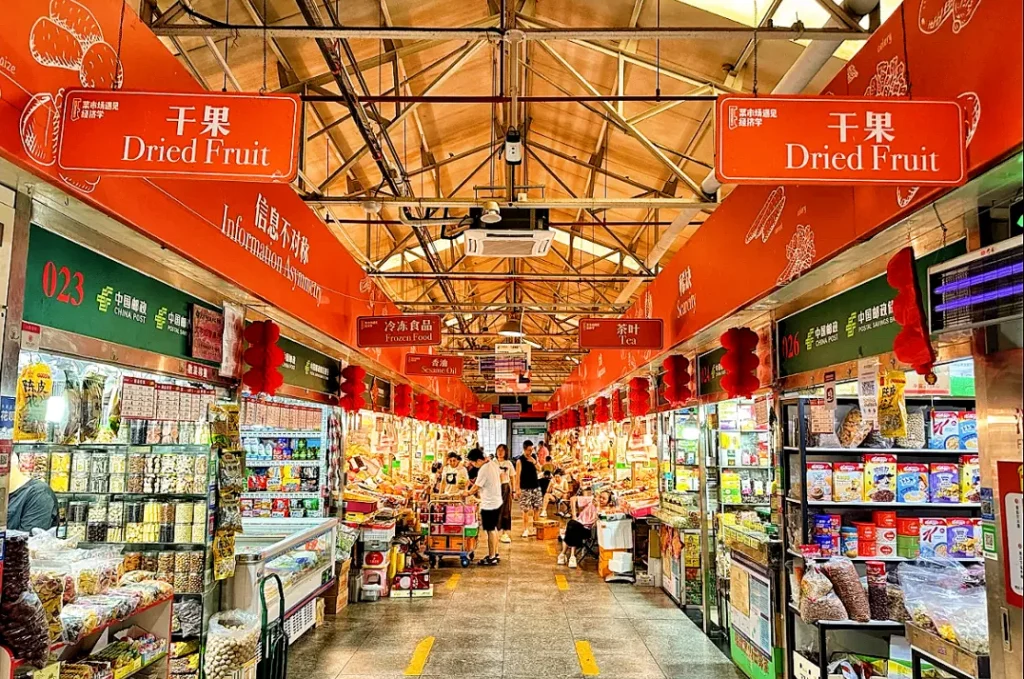
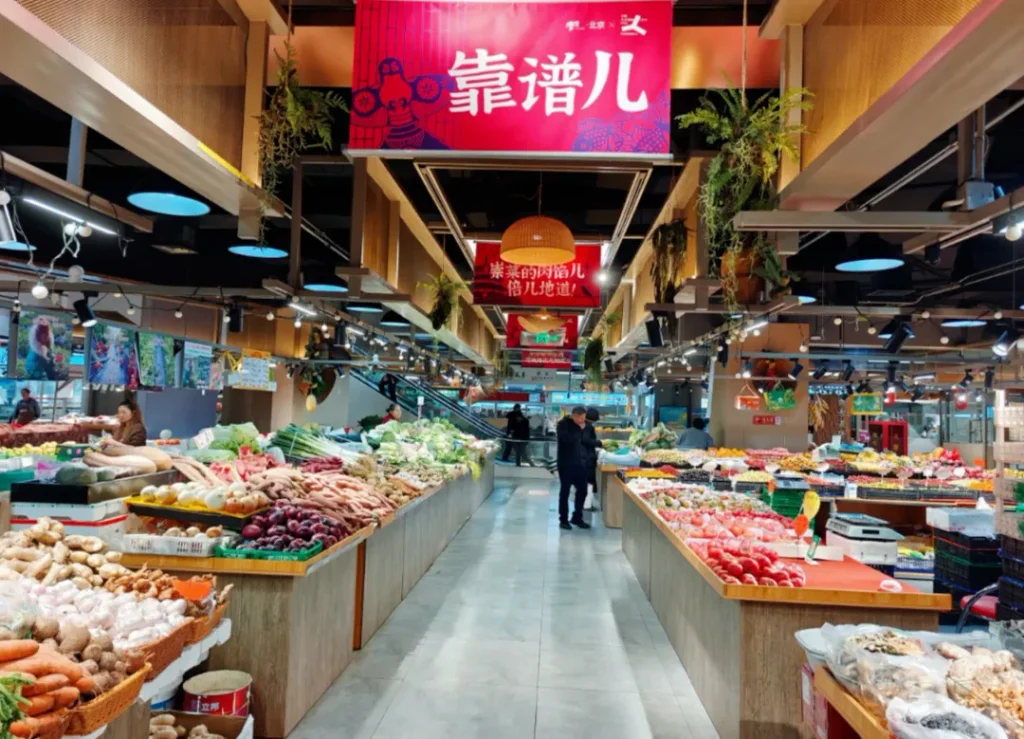
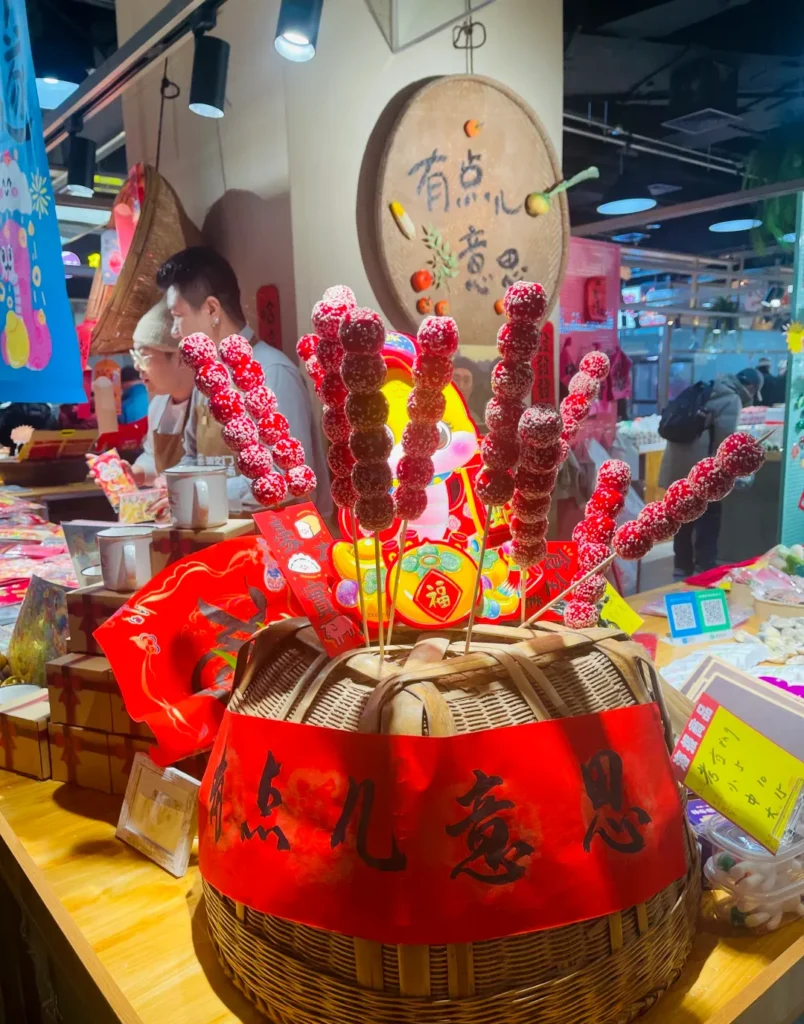
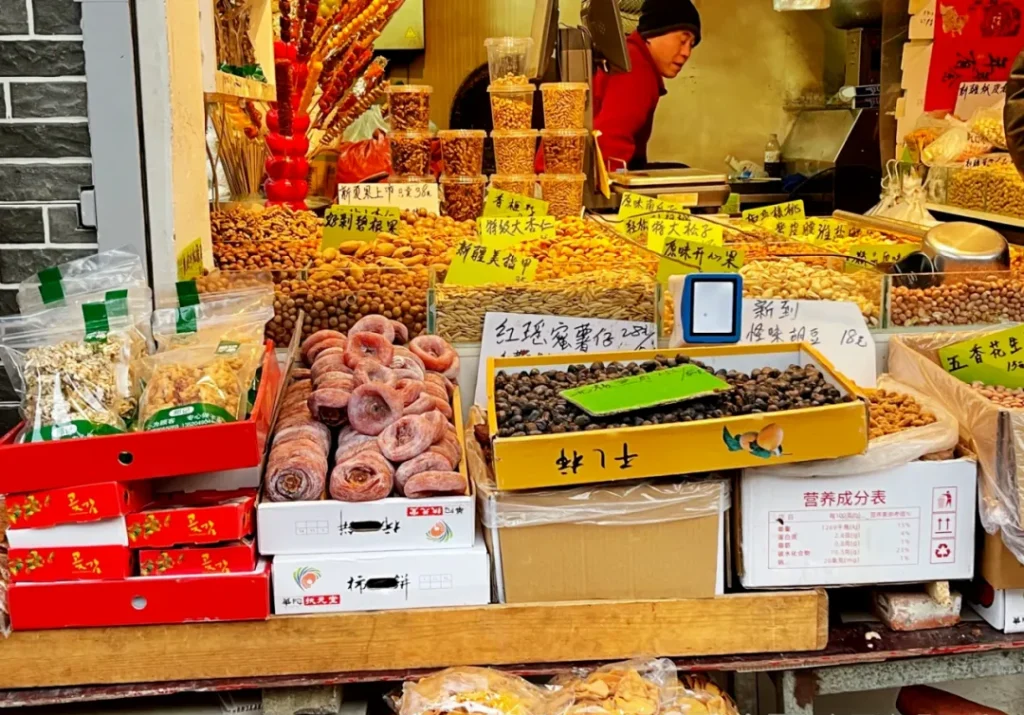
For most first-time visitors, Sanyuanli Market (三源里菜市场) is the easiest introduction to a Beijing food market.
The market sits close to the Liangmaqiao embassy district and has long served both local residents and Beijing’s international community. That shows in the merchandise: alongside ordinary Chinese vegetables, fruit, meat and seafood, you will find imported cheese, Western seasonings, Southeast Asian ingredients and less common produce.
Another advantage is communication. Vendors here are more accustomed to international customers than at most neighborhood markets, and Beijing tourism reporting specifically notes the market’s international clientele and vendors’ ability to communicate in English.
It is still a real working food market, but it feels considerably more approachable if this is your first encounter with a Chinese wet market.
Address: East side of Building 2, Shunyuanli, Chaoyang District
Chinese: 朝阳区顺源里2号楼东侧
Metro: Line 10 to Liangmaqiao Station, followed by a walk to the market.
Published opening hours: 08:00–18:00.
Current Beijing tourism information lists the market as open daily from 08:00 to 18:00. Older third-party listings sometimes show slightly different hours, but that disagreement has little practical impact for travelers. If you arrive at 08:00 and some stalls are still setting up, that is normal.
Best visitor window: 09:00–11:00 on a weekday.
By then the market is fully active, while you avoid both the earliest setup period and the heavier weekend traffic.
If you are new to Beijing’s metro system, prepare your route in advance and use the Best Navigation App for Foreign Tourists in China rather than relying entirely on Google Maps.
Sanyuanli is most interesting when you browse rather than arrive with a rigid shopping list.
Look for:
Premium imported ingredients can be expensive, so ask the price before ordering anything sold by weight.
You do not need to buy much. For a traveler without a kitchen, fruit, packaged snacks or a few unfamiliar ingredients can be enough to make the visit worthwhile.
Sanyuanli is not the market to choose if your main goal is the cheapest produce or the rawest neighborhood atmosphere.
Its international reputation, embassy-area location and specialty ingredients make it more polished than Longtan or Xinmin. That accessibility is precisely why it works so well for first-time visitors—but it also means you should not treat it as representative of every Beijing neighborhood market.
For broader retail shopping rather than food-market browsing, see the Beijing Shopping Guide.
If Sanyuanli is the easiest market, Longtan Morning Market (龙潭早市) is the one to choose when you want to see Beijing functioning before the sightseeing day begins.
This is a working morning market rather than a tourist attraction. The appeal is the rhythm: breakfast stalls, vegetables arriving, shoppers moving quickly through narrow aisles, steam rising from hot food and vendors serving regular customers.
It is particularly rewarding for photographers and travelers who enjoy observing ordinary urban life.
Longtan Morning Market is associated with the Longtan area of Dongcheng District, near Longtan Park.
Save the Chinese name 龙潭早市 before leaving your hotel. English-language transliterations and map labels are not always consistent, while the Chinese characters are much more useful when searching in Amap or showing the destination to a driver.
For this particular market, checking the current Chinese map listing shortly before your visit is more useful than relying on an old English travel listing.
Aim to arrive before 08:00.
Unlike Sanyuanli, this is not a market where arriving later necessarily makes the visit easier. The early hours are part of the experience.
By late morning, the atmosphere changes substantially as morning trading winds down. Do not build an afternoon itinerary around Longtan.
For an early visit, a taxi or DiDi is often easier than constructing a metro-plus-bus journey around a morning-market schedule.
This is especially useful if you want to arrive before 08:00.
If you have never used Chinese ride-hailing, set it up before the morning of your visit using the DiDi Guide for Foreigners in China.
Longtan is better for looking, tasting and observing than for hunting one famous product.
Watch for:
Prices and available foods can change quickly, which is one reason rigid online “must-buy” lists age badly.
If something looks interesting, ask the price first and buy a small portion.
The most common mistake is arriving too late.
The second is treating the market like a staged attraction. People are working, shopping and eating breakfast. Avoid blocking aisles or positioning yourself directly in front of a vendor simply to take photographs.
Floors can also be wet or uneven around fresh-food sections, so shoes with reasonable grip are more useful than fashionable footwear.
Xinmin Market (新民菜市场) works particularly well for travelers who care more about cooked food and everyday Beijing flavors than imported ingredients.
It is smaller and easier to understand than Longtan, while feeling considerably more neighborhood-oriented than Sanyuanli.
This makes it a useful middle ground: local enough to feel different from a tourist food street, but compact enough that you do not need to devote half a day to it.
Address: No. 68 Jiugulou Outer Street, Dongcheng District
Chinese: 东城区旧鼓楼外大街68号
Some older online references show a different address. Use the Jiugulou Outer Street address above.
Metro: Guloudajie Station on Lines 2 and 8 is the practical metro approach identified in Beijing tourism information.
Published information lists the broader market at approximately 06:30–20:00, but that does not mean every section operates for the entire period.
The fresh fruit and vegetable morning section winds down around midday, while other vendors can continue later.
For a traveler interested in food and atmosphere:
Arrive before 10:00.
That gives you a much better chance of seeing the market while the morning trade is still active.
Xinmin is one of the stronger choices in this guide if eating is your priority.
Depending on the day and stall availability, look for:
Do not feel obligated to try douzhi simply because it is famous. Fermented mung-bean juice has a strong sour aroma and flavor, and plenty of Chinese visitors do not enjoy it either.
Start with small portions when trying unfamiliar foods.
Chaonei South Market (朝内南小街菜市场) is better understood as a neighborhood stop than a major sightseeing destination.
That is part of its appeal.
It does not need to compete with Longtan for atmosphere or Sanyuanli for variety. Instead, it offers a compact glimpse of the staple foods residents buy in everyday life.
Look for everyday foods such as:
If your itinerary already takes you through the surrounding Dongcheng area, it can be an enjoyable 20–30 minute stop.
I would not cross Beijing solely for it unless neighborhood markets are a particular interest.
Baixing Cailanzi (百姓菜篮子百子湾店) is the largest and most modern-feeling option in this guide.
According to Beijing tourism reporting, the renovated market covers approximately 9,000 square meters, with a central passage running about 400 meters from south to north. The same reporting places it roughly 800 meters east of Baiziwan Metro Station. These figures describe the scale of the renovated market rather than a traveler needing to walk every aisle.
That size gives it a different character from Xinmin or Chaonei South: this is closer to a comprehensive neighborhood food-shopping complex.
Area: Baiziwan, Chaoyang District
Metro: Line 7 to Baiziwan Station, then continue east toward the market.
For the final walking section, use Amap or another China-friendly navigation app rather than depending solely on Google Maps.
This is probably the easiest choice if you are traveling with:
It is also useful in poor weather because much of the experience is indoors.
Expect a broad mix of:
Some seafood can be purchased and prepared nearby or on site depending on the stall and current setup.
If eating is your goal rather than grocery shopping, arriving after about 10:00 gives prepared-food operations more time to get going.
| Your Situation | Best Choice | Why |
|---|---|---|
| First trip to Beijing | Sanyuanli | Easiest communication and browsing |
| Serious street photographer | Longtan | Strongest early-morning working-market scenes |
| Want traditional cooked food | Xinmin | Compact and food-focused |
| Only have 30 minutes nearby | Chaonei South | Small and easy to browse |
| Traveling with children | Baixing Cailanzi | Spacious and indoor |
| Vegetarian traveler | Sanyuanli or Longtan | Strong produce and non-meat selection |
| Bad weather | Baixing Cailanzi | Most comfortable indoor option |
| Nervous about language barriers | Sanyuanli | Most accustomed to international customers |
Alipay and WeChat Pay should be your primary payment methods. Carry some RMB cash as backup.
China's mobile-payment environment for international visitors has improved substantially. Eligible international Visa, Mastercard and other supported bank cards can be linked directly to Alipay or WeChat Pay.
However, a market is not the place to discover that your wallet setup or mobile data is not working.
Set up payment before visiting using:
Physical foreign-card terminals should not be assumed at individual produce stalls.
A small amount of RMB cash remains a sensible backup, particularly at smaller neighborhood vendors.
If your phone loses connectivity after landing in China, the No Internet After Landing Guide is worth saving before your trip.
For international cards linked to major Chinese mobile-payment platforms, the standard fee structure generally distinguishes between smaller and larger transactions.
Transactions of RMB 200 or less are generally exempt from the standard international-card service fee, while transactions above RMB 200 may incur a 3% service fee, subject to the platform's current rules and promotions.
For ordinary market purchases—fruit, breakfast or snacks—many individual transactions naturally fall below that threshold.
Check the payment platform's current terms before travel because promotional fee waivers can change.
The most important unit to recognize is:
1 jin (斤) = 500 grams
If a vegetable sign says ¥8/斤, that means ¥8 per 500 grams—not per kilogram.
Useful quantities:
| Chinese | Meaning |
|---|---|
| 半斤 | 250 g |
| 一斤 | 500 g |
| 两斤 | 1 kg |
You can say:
“Lái yì jīn.” (来一斤。)
“One jin, please.”
But do not assume everything in a market is priced by jin. Boxed fruit, seafood, prepared foods and premium products may instead be sold by piece, box, portion or another unit.
When in doubt, point to the price and ask the vendor to show the total on a calculator.
Do not approach these markets like souvenir bazaars.
At Sanyuanli, especially for imported or clearly priced goods, routine bargaining is generally unnecessary.
At more traditional stalls, there can sometimes be modest flexibility when buying multiple items, but aggressive bargaining over a small food purchase is rarely worth the effort.
If you want to ask politely:
“Piányi yìdiǎn xíng bu xíng?” (便宜一点行不行?)
“Could it be a little cheaper?”
A smile matters more than winning a tiny discount.
A few things make these visits much easier:
For first-time visitors, it is worth sorting out connectivity before the trip. Compare your options in the China eSIM vs SIM Guide.
The biggest mistakes are practical rather than cultural.
Do not arrive at every market at the same time.
Longtan rewards a very early start; Sanyuanli does not require one; Xinmin is best before 10:00.
Do not assume every quoted price is per kilogram.
Look for 斤 and remember that one jin is 500 grams.
Do not rely on a physical foreign credit card.
Mobile payment is much more useful at individual stalls.
Do not arrive without working mobile data.
You may need your phone for payment, navigation and translation.
Do not treat a working market like a photo set.
Keep aisles clear and ask before taking recognizable close portraits.
Do not plan a market visit around Google Maps alone.
Save the Chinese market name and address and use a China-friendly navigation app.
The five markets do not present the same practical conditions.
| Market | Crowd Issue | Floor / Space | Photography |
|---|---|---|---|
| Sanyuanli | Weekends can get busy | Clean, relatively easy to navigate | Easiest for food and stall photography |
| Longtan Morning | Dense during the early-morning peak | Tighter working-market environment | Best documentary atmosphere; ask before close portraits |
| Xinmin | Morning food areas can be busy | Watch your footing around fresh-food sections | Good for general scenes; avoid intrusive close-ups |
| Chaonei South | Usually a quick local stop | Small and compact | Limited photographic variety |
| Baixing Cailanzi | Large but more spacious | Indoor, broad main passage | Easy for food, displays and wide market scenes |
The basic rule is simple: photographing food, signs and wide market scenes is much less intrusive than photographing an identifiable person at close range.
At Longtan especially, remember that people are working rather than performing for visitors. For a close portrait, make eye contact, gesture toward your camera and wait for a nod.
This article is part of the Beijing Travel Guide Hub.
Sanyuanli is the easiest choice; Longtan offers the strongest documentary atmosphere.
At Longtan before 08:00, steam, deliveries, breakfast stalls and dense layers of activity create much stronger street-photography material, but it is a working market rather than a photo set.
Ask before taking close portraits. For candid scenes, keep a respectful distance and avoid blocking vendors or customers.
If you want attractive market photography with less ethical tension, choose Sanyuanli on a weekday morning.
Yes, but Baixing Cailanzi and Sanyuanli are the easiest choices for families.
Baixing Cailanzi is large, indoor and comparatively spacious, while Sanyuanli is compact and easy to navigate.
Longtan is less convenient with young children because of the early start, denser crowds and working-market environment. A stroller can also be awkward in tighter aisles.
Absolutely.
Sanyuanli has extensive fruit, vegetables, tofu products and imported vegetarian ingredients. Longtan has seasonal produce, pickles and simple breakfast staples, while Baixing Cailanzi has enough variety that finding meat-free food should not be difficult.
Xinmin has more emphasis on cooked meats and fried foods, although breads and vegetable-based snacks are available.
One caution: do not assume a prepared dish is vegetarian just because visible meat is absent. Lard, meat stock or mixed fillings can appear in traditional foods, so strict vegetarians and vegans should confirm ingredients before ordering.
Major indoor markets commonly continue operating on weekends, but individual stalls can adjust their schedules during Chinese public holidays. Spring Festival is the period most likely to cause significant changes.
If your trip overlaps a national holiday, check the Chinese listing shortly before visiting and expect heavier crowds.
See the China Public Holidays Guide before planning market visits around a holiday period.
It depends on the food and your destination country.
Commercially packaged dry products are generally easier to travel with than fresh fruit, raw meat, plants or homemade foods, which may face quarantine or import restrictions.
Always check the customs and agriculture rules of the country you are entering before buying food specifically as a souvenir.
Sanyuanli is the easiest of these five markets for non-Chinese speakers. Beijing tourism reporting notes its international customer base and vendors accustomed to communicating with foreign shoppers.
At Longtan, Xinmin and smaller neighborhood markets, assume English will be limited.
Keep the market's Chinese name on your phone and use a translation app plus a calculator. For simple purchases, pointing to an item, showing the quantity and confirming the price is usually enough.
For ordinary visitors, the main practical concerns are crowded aisles, wet floors, navigation and keeping track of personal belongings rather than market-specific dangers.
If you are visiting an early-morning market alone, arrange your route before leaving your hotel.
Solo travelers who want a broader China safety checklist can use the Solo Female Travel in China Guide.
Do not assume the market itself offers international shipping.
Small packaged products are usually easier to carry yourself. Fresh, perishable or bulky purchases create additional courier and customs complications.
If a vendor says shipping is available, confirm whether that means domestic delivery within China or international shipping before paying.
There is no single Beijing market that represents the whole city.
Choose Sanyuanli if you want the easiest first experience. Wake up early for Longtan if you want working-market atmosphere and street photography. Choose Xinmin when traditional food matters most. Add Chaonei South when you are already nearby, rather than crossing the city for it. Pick Baixing Cailanzi when comfort, space or traveling with children matters more than old-market atmosphere.
The most rewarding approach is not trying to visit all five. Choose the market that matches the Beijing you actually want to see.
This guide was reviewed in September 2026 using Beijing tourism information, Beijing municipal guidance and current traveler-facing payment rules. Market hours can still change by stall, season and public holiday, especially at traditional morning markets. Where reliable official information does not support an exact figure, this guide favors practical visitor windows over false precision. Prices and individual food stalls change more quickly than addresses or market structure, so confirm unusually important details shortly before visiting.
TripChina.me creates practical China travel guides shaped by real local experience, helping independent travelers navigate transport, payments, food, neighborhoods, and the cultural details that make traveling in China easier and more meaningful. Find the guide for your destination at tripchina.me.