Our Location:
No. 99, Jiazi Road, Chengdu

 authorChris Lee
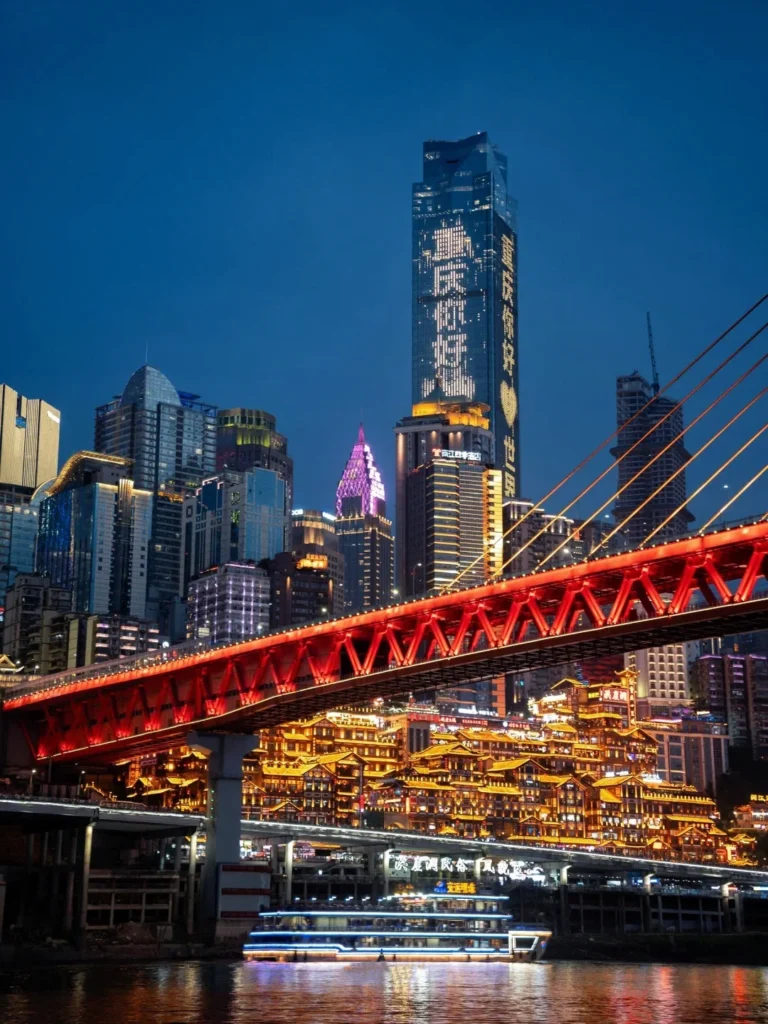
Hongyadong is free, spectacular after dark—and much easier to enjoy once you understand its unusual vertical layout.
This guide shows you which entrance to use, where the best night views are, how to avoid wasting time inside, and how to plan around crowds without paying for a fake “fast pass.”
Yes, Hongyadong is worth visiting—especially after dark. But the most memorable part is usually seeing the illuminated cliffside architecture from outside rather than browsing every floor inside.
The key thing to understand is Chongqing's vertical geography:
Hongyadong's 11F and 1F both connect directly to public streets.
For most first-time visitors, a smart route is:
Jiefangbei → 11F Hongyadong → Qiansimen Bridge → exterior night view → descend toward 1F if conditions are comfortable
As of September 3, 2026, Hongyadong's current official lighting hours are 19:30–23:00. Because the schedule has changed several times during the year, treat this as the current schedule rather than a permanent year-round rule.
And remember:
Hongyadong is free. There is no official paid “fast pass.”
Yuzhong District authorities have explicitly warned visitors about false claims involving admission charges, long waits and paid “fast channels.”
You do not need to follow the same route as everyone else.
| Route | Best For | Suggested Timing | Crowd Exposure | Photo Potential | Main Idea |
|---|---|---|---|---|---|
| Classic Night Route | Most first-time visitors | Around light-on time | Medium–High | Excellent | 11F + Qiansimen + 1F |
| Crowd-Smart Short Route | Travelers who hate crowds | Later in the evening | Lower | Excellent | Exterior views, minimal interior time |
| Daytime Architecture Route | Vertical-city experience | Daytime | Usually lower | Fair | Understand the structure without night crowds |
TripChina Pick: For most travelers, choose the Classic Night Route and spend more time on exterior viewpoints than shopping inside.
This is the one fact that makes Hongyadong much easier to understand.
The 11F entrances connect directly to Cangbai Road (沧白路).
That means you can stand outside the 11th floor and still feel as though you are standing on an ordinary city street.
The 11F side connects naturally with:
This is why starting from the upper side makes sense for many first-time visitors.
The 1F entrance connects with Jialing River Binjiang Road (嘉陵江滨江路) below.
From here, you look sharply upward at the illuminated buildings rather than down toward the river.
Official visitor guidance has long identified the lower riverside side as one of the strongest places to understand Hongyadong's dramatic vertical scale.
For many first-time visitors, starting around 11F is the easiest option because it combines naturally with Jiefangbei and Qiansimen Bridge.
But Hongyadong does not function like a conventional attraction with one obvious front gate.
Think of it as:
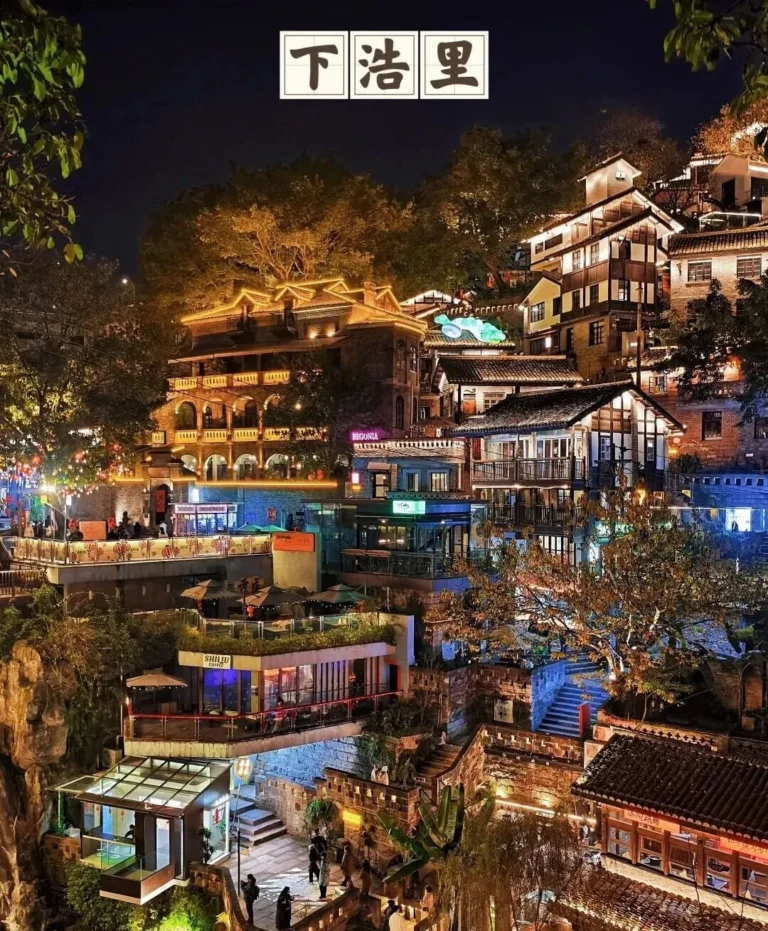
a vertical neighborhood built into a cliff
rather than a building with one entrance.
Yes.
If you are already on Jialing River Binjiang Road, entering from the 1F side and moving upward is a valid alternative.
It can feel different from the more common upper-city approach, but crowd conditions vary by time and day, so do not treat it as a guaranteed “fast route.”
Use it because it fits your location—not because someone promises it will always save time.
Hongyadong itself is free to visit.
There is no official paid priority-entry ticket that ordinary visitors need in order to enter.
Yuzhong District's tourism-market enforcement has specifically targeted people who create anxiety by falsely claiming:
Authorities have also reminded visitors not to pay people simply to lead them through public access routes.
If you are unsure where to go, ask:
instead of paying someone who approaches you on the street.
No.
Hongyadong is also a large commercial complex with legitimate:
The warning applies specifically to fake admission, fake priority access and misleading paid shortcuts.
Yuzhong District enforcement has also targeted problems such as:
A simple rule works well:
If someone approaches you with an unsolicited “special access,” transport, tour or photo deal, check exactly what you are buying before paying.
For broader citywide pitfalls, see TripChina's Chongqing Travel Mistakes Guide.
As of September 3, 2026, the current official lighting schedule is:
19:30–23:00
This latest adjustment was published by Chongqing government and tourism channels in early September.
Because Hongyadong's lighting schedule has changed several times during the year, treat 19:30–23:00 as the current schedule, not a permanent annual rule.
Arrive roughly 20–30 minutes before the current light-on time if you want the transition from daylight into the illuminated night view.
That usually gives you better visual depth than arriving after the sky has already turned completely black.
The exact blue-hour timing depends on your travel date and weather, so check sunset time rather than memorizing one fixed clock time.
Often, yes.
Weekends, summer evenings and Chinese public holidays can be extremely busy.
On major holidays, authorities may introduce temporary controls around:
If avoiding crowds matters more than seeing the exact moment the lights switch on, visiting later in the evening can feel more comfortable.
The strongest views are outside the complex.
| Photo Spot | Best For | Perspective | Crowd Risk | TripChina Take |
|---|---|---|---|---|
| Qiansimen Bridge | First-time visitors | Elevated panorama | High at peak times | Best overall |
| 1F Riverside Area | Dramatic close-ups | Looking upward | Very high | Iconic lower-angle shot |
| Grand Theatre / Jiangbei side | Skyline composition | Across the river | Variable | Best wide-angle setting |
| Dajia Alley Cliffside Walk | Chongqing terrain | Side / elevated | Moderate | Best vertical-city experience |
From Qiansimen Bridge, you can understand the scale of Hongyadong against the Jialing River and Chongqing's layered skyline.
Current visitor guidance also recommends a broader night-view sequence linking Hongyadong, Qiansimen Bridge and the Grand Theatre riverfront.
One warning:
Qiansimen Bridge can be subject to pedestrian or traffic controls during major holidays.
The 1F riverside area gives you the dramatic upward-looking perspective:
illuminated buildings rising directly above the road
The Grand Theatre / Jiangbei side gives you the wide skyline composition:
Hongyadong + Qiansimen Bridge + riverfront cityscape
Use 1F if you want the most dramatic close-up.
Use the opposite-bank side if you want the broader postcard-style skyline.
High-water warning: Do not enter exposed riverbank areas when barriers or official safety warnings are in place.
Dajia Alley Cliffside Walk (戴家巷崖壁步道) is less about finding one perfect postcard photograph and more about experiencing Chongqing's vertical geography.
It connects the upper urban area with the riverfront through a steep cliffside environment beside Hongyadong.
This is where the city starts to make sense physically:
streets above streets, roads beside upper floors, and riverfront paths far below neighborhoods that look close on a flat map.
Try:
Jiefangbei → 11F Hongyadong → Qiansimen Bridge → return toward Hongyadong → brief interior visit → descend toward 1F
Allow roughly 1.5–2 hours if you are stopping for photographs.
The goal is not to “complete” all 11 floors.
It is to combine:
Do less.
A practical short route is:
11F → Qiansimen Bridge → exterior night view → leave
Allow roughly 45–60 minutes, excluding temporary crowd controls.
You can see the landmark without slowly working through every commercial floor.
Yes, if your priority is understanding the architecture and Chongqing's vertical urban form.
Daylight makes it easier to see:
But if you have time for only one visit, choose the evening.
For many travelers, the best answer is:
Go inside briefly. Spend more time outside.
Hongyadong is a multi-level commercial and cultural complex containing:
It can be entertaining on a first visit, but you do not need to explore every floor.
Because once you are inside the structure, you cannot see the full illuminated building that made Hongyadong famous in the first place.
If your main goal is photography, prioritize:
Qiansimen Bridge + lower exterior + across-river viewpoint
rather than shopping floor by floor.
For many first-time visitors, 20–40 minutes inside is enough unless you specifically plan to eat or shop.
Use the rest of your visit moving between viewpoints.
Hongyadong sits in central Yuzhong near Jiefangbei, so public transportation and walking are usually more practical than trying to drive directly to the lower riverside road.
Xiaoshizi Station (小什字站) on Metro Lines 1 and 6 is a practical option for reaching the Hongyadong area.
The Chongqing municipal government also lists Xiaoshizi and Linjiangmen among practical rail-access points for Hongyadong.
Rather than memorizing one metro exit forever, use your mapping app after leaving the station and navigate toward:
洪崖洞 11楼 / 沧白路
Pedestrian routing can change when crowd controls are introduced.
You can, but during busy periods it may not be the easiest option.
Roads around Hongyadong and Jiefangbei can become congested.
A practical strategy is often:
Metro → walk to Hongyadong → leave the busiest immediate area before requesting ride-hailing
If you use ride-hailing, see TripChina's DiDi Guide for Foreign Travelers.
Yes.
Combining Jiefangbei and Hongyadong is one of the most logical ways to structure an evening in central Chongqing.
But do not judge distance only from a flat map.
Chongqing's:
can make short-looking distances behave very differently on foot.
For routes built around that geography, see TripChina's Chongqing City Walk Routes.
Hongyadong is a major urban landmark, not a hidden local neighborhood.
If you visit on a Saturday night or during a Chinese public holiday, expect crowds.
If you came because of the photographs you saw online, prioritize the exterior.
Tourism-market enforcement around Hongyadong has addressed aggressive solicitation, misleading services and unlicensed transport.
Verify the service and price before paying.
Roads, bridges and pedestrian routes around Hongyadong can be managed dynamically when visitor numbers are high.
Follow police, scenic-area staff and official signage even if your mapping app suggests another route.
Yes—but don't give it your entire evening.
Hongyadong works best as part of a wider central-Chongqing night rather than as a standalone half-day attraction.
A practical sequence is:
Jiefangbei → Hongyadong → Qiansimen Bridge → riverside/night-view area → dinner
That gives you the landmark without sacrificing the rest of your evening.
| Step | What to Do | Why |
|---|---|---|
| 1 | Check the current lighting notice | Times can change |
| 2 | Arrive around the upper 11F side | Easy connection from Jiefangbei |
| 3 | Walk toward Qiansimen Bridge | Get the wide exterior view first |
| 4 | Return for a brief interior look | See inside without overcommitting |
| 5 | Descend toward 1F if comfortable | Get the dramatic upward perspective |
| 6 | Leave before fatigue replaces enjoyment | Hongyadong does not need half a day |
TripChina Verdict: Don't treat Hongyadong like a museum you must “complete.” Treat it as a night-view experience built around Chongqing's extraordinary vertical geography.
Explore all Chongqing travel guides here → Chongqing Hub
Yes, but it is inconvenient.
Large suitcases are awkward in crowded pedestrian areas, on stairs and across elevation changes.
If possible, leave large bags at your hotel or a verified luggage-storage facility before visiting.
The exterior night view can still be enjoyed without completing the full vertical route.
However, steep terrain, crowd density and changing elevations can make some routes difficult.
Travelers who need step-free access should prioritize exterior viewpoints and confirm current elevator/access arrangements with scenic-area staff.
Generally, Hongyadong can still be visited in rain unless temporary safety or crowd-control measures are introduced.
Exterior stairs and cliffside paths may become slippery, and riverside areas require extra caution during periods of high water.
Follow barriers and official safety instructions.
Do not assume that an outdoor location automatically permits recreational drone use.
Hongyadong is in a dense central-city environment where airspace restrictions and temporary controls can apply.
Check China's current drone-registration and local flight rules before attempting aerial photography.
Keep:
Yuzhong District tourism-market guidance identifies the government service hotline 12345 as a reporting channel for tourism-market problems.
Wonder why Hongya Cave has become one of China’s most famous night views?
This video captures the glowing riverside lights, traditional-style architecture, dramatic city scenery, and the unforgettable atmosphere of Chongqing after dark.
A short video can help you understand why Hongyadong works better as a night-view experience than as a conventional indoor attraction.
Look for the relationship between:
before planning your own route.
Yuzhong District Government — Hongyadong Tourism Market Regulation
Chongqing Municipal Government — Hongyadong Visitor Information
Yuzhong District Government — Official Tourism Information
Chongqing Municipal Government — Official Portal
Last researched: This guide was reviewed against Chongqing municipal and Yuzhong District tourism information, including Hongyadong's free-entry status, official warnings against paid “fast channels,” multi-level access, September 2026 lighting hours and peak-period crowd controls. Lighting schedules, bridge access, traffic restrictions and riverside safety measures can change for holidays, events or high-water conditions, so time-sensitive details should be checked shortly before visiting.
TripChina.me creates practical China travel guides shaped by real local experience, helping independent travelers navigate transport, payments, food, neighborhoods, and the cultural details that make traveling in China easier and more meaningful. Find the guide for your destination at tripchina.me.


Can you please email a map of the Dajia Alley cliffside path route to get to Hongyadong from the closest metro station? It doesn't look like the path connects on Google Map.
Thank you
Hi, could you tell me which subway station you're at? The best solution is to download Amap (Gaode Maps). While Google Maps on iPhones works, much of the information is outdated and significantly off-target.