Our Location:
No. 99, Jiazi Road, Chengdu

 authorChris Lee
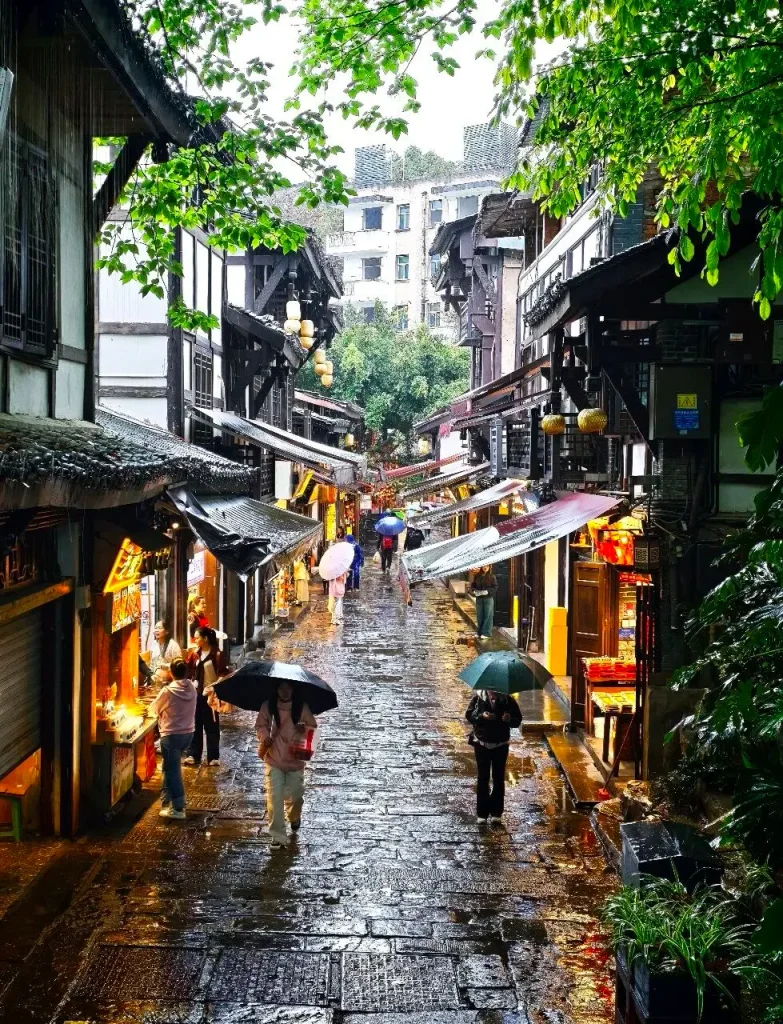
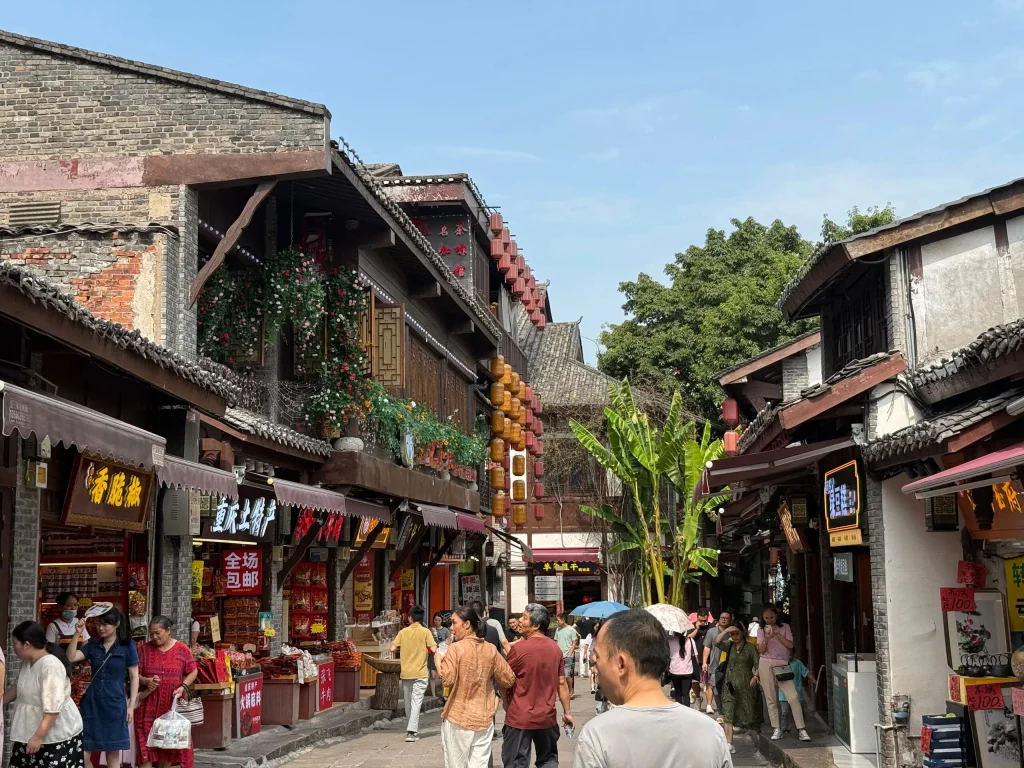
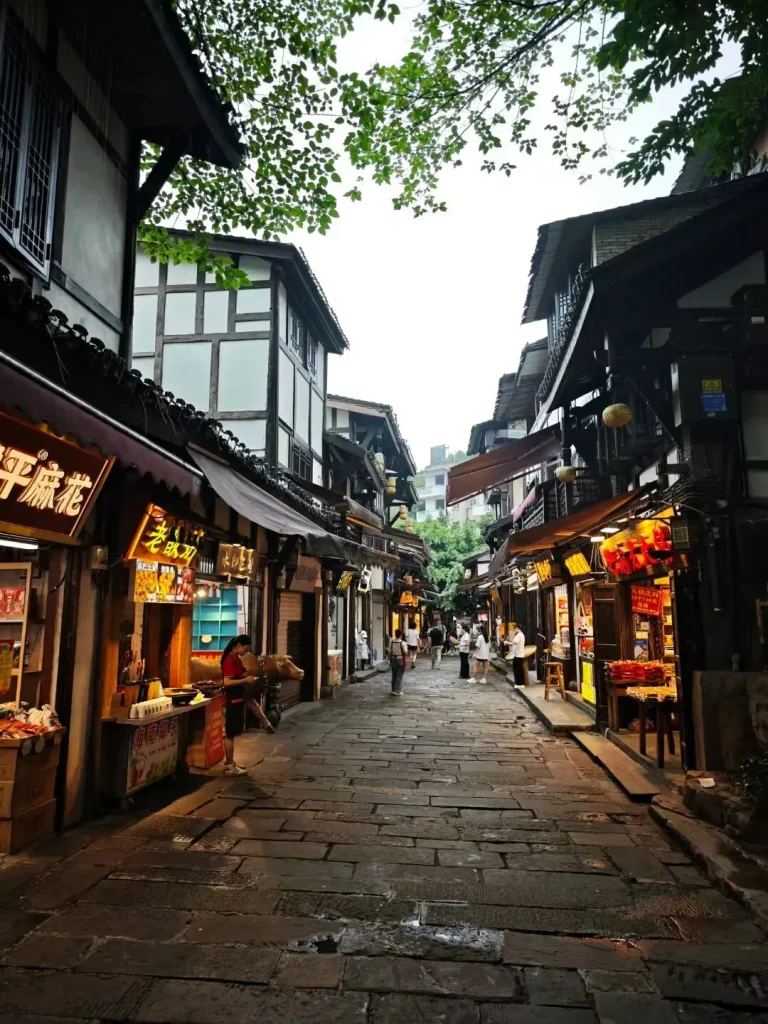
Ciqikou Ancient Town is a free, metro-accessible Chongqing landmark known for stone lanes, local snacks and old-town atmosphere. Yet many visitors walk only the crowded main street, decide the whole place is over-commercialized, and leave disappointed.
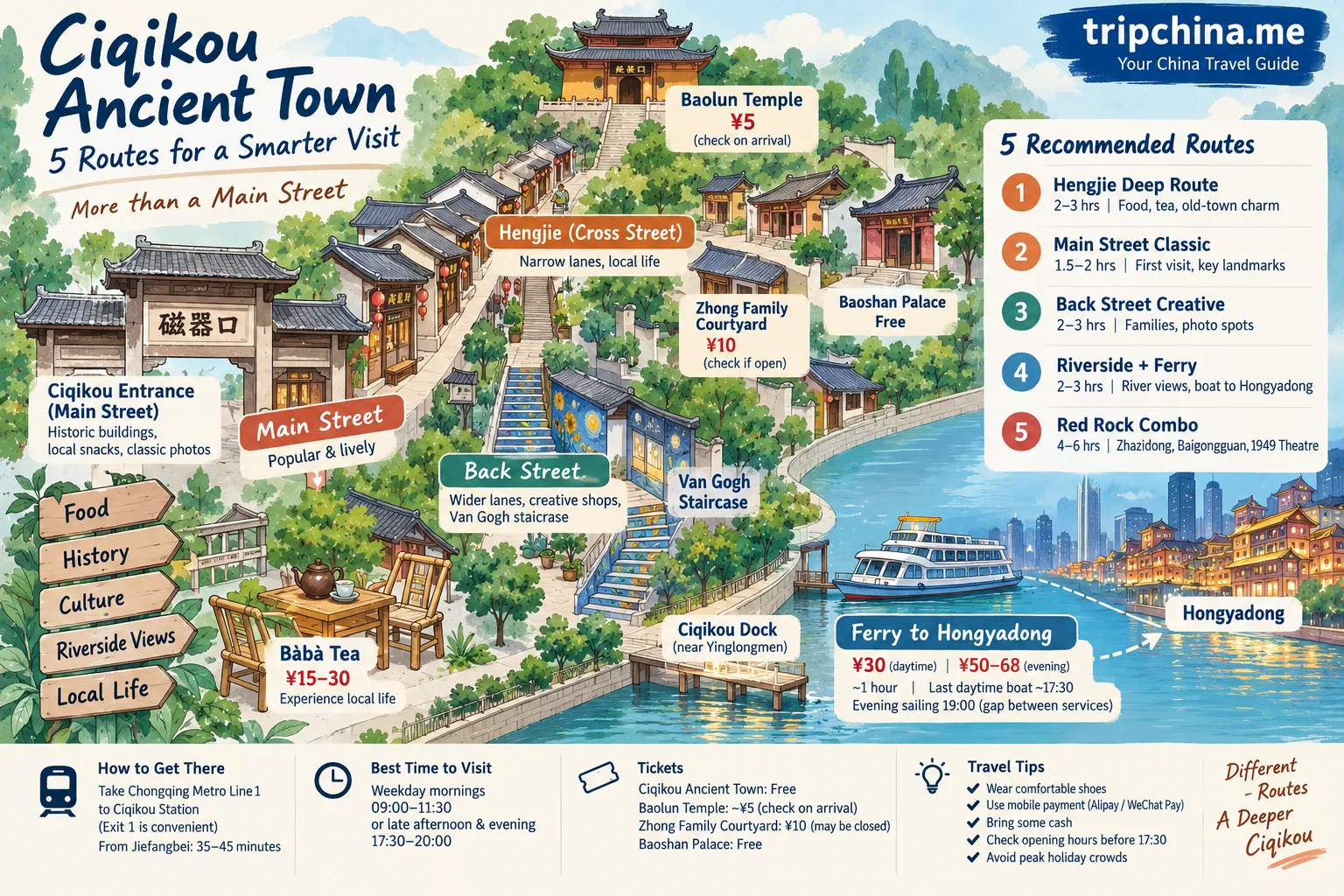
The problem is usually the route. Ciqikou changes completely once you move into Hengjie, the back street, Baolun Temple or the riverside. This guide compares five practical ways to explore it.
Yes — if you do more than walk straight down the main tourist street.
As of September 2026, Trip.com’s current attraction page still lists Baolun Temple as free, while recent Ciqikou visitor guides report a ¥5 admission charge. Treat ¥5 as a practical planning allowance, not a guaranteed official tariff, and check the entrance notice when you arrive.
| Route | Time | Best For | Main Experience | Typical Extra Spend |
|---|---|---|---|---|
| Hengjie Deep Route | 2–3 hrs | Food, tea, atmosphere | Narrow lanes, Baolun Temple, local life | ¥30–60 |
| Main Street Classic | 1.5–2 hrs | First visit, limited time | Historic landmarks, famous storefronts | ¥20–50 |
| Back Street Creative | 2–3 hrs | Families, younger travelers | Wider lanes, museums, photo spots | ¥30–100 |
| Riverside + Ferry | 2–3 hrs | Couples, photographers | Jialing River + boat to Hongyadong | From ¥30 |
| Red Rock Combo | 4–6 hrs | History travelers | Zhazidong, Baigongguan, 1949 Theatre | Varies |
These are not five branches of one continuous walking route. The Red Rock sites, Hongyadong and the Half-Mountain Cliff Trail lie outside the core ancient town and require metro, bus, ferry or another transfer.
If your Chongqing trip falls on a national holiday, check our China public holidays guide before choosing your day. Ciqikou can become extremely congested during major holiday periods.
For most travelers who dislike heavily commercialized attractions, yes.
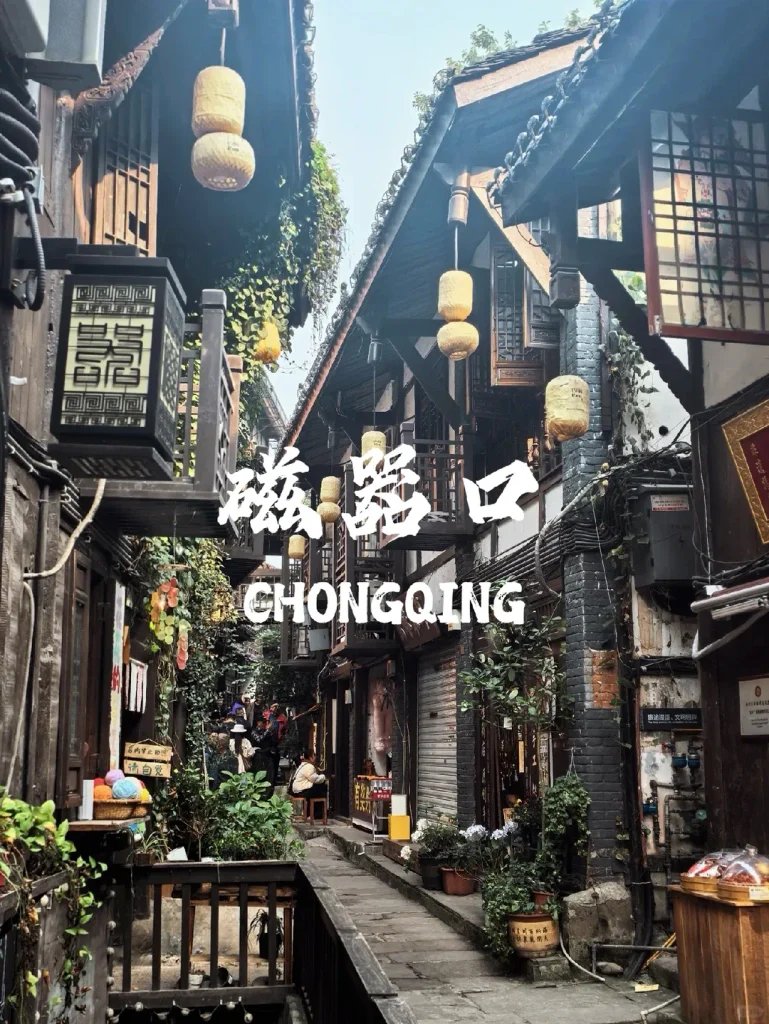
Hengjie (横街) intersects the main street rather than simply being a random hidden alley. It is roughly 240 meters long and unusually narrow, creating a much more intimate streetscape than the tourist spine.
Baolun Temple sits along this historic side of the ancient town.
Walk into the historic core and look for the intersection leading uphill toward Baolun Temple rather than automatically continuing downhill with the largest flow of visitors.
This is a better navigation landmark than the old advice to “turn before you reach the river.”
Once you enter the narrower lane, the crowd generally spreads out and the old-town scale becomes easier to appreciate.
Good casual choices include:
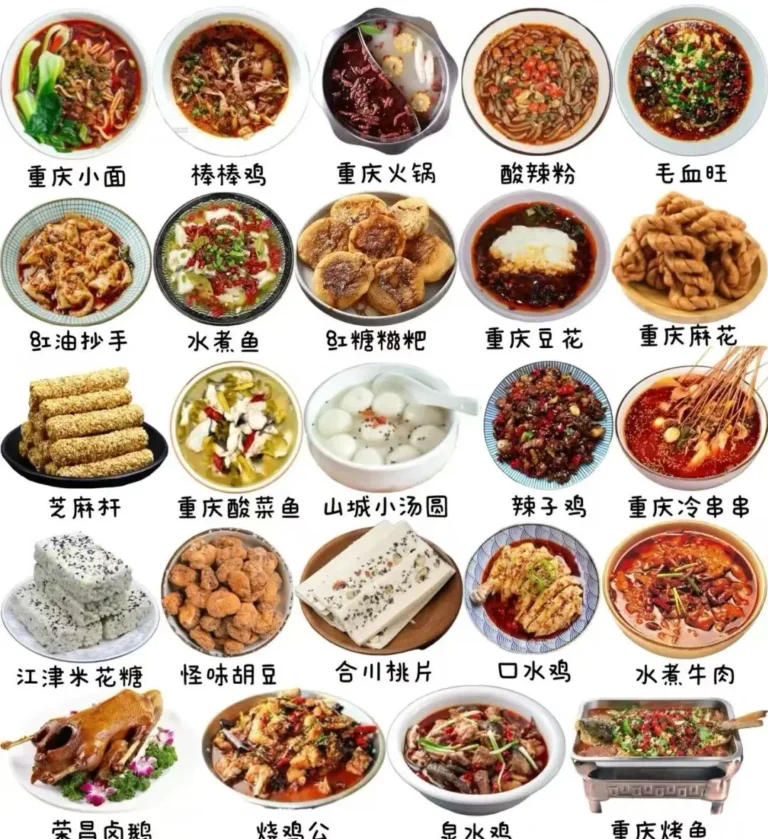
Prices depend heavily on shop and portion size. Small snacks commonly sit in the ¥5–20 range, while a shared hot dish can cost substantially more.
For a wider look at what is actually worth eating in the city, see our Chongqing food guide for foreign visitors.
Look for a simple open-air tea setup rather than the most polished tourist teahouse.
Bàbà chá (坝坝茶) means sitting outside on small chairs and drinking tea at an unhurried pace. A simple pot often costs roughly ¥15–30.
Local older residents still gather around these neighborhood-style tea spaces. That everyday social rhythm — sitting, chatting, watching people pass — is more representative of Chongqing leisure culture than a staged tea ceremony.
Best time: About 17:00–20:00, when the daytime groups begin thinning and the lanterns become more visible.
The main street is the most commercial part of Ciqikou, but skipping it completely also means missing several important landmarks.
Use it as a connector rather than spending your entire visit there.
The old gateways and tightly packed historic storefronts create the classic Ciqikou image most first-time visitors expect.
Stop for photographs, but keep moving rather than joining every food queue near the entrance.
Yes.
Baolun Temple (宝轮寺), also known historically as Longyin Temple, is one of Ciqikou’s most important surviving religious sites.
Its main hall is particularly interesting for its traditional timber construction.
Admission information is currently inconsistent. Trip.com lists free admission, while recent 2026 visitor reports quote ¥5. Budget ¥5, but check the entrance notice rather than assuming either online listing is definitive.
Current visitor information lists 07:30–18:00, with last entry at 17:00.
Carry a little cash if convenient, although mobile payment is normally the more useful default in Chongqing.
Zhong Family Courtyard (钟家院) preserves a traditional residence combining courtyard planning with regional Sichuan architectural details.
Look closely at the timber carving rather than simply photographing the entrance.
Recent visitor guides have quoted ¥10 admission when open, but current Ctrip listings mark Zhong Family Courtyard as temporarily closed for renovation, with no confirmed reopening date. Do not plan your route around entering it until you verify the day’s status.
The Hanlin Academy Site (翰林院旧址) reflects Ciqikou’s history as more than a market and port town.
It is associated with the area’s old educational traditions and local families who achieved success through the imperial examination system.
Baoshan Palace (宝善宫) was historically associated with Taoist use before later educational functions.
Today the building is used for cultural and exhibition activities and remains an important part of Ciqikou’s education-history story.
Most small cultural courtyards in the ancient-town area close in the late afternoon, often around 17:30, while Baolun Temple maintains the later 18:00 closing schedule. Individual venues can change hours or close temporarily, so prioritize small courtyards earlier in the day.
Once you have seen the main historic landmarks, turn into Hengjie or toward the back street rather than walking automatically through every repetitive snack and souvenir section.
The biggest tourist mistake is rushing through the crowded main street, buying a generic bag of mahua, and leaving without seeing the narrower lanes, temple area or river.
The back street (后街) opened as part of Ciqikou’s major expansion in 2021. Chongqing’s municipal government still identifies its opening as a key part of the wider Ciqikou scenic-area redevelopment.
It is wider and more orderly than the oldest lanes, making it particularly useful for families and travelers who find the main street claustrophobic.
A useful current approach is from Ciqikou Metro Station Exit 1.
Rather than immediately joining the heaviest flow toward the traditional main entrance, follow the quieter approach through the Yuwang Lane side toward the back-street area. Current visitor routing commonly uses the sequence:
Back Street → Baolun Temple → Main Street → Riverside
This creates a mostly downhill progression and avoids unnecessary backtracking.
The Van Gogh-style staircase sits around the Hemei Courtyard (和美大院) area on the back-street side.
Its painted Starry Night and sunflower imagery works best from the bottom of the stairs looking upward, where the mural fills more of the frame.
It is a playful photo stop rather than a historical attraction, so five or ten minutes is enough.
The area includes small exhibition spaces, snack-related displays, creative shops and more open public areas.
Families generally find it easier than the older main and cross streets because there is more room to stop without blocking pedestrian traffic.
Do not confuse “newer” with “fake.” The back street is intentionally a contemporary extension of the historic tourism area rather than part of the ancient street fabric.
If the ferry is operating, it is one of the best ways to turn Ciqikou into a one-way Chongqing sightseeing route instead of retracing your metro journey.
The current Ciqikou ferry stop is at Ciqikou Dock near Yinglongmen Riverside Plaza (迎龙门滨江广场).
The Chongqing municipal government confirmed that the upgraded Ciqikou stop formally joined the Jialing Xiaodu network in February 2026.
Follow signs toward the river rather than older advice sending you specifically to the former Tegang Dock.
The river journey takes roughly one hour.
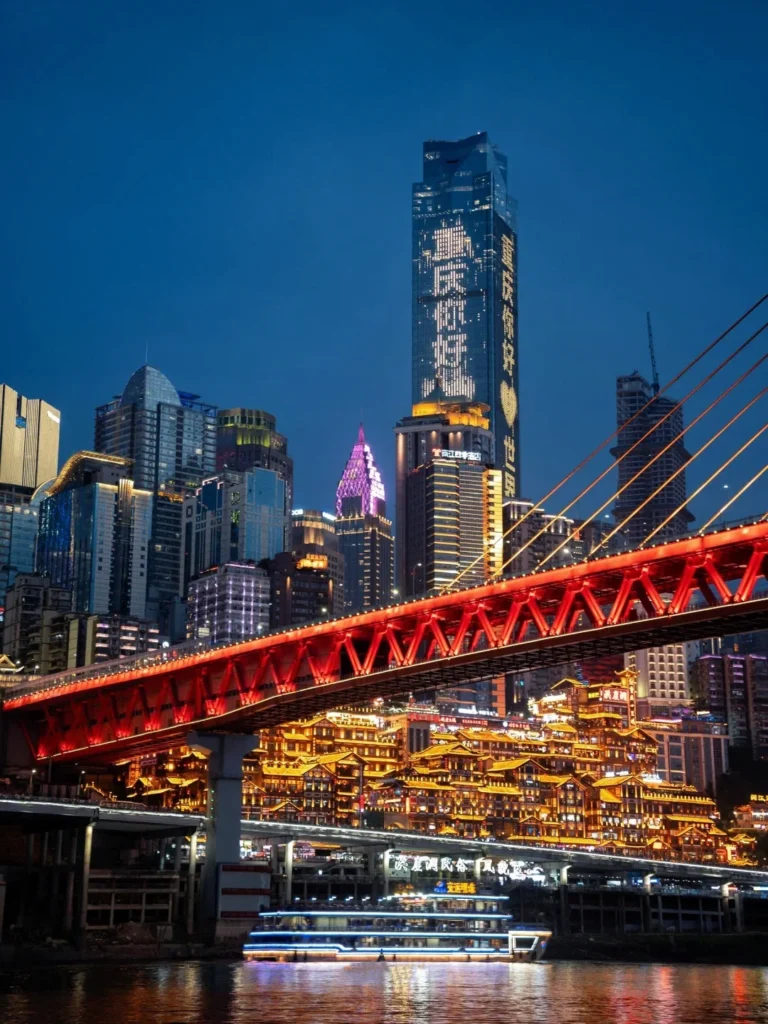
The route passes major Jialing River scenery, including multiple bridges, the Liziba area and the central Chongqing skyline before reaching Hongyadong.
Current 2026 listings show the standard daytime fare at ¥30 per adult, with the last regular daytime sailing from Ciqikou currently around 17:30. Children under 1.2 meters can ride free, limited to one free child per paying adult.
River levels, weather and seasonal operating conditions can change the timetable, so check “重庆小渡”, 重庆市客轮有限公司, or the current official booking page on the day you travel.
Yes — but the evening sailings are separate products, not a continuation of the daytime hourly service.
Current listings show the last standard daytime sailing at approximately 17:30, followed by a gap before the dedicated 19:00 evening departure. Do not arrive at 18:00 expecting a normal ferry to leave immediately.
Current evening products include:
The sunset route takes about one hour from Ciqikou to Hongyadong.
If you arrive in central Chongqing around dusk, continue with our Chongqing night view guide rather than immediately taking the metro back to your hotel.
For many older travelers, sitting for an hour is easier than making another metro transfer after several hours of walking.
But river conditions vary. Anyone who is pregnant, elderly, highly sensitive to motion or uncomfortable on boats should check the weather and water conditions rather than assuming every sailing will be perfectly smooth.
It is worth seeing, but it is not a Ciqikou walking extension.
The spectacular new Eling elevated section opened in late 2025 and connects Fotuguan Park with Eling Park. The suspended bridge itself is 460 meters long, while the much larger Half-Mountain Cliff Trail system extends far beyond that single structure.
The main Half-Mountain Cliff Trail is about 9.3 km, with separate branches in Yuzhong and Shapingba.
So the old wording suggesting one 460-meter “Half-Mountain Trail” was misleading: 460 meters refers specifically to the Eling suspended bridge, not the entire trail system.
Do not try to walk there directly from Ciqikou as if it were one continuous attraction.
Take the metro toward Eling or the Liziba/Fotuguan area, then begin a separate city walk. Our Chongqing Citywalk routes guide is a better place to plan that part of the day.
Yes. This is the strongest option for travelers interested in 20th-century Chongqing history rather than shopping and food.
The key sites sit around the Geleshan–Ciqikou area but should be treated as a separate half-day excursion.
Zhazidong (渣滓洞) is a former detention site associated with the final years of the Chinese Civil War.
Allow roughly 40 minutes and treat it as a memorial site rather than a casual photo attraction.
Baigongguan (白公馆) is another major Red Rock historical site nearby.
It is easy to combine with Zhazidong because sightseeing buses and local tourist transport connect the area.
The cemetery and memorial facilities provide broader historical context for the Red Rock sites.
Allow extra time if you want to read the exhibitions rather than simply walking through.
The Chongqing 1949 Theatre sits close enough to combine naturally with Ciqikou and the Red Rock sites.
The immersive performance uses a large-scale rotating theatrical system and lasts roughly 75 minutes.
The old ¥100–200 estimate is no longer realistic.
Official Chongqing Culture and Tourism Commission listings in 2026 have published approximately ¥199–599 as the standard price range.
Book through the 重庆1949大剧院 official mini-program. Individual promotional products may differ, so check the actual performance date before choosing seats.
A practical sequence is:
Ciqikou in the morning → Red Rock sites in the afternoon → Chongqing 1949 Theatre
That avoids unnecessary backtracking.
Best for a short visit: Baolun Temple + Hengjie + one snack stop. Allow about 1.5–2 hours.
Best for food: Hengjie and the smaller side lanes rather than buying everything near the entrance.
Best for families: Back street first, where wider walking space makes stopping easier.
Best for photography: Morning lanes or the riverside around sunset.
Best for a one-way itinerary: Ciqikou followed by the ferry to Hongyadong.
Skip it if you truly have only one hour: From central Chongqing, the transport time alone makes such a rushed visit poor value.
Avoid peak weekends if possible: If you cannot, arrive early or stay into the evening after large daytime groups leave.
Because they see the most commercial 20% and judge the entire district by it.
Ciqikou is not simply one souvenir street. It is a layered historic neighborhood that contains religious sites, old residential lanes, contemporary tourism extensions and a working riverside landscape.
The biggest tourist mistake is walking straight through the busiest street, buying mahua and leaving.
Slow down.
Sit with tea for twenty minutes. Turn uphill instead of following the crowd downhill. Walk toward the river. Return after the lanterns switch on.
That is the version of Ciqikou that makes much more sense.
Take Chongqing Metro Line 1 to Ciqikou Station.
Exit 1 is useful for approaching the quieter back-street side; other exits can also lead toward the main scenic area depending on your planned route.
From Jiefangbei, allow roughly 35–45 minutes including walking and transfers.
Because Chongqing’s vertical urban layout can confuse ordinary map apps, save the Chinese destination name 磁器口古镇 before setting out. Our China navigation app guide explains which map tools work best for foreign travelers.
The outdoor ancient-town streets remain accessible much later than individual historic sites and exhibitions.
Do not apply one closing time to every indoor attraction.
Most small cultural courtyards close in the late afternoon, commonly around 17:30, while Baolun Temple currently lists 18:00 closing with last admission at 17:00. Individual courtyards can close temporarily for restoration or exhibitions, as Zhong Family Courtyard currently demonstrates.
If a particular indoor site matters to you, visit it before late afternoon.
Do not rely on the previously circulated private phone numbers.
The claimed daily 16:30 free group tour and its old contact details could not be verified consistently through current official public information.
Ask at the visitor-service center when you arrive or check the official Ciqikou tourism WeChat channels for that day’s guided-tour arrangements.
Storage options exist around the metro and tourist-service area, but the previously circulated claim that the visitor center guarantees free 09:00–18:00 storage could not be confirmed from a current official source.
If you arrive with a suitcase, check the visitor center first, then use a commercial locker or staffed storage point near the metro if necessary.
Rolling a large suitcase through Ciqikou is unpleasant: the historic lanes contain uneven paving, stairs, slopes and heavy pedestrian traffic.
WeChat Pay and Alipay are the most useful payment methods for stalls, restaurants and small shops.
International Visa or Mastercard acceptance should not be assumed at small independent vendors. Larger retail businesses may accept cards, but mobile payment or RMB cash is safer.
For setup instructions, see our Alipay guide for foreign visitors and WeChat Pay guide.
China continues to require merchants and transport services to preserve cash payment options, so carrying some RMB remains a useful backup.
Wear comfortable shoes with decent grip.
The historic lanes contain stone paving, stairs and slopes. Heels, smooth-soled fashion shoes and flimsy sandals make the terrain unnecessarily difficult.
Wheelchairs and strollers face the same problem. The newer back-street areas are easier, but the traditional core is not consistently step-free.
This article is part of the Chongqing Travel Guide Hub.
Not as the casual 6 km / 3–4 hour walk sometimes described online.
Ciqikou and Jiefangbei are much farther apart than that. A better version is to take the metro from Ciqikou toward Eling or Liziba, then begin a separate central-Chongqing walk through the Half-Mountain Cliff Trail, Eling Park and onward toward Jiefangbei.
That keeps the interesting walking sections without turning the day into a long roadside trek.
Be skeptical of anything advertised as “free” if it requires you to sit down, enter a private room or accept a service first — fortune-telling, portraits and similar offers can lead to pressure to pay afterward.
Ask the price before photographs, tea sets, jewelry or personalized souvenirs. For mahua, compare a few shops instead of buying automatically from the first crowded storefront.
For broader citywide issues, read our Chongqing travel mistakes and tourist traps guide.
Yes, but the traditional core is not especially stroller-friendly.
The main street and Hengjie contain uneven stone, stairs and slopes, while the newer back-street development offers more space and generally easier movement.
If traveling with a toddler, a carrier is often more practical than a large stroller.
Major entrances and important tourist facilities generally provide enough standardized signage to navigate the main scenic area, but small alleys, menus and independent shops may use Chinese only.
Keep 磁器口古镇, 宝轮寺, 横街, and your metro station name saved on your phone. A translation app is useful for food ordering and asking directions.
Yes. Public toilets are available within the scenic area and around major visitor zones.
Use them when you pass one rather than assuming every small historic lane will have facilities nearby, especially if you are heading toward the riverside.
For most independent travelers, use this order:
Back Street → Baolun Temple → Hengjie → Main Historic Street → Riverside
It reduces time spent fighting the main-street crowds, preserves the strongest historic sections for the middle of the visit, and gives you the option of finishing with the ferry rather than retracing your route.
If you care more about history than food, combine Ciqikou with the Red Rock sites instead.
If you care more about photography and city scenery, finish at the river and continue to Hongyadong.
The worst route is still the simplest-looking one: walking the crowded main street from end to end and assuming you have seen Ciqikou.
Continue planning with our Chongqing travel guide and Chongqing full travel hub.
Chongqing Municipal Government – Ciqikou Ancient Town
Chongqing Municipal Government – Jialing River Evening Sailings
Chongqing Culture and Tourism Commission – 2026 Performance Listings
Trip.com – Baolun Temple Current Visitor Information
This guide was fully updated in September 2026 using Chongqing municipal tourism and transport announcements, current ferry information, Chongqing Culture and Tourism Commission performance listings, recent visitor-platform data and TripChina route research. Baolun Temple admission remains inconsistent across current listings, so travelers should check the entrance notice. Ferry daytime and 19:00 evening products operate separately, and small historic courtyards may change hours or close temporarily for restoration.
TripChina.me creates practical China travel guides shaped by real local experience, helping independent travelers navigate transport, payments, food, neighborhoods, and the cultural details that make traveling in China easier and more meaningful. Find the guide for your destination at tripchina.me.