Our Location:
No. 99, Jiazi Road, Chengdu

 authorChris Lee
Shibati is a free, centuries-old hillside passage connecting Chongqing’s upper and lower city.
Shibati (十八梯) is one of Chongqing’s most interesting places for first-time visitors because it combines a historic hillside street layout with modern skyscrapers in one short walk.
But Shibati is also easy to misunderstand.
It is not an untouched old neighborhood, and it is not just another commercial tourist street. The best reason to visit is the contrast between Chongqing’s historic mountain-city landscape and its modern urban life.
This guide explains the best route, what to see, what to eat, and how to avoid the common mistakes that make visitors miss the real experience.
Yes. Shibati is worth visiting for most first-time Chongqing visitors because it offers a free, compact, and photogenic introduction to the city’s unique “mountain city” character.
The best way to visit is to enter from Jiaochangkou Station Exit 11, walk downhill, and arrive around 4 PM so you experience both daylight and the evening lantern atmosphere.
Choose Shibati if you want old-meets-new scenery, local snacks, and an easy half-day city walk. Skip it if you are looking for a completely original, non-commercial old neighborhood.
For a quieter, less renovated hillside walk, compare the routes in our Chongqing Citywalk guide.
All routes below are easiest when you start from Jiaochangkou Station Exit 11 and walk downhill.
| Route | Time Needed | Difficulty | Cost | Best For |
|---|---|---|---|---|
| Classic Photo Walk | 1–1.5 hrs | Easy downhill | Free | First-time visitors |
| Cultural Route | 2.5–3 hrs | Moderate | 0–60 RMB | History lovers |
| Night Food Route | 2–3 hrs | Easy | 20–80 RMB | Food & photography |
| Half-Day Combined Route | 4–5 hrs | Moderate | Free (food separate) | Deep Chongqing experience |
| Accessible Route | 1.5–2 hrs | Easy | Free | Elderly visitors & wheelchair users |
Choose the Classic Photo Walk if you have limited time and want to see the core of Shibati without spending money. Choose the Night Food Route if you want the best visual experience — the lanterns and city skyline at dusk are genuinely impressive. Choose the Cultural Deep Dive only if you have a specific interest in Chongqing’s wartime history or traditional architecture. Skip Shibati entirely if you dislike commercialized old streets and prefer raw, less renovated neighborhoods; in that case, head to Shancheng Trail instead.
| Feature | Shibati | Hongyadong | Shancheng Trail |
|---|---|---|---|
| Entry cost | Free | Free | Free |
| Best time | 16:00–19:30 | After sunset | Daytime |
| Main attraction | Old + modern contrast | Night skyline | Original mountain streets |
| Character | Rebuilt historic street | Illuminated cliffside complex | Original residential lanes |
| Walking difficulty | Medium stairs | Easy–medium | Hard |
| Time needed | 2–3 hours | 1–2 hours | 1–2 hours |
| Best for first visit | ★★★★★ | ★★★★ | ★★★ |
TripChina Verdict: If you have only one evening in central Chongqing, pick Shibati if you want a balanced mix of history, food, photos, and modern skyline views in the shortest time with minimal hassle. If your priority is purely dramatic night scenery, Hongyadong may suit you better.
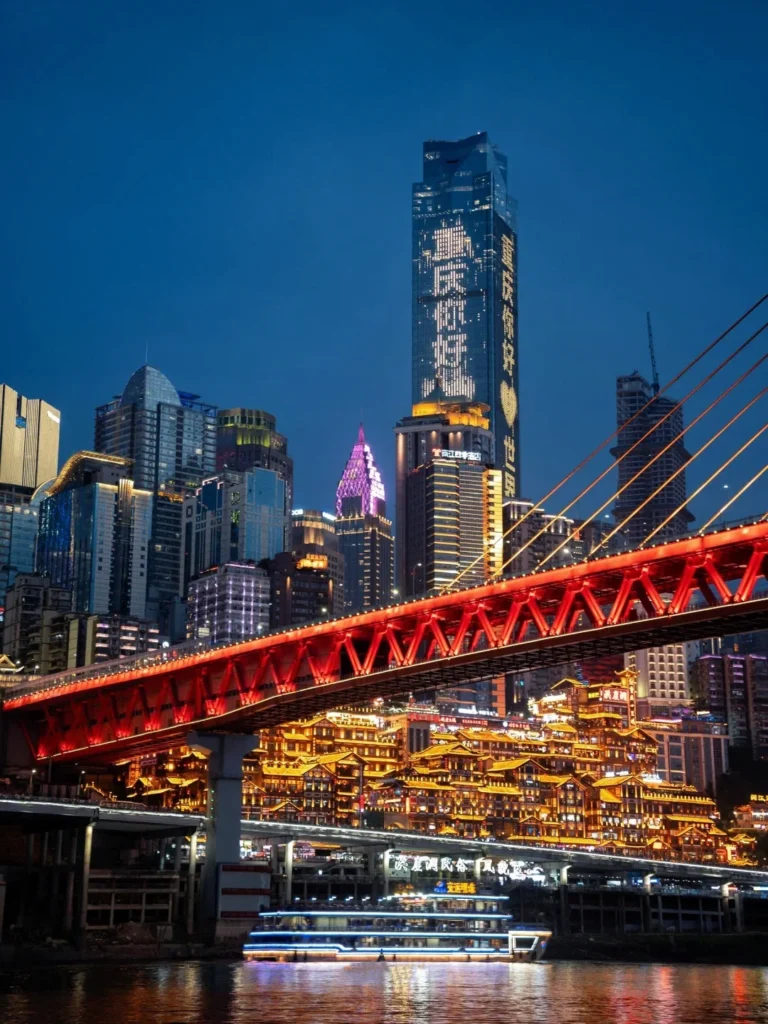
For the city’s most famous illuminated cliffside view, read our Hongyadong Chongqing guide.
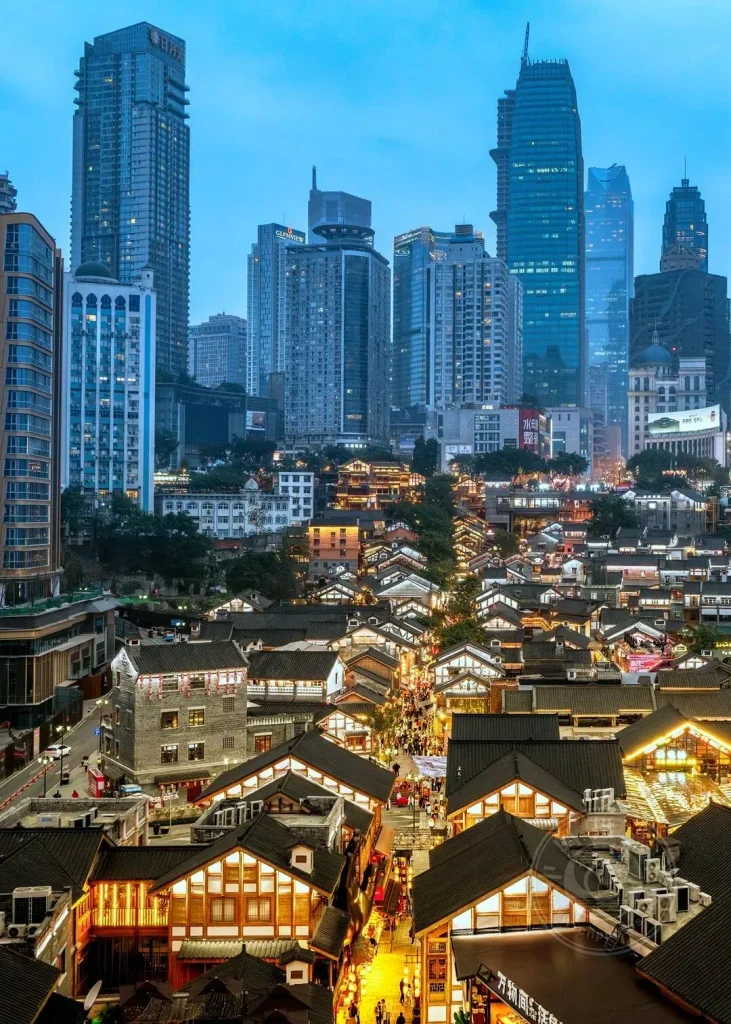
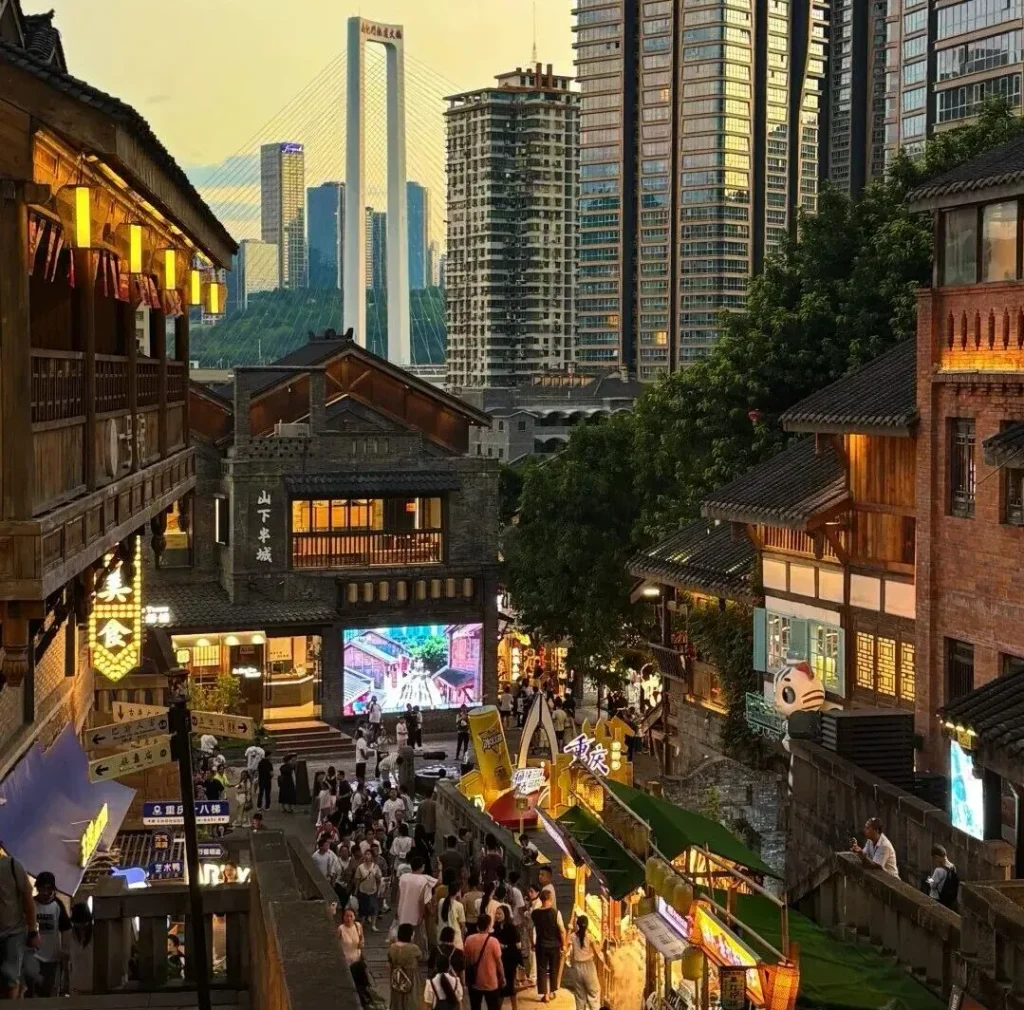
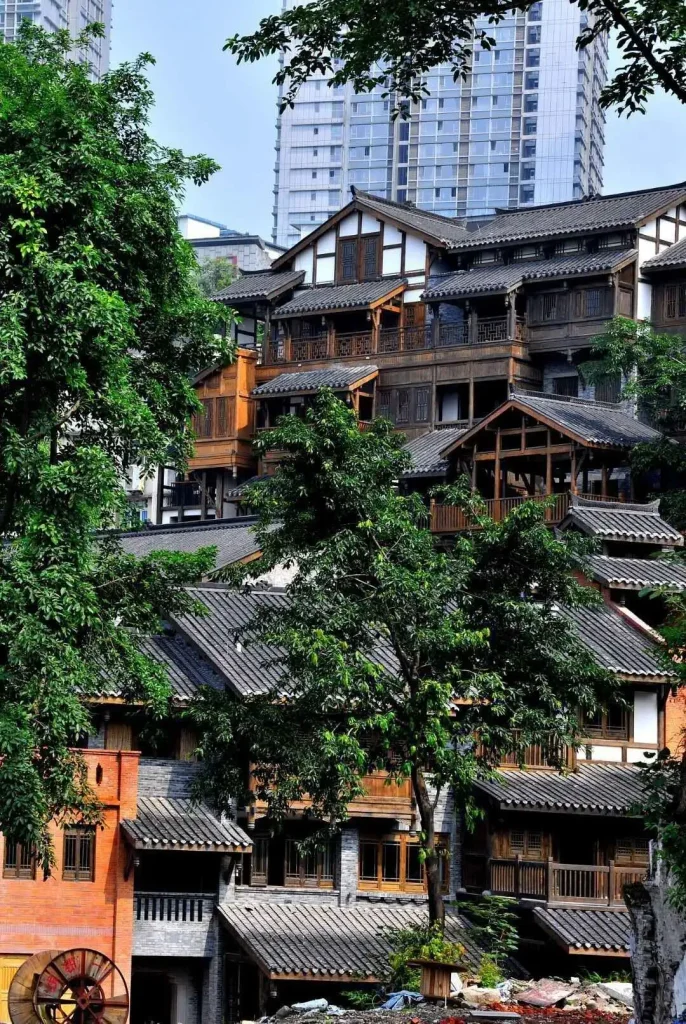
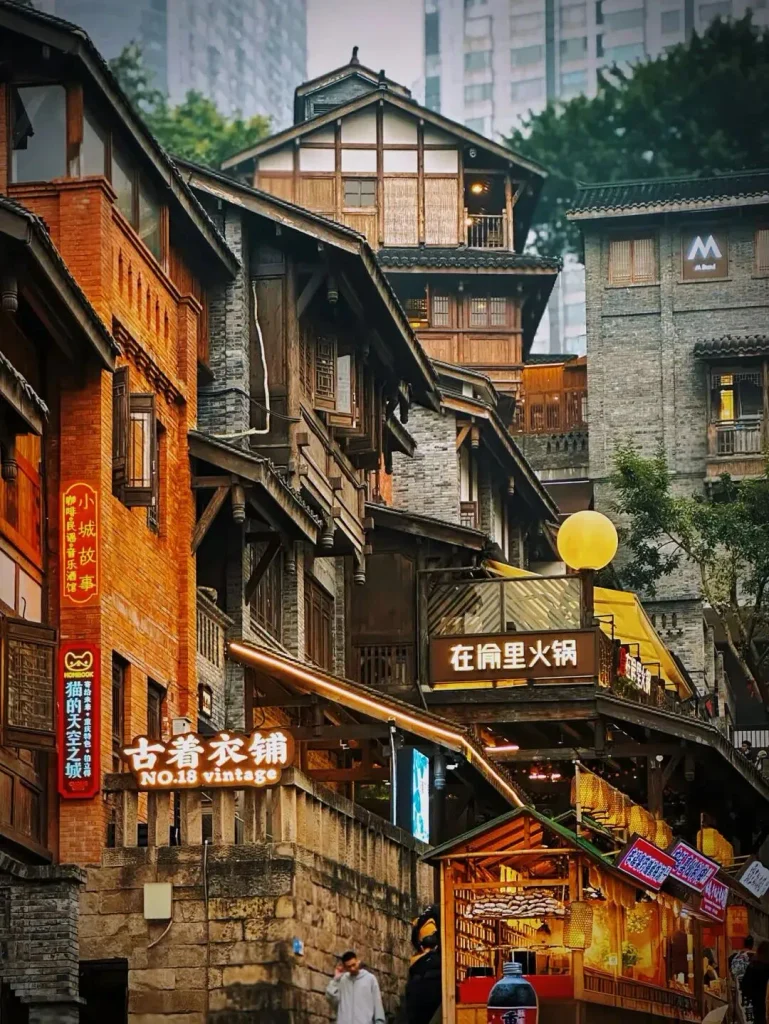
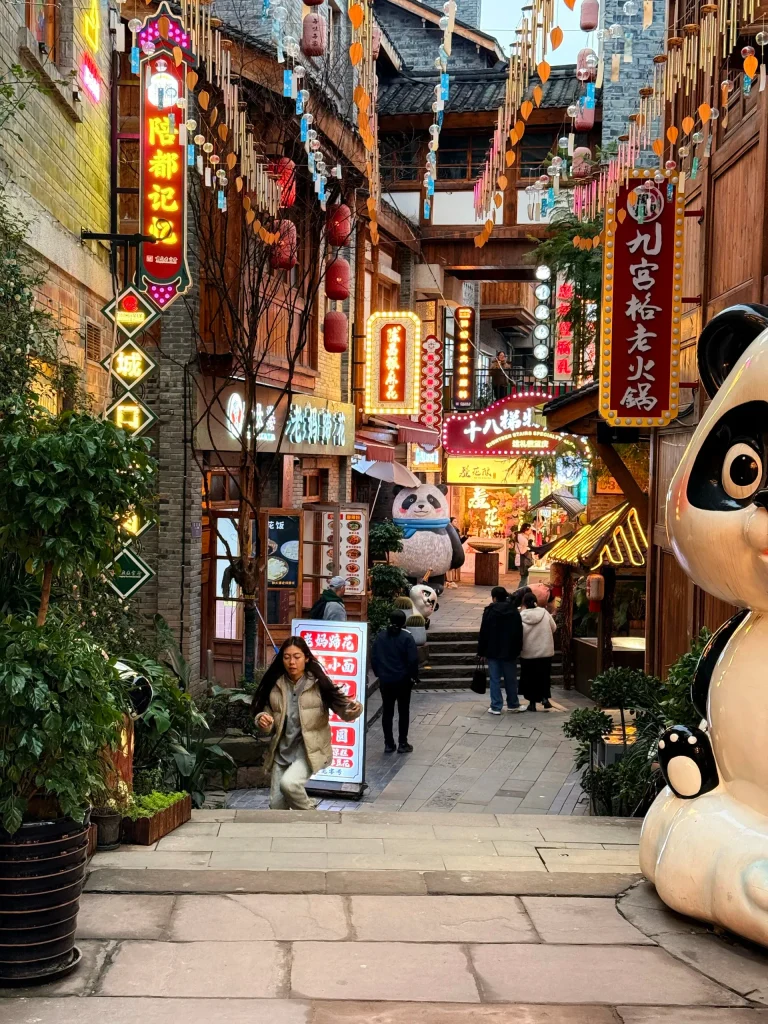
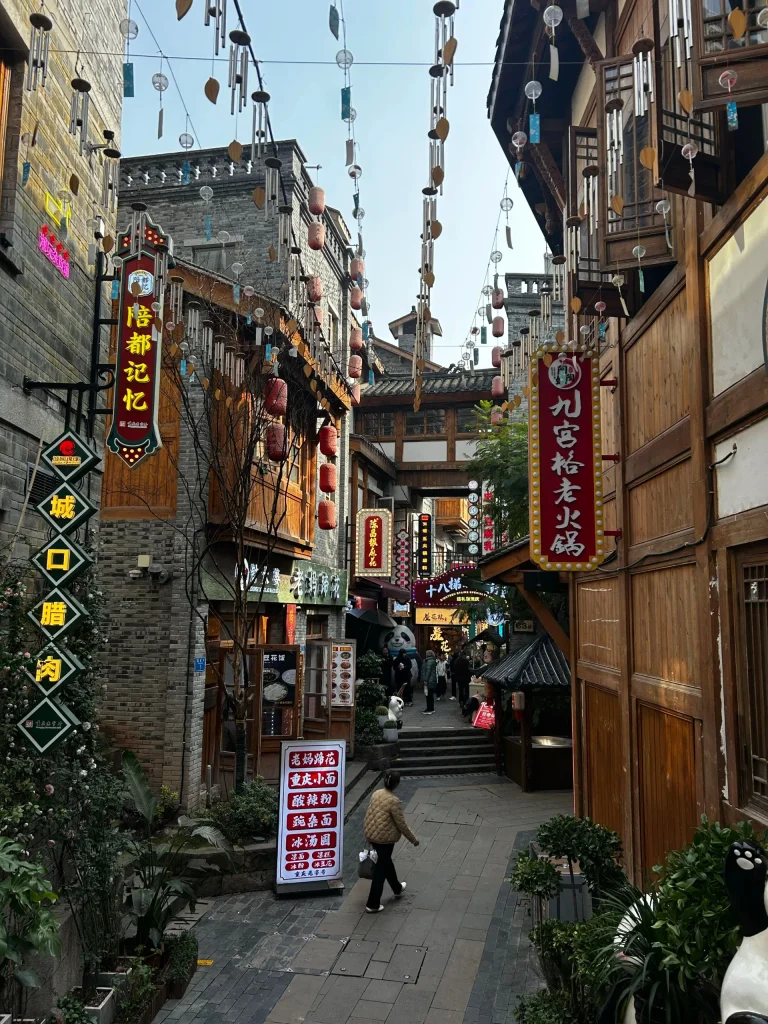
Best for: First-time visitors who want a compact, photogenic, and free introduction to Chongqing’s layered cityscape. Also good for travelers with 2–3 hours to spare near Jiefangbei.
Skip if: You are looking for an untouched, pre-commercialization old street. Shibati was reconstructed and reopened in 2021. For a more raw experience, choose Shancheng Trail. Also skip if you absolutely cannot handle stairs — even the downhill route has many steps.
The single most common mistake visitors make is entering from the wrong side. Here is the route that minimizes unnecessary climbing.
Start: Jiaochangkou Station, Exit 11. Walk roughly 2–3 minutes to the North Entrance. An elevator provides access to the upper viewing area.
If you rely on English-language mapping, remember that navigation apps behave differently in mainland China. Our guide to the best navigation apps for foreign travelers in China explains the easiest options before you arrive.
Walk order (all downhill or flat):
Total walking time: About 40 minutes without stops. With photos, food, and museum visits, plan for 2–3 hours.
Elevator shortcuts: If you or someone in your group gets tired, use the elevators and escalators around the North Entrance, Ancient Well Square, and mid-level areas rather than forcing yourself to complete every staircase.
This is the default option for most visitors. It covers the main staircase, the observation deck, Ancient Well Square, and the best photo spots.
The route: Jiaochangkou Station Exit 11 → upper viewing area → walk downhill along the main stone staircase → Ancient Well Square → pass the “From Your Whole World Passing By” movie wall → exit at the lower city side.
What you’ll see: The main staircase descends sharply through the hillside, framed by traditional-style tile-roofed buildings. At the bottom, you emerge into the modern lower city. The contrast between historic street geometry and modern Chongqing is the main attraction.
Photo spots along this route:
Cost: Zero. No general admission ticket or mandatory purchase is required for the public street area.
Trade-off: You’ll see the main attractions but miss some of the cultural sites, teahouse experiences, and nighttime atmosphere. If you only have one hour, this is the right choice.
This route adds the museums, wartime tunnel memorial, and a teahouse visit. It requires more time and some optional spending, but it gives you more context for why Shibati matters beyond the photos.
What to add to the classic route:
Cost breakdown:
Trade-off: The museums and cultural stops add roughly 1–1.5 hours. If you have already seen Sichuan opera elsewhere, the teahouse is optional. The Big Tunnel memorial is the most historically significant stop on this route.
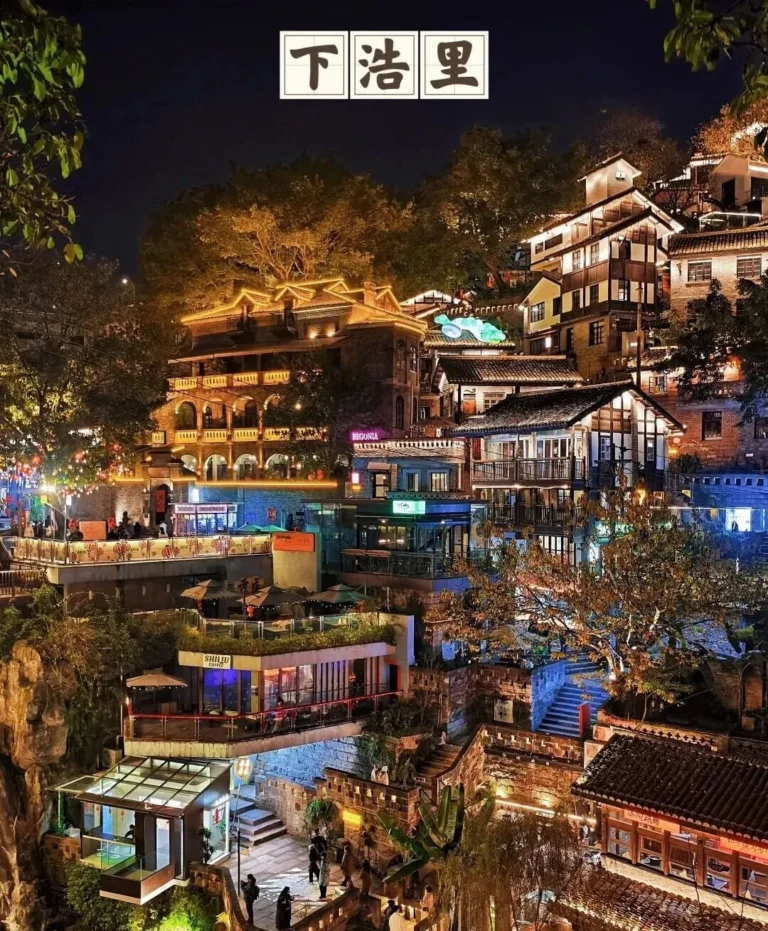
Shibati looks particularly atmospheric after dark. Red lanterns along the stairways create a warm, layered glow, while modern high-rises behind the traditional-style roofs produce the old-meets-new contrast the area is known for.
Timing:
If your Chongqing dates overlap a national holiday, check the China public holiday calendar and crowd guide before deciding when to visit.
For more night-view options beyond Shibati, compare the viewpoints in our Chongqing Night View guide.
Food options:
Photo spots at night:
Cost: Around 20–80 RMB for snacks and drinks. A full hotpot meal costs considerably more.
Trade-off: The night route gives you the strongest visual atmosphere, but individual shops, restaurants, and performances do not all follow the same closing time.
If you only have one afternoon and evening in central Chongqing, combining Shibati with nearby attractions is one of the most efficient ways to experience the city’s old streets, mountain-city landscape, and famous night views:
Shancheng Trail (daytime) → Shibati (late afternoon to evening) → Jiefangbei (night)
The sequence:
Total walking: Expect several kilometers once detours inside both historic areas are included.
Trade-off: This is a full afternoon-to-evening commitment. If you are not a strong walker, skip Mountain City Trail and do only Shibati + Jiefangbei.
Shibati’s main staircase is made up of stone steps and is not wheelchair-friendly. However, elevators, escalators, and flatter commercial platforms allow visitors with limited mobility to experience parts of the district without completing the main stairway.
Practical approach:
What you can experience more easily:
What may be difficult or inaccessible:
Toilet note: Accessible toilets are available in the district, but facilities and routes can change as individual buildings are repurposed. Check the site map or ask staff for the nearest accessible restroom.
Best time: Weekday mornings or other quieter periods, when elevators and narrow routes are less crowded.
Trade-off: Visitors with limited mobility can still experience Shibati, but the full vertical stone-stairway walk — one of the defining features of the area — may not be practical.
Shibati has two kinds of eating: sit-down meals and walk-and-eat snacks. Prices are generally higher than ordinary neighborhood eateries but still manageable for a central tourist district.
For a broader introduction to what to order beyond Shibati, see our Chongqing Food Guide for Foreigners.
TripChina.me Insight: Do not feel obligated to buy packaged Chongqing souvenirs inside Shibati. Compare prices with supermarkets or ordinary shops elsewhere in the city before buying.
| Location | Best Angle | Best Time |
|---|---|---|
| Jiaochang Lansheng Observation Deck | Shoot downward along the stairway, with traditional-style roofs in the foreground and skyscrapers behind | Late afternoon / dusk |
| “Chongqing” brick wall near Exit 11 | Shoot upward from a low angle to make the characters look larger | Daylight |
| Main staircase | Use the stairs as leading lines, shooting either upward or downhill | Late afternoon |
| Ancient Well Square | Wider street scene with stone paving and historic details | Daylight / early evening |
| Former French Consulate | Yellow exterior and architectural details | Daylight |
| Main street after dark | Lanterns + modern skyline from an elevated or mid-level platform | After dusk |
Many visitors expect an untouched old street. Shibati is not that.
Large parts of the old neighborhood were redeveloped, and the current traditional-style district was reconstructed beginning in 2017. The first major sections reopened on September 30, 2021, with later phases subsequently opening.
The project retained the historic “seven streets and six alleys” (七街六巷) street pattern and Chongqing’s distinctive steep terrain. Historic remains and selected older structures coexist with reconstructed traditional-style buildings, new commercial spaces, restaurants, cultural venues, and visitor facilities.
That distinction matters.
Shibati is best understood as a reconstructed historic district built around a genuine old mountain-city street pattern and surviving historic elements, rather than an untouched residential neighborhood.
In 2025, Shibati Traditional Style Area was officially included in China’s fourth group of national-level tourism and leisure districts.
The attraction today is the combination: old street geometry, steep elevation changes, historical memory, reconstructed architecture, food, lighting, and modern Chongqing rising immediately around it.
Many visitors come to Chongqing looking for dramatic viewpoints and famous night scenes. Shibati offers something different: a short walk that explains why Chongqing is called a “mountain city.”
The attraction is not a single building or photo spot. It is the experience of moving vertically through the city — from historic stone steps and traditional streets to modern skyscrapers within minutes.
If you leave late or do not want to climb back toward a metro entrance, ride-hailing is a useful backup. Foreign visitors unfamiliar with the app can check our guide to using DiDi in China without a Chinese phone number.
Public restrooms are available at multiple points within the district. Facilities near major entrances and commercial areas are the easiest to locate.
Expect a mix of squat and sitting toilets. Carrying tissues is useful when traveling anywhere in China, particularly during busy holiday periods.
This article is part of the Chongqing Travel Guide Hub.
No. General access to the Shibati Traditional Style Area is free. Individual performances, restaurants, teahouses, exhibitions, or special experiences may charge separately.
It depends on what you want.
Choose Shibati for walking, history, food, and the contrast between old-style streets and modern Chongqing. Choose Hongyadong if your main priority is Chongqing’s famous illuminated night skyline.
Wear flat, non-slip shoes with good grip.
Stone stairs can be uneven and become slippery after rain. High heels and smooth leather soles are poor choices. In wet weather, take extra care on downhill sections.
Yes. They work well together.
Visit Shancheng Trail during daylight, then continue to Shibati in the late afternoon and stay into the evening. This gives you two different versions of old Chongqing: a quieter hillside walking route followed by a more polished and lively historic-commercial district.
The outdoor district remains accessible after dark, but individual businesses and indoor attractions follow their own opening hours.
For the best atmosphere without arriving too late for food or museums, visit in the late afternoon and stay through the first part of the evening.
Yes, but the stairs require attention, especially with younger children.
Families with strollers should use elevators and flatter sections where possible rather than trying to complete the entire main staircase.
Yes.
Shibati is one of central Chongqing’s major visitor districts, and weekend evenings and national holidays can bring very heavy crowds.
If crowd levels matter to you, visit on a weekday. For photography, earlier daytime periods are usually easier than the evening peak.
Do not plan your visit around guaranteed on-site luggage storage.
Shibati’s stairs make large suitcases inconvenient even if storage happens to be available nearby. Leave large luggage at your hotel, railway station, or a verified luggage-storage facility before visiting.
Public restrooms in the district are generally free to use.
Expect both squat-style and some sitting toilets, with accessible facilities around selected major areas. During busy periods, carrying your own tissues and hand sanitizer is useful.
The main tourist district is busy and well lit during normal evening visiting hours.
Solo travelers should still use ordinary city precautions: stay on the main visitor routes, watch your footing on stairs, keep valuables secure in crowds, and avoid wandering into quiet side areas late after businesses have closed.
Alipay and WeChat Pay are widely used by shops and restaurants in Chongqing, including tourist districts such as Shibati.
Foreign visitors can link supported international cards to major Chinese payment apps. Carrying some RMB cash as backup is still sensible in case of connectivity or app problems. If this is your first trip, set up payment before arrival using our guide to how foreigners pay in China with Alipay, WeChat Pay, cards and cash.
It is a popular photo stop associated with the Chinese film I Belonged to You (从你的全世界路过).
It is worth a quick stop if there is little or no queue, but it is not one of the main reasons to visit Shibati. If the area is crowded, prioritize the staircase viewpoints and the wider mountain-city scenery instead.
This guide draws on Chongqing municipal, tourism, and urban-development authorities, together with practical route planning for independent international travelers. Official records confirm that construction began in 2017, the ABC sections opened in September 2021, and the historic “seven streets and six alleys” urban pattern was retained. Later phases have since opened, and Shibati became a national-level tourism and leisure district in 2025. Restaurants, performances, indoor hours, and visitor facilities can change, so verify time-sensitive details locally.
TripChina.me creates practical China travel guides shaped by real local experience, helping independent travelers navigate transport, payments, food, neighborhoods, and the cultural details that make traveling in China easier and more meaningful. Find the guide for your destination at tripchina.me.