Our Location:
No. 99, Jiazi Road, Chengdu

 authorChris Lee
A hotel “500 metres from Jiefangbei” can still mean stairs, slopes and a confusing arrival with luggage. When deciding where to stay in Chongqing, the hotel entrance and actual walking route matter as much as the neighbourhood.
This guide compares the best areas to stay in Chongqing for first-time visitors, sightseeing, families and nightlife. Choose between Jiefangbei, Guanyinqiao and river-view locations, then check metro access, elevators, room categories and passport check-in before paying.
| Area | Best For | Accommodation Planning Range per Room/Night | Metro Convenience | View Potential | Main Booking Risk |
|---|---|---|---|---|---|
| Jiefangbei / Jiaochangkou | First-timers, short stays | RMB 300–700 for many mid-range options | Multiple useful stations; check the exit-to-door route | City / selected river views | Overstated views, shared elevators, complicated entrances |
| Nanbin Road / Danzishi | Couples, photographers | RMB 350–600 for some better river-view rooms | Varies substantially by section and property | Skyline across the river | Underestimating the journey to sightseeing areas |
| Guanyinqiao | Food, nightlife, value | RMB 200–500 for many mid-range options | Good around useful station exits | City | Nightlife noise |
| Shapingba / Ciqikou | Budget, western-city visits | RMB 150–350 for many mid-range options | Good around Shapingba; check individual Ciqikou locations | Limited | Longer trips to central Yuzhong |
| Chaotianmen | Luxury, river-confluence views | RMB 800–2,000+ for upscale stays | Line 1 access; building routes vary | River / skyline | Multi-stage elevator and building access |
| Airport area | Overnight transit | RMB 150–300 for basic options | Depends on the hotel, terminal and shuttle | Not the priority | Too much commuting for a sightseeing stay |
These are earlier budgeting references, not live quotes or directly comparable hotel categories. Room quality, size, windows, cancellation terms and demand can change the price substantially.
Fast decision: First trip? Start with Jiefangbei/Jiaochangkou. Want skyline views? Compare individual south-bank properties. Want food and nightlife? Consider Guanyinqiao. Early flight only? Check an airport-area stay.
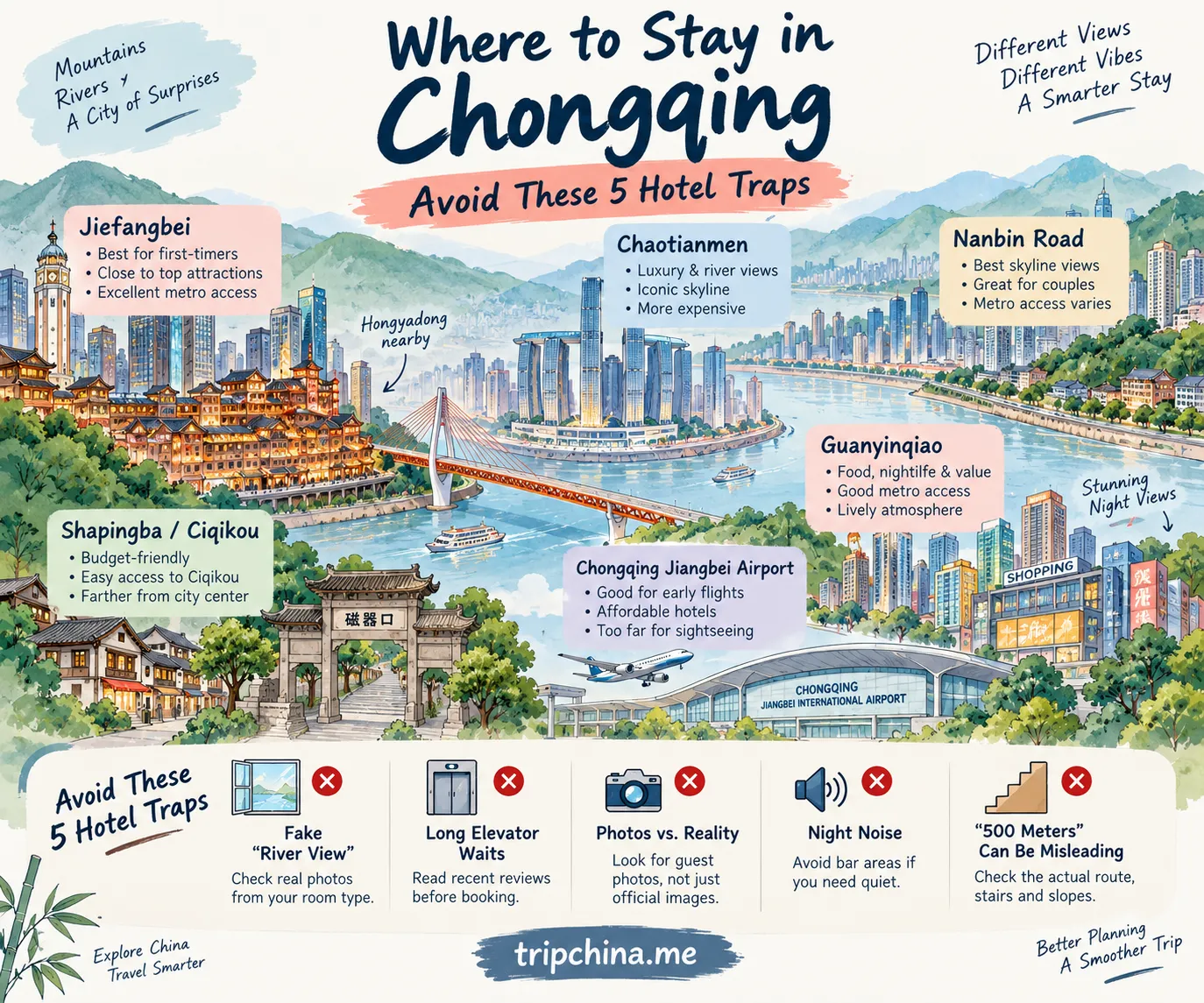
Chongqing is one of the Chinese cities where a simple map distance can be especially misleading for pedestrians. Roads sit at different elevations, buildings connect multiple street levels, and a route that looks short may involve stairs, steep slopes or a long detour.
A listing described as “500 metres from Jiefangbei” therefore tells you surprisingly little about what happens when you arrive with a 20-kilogram suitcase.
Before booking, check the actual walking route to the nearest metro entrance, not just the straight-line distance. Search recent guest reviews for:
Local directions can also be more useful than blindly following a walking route on your phone. If an entrance makes no sense when you arrive, ask the hotel to send its Chinese address, nearest landmark and exact street-level entrance.
Before booking, use our guide to navigation apps that work in China to check the route between your hotel entrance, metro exit and sightseeing stops.
Use our Chongqing travel guide to identify your main sightseeing priorities before choosing which area to stay in.
If you’re looking for the best place to stay in Chongqing for sightseeing, start with Jiefangbei or Jiaochangkou, then check the hotel’s actual entrance and transport connections. They work particularly well when you have only two or three days and want to avoid repeated journeys across the city.
Bayi Food Street is close to central Jiefangbei. Hongyadong, Shibati and the Yangtze River Cableway are also within the wider central sightseeing zone. Elevation changes mean the actual walking effort varies by hotel entrance and route.
Metro access is another advantage. Jiaochangkou serves Lines 1 and 2, while Xiaoshizi serves Lines 1 and 6. Linjiangmen on Line 2 is useful for other parts of the area.
Check the current rail map and the specific exit you would use before booking.
Earlier planning ranges put some budget rooms around RMB 150–250, many mid-range options around RMB 300–700, and better high-floor or upscale rooms around RMB 500–1,200+. These are not guaranteed prices.
You will find everything from basic domestic chains to upscale hotels and serviced apartments.
Properties carrying names such as Atour, Orange and Asiam International illustrate the range travellers encounter. A brand name alone does not confirm the entrance, room condition, overseas-card acceptance or view of a particular property.
For a first trip, shortlist hotels that can clearly show:
For a river-view room, do not book based only on the words “river view.” Some high-floor rooms have impressive sightlines; others offer an angled or partially obstructed view.
Ask for a recent photograph or short unfiltered video from the exact room category you are booking.
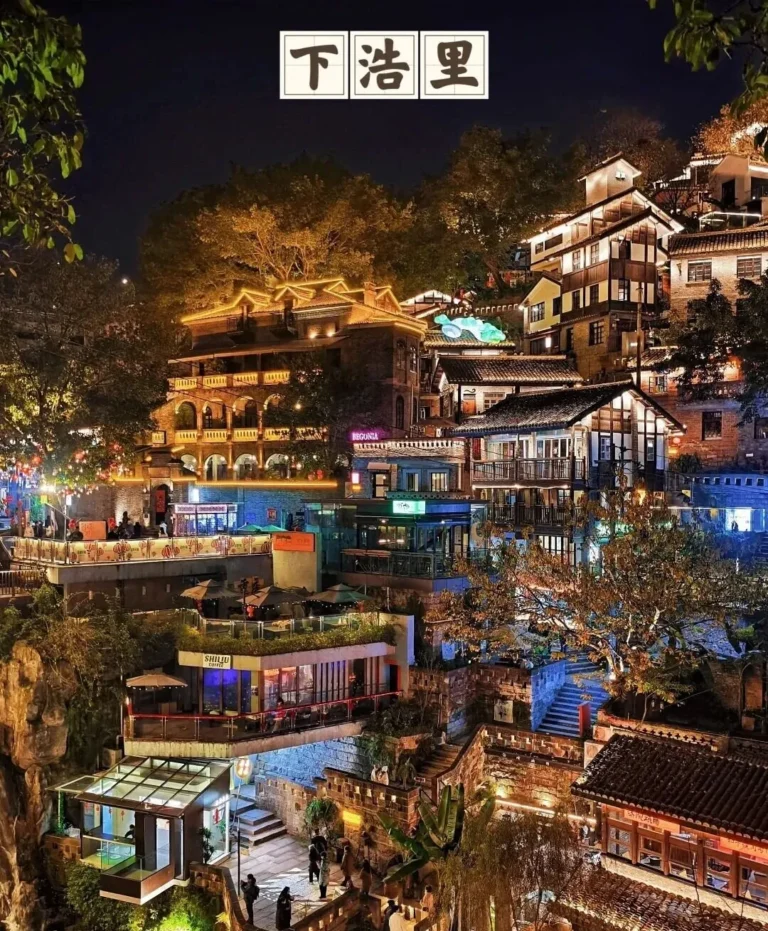
Hotels near Hongyadong Chongqing are not automatically the easiest base. A nearby map pin can still involve an uphill return, a detour or an entrance on a different road level. Check the route you will actually use after sightseeing.
The biggest disadvantages are crowds, noise and complicated access. Some properties also share elevators with residents or other businesses.
Fog and poor visibility can reduce the view you paid for. Treat a famous sightline as a room feature to verify, not a guarantee of clear weather.
For most first-time visitors, central convenience still wins—but only after checking the actual door-to-destination route.
| Priority | Jiefangbei / Jiaochangkou | Guanyinqiao |
|---|---|---|
| First short sightseeing trip | Usually the easier starting point | Requires more travel to central Yuzhong sights |
| Food and shopping | Plenty of options, including tourist-heavy streets | Strong choice for a food-and-shopping-focused stay |
| Nightlife | Convenient evening sightseeing | Useful for late-night dining and entertainment |
| Returning to the room between sights | Practical when most plans are on the peninsula | Less convenient if your whole day is in Yuzhong |
| Value | Compare room quality carefully | Worth checking for better value on your dates |
| Main risk | Paying for location or views without checking access | Booking too close to late-night noise |
Choose Jiefangbei for a short first visit centred on the classic Yuzhong sights. Choose Guanyinqiao when food, shopping and nightlife there are priorities. Compare actual room prices and journeys rather than assuming either area always offers better value.
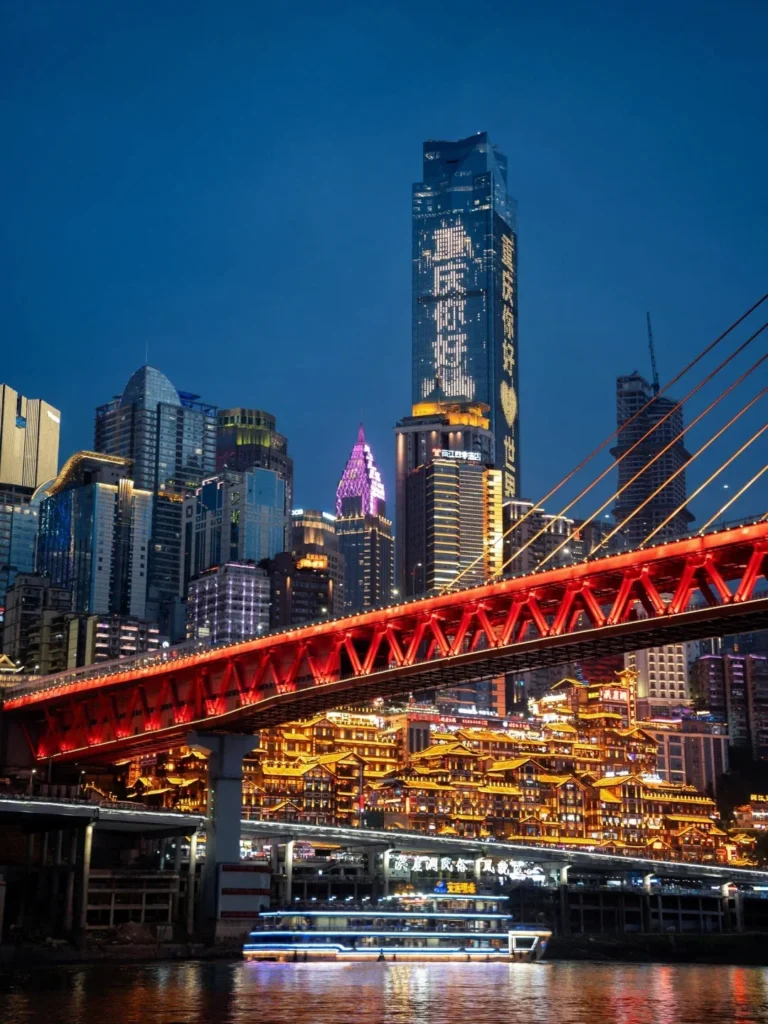
Stay on the south bank if seeing Yuzhong’s illuminated skyline from across the river matters more than being able to walk to your main sightseeing stops.
This can be a strong accommodation choice for couples and photographers. After sightseeing in Yuzhong, you can return across the river for the evening view.
Earlier planning ranges put some standard rooms around RMB 150–350, better river-view rooms around RMB 350–600, and upscale options around RMB 600–1,000+.
The catch is transport. Nanbin Road is long, and Danzishi is not interchangeable with every other part of the waterfront.
| South-Bank Location | Why Consider It? | What to Check |
|---|---|---|
| Longmenhao / Shangxinjie surroundings | Old-street atmosphere and potential access to Shangxinjie rail connections | Elevation between the riverfront, station and hotel; stairs inside heritage areas |
| Other Nanbin Road hotel stretches | Riverfront stays and views back toward Yuzhong | Exact station distance, vehicle access and whether walking is practical |
| Danzishi / Changjiahui surroundings | Riverside atmosphere and skyline-oriented stays | Route to Danzishi station, the hotel entrance and cross-river journeys |
Do not assume “near Line 6” means a level walk directly from the riverfront. Do not assume every Danzishi property has the same transport convenience.
A property near a useful station entrance can work very differently from another hotel carrying the same broad “Nanbin Road” location label.
Choose Jiefangbei when your priority is a short first trip with frequent stops around central Yuzhong.
Choose Nanbin Road when the hotel stay and view are part of the experience, and you accept additional transport.
Some Nanbin Road-to-Jiefangbei taxi journeys may take around 15–30 minutes in lighter traffic, but this is not a reliable allowance for the entire waterfront. Starting point, bridge choice, evening congestion and special traffic controls can make the journey substantially longer.
Use a live route estimate for your hotel at the time you expect to travel.
Some older high-rise rentals also receive complaints about inconsistent water pressure. This is a property-level issue rather than a Nanbin Road rule, so recent reviews matter more than the neighbourhood name.
Before paying for a skyline room, compare its orientation with the viewpoints in our Chongqing night-view guide and decide whether a public viewpoint could meet your needs instead.
Guanyinqiao is a strong alternative if you do not need to sleep beside Chongqing’s most famous attractions.
The area has major shopping, restaurants, late-night food and nightlife. It is particularly attractive for food-focused trips, solo travellers and repeat visitors.
Earlier budget references ranged around RMB 100–280, with many mid-range options around RMB 200–500. The lowest advertised prices require extra checking: they may represent a small room, a windowless category, a hostel bed, a promotion or restrictive booking terms. Do not compare them directly with a standard private room.
Guanyinqiao is served by Lines 3 and 9. Some rail journeys toward the Jiefangbei area may take around 20–30 minutes between selected stations, depending on the route. Add walking, station access, waiting and any transfer time.
Choose a hotel convenient for the places you want to visit, but avoid assuming that a room directly above late-night venues is the best choice.
Search recent reviews for:
Ask whether a quieter room faces away from the street or entertainment venue. A high floor alone does not guarantee quiet.
If food is shaping your hotel choice, use our Chongqing food guide to plan the meals and neighbourhoods you want to explore before committing to a base.
Shapingba makes sense for travellers prioritizing price, university-district energy, the railway station or access to Ciqikou.
It makes less sense if almost everything on your itinerary is in central Yuzhong.
Earlier planning references put basic accommodation around RMB 80–220 and many mid-range options around RMB 150–350. Check whether the lowest price is for a private room or a bed, and whether windows and a private bathroom are included.
Shapingba has connections involving Line 1, Line 9 and the Loop Line. A 30–40-minute rail allowance toward parts of central Yuzhong should be treated only as a rough starting point. Your actual station pair and hotel access can change the journey.
Be more cautious about accommodation inside the historic core.
Stone steps and crowds can make luggage awkward. Some small properties may be noisy or humid, and holiday congestion can complicate vehicle pickup and drop-off.
That does not make every Ciqikou guesthouse a poor choice. The atmosphere simply needs to justify the inconvenience.
Check our Ciqikou walking routes and visitor guide before booking inside the old town; a planned visit may suit you better than an overnight stay.
Chaotianmen occupies the tip of the Yuzhong Peninsula near the meeting point of the Yangtze and Jialing Rivers.
Raffles City, the landmark mixed-use complex with towers, a shopping mall and accommodation, has made this one of Chongqing’s most recognizable upscale hotel areas.
Earlier planning references put some mid-range options around RMB 450–700, while luxury rooms entered the RMB 800–2,000+ range. Premium properties and suites can cost substantially more.
This area works best for couples, special-occasion trips and travellers willing to pay for architecture and river views.
The hidden inconvenience is vertical circulation. Large mixed-use developments can require elevator transfers between street level, hotel lobbies, malls and guest floors.
Chaotianmen is on Line 1. Central Jiefangbei is relatively close, but the real walking effort depends on which exit and elevation you start from.
Ask the property for hotel arrival instructions, not only directions to the shopping mall.
For a Chongqing hotel near the metro, check the specific station exit and the route to reception. A short map distance does not establish whether the walk is level, step-free or manageable with luggage.
Being “300 metres from a station” can mean a level pavement, a steep slope, a footbridge or several flights of stairs.
Before booking, ask:
Prioritize a hotel with a confirmed step-free route from vehicle drop-off to reception and your room. If you plan to use the metro, check lift access at the specific station exit as well as the walk outside.
No broad area recommendation can guarantee a stair-free visit.
When choosing where to stay in Chongqing with family, prioritize easy arrivals, suitable beds and manageable daily journeys. Older travellers, stroller users and wheelchair users should also confirm the exact step-free route and room facilities.
| Need | What to Confirm With the Property |
|---|---|
| Suitcases or stroller | Step-free path from vehicle drop-off to reception and room |
| Wheelchair | Door widths, lift dimensions, bathroom layout and any thresholds |
| Older travellers | Short arrival route, reliable lifts and nearby food options |
| Young children | Bed configuration, occupancy rules, window safety and noise |
| Frequent breaks | Easy return from your main sightseeing area |
| Medical or mobility needs | Whether staff can assist with the specific support required |
A hotel labelled “accessible” may not answer all these questions. Request photographs or measurements when a particular feature is essential.
For a first sightseeing trip, start by checking suitable central hotels around Jiefangbei/Jiaochangkou. For a hotel-focused stay, other areas may work well if vehicle access is straightforward.
They can be, particularly when you need separate sleeping space, laundry or a kitchen.
Confirm that the facilities belong to the booked unit. “Laundry available” may mean shared equipment, and a kitchen photograph does not establish that cooking is permitted or utensils are provided.
A serviced apartment with staffed reception can be a different experience from a privately managed unit in a residential tower.
Only if you have a very late arrival, very early departure or an overnight connection.
Earlier airport-area room references were roughly RMB 150–300, but staying there to save money on a sightseeing trip can add substantial commuting.
Allow a substantial journey to central sightseeing areas. Rail travel may take around an hour or longer once terminal access, waiting, transfers and the final walk are included.
Confirm:
Compare the arrival and departure options in our Chongqing airport-to-city transport guide before deciding whether to stay near the airport or continue to your sightseeing base.
These problems are not unique to Chongqing, but the city’s terrain and high-rise accommodation make their consequences especially important.
The best river-view hotels in Chongqing for your trip should offer both a clearly described view and practical access. Compare the exact room category, orientation and entrance before paying a premium. “River view” may describe anything from a panoramic window to a narrow slice of water between buildings.
Before paying a premium, ask for an unfiltered current photograph or video from the exact room type.
Check:
A limited view is not automatically a scam. The issue is whether the booked room is represented accurately.
Some B&Bs and short-term rentals occupy residential or mixed-use towers and share elevators with residents, offices or other accommodation businesses.
Waiting times can become frustrating during busy periods.
Search recent reviews for elevator / 电梯, then ask:
This matters especially for families, early departures and anyone who expects to return to the room during the day.
Wide-angle photography can make small rooms look much larger.
Focus on recent guest-uploaded photographs showing the bathroom, windows, corridors and building entrance.
If almost every image comes from the property itself, seek more evidence before booking.
Check the stated room area and whether it includes unusual layouts, mezzanines or shared spaces.
Hongyadong-facing rooms, nightlife areas and accommodation inside popular old streets can experience evening noise.
The actual risk depends on the building, orientation, glazing and nearby activity—not simply the area name.
Look for recent comments about noise / 噪音 and soundproofing / 隔音.
Ask about a quieter room category before paying rather than relying on a special request that the hotel has not confirmed.
This is the Chongqing mistake that catches even experienced travellers.
Open the actual walking route. Check stairs, slopes and the correct building entrance.
If several guests complain about finding the property or carrying luggage uphill, take those comments seriously.
For transport, navigation and sightseeing problems beyond accommodation, read our Chongqing travel mistakes guide.
| Budget per Room/Night | What You May Find | What to Check |
|---|---|---|
| Under RMB 200 | Basic hotels, hostels and promotional rooms | Private room vs bed, windows, bathroom, building condition |
| RMB 200–400 | Many practical mid-range options | Entrance, station route, room size and cancellation terms |
| RMB 400–800 | Better locations, larger rooms, upscale properties and selected river views | Whether the specific room justifies the premium |
| RMB 800–2,000+ | Luxury properties, premium rooms and higher-end amenities | View category, service inclusions and total price |
These are budgeting ranges from earlier research, not fixed rates. Prices change by date, room category and demand.
One of Chongqing’s advantages is that you do not necessarily need a luxury budget for a comfortable room.
A well-chosen RMB 200–400 hotel near a useful metro entrance can make a trip easier than a more expensive view apartment hidden behind a difficult arrival route.
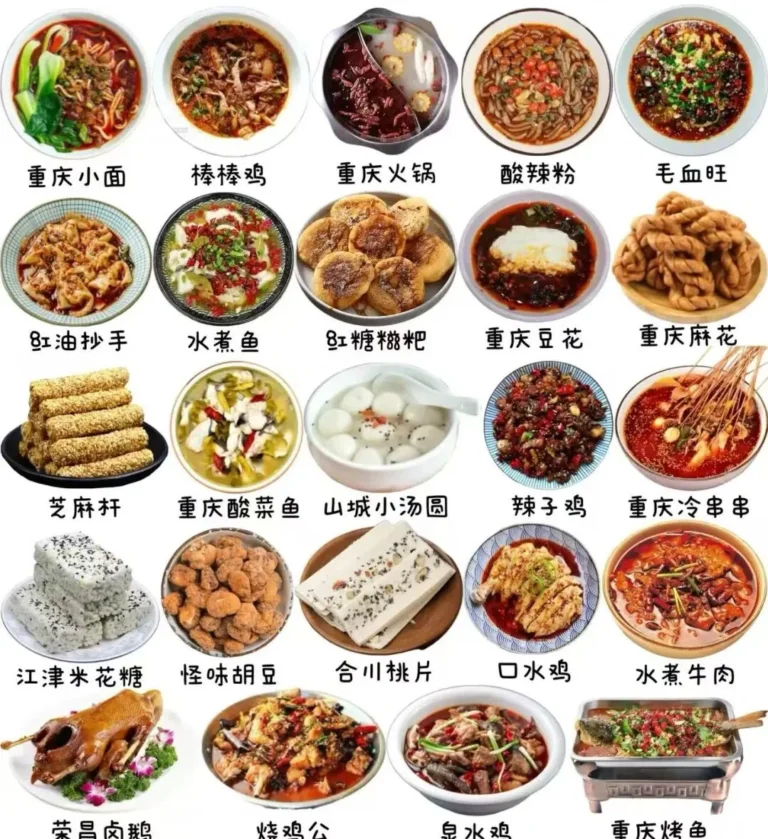
And yes, the money you save can buy a remarkable amount of hotpot.
It can be worth paying more when:
Consider skipping the upgrade when:
Compare the exact price difference for your dates. Do not assume every high-floor room is worth more.
Chongqing can experience severe summer heat.
In July and August, prioritize strong air conditioning, a short and simple route to transport, and a hotel you would be comfortable returning to during the hottest afternoon hours.
Check recent reviews for cooling performance rather than assuming every small homestay cools equally well.
Chinese public holidays are another major variable. Popular accommodation can rise sharply in price and sell out.
For major holiday periods, book as early as practical and review cancellation terms. Check China’s public holidays and busiest travel periods before comparing hotel rates.
China’s accommodation guidance says providers and platforms should not impose improper restrictions on overseas guests.
For foreigners booking hotels in Chongqing, confirm passport check-in, reception hours and registration arrangements before paying. Procedures and staff experience can vary, especially at small properties and privately managed apartments.
Avoid treating “foreigners accepted” as a substitute for checking the actual room and building.
Our guide to booking hotels in China with a foreign passport explains how to confirm check-in procedures, room details and booking conditions before paying.
Hotels handle accommodation registration for their foreign guests. Bring your original passport or other accepted document.
For accommodation outside hotels, registration is generally required within 24 hours of arrival.
Chongqing was included in the online-registration pilot beginning March 20, 2026. Channels include the NIA Government Service Platform, NIA 12367 app, and its WeChat or Alipay mini-programs. Offline registration remains available.
The official guidance says initial online registration should be completed with the host’s assistance. Do not assume a first-time guest can complete everything without the host’s property information and cooperation.
Ask whether the accommodation is operated as a hotel or a non-hotel residence. A booking platform’s “apartment” label does not answer that question.
Check our China accommodation registration guide to understand the difference between hotel registration and a stay in a non-hotel residence.
Do not assume that every hotel terminal accepts every overseas card.
Confirm separately:
Online prepayment does not necessarily remove the need for an on-site deposit.
A chain name alone does not guarantee acceptance at a particular property. For small rentals, also confirm that payment requests come through the agreed booking process.
Prepare a backup with our guide to paying in China with overseas cards, mobile payments and cash, and confirm the property’s deposit arrangements separately.
Before confirming, check these ten points:
| Check | What You Need to Know |
|---|---|
| 1. Exact location | Chinese name, address, building and entrance |
| 2. Arrival route | Correct metro exit or vehicle drop-off |
| 3. Stairs and slopes | Whether you can move luggage without carrying it |
| 4. Elevators | Shared lifts, transfers and access to reception |
| 5. Room category | Size, windows, beds, bathroom and occupancy |
| 6. View | Exact orientation and any obstruction |
| 7. Noise and cooling | Recent reviews for your likely room position and season |
| 8. Check-in | Passport procedure, registration and late arrival |
| 9. Payment | Full price, deposit, accepted methods and cancellation |
| 10. Luggage | Storage before check-in or after checkout, collection deadline and any charge |
If the hotel cannot clearly explain the entrance, ask for a short arrival video.
A hotel is generally the easier first-trip choice because reception, luggage handling, access instructions and registration support are more straightforward.
Apartments can provide more space, but check shared lifts, reception availability, water pressure, cleaning arrangements and registration.
A staffed serviced apartment can be a useful middle option.
If your Chongqing river-view room does not match the booked description, document the room and view immediately with photographs or video. Contact the property and booking platform with the listing and room-category confirmation.
Ask first for a room matching the booked category. If that cannot be provided, use the platform’s dispute-resolution process.
Keep the original listing and written confirmation of the promised view.
Prioritize a property with a straightforward entrance and a manageable route from transport.
If the walking approach involves steep stairs, compare a taxi with using DiDi in China and send the driver the hotel’s Chinese name and confirmed vehicle entrance.
Ask whether the vehicle can reach the actual entrance. A map pin at the building’s opposite side can still leave you with a climb.
Ask the property directly.
Confirm storage hours, any charge, whether valuables are excluded and the latest collection time. Private apartments may have no staffed storage.
Early check-in and late checkout are separate requests. Both depend on availability and may cost extra; luggage storage does not guarantee either.
If using an outside storage service, verify the exact location and opening hours before travelling there.
To find quiet hotels in Chongqing city centre, read recent reviews for the specific building and room orientation. Check for nearby bars, busy roads and construction rather than relying only on the neighbourhood’s reputation.
Ask about rooms away from nightlife venues, busy roads and construction. Do not assume every room in a central hotel has the same noise exposure.
A confirmed quieter room can be more useful than a general “high-floor request.”
Save the hotel’s Chinese name, address and phone number before arrival.
Translation apps help with routine questions. Screenshot the booking confirmation and room category so you can show exactly what you reserved.
Send important questions in writing before booking, especially about steps, arrival after reception hours and document requirements.
English-language platforms such as Trip.com, Booking.com and Agoda are commonly used, although inventory, payment and support options differ.
Whichever you choose, prioritize recent reviews, clear cancellation terms and a property that can confirm your exact room category and check-in requirements.
Bring your original valid passport or another accepted identity or international travel document.
Keep it accessible for check-in rather than packing it inside stored luggage.
For one night in Chongqing, choose your base around your main purpose: a short sightseeing visit, an early flight or a specific train departure.
For a short sightseeing stay, Jiefangbei/Jiaochangkou is a practical starting point. For an early flight, check an airport hotel’s terminal access and shuttle schedule.
For a train connection, confirm the exact departure station before choosing a nearby hotel. Chongqing North, Chongqing West and Shapingba are different stations.
For a first trip, Jiefangbei or Jiaochangkou remains the most practical starting point. You trade some quiet and potential savings for a central base that can reduce unnecessary travel.
Choose the south bank when the skyline is part of the stay, Guanyinqiao when food and nightlife matter more, Shapingba when western-city plans or budget dominate, and Chaotianmen when you want an upscale riverfront experience.
The most important Chongqing booking rule is simpler than all those choices:
Do not book the dot on the map. Book the actual entrance, walking route and building.
That check can matter more here than an extra hotel star.
Accommodation figures are earlier research-based planning ranges, not live quotations. Prices, room categories, availability and property policies change frequently. Confirm the full room price, taxes or fees, deposit, cancellation terms and check-in requirements before booking. Transport times are rough planning allowances and depend on the exact route, traffic, waiting and walking.
This guide combines official accommodation and registration guidance with editorial area comparisons and practical booking checks. Hotel prices are earlier budgeting references rather than live quotes. Walking and transfer times depend on the exact entrance, elevation and traffic. Views, elevators, accessibility, payment acceptance and registration arrangements require property-level confirmation. Hotel names are examples, not endorsements. No individual property inspection is implied.
TripChina.me creates practical China travel guides shaped by real local experience, helping independent travelers navigate transport, payments, food, neighborhoods, and the cultural details that make traveling in China easier and more meaningful. Find the guide for your destination at tripchina.me.