Our Location:
No. 99, Jiazi Road, Chengdu

 authorChris Lee
Jiezi Ancient Town is about 60 km from downtown Chengdu, where old Sichuan lanes meet the foothills of Fengqi Mountain. The town itself is free to enter, and unlike Chengdu’s busiest historic streets, the pleasure here is not checking off attractions—it is slowing down. This guide shows you how to get there, what is actually worth seeing, what to eat, and whether Jiezi deserves a place in your Chengdu itinerary.
Yes—especially if you want a relaxed Chengdu day trip rather than another packed city attraction.
| What to Know | Quick Answer |
|---|---|
| Admission | Free to enter the main ancient town |
| Location | Jiezi Town, Chongzhou, about 60 km from downtown Chengdu |
| Travel time | Typically around 1–1.5 hours each way, depending on transport and traffic |
| Time needed | Half a day for the town; most of a day if adding Fengqi Mountain and Guangyan Zen Temple |
| Best for | Riverside tea, old streets, local snacks, slow travel and light hiking |
| Best time | Spring and autumn; weekdays are noticeably calmer |
| Main sights | Ginkgo Square, Ziku Pagoda, Jiangcheng Street, riverside area, Fengqi Mountain and Guangyan Zen Temple |
| Booking | No advance ticket is normally needed simply to walk around the ancient town |
| Main drawback | It takes more effort to reach than central Chengdu attractions |
Information checked as of September 2026. Local bus schedules, paid activities, parking fees and individual attraction hours can change, so verify them on the day of travel.
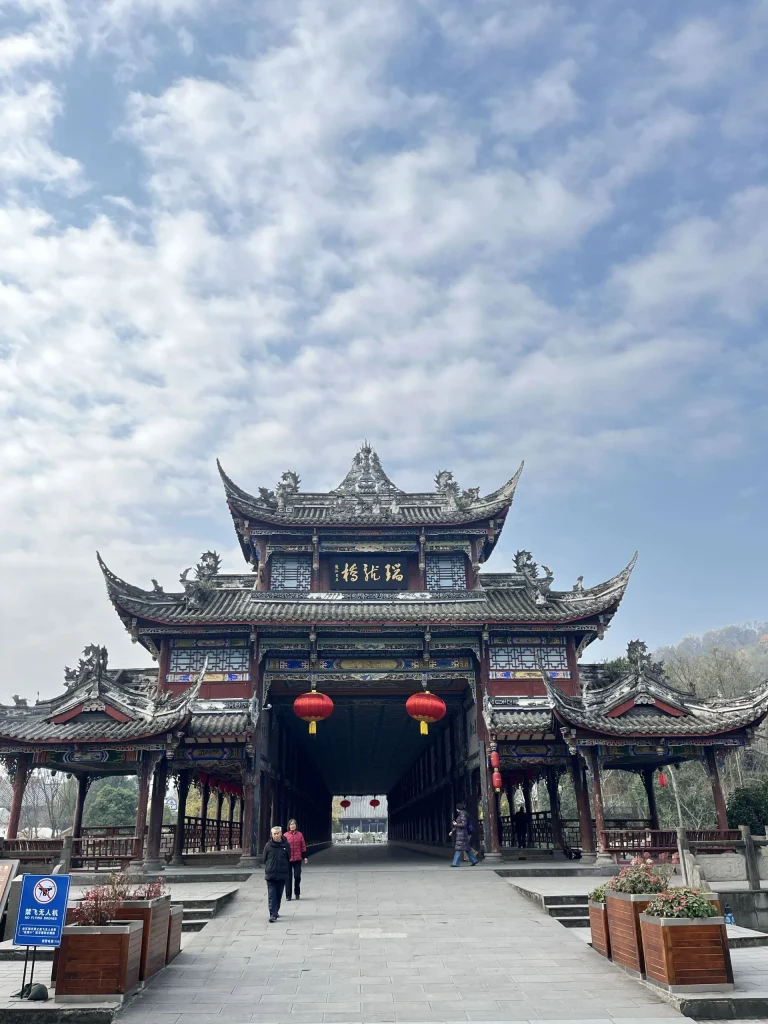
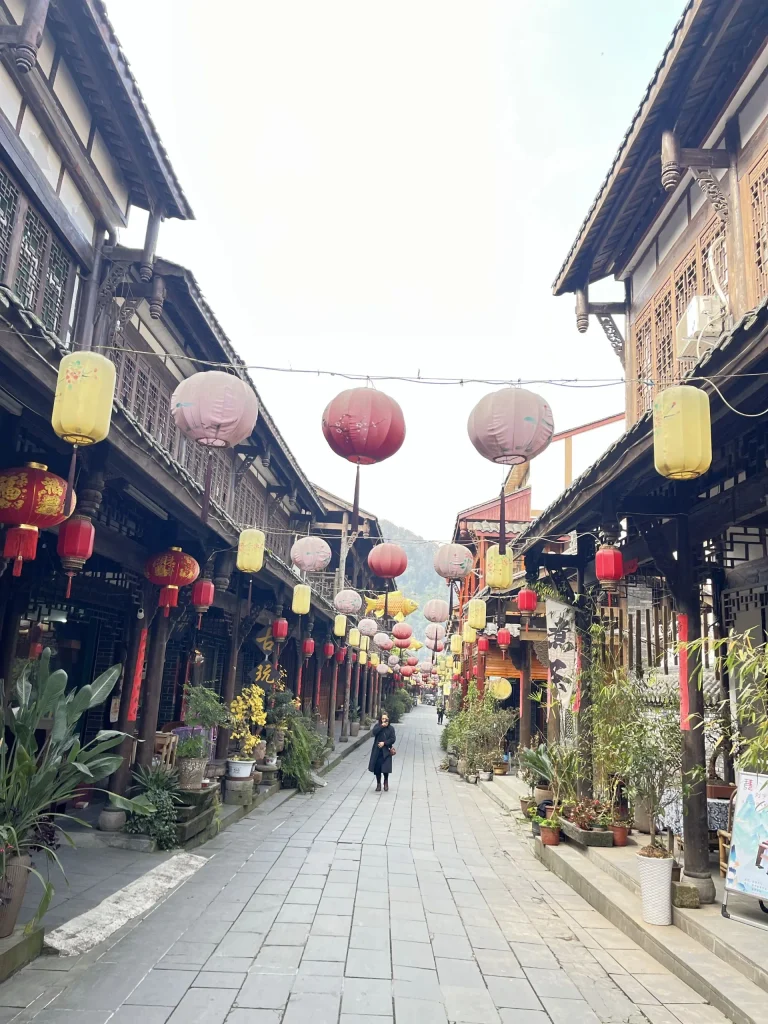
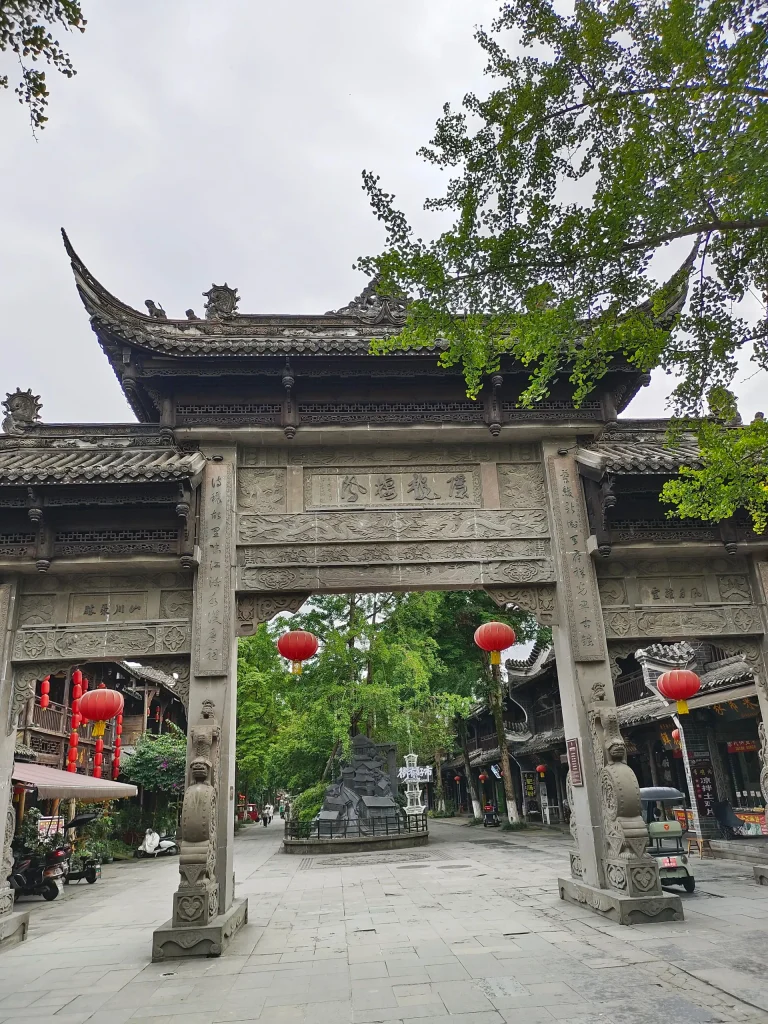
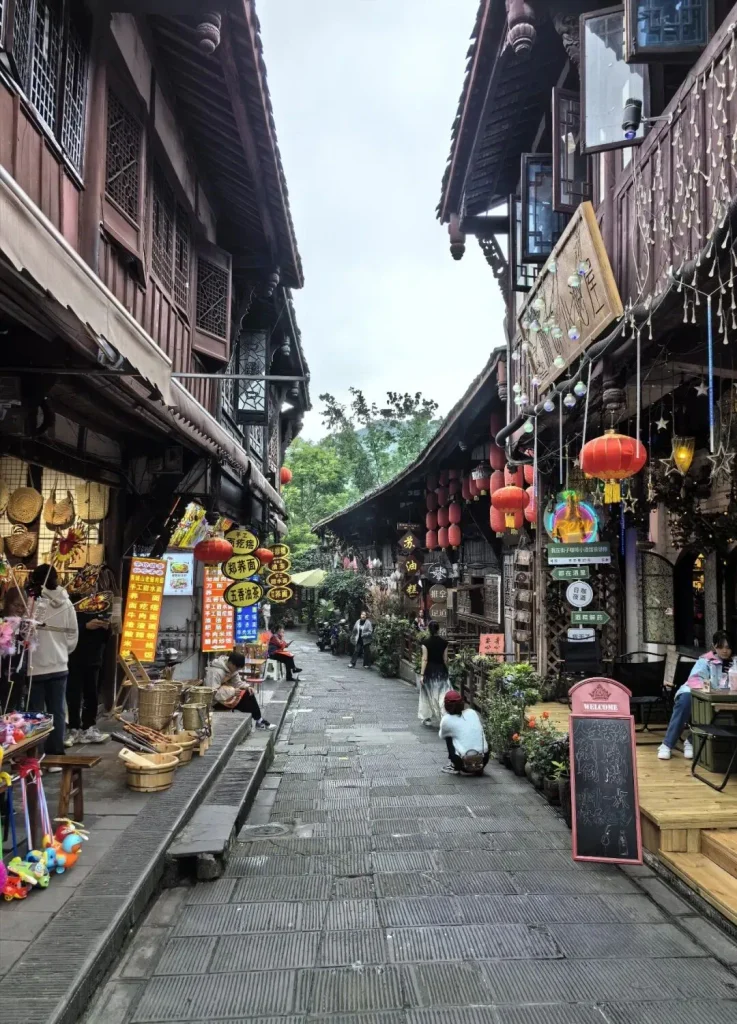
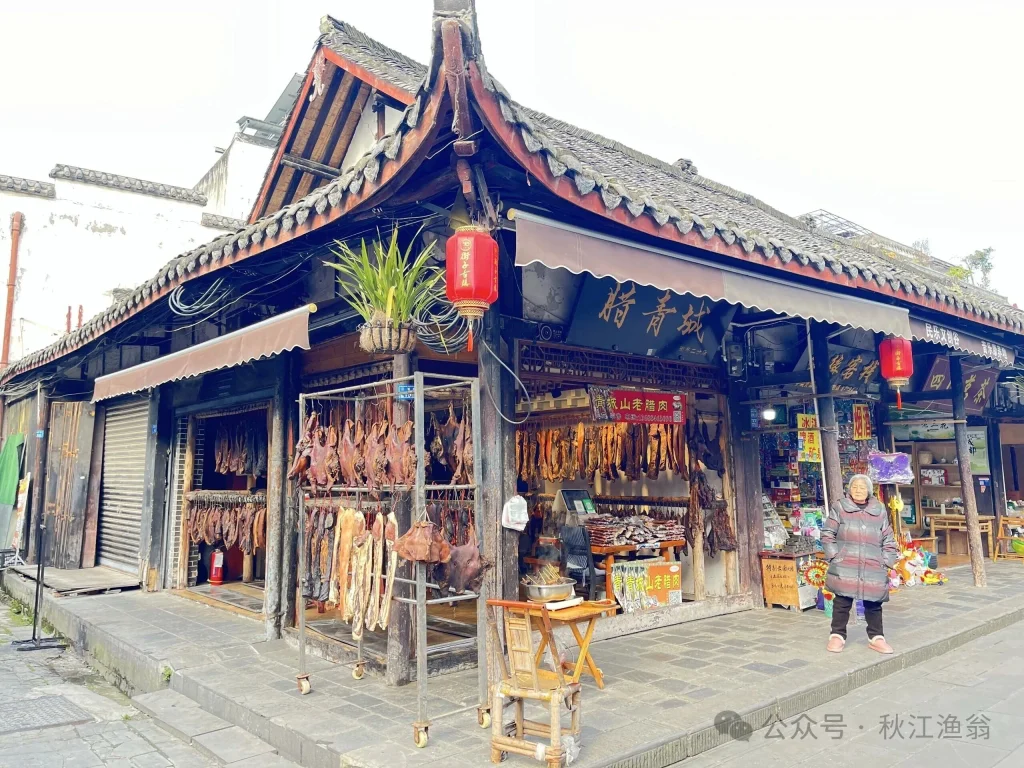
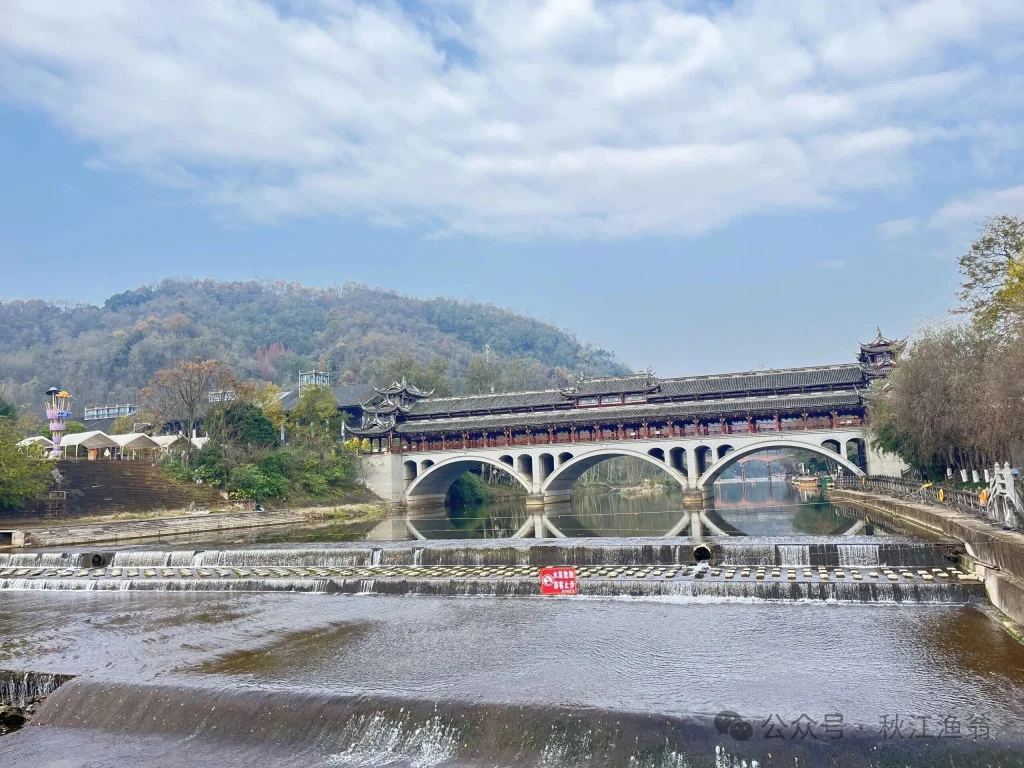
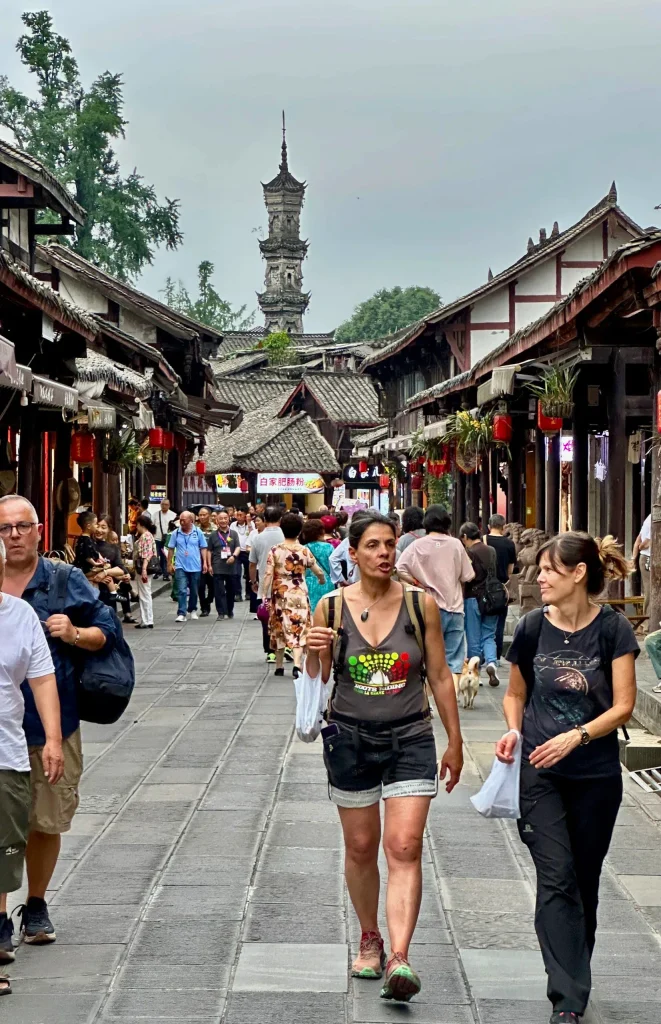
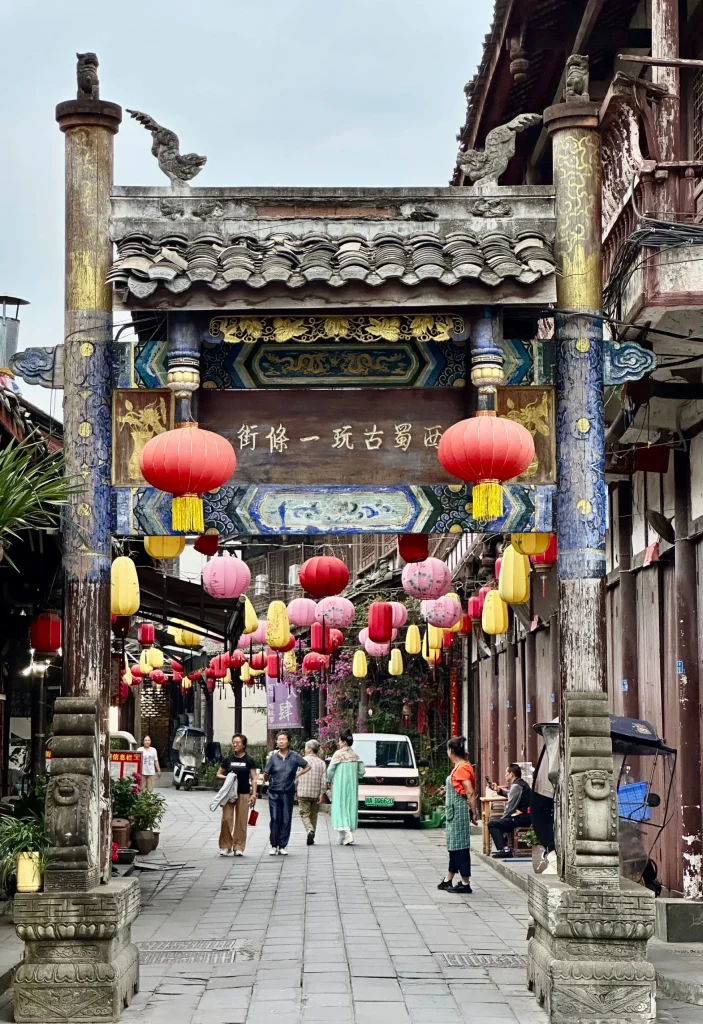
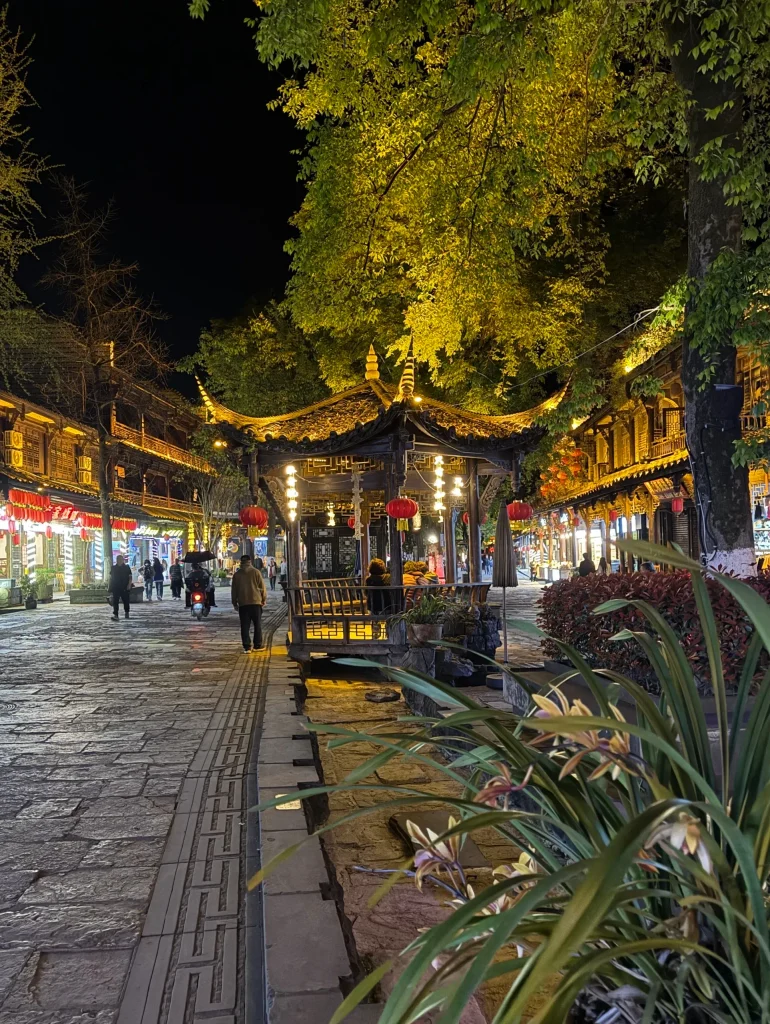
Jiezi Ancient Town (街子古镇) sits at the foot of Fengqi Mountain in Chongzhou, close to the Qingcheng Mountain area. Official Chengdu tourism information places it about 60 kilometers from downtown Chengdu.
It is often described locally as a western Sichuan water town and the “back garden” of Qingcheng Mountain.
That description makes more sense once you arrive.
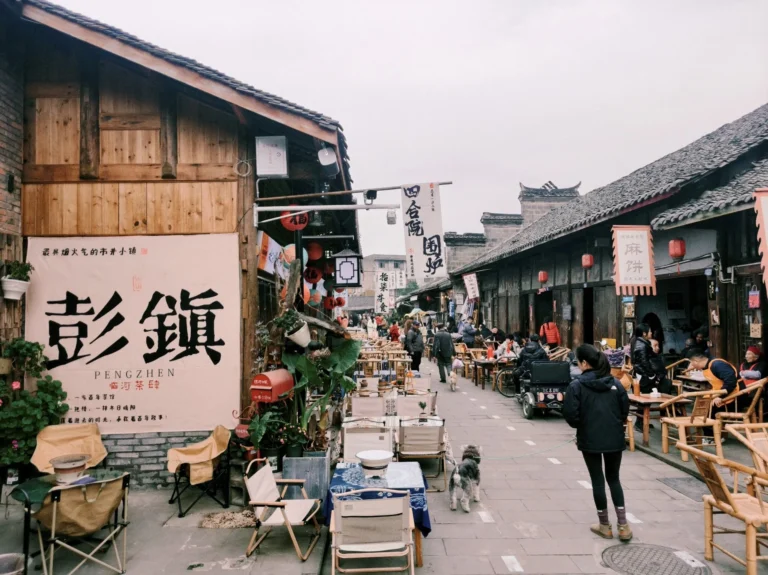
Water runs through and around the settlement, old streets sit beneath the mountain, and the town transitions surprisingly quickly from snack stalls and teahouses to forested paths.
Jiezi also has a history stretching back more than 1,000 years and is associated with Tang Qiu (唐求), a late-Tang poet traditionally known as the “Ladle Poet.”
But you should come with the right expectations.
This is not an untouched historical village. There are renovated storefronts, souvenir shops, restaurants and weekend crowds. What makes Jiezi worthwhile is the mixture: historic architecture, ordinary local life, Sichuan tea culture and mountain scenery still exist within the same compact area.
If you have already seen places such as Jinli and Kuanzhai Alley, Jiezi feels different precisely because it is farther from central Chengdu.
For comparison, our guide to Kuanzhai Alley explains how to visit Chengdu’s much more central—and much more commercial—historic district without wasting money.
For most foreign visitors, transport is the least straightforward part of a Jiezi trip.
There is no Chengdu Metro station at the ancient town itself.
As of September 2026, I would not build your day around an old online bus timetable. Routes and departure times around Chengdu’s outer districts can change, and many English-language pages still repeat schedules published years ago.
Instead, choose between three practical strategies.
| Transport | Typical Time | Best For | Main Issue |
|---|---|---|---|
| DiDi / private car | About 1–1.5 hr | 2–4 travelers, families | Higher cost |
| Intercity train + local transport | About 1.5–2 hr | Independent travelers | Requires a transfer |
| Long-distance / tourist bus | Varies | Budget travelers | Timetables need same-day verification |
Yes.
For two or more people, I would seriously consider DiDi or a private transfer. It removes the biggest weakness of Jiezi: the final public-transport connection.
Enter:
街子古镇
Jiezi Ancient Town
into your navigation or ride-hailing app and check the destination before confirming.
The road journey from central Chengdu is generally around 1–1.5 hours, but weekend and public-holiday traffic can make it longer.
If you have never used Chinese ride-hailing before, set it up before leaving the city. Our DiDi guide for foreign travelers explains how to use it without a Chinese phone number.
Not directly.
A useful public-transport strategy is to travel from Chengdu toward Qingchengshan Railway Station (青城山站), then continue by local bus, taxi or DiDi toward Jiezi.
Bus 102 has historically connected the Qingchengshan area with Jiezi, but do not treat timetable information copied from older travel pages as a guaranteed 2026 schedule.
Check Amap (Gaode Maps), Baidu Maps or local transport information on the morning of your trip.
For foreign travelers using China’s rail system for the first time, see our China train boarding guide before relying on this route.
Bus connections between Chengdu and the Jiezi/Chongzhou area exist, but this is where outdated travel information causes problems.
Older guides frequently quote direct services from Chadianzi Bus Station, specific fares around ¥20 and fixed departure times. Those figures should not be treated as a current timetable without checking.
If you prefer the bus, search the destination 街子古镇 or ask at the station on the day you travel.
For first-time foreign visitors prioritizing convenience over minor savings, DiDi or train + local transfer is usually simpler.
Do not rush through Jiezi with a checklist.
The best route is essentially a slow walk from the old streets toward the river, followed by the mountain if you still have time and energy.
Start around Ginkgo Square (银杏广场).
Ancient ginkgo trees are one of Jiezi’s distinctive features, and Chengdu tourism sources specifically note thousand-year-old ginkgo trees in the area.
Nearby is one of the town’s most recognizable historic structures: the Ziku Pagoda (字库塔).
A ziku was associated with the traditional practice of respectfully burning paper bearing written characters rather than casually throwing it away. Jiezi’s surviving Qing-era tower makes this more than a decorative “ancient town” landmark—it reflects an older cultural respect for the written word.
Late autumn is especially attractive when the ginkgo leaves turn yellow, although the exact peak varies each year.
Jiangcheng Street (江城街) forms part of the historic core.
Look beyond the shop signs and you will still find features typical of traditional western Sichuan architecture: timber structures, grey-tiled roofs, narrow facades and stone-paved lanes.
The main street can feel commercial on a busy weekend.
My advice is simple: turn off it occasionally.
Some of the quieter side lanes give you a better sense of the town than the busiest souvenir strip.
Head toward the Weijiang riverside.
Bridges, water, old houses and mountain vegetation come together here, which is why this is one of the most pleasant parts of Jiezi.
Instead of walking continuously, stop.
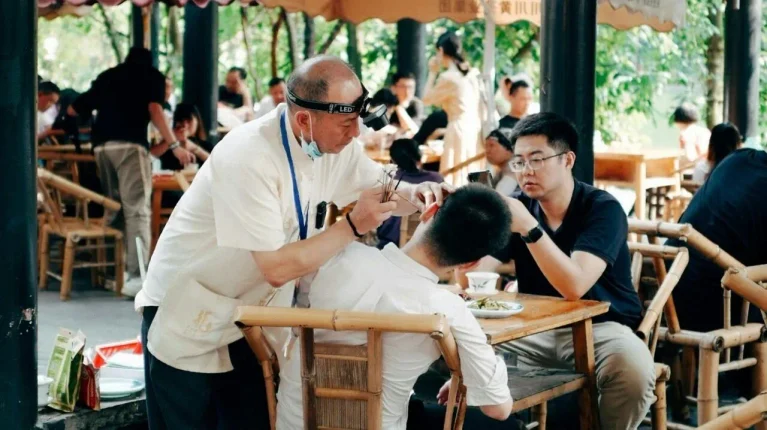
Order a gaiwan tea (盖碗茶), sit beside the water and stay for 30–60 minutes.
That may sound like “doing nothing,” but in Sichuan, sitting over tea is part of the experience rather than dead time between attractions.
If this is something you enjoy, our guide to Chengdu’s local teahouses explains how Sichuan tea culture differs across the city.
Do it if you have most of a day and enjoy forest walking.
Fengqi Mountain rises directly behind the ancient town. The wooded walking route toward Guangyan Zen Temple (光严禅院) changes the character of the trip completely: food streets and teahouses give way to shade, mountain air and temple scenery.
Guangyan Zen Temple is a historic Buddhist site whose origins are traditionally traced to the Jin period. Historical records also associate the temple with the Hongwu Nanzang (洪武南藏), an important Ming-era Buddhist canon.
Allow several additional hours if you plan to walk rather than simply visiting the lower town.
Do not assume that an old blog’s temple admission fee or opening hours are still exact. As of September 2026, those details should be checked locally before making the mountain section the centerpiece of a tightly timed itinerary.
After heavy rain, pay particular attention to local notices. Mountain paths around Jiezi can be temporarily restricted during periods of severe weather.
For most travelers, there are three sensible ways to plan the visit.
| Route | Time | Best For | Effort |
|---|---|---|---|
| Ancient town only | 3–4 hours | Casual day-trippers | Easy |
| Town + long tea/lunch stop | 4–5 hours | Slow travelers | Easy |
| Town + Fengqi Mountain + temple | 6–7+ hours | Culture + hiking | Moderate |
Use this order:
Ginkgo Square → Ziku Pagoda → Jiangcheng Street → side lanes → riverside → bridge → gaiwan tea → local snacks → return.
Three to four hours is enough if you are not hiking.
Do not turn a half-day visit into a race. Jiezi is more enjoyable when you spend 40 minutes drinking tea than when you spend those 40 minutes trying to find three minor “attractions.”
Start earlier and use this sequence:
Ginkgo Square → Ziku Pagoda → Jiangcheng Street → riverside → early lunch → Fengqi Mountain trail → Guangyan Zen Temple → descend → tea or dinner in town.
Allow at least six to seven hours in the area.
If mountain scenery matters more to you than the ancient town itself, read our Mount Qingcheng guide before deciding where to spend most of your day.
The food is part of the visit, but there is no reason to arrive with a huge “must-eat” checklist.
Start with Tang Ma Bing (汤麻饼), the local sesame pastry most strongly associated with Jiezi. It is crisp, slightly sweet and easy to carry, making it a practical snack or souvenir.
You will also see Sichuan noodles, tofu dishes, grilled snacks, pickled vegetables and restaurants serving ordinary Sichuan home-style dishes.
| Food | What It Is | Good Choice For |
|---|---|---|
| Tang Ma Bing 汤麻饼 | Crisp sesame pastry | Local specialty / souvenir |
| Tofu pudding 豆花 | Soft tofu with Sichuan seasoning | Light snack |
| Sichuan noodles | Small bowls with local seasonings | Quick lunch |
| Home-style Sichuan dishes | Shared stir-fries and local dishes | Sit-down meal |
| Gaiwan tea 盖碗茶 | Traditional lidded-bowl tea | Riverside break |
You do not need to buy from the first shop at the entrance.
The busiest storefront is not automatically the best one. Walk farther inside, compare a few stalls, and look for shops where local visitors are actually sitting and eating.
For a much broader introduction to local flavors, see our Chengdu hot pot guide.
Spring and autumn are the easiest seasons for most travelers.
Spring generally gives you comfortable walking temperatures and lush vegetation. Autumn brings cooler weather, and late autumn can add yellow ginkgo foliage around the old town.
Summer is greener but hotter and wetter. The shaded Fengqi Mountain section can feel much cooler than the streets below.
Winter is quieter and can work well if your priority is atmosphere rather than greenery.
But the day of the week matters almost as much as the season.
Come on a weekday.
If you must visit on a weekend, arrive in the morning before the central streets become busy.
The periods I would be most cautious about are major Chinese public holidays. A quiet ancient-town experience can change dramatically once large numbers of Chengdu day-trippers arrive.
Check our China public holiday calendar before locking in a date.
After about 4 PM, some day visitors begin leaving, and the town can gradually become more relaxed again.
Jiezi is not automatically the “best” ancient town around Chengdu. It depends on what you want.
| Ancient Town | Main Character | Best For | From Central Chengdu |
|---|---|---|---|
| Jiezi | Mountain + river + tea | Slow travel, light hiking | About 60 km |
| Huanglongxi | Lively waterside town | Families, food, atmosphere | Southwest of Chengdu |
| Luodai | Hakka heritage | Guild halls and cultural history | East of Chengdu |
| Pingle | River + Tea Horse Road heritage | Long riverside breaks | Farther southwest |
Pick Jiezi if you want the combination of ancient-town streets and mountain scenery.
Pick another town if you mainly want the easiest possible transport or a more activity-heavy day.
Jiezi’s biggest strength is not a single spectacular monument. It is how easily the experience moves from old streets to riverside tea to forested mountain paths.
Technically, yes.
For most first-time visitors, I would not recommend trying to do a complete Qingcheng Mountain visit and a complete Jiezi visit on the same day using public transport.
You will spend too much of the day checking connections and watching the clock.
If you have a private car or driver, the combination becomes much more realistic. In that case, treat Jiezi as the shorter stop rather than trying to complete both destinations in depth.
If you also want to include Dujiangyan, resist the temptation to put all three into one day. Our Dujiangyan route guide shows why the irrigation system itself deserves enough time.
Jiezi is easy once you are there, but a few China-specific preparations make the day smoother.
Do not assume so.
Small snack stalls and teahouses are much more likely to rely on QR-code payments than international card terminals.
Set up Alipay or WeChat Pay before the trip. I also carry some RMB cash for small vendors and as a backup.
Our foreign payment guide for China explains cards, cash, Alipay and WeChat Pay in one place.
You can visit without speaking Chinese, but English is limited compared with central Chengdu tourist attractions.
Save or screenshot these names before leaving Chengdu:
| English | Chinese | Useful For |
|---|---|---|
| Jiezi Ancient Town | 街子古镇 | Main destination |
| Ginkgo Square | 银杏广场 | Starting point in the old town |
| Ziku Pagoda | 字库塔 | Historic landmark |
| Fengqi Mountain | 凤栖山 | Mountain walking area |
| Guangyan Zen Temple | 光严禅院 | Temple destination |
| Qingchengshan Railway Station | 青城山站 | Train + local transport connection |
Screenshots are useful because you can simply show the Chinese characters to a driver or station employee.
A Chinese navigation app is also worth installing. Our China navigation guide for foreign travelers explains why relying only on Google Maps can cause problems in mainland China.
Not necessarily, but carrying ¥100–200 in small notes is sensible.
Mobile payment dominates daily transactions in China, yet cash remains useful when a small vendor’s QR payment does not work with your foreign-linked account.
For the town alone, ordinary comfortable walking shoes are enough.
The old streets are mostly manageable, although stone paving can become slippery after rain.
If you plan to hike toward Guangyan Zen Temple, wear shoes with better grip and check the weather first.
The ancient-town portion is much easier than the mountain section.
Main streets and riverside areas can generally be explored at a relaxed pace, although stone paving, occasional steps and uneven surfaces mean it is not completely barrier-free.
Families can easily shorten the day to snacks, old streets and the river.
For travelers with limited mobility, I would treat Fengqi Mountain and the temple as optional rather than essential.
Yes—if you know why you are going.
Come for Jiezi if you want a quieter side of Sichuan: old lanes, a river, a bowl of something spicy, a long cup of tea and perhaps a walk into the forest.
Do not come expecting a perfectly preserved historical museum or a completely tourist-free village.
That distinction matters.
Jiezi is at its best when you stop trying to “complete” it.
Sit down by the river. Wander into a side lane. Buy a Tang Ma Bing. Spend longer over tea than you planned.
For many travelers, that slower rhythm is exactly what makes the journey from Chengdu worthwhile.
Yes. Guesthouses and small hotels are available around Jiezi and the Qingcheng Mountain area. An overnight stay makes sense if you want quieter streets after the main day-trip period or plan to explore the mountain area the following morning.
Foreign visitors should confirm that their accommodation can correctly handle guest registration. See our China hotel booking guide for foreigners before booking a small independent guesthouse.
A stroller is workable on many of the main streets, but stone paving and occasional steps make the experience less smooth than a modern pedestrian district. A lightweight stroller is easier than a large one. Do not assume the mountain trail to Guangyan Zen Temple will be stroller-friendly.
Yes, public facilities are available around the main tourist area. Do not expect every restroom to have Western-style toilets or toilet paper, so carrying tissues is useful when traveling outside central Chengdu.
Do not rely on an old online “last bus” time. If you are using public transport, check the current return route and final connection in Amap, Baidu Maps or at the local stop before you begin sightseeing.
If you plan to stay for dinner or evening atmosphere, DiDi or a prearranged car gives you more flexibility. When using a train connection, also leave enough time to reach Qingchengshan Railway Station before your booked departure.
Usually not for a first visit. If you have only two days, the panda base and central Chengdu attractions will normally give you more value with less travel time. Jiezi becomes more attractive on a longer stay when you have a spare half-day or full day for a slower excursion.
Jiezi Ancient Town works best as a slow day trip from Chengdu, not as a collection of must-see landmarks.
The main town is free, the setting combines traditional western Sichuan streets with river and mountain scenery, and you can comfortably spend a half-day walking, eating and drinking tea. Add Fengqi Mountain and Guangyan Zen Temple only when you have enough time to enjoy them without rushing.
If your Chengdu itinerary already feels packed, skip Jiezi.
If what you need is one quieter day away from the city, it is one of the more interesting choices around Chengdu.
GoChengdu — Top Ancient Towns Around Chengdu
Ministry of Culture and Tourism of China — Chengdu Tea Country Route
Chengdu Radio and Television — Jiezi Ancient Town Visitor Update
China National Immigration Administration
Updated September 2026. This guide was cross-checked against Chengdu tourism, national cultural-tourism, local official-media and transport information. Stable details such as the town’s location, free access and major historic sights were separated from changeable details such as bus schedules, parking fees and temple hours. Older exact transport times were not treated as current facts. Travelers should recheck local transport and weather-related mountain restrictions on the day of travel.