Our Location:
No. 99, Jiazi Road, Chengdu

 authorChris Lee
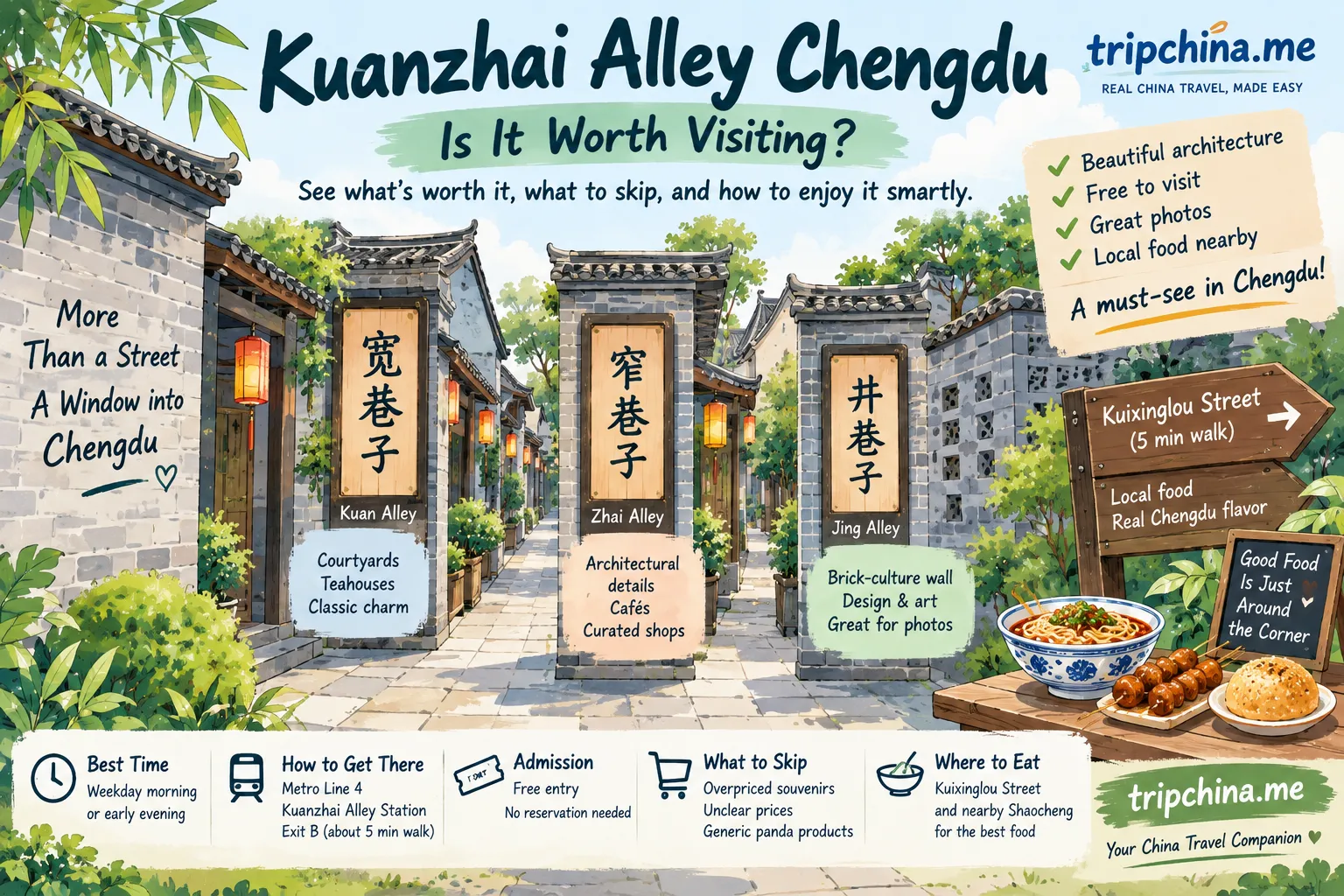
Kuanzhai Alley—also known as the Wide and Narrow Alleys—is one of Chengdu’s most famous historic districts. It is free, photogenic and easy to reach—but also easy to overspend in. The smart way to visit is not to avoid it. Come for the courtyards, architecture and atmosphere, spend selectively, then walk beyond the tourist core into the surrounding Shaocheng neighborhood for food and a more everyday side of Chengdu.
If this is your first visit to the city, our Chengdu tourist traps guide covers similar decisions elsewhere in Chengdu.
Yes. Kuanzhai Alley is worth visiting for about 1.5–2 hours, especially on a first trip to Chengdu. Entry is free. Come for the three historic lanes and courtyard architecture, not bargain shopping or your main meal. For food, continue into nearby Kuixinglou Street and the wider Shaocheng neighborhood.
| Question | Quick Answer |
|---|---|
| Also known as | Wide and Narrow Alleys (宽窄巷子) |
| Is it worth visiting? | Yes, especially for first-time visitors |
| Admission | Free; no general-entry reservation required |
| Best for | Architecture, courtyards, photos, atmosphere |
| How long? | About 1.5–2 hours; 3–4 hours with tea and dinner nearby |
| Best time | Weekday morning for photos; early evening for atmosphere |
| Best route | Kuan Alley → Zhai Alley → Jing Alley |
| What should you buy? | Fresh snacks or an experience you genuinely want |
| What should you skip? | Generic souvenirs and any service without a clear price |
| Where to eat? | Kuixinglou Street and surrounding Shaocheng streets |
| Metro | Line 4 → Kuanzhai Alley Station (宽窄巷子站) → Exit B |
Kuanzhai is actually three parallel streets: Kuan Alley (宽巷子), Zhai Alley (窄巷子) and Jing Alley (井巷子). Official Chengdu tourism information describes the district as a historic street system of three parallel alleys and multiple traditional courtyards.
For travelers who enjoy exploring neighborhoods on foot, our Chengdu city walk guide has additional self-guided routes.
One-sentence cheat sheet: Visit on a weekday morning or early evening, walk Kuan → Zhai → Jing for free, buy only snacks or experiences you genuinely want, continue toward Kuixinglou for your main meal, and ask the price before any tea, ear-cleaning or street-photo service.
The biggest mistake is assuming that because Kuanzhai Alley is famous, everything sold inside represents the best version of Chengdu.
It doesn’t.
The district is a major commercial tourism area. Higher prices do not automatically mean a business is dishonest; you are often paying for a prime location, restored courtyard setting and heavy visitor traffic.
The useful distinction is between paying a tourist premium knowingly and entering a transaction without understanding the price.
| Experience | Worth Paying For? | Smart Approach |
|---|---|---|
| Fresh Chengdu snack | Usually | Buy it if it is freshly prepared and clearly priced |
| Courtyard tea | Sometimes | Pay for the setting, not because the tea must be better |
| Ear cleaning | If you want the experience | Confirm the full price first |
| Short cultural performance | Sometimes | Check what is included before sitting down |
| Panda souvenirs | Usually poor value | Compare several shops |
| Photo drinks | Only if you want the photo | Treat them as a visual souvenir |
| Street-performer photos | Only with an agreed price | Ask before posing |
| “Antiques” | Not recommended for casual buyers | Treat undocumented pieces as souvenirs |
Specific vendor prices change too quickly to make a fixed price list useful. Treat any online price for individual snacks, tea or services as a budget reference rather than a quote.
Bamboo-tube and novelty drinks are mainly visual souvenirs. There is nothing wrong with buying one if you want the photo, but do not assume it is a must-try Chengdu drink.
For packaged specialty meat, check the ingredient label rather than relying on the picture or sales pitch. If provenance matters, buy from a reputable food retailer.
Generic panda toys are everywhere in Chengdu. Kuanzhai is convenient, but it is rarely necessary to make an immediate purchase.
Be particularly careful with anything marketed as an antique. Unless you have the expertise and documentation to evaluate it, treat it as a decorative souvenir rather than a collectible investment.
For street performers or paid photo opportunities, ask:
多少钱?(Duōshao qián?) — How much?
Ask before taking the photo. It prevents an awkward disagreement afterward.
For a proper meal, continue into Kuixinglou Street (奎星楼街) and the surrounding Shaocheng streets.
Kuixinglou is no longer a hidden local discovery. It attracts plenty of visitors, especially around dinner. But it still functions more like a Chengdu dining street than the core scenic alleys do.
According to People’s Daily Sichuan, a marked Shaocheng Citywalk green line was introduced in April 2026. It starts at Kuanzhai Alley’s East Square and connects Kuixinglou Street, Xiaotongren Road, Paotongshu Street and other nearby streets.
You will find skewers, noodles, cold dishes, Sichuan snacks and casual restaurants. If one viral restaurant has a huge queue, keep walking. There are too many food options nearby to build your evening around a single social-media-famous storefront.
For a larger Sichuan meal, our Chengdu hot pot guide explains what to order and how to avoid common first-timer mistakes.
A useful rule: snack inside Kuanzhai if something looks good; eat your main meal outside the scenic core.
The Wide and Narrow Alleys make more sense when you stop treating them as one long attraction.
| Alley | Best For | Character | Priority |
|---|---|---|---|
| Kuan Alley 宽巷子 | Courtyards, teahouses, classic streetscape | Traditional and visitor-oriented | Highest |
| Zhai Alley 窄巷子 | Architectural details, cafés, curated shops | More polished | High |
| Jing Alley 井巷子 | Brick-culture wall, design, photos | More contemporary | Do not skip |
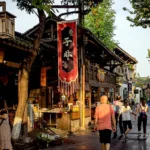
Kuan Alley has the strongest version of the classic Kuanzhai image: grey brick, tiled roofs, courtyard gates, teahouses and enclosed residential-style spaces.
Do not spend the whole visit looking at storefronts. Look above them.
Rooflines, wooden details, entrances and courtyard proportions are more interesting than another souvenir display.
Kai Lu (恺庐) has one of the district’s recognizable courtyard entrances and is a useful architectural photo stop. Avoid attaching elaborate stories to individual former residents unless those claims are documented at the site.
If you want to stop for tea, the setting can justify paying more than you would at a neighborhood teahouse. But the courtyard experience and everyday Chengdu teahouse culture are not quite the same thing.
For that distinction, see our Chengdu teahouse guide.
The full background on Kuanzhai’s restoration is covered in the dedicated history section below.
Zhai Alley feels more curated and mixes traditional Sichuan architectural elements with later influences.
One detail worth noticing is the horse-hitching stone (拴马石).
During the 2026 Spring Festival, a temporary cultural program used the hitching stone and several other Kuanzhai landmarks as AR interaction points. The program ran from February 15 to March 3, so it should not be treated as a permanent attraction.
The better reason to explore Zhai Alley is physical rather than digital: gates, windows, stonework and the tighter scale of the street.
Individual cafés, bookstores and boutiques change. The architecture is a more reliable reason to visit than a list of fashionable businesses.
Jing Alley is the easiest of the three to underestimate.
Its brick-culture wall gives the street a different visual character from Kuan and Zhai alleys, making it useful both for photography and for understanding how Kuanzhai mixes heritage interpretation with contemporary tourism.
It also gives you a break from the courtyard-and-shop rhythm of the other two streets.
If Kuan Alley is the postcard, Jing Alley is where the district starts to feel less predictable.
Neither “untouched ancient neighborhood” nor “fake old street” is a very accurate description.
The historical framework is real. Kuanzhai traces its street history back more than 300 years, and Kuan, Zhai and Jing are the three surviving parallel alleys associated with that historic layout.
The modern visitor district, however, is also the result of major conservation and redevelopment.
According to GoChengdu’s historical overview, the three alleys underwent a major renovation in 2005 and reopened to tourists in 2008. Visitors today are therefore seeing a combination of historic street form, surviving heritage fabric, restored architecture, reconstruction and modern adaptive reuse.
That distinction matters.
Kuanzhai is more interesting when you view it as historic Chengdu adapted into a modern cultural and commercial district, rather than trying to decide whether every brick is “authentic.”
The area continues to host new cultural programming and neighborhood projects, but individual shops, performances and temporary digital experiences can change. Verify those close to your visit.
Kuanzhai should not be your main Chengdu food destination, but that does not mean you need to reject everything sold inside.
If a snack is freshly cooked, clearly priced and something you actually want to try, paying a few extra yuan for convenience is perfectly reasonable.
Tangyou Guozi (糖油果子) are fried glutinous-rice snacks coated with a sweet glaze and sesame. They are best eaten fresh.
Dan Hong Gao (蛋烘糕) are small Chengdu-style egg pancakes filled with sweet or savory ingredients.
San Da Pao (三大炮) are sticky-rice balls traditionally prepared with a dramatic throwing motion before being coated with soybean powder and sweet syrup. The spectacle is part of the appeal.
A balanced approach works better than declaring every tourist-area snack a rip-off.
A snack you enjoy while exploring the alleys is not wasted money. Paying for an unclear service because you felt pressured is different.
It depends on what you expect.
A short tourist-oriented performance can be enjoyable if you want a quick taste of face-changing or traditional stage arts while already visiting Kuanzhai.
But if Sichuan Opera is one of the reasons you came to Chengdu, choose the performance itself rather than whichever show happens to be nearest.
Our Chengdu Sichuan Opera guide compares more established performance options.
Be careful with phrases such as “free show.” A performance may be bundled with tea or another minimum purchase. Ask what you need to order and what the total cost will be before sitting down.
The easiest route is:
Kuan Alley → Zhai Alley → Jing Alley → Shaocheng → Kuixinglou Street
This avoids unnecessary backtracking.
Begin at Kuan Alley and give yourself around 20–30 minutes.
Slow down at the courtyard entrances and architectural details. If photography matters, this section benefits most from arriving before the main daytime crowds.
Use one of the connecting lanes and walk Zhai Alley in the opposite direction.
Look for the horse-hitching stone, windows, gates and smaller architectural details rather than moving shop to shop.
Allow roughly 20–30 minutes.
Continue into Jing Alley and spend 15–25 minutes around the brick-culture installations and street details.
You have now seen all three alleys without repeatedly retracing your route.
Instead of ending the experience at the edge of the tourist district, continue into the surrounding neighborhood.
The Shaocheng Citywalk route links Kuanzhai with Kuixinglou, Xiaotongren Road, Paotongshu Street and other surrounding streets. Check locally for the current route markers.
Most visitors need 1.5–2 hours for the three alleys. Add another 1–2 hours if you stop for tea or continue to Kuixinglou for dinner.
For architecture and photography, choose a weekday morning.
You do not need to chase an exact minute. The goal is simply to arrive before the main daytime visitor flow builds.
Early evening gives you a different Kuanzhai. Courtyard lights and lanterns make the streets more atmospheric, while restaurants and shops are fully active.
If your priority is photography, choose morning. If you want atmosphere, choose early evening.
Chinese public holidays are the bigger issue than the exact hour. Kuanzhai is a major Chengdu visitor district, so May Day, National Day and other peak periods can dramatically increase crowding.
Check the China public holiday calendar before fixing your itinerary.
First, look up.
Many visitors spend almost the entire visit at shop-window level. Rooflines, gates, brickwork and courtyard entrances tell you more about the physical character of the district.
Second, walk beyond the famous three alleys.
The surrounding Shaocheng streets make it easy to turn Kuanzhai from a single tourist stop into a longer neighborhood walk.
Third, do not make digital experiences central to your visit.
Some QR-code or AR cultural features are seasonal or event-specific. Some may run through domestic platforms such as WeChat Mini Programs, where registration, phone-number or language requirements can create friction for international visitors. Treat them as a bonus rather than something your visit depends on.
You do not need a complicated photography route.
Kuan Alley in the morning is best for a wider street scene before crowds dominate the frame.
Kai Lu’s gate works well for architectural detail.
The horse-hitching stone in Zhai Alley gives you a smaller historic detail rather than another broad street photo.
Jing Alley’s brick-culture wall provides a completely different background from the traditional courtyard imagery.
For rooflines and courtyard entrances, step back rather than photographing everything head-on. Early morning remains the easiest time if you want cleaner frames.
Casual phone photography is generally straightforward. For commercial shoots, wedding photography, professional filming, drones or equipment that obstructs pedestrian areas, check current site and local rules before setting up.
Chinese name: 宽窄巷子
District: Qingyang District, Chengdu
Metro: Line 4 → Kuanzhai Alley Station (宽窄巷子站) → Exit B
Walking: Exit B is the usual choice; follow signs for 宽窄巷子. The walk is short, roughly five minutes.
Admission: Free
Reservation: No general-entry reservation required
For offline or third-party mapping, an approximate central map pin is:
30.6639, 104.0533
Treat the coordinates as an approximate central point, not a specific entrance. Searching 宽窄巷子 in a China-compatible map app is more reliable for the final approach.
If you are new to the system, our Chengdu Metro guide explains tickets and payment.
Eligible contactless overseas-issued Visa, Mastercard, American Express and UnionPay cards can be used directly on Chengdu’s public transportation network, including the metro, provided the card meets the relevant contactless requirements. GoChengdu confirms the system also covers Chengdu buses and trams.
For a taxi or ride-hailing app, enter 宽窄巷子 rather than depending on an English transliteration. Our DiDi guide for foreigners covers app setup and payment.
For walking after you arrive, save both 宽窄巷子 and 奎星楼街. If your usual overseas map performs poorly in China, see our China navigation app guide.
Mobile payment is generally the easiest option for small purchases.
Alipay and WeChat Pay are widely used in Chengdu, and international visitors can link supported overseas cards. Cash remains legal tender, so carrying some RMB is a useful backup.
Do not assume every small snack stall will accept your physical Visa or Mastercard directly. A merchant may accept QR payment even when it does not have a card terminal.
Our China payment guide for foreign visitors explains foreign-card linking, mobile wallets and cash backup options.
Your phone connection matters for the same reason. Do not rely on finding dependable free Wi-Fi whenever you need to pay, translate a menu or call a ride.
The China eSIM vs SIM guide explains the main connectivity options before arrival.
It is better described as a highly commercial historic tourism district.
The commercialization is obvious. That does not make the entire district a tourist trap.
Admission is free. You can walk all three streets, see the architecture and leave without buying anything.
The risk comes from assuming that every famous-looking product is special, every tourist experience is good value, or every service price is obvious.
The solution is not to skip Kuanzhai.
See the district for free. Spend selectively.
These places solve different travel needs, so there is no reason to treat them as interchangeable.
| Place | Best For | Main Feel | Choose It If… |
|---|---|---|---|
| Kuanzhai Alley | Courtyards, architecture, photos | Restored historic-commercial district | You want Chengdu heritage in an easy central location |
| Jinli | Snacks, lanterns, busy market atmosphere | Dense traditional-style visitor street | You are already visiting Wuhou Shrine or want a lively evening |
| People’s Park | Tea, everyday social life, relaxing | Public park and local leisure | You want to observe how Chengdu actually slows down |
If you have only one day in central Chengdu, a balanced combination is: People’s Park for morning tea → Kuanzhai Alley in the afternoon or early evening → Kuixinglou Street for dinner.
📍 Open in Amap — Kuanzhai Alley (宽窄巷子)📍 Open in Amap — Kuixinglou Street (奎星楼街)This article is part of the Chengdu Travel Guide Hub.
Yes, Kuanzhai is generally a busy, heavily visited central tourism district. Normal city precautions still apply: keep track of your phone and bag, and do not accept a service whose price you have not confirmed.
If you are returning by metro late in the evening, check the current last-train time in your navigation or metro app rather than relying on an old timetable.
A normal backpack is fine, but a large rolling suitcase is inconvenient in crowded pedestrian lanes and smaller courtyards.
Do not plan around finding guaranteed luggage storage inside the district. Availability at nearby businesses can change. Leaving large luggage at your hotel, railway station or a pre-confirmed storage location is safer.
The main pedestrian streets are mostly flat, making Kuanzhai easier than many historic sites with long stairways. Some courtyard entrances and thresholds can still create obstacles, and dense crowds are often the bigger problem.
For wheelchairs, strollers or elderly travelers, visit outside peak hours and treat interior courtyards individually rather than assuming every space is step-free.
Yes, public restroom facilities are available around this heavily visited tourist district, but facilities inside individual cafés and shops should not be treated as public toilets.
Use the on-site directional signs when you see them rather than waiting until you are deep inside a restaurant or small courtyard.
Sometimes, but do not depend on them. Some digital experiences are temporary or require domestic apps or registration. Your core Kuanzhai visit does not require them.
No. Kuanzhai is one of Chengdu’s most tourism-oriented areas, and major metro signage includes English.
Still, save 宽窄巷子 for Kuanzhai Alley and 奎星楼街 for Kuixinglou Street on your phone. Those Chinese names are more useful than pronunciation when showing a destination to a driver or searching a local map.
Light rain can actually suit Kuanzhai’s grey-brick courtyards and covered entrances, so there is no need to cancel immediately.
In heavy rain, shorten the outdoor walk and stop at a teahouse, café or restaurant. Because the district itself is free, you lose little by returning later if the weather improves.
Major tourism and metro signs generally include English, so navigating the main district is straightforward.
Smaller shops, menus and temporary displays may be Chinese-only. Keep a translation app available and save important place names in Chinese.
Yes, especially outside peak crowd periods. The main streets are walkable, but watch younger children around hot food, dense pedestrian traffic and courtyard thresholds.
A stroller is possible, though it becomes less convenient when the alleys are crowded.
Do not assume you can. Kuanzhai is a busy central urban tourism district, and drone use in China is subject to aviation, local airspace and site-specific restrictions.
Check current official rules before flying; for most visitors, ordinary ground-level photography is the simpler option.
All vendor-set price ranges and spending guidance in this article reflect conditions researched through September 2026. Snack, tea, performance and service prices can change with individual businesses, seasons and holidays. Treat online prices as budgeting guidance, not guaranteed quotes, and confirm the full price before accepting a service.
Short answer: yes—but spend selectively rather than treating the scenic core as your main place to shop or eat.
Kuanzhai Alley is not the place to hunt for Chengdu’s cheapest meal or pretend you have discovered an untouched Qing Dynasty neighborhood. It is a historic urban framework that has been restored, reconstructed and adapted into one of the city’s major cultural-commercial districts.
Give it 1.5–2 hours. Walk Kuan, Zhai and Jing alleys. Look at the courtyards and rooflines. Buy a fresh snack if you want one, but do not feel obligated to spend money simply because you are inside a famous attraction.
Then keep walking into Shaocheng and Kuixinglou.
See the famous place. Understand what you are looking at. Spend selectively. Then go beyond it.
GoChengdu — Landmark Alley: A Witness of Chengdu History — Historical background and the 2005 renovation and 2008 reopening.
People’s Daily Sichuan — Shaocheng Citywalk, April 2026 — Confirms the ground-marked Shaocheng Citywalk route from Kuanzhai Alley’s East Square through surrounding streets.
People’s Daily Sichuan — Kuanzhai Spring Festival Cultural Program, February 2026 — Confirms the seasonal AR program, including the horse-hitching stone interaction point and its February 15–March 3 event dates.
GoChengdu — Tap-and-Go Payment for Foreign Bank Cards — Confirms eligible overseas Visa, Mastercard, American Express and UnionPay contactless cards on Chengdu public transportation.
This guide separates verified historical facts, recent official reporting and editorial recommendations. Historical street layout was distinguished from modern restoration to avoid describing Kuanzhai as either untouched or entirely reconstructed. Vendor prices were treated as volatile rather than fixed facts. Temporary cultural programs such as AR experiences were identified as seasonal rather than permanent attractions.
TripChina.me creates practical China travel guides shaped by real local experience, helping independent travelers navigate transport, payments, food, neighborhoods, and the cultural details that make traveling in China easier and more meaningful. Find the guide for your destination at tripchina.me.

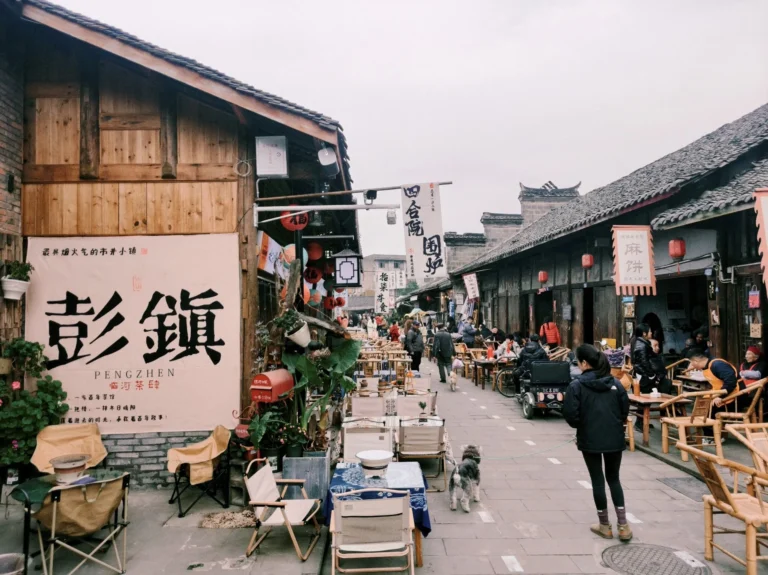
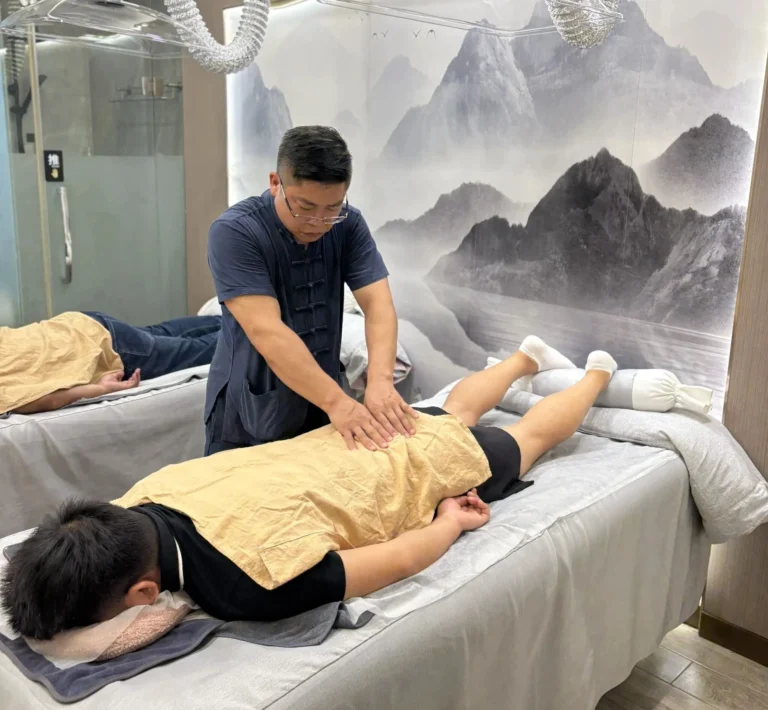
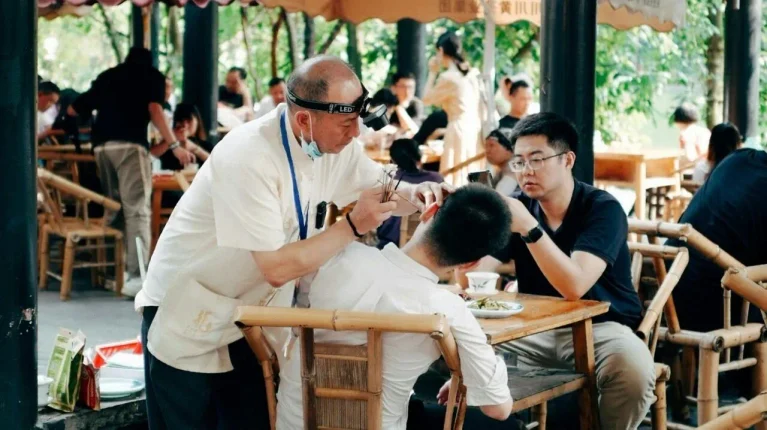

[…] you have already experienced central attractions such as Kuanzhai Alley, Tangchang offers almost the opposite […]
[…] comparison, our guide to Kuanzhai Alley explains how to visit Chengdu’s much more central—and much more commercial—historic district […]