Our Location:
No. 99, Jiazi Road, Chengdu

 authorChris Lee
Chengdu has thousands of places to drink tea, but choosing one is not simply about finding the “most authentic.” Some famous old teahouses are minutes from the metro; others sit in Pengzhen, Shuangliu or Huanglongxi and can take up much of your day. This guide compares 14 very different Chengdu teahouses by location, travel time, atmosphere and trade-offs — so you can choose one that actually fits your trip.
This guide covers 11 teahouses in Chengdu plus 3 Huanglongxi options for travelers already planning an ancient-town day trip. If this is your first trip to Chengdu, choose by location first, then by atmosphere.
| Recommendation | Teahouses | When They Make Sense |
|---|---|---|
| Strong first picks | Heming, Da Qi, Guanyinge, Jinqin | You specifically want a memorable Chengdu teahouse experience |
| Specialist picks | Yuelai, Grand Stage for evening shows, Shuren Shishi, Lingke | Opera, folk arts, literature or performance matters to you |
| Worth it if nearby | Guangshenggong, Zide, Baijia | They fit naturally into where you are already going |
| Day-trip picks | Fuxing, Longjian | You are already visiting Huanglongxi |
If you want to understand why teahouses matter so much here—not just which ones to visit—read our guide to Chengdu teahouse culture and the everyday rituals behind the gaiwan, bamboo chairs and hours of unhurried conversation.
Worth a special trip: Guanyinge, particularly for photography, old neighborhood atmosphere and a less polished side of Chengdu.
Worth it if you're nearby: Baijia, Guangshenggong and Zide. Each offers something worthwhile, but I would not cross Chengdu solely to tick it off a list. Yuelai makes more sense when Sichuan Opera is already one of your priorities.
Not worth crossing the city for just the tea: Baijia unless you're already in Shuangliu, and Guangshenggong unless it fits naturally into your central-Chengdu route.
Huanglongxi is different: Fuxing and Longjian can all be worthwhile, but Huanglongxi should be the reason for the journey. Choose the teahouse once you're there.
This is the location-first rule behind the entire guide: the most atmospheric teahouse is not automatically the best choice for your itinerary.
If this is your first visit to the city, our Chengdu City Walk Guide can help you fit tea naturally into a slower neighborhood day rather than treating it as another attraction to check off.
Practical note: Prices, opening hours and performance schedules at independent teahouses can change. Information in this guide was reviewed in September 2026; check same-day details when a particular price or performance matters to your visit.
| Travel Zone | Teahouses | Best For | How to Plan |
|---|---|---|---|
| Central / Urban Chengdu | Heming, Da Qi, Guangshenggong, Jinqin, Lingke, Grand Stage, Shuren Shishi, Zide, Yuelai | First visits and easy itinerary combinations | 1–3 hours |
| Outer Chengdu / Shuangliu | Guanyinge, Baijia | Old-school atmosphere, photography and neighborhood life | Allow a half-day |
| Huanglongxi Ancient Town | Fuxing, Longjian | Ancient-town tea experience | Combine with a day trip |
If you only have time for one: start with Heming for convenience and classic atmosphere.
If atmosphere matters more than travel time: choose Guanyinge.
If you're already visiting Huanglongxi: choose among Fuxing and Longjian according to the mood you want.
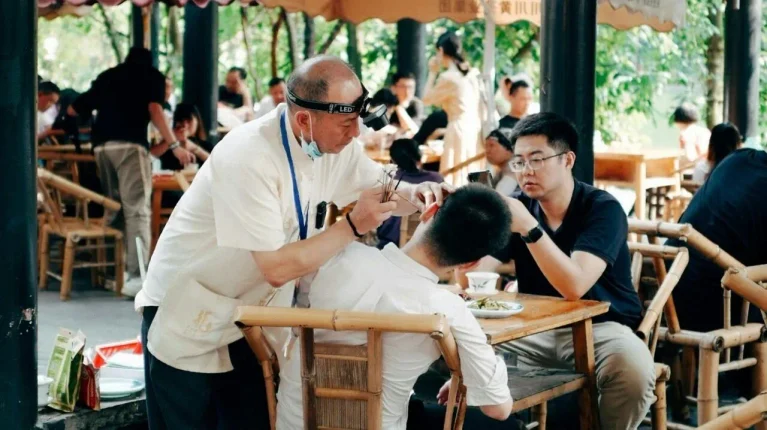
A traditional Chengdu teahouse is not necessarily a formal tea ceremony. It can be loud. People chat, play cards, read newspapers, nap in bamboo chairs and call for another kettle of hot water.
The tea itself is often secondary.
The tea is the excuse. What you're really buying is permission to sit while life happens around you.
That is why tourists sometimes misunderstand the experience. They arrive, photograph the gaiwan, finish their tea and leave. Locals are more likely to treat the teahouse like a shared living room.
The traditional Chengdu gaiwan tea experience centers on a three-piece covered bowl — lid, bowl and saucer. Another expression you may hear is bai longmen zhen (摆龙门阵), the Sichuan habit of sitting together and chatting, telling stories and gossiping over tea.
The same social logic appears in Chengdu's food culture. If you want to understand it beyond tea, the Chengdu Hot Pot Guide for First-Time Visitors explains why hot pot is as much a social activity as a meal.
For travelers staying around Tianfu Square, Chunxi Road, People's Park or other central neighborhoods, this group requires the least disruption to a sightseeing itinerary.
You do not need to travel to the outskirts of Chengdu to experience genuine tea culture. The city-center choices simply show different versions of it.
Location: People's Park, central Chengdu
Nearest Metro: People's Park Station, Line 2
Best for: First-time visitors and classic Chengdu atmosphere
Time to allow: 1–2 hours
Best order: A simple jasmine gaiwan tea
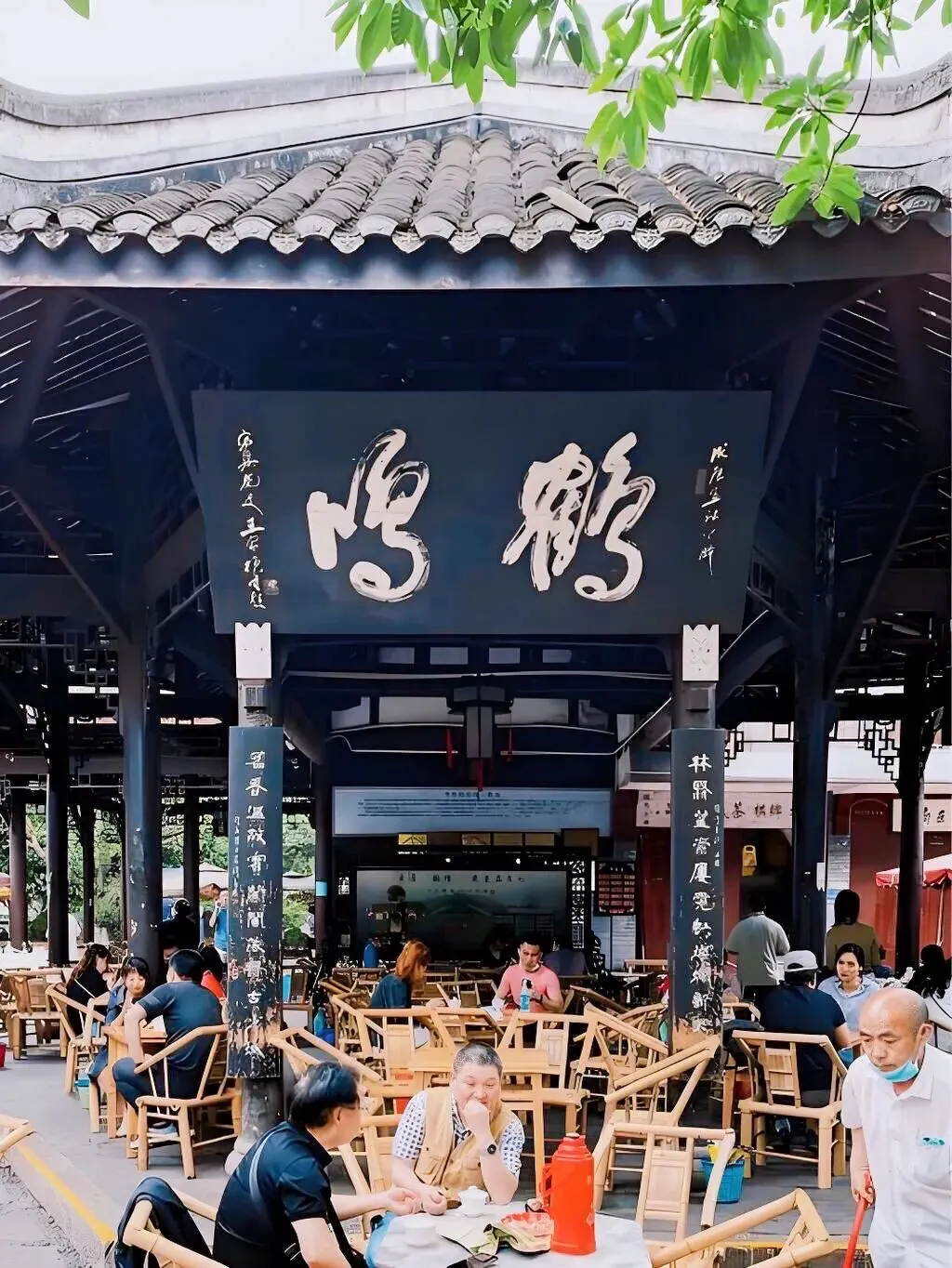
Heming was founded in 1923, making it one of the oldest continuously operating teahouses in Chengdu.
It is also famous, photographed and busy — which can make travelers searching for “authentic Chengdu” suspicious. But fame has not stopped it from functioning as a real teahouse.
Old men read, groups talk, cards appear on tables, kettles move between bamboo chairs, and visitors mix with regular customers beneath the trees. On a sunny weekday, the scene can still feel remarkably ordinary despite the tourists.
Author's note: This is why Heming works better than I once expected. It is tourist-friendly without becoming only a tourist attraction.
The biggest advantage for an international visitor is location. You do not need to sacrifice half a day getting there. The trade-off is crowds: come for the setting and social atmosphere rather than expecting a quiet specialist tea experience.
If you're also exploring the city's historic lanes, our Kuanzhai Alley Guide can help you combine the two without unnecessary backtracking.
Location: Qingyang District
Nearest Metro: Tonghuimen Station, Line 2, Exit A; about 600 m on foot
Best for: Tea, folk performances and industrial heritage
Time to allow: 1.5–2.5 hours
Best order: Basic gaiwan tea
Da Qi is one of the easiest recommendations for travelers who want something happening around them while they drink tea.
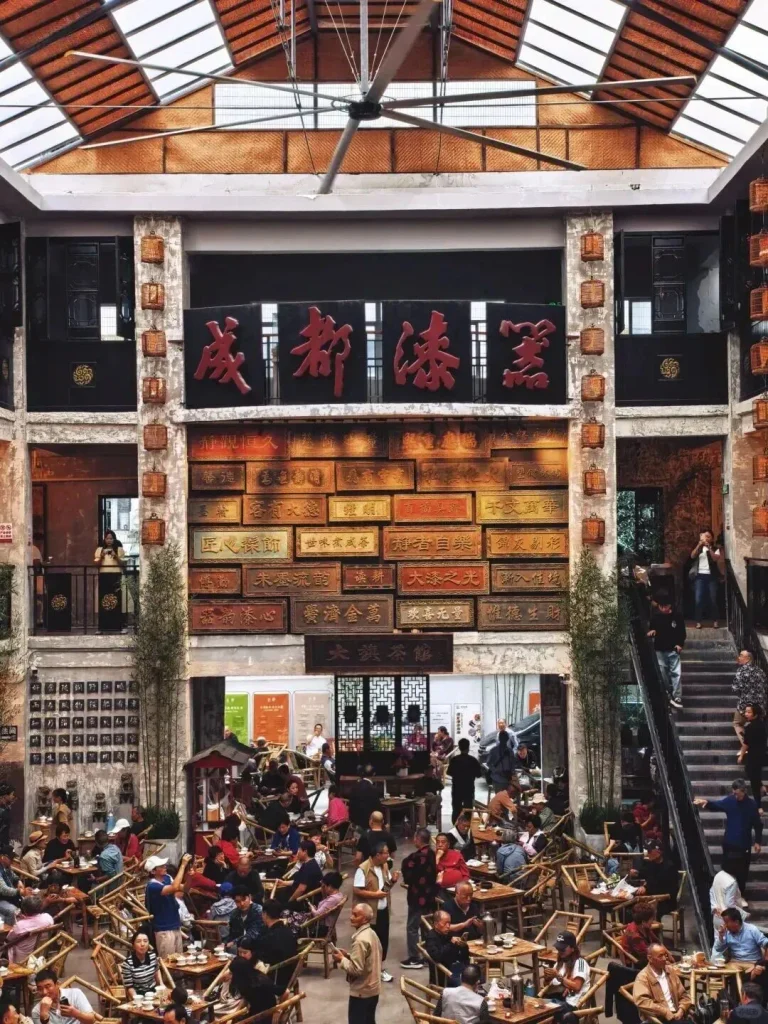
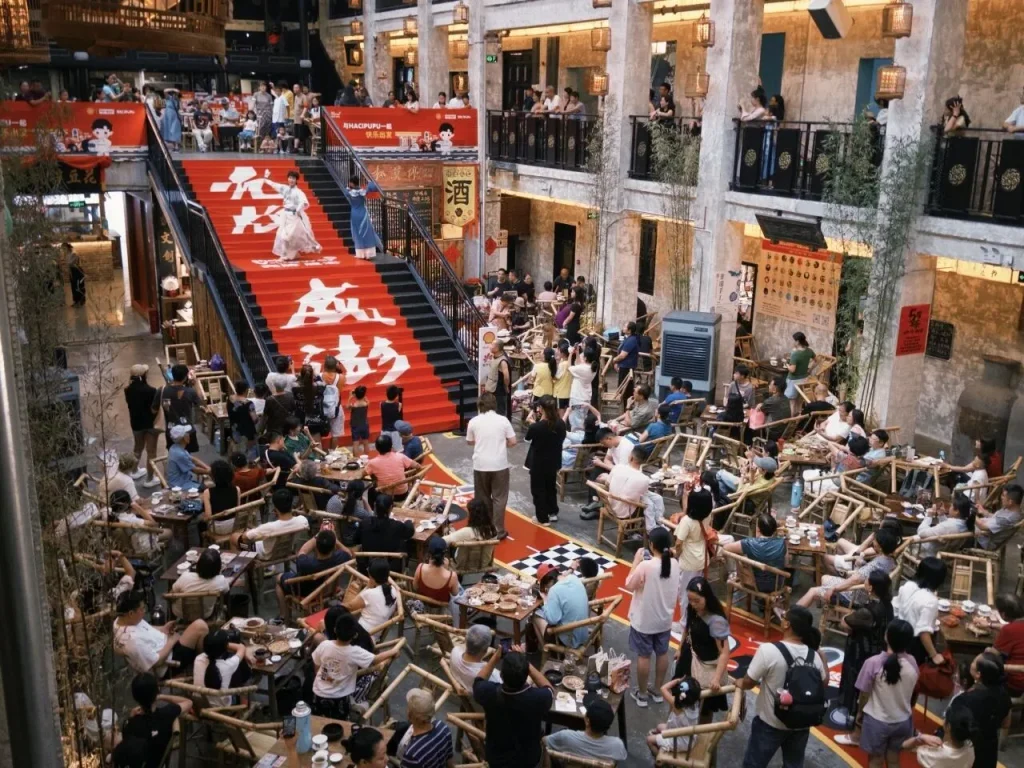
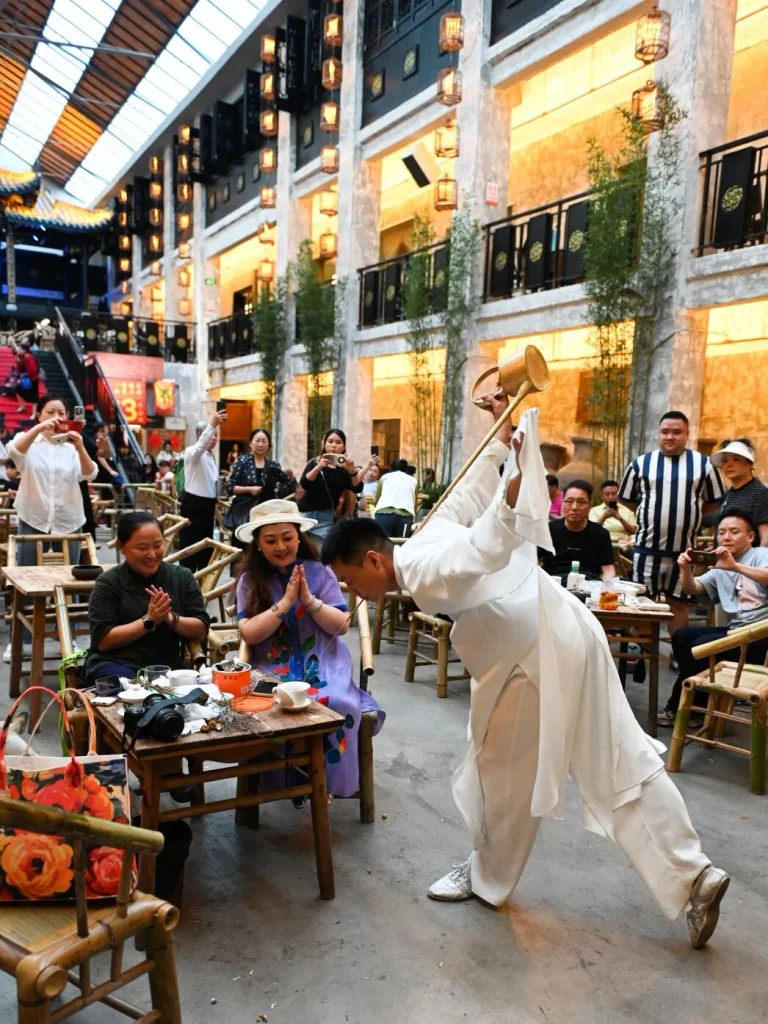
The teahouse occupies the Chengdu Lacquerware Craft Factory, with a lacquerware exhibition area upstairs. As of June 2026, GoChengdu reported two free afternoon performances combining activities such as tea ceremony, crosstalk, folk vocal arts and instrumental music. The same official guide gives Metro Line 2 to Tonghuimen Station, Exit A, followed by a roughly 600-meter walk.
That puts Da Qi somewhere between a traditional neighborhood teahouse and a modern cultural venue. It is busier and more deliberately designed than Guanyinge; if you want silence, choose somewhere else.
If you want accessible traditional culture without leaving urban Chengdu, it makes much more sense.
Location: Xima Dao Street area
Best for: Quiet atmosphere and old neighborhood spaces
Travel reality: Central Chengdu; use the Chinese venue name in Amap/Gaode for the final approach
Time to allow: 1–2 hours
Best order: Simple local tea
Guangshenggong offers a different tea experience.
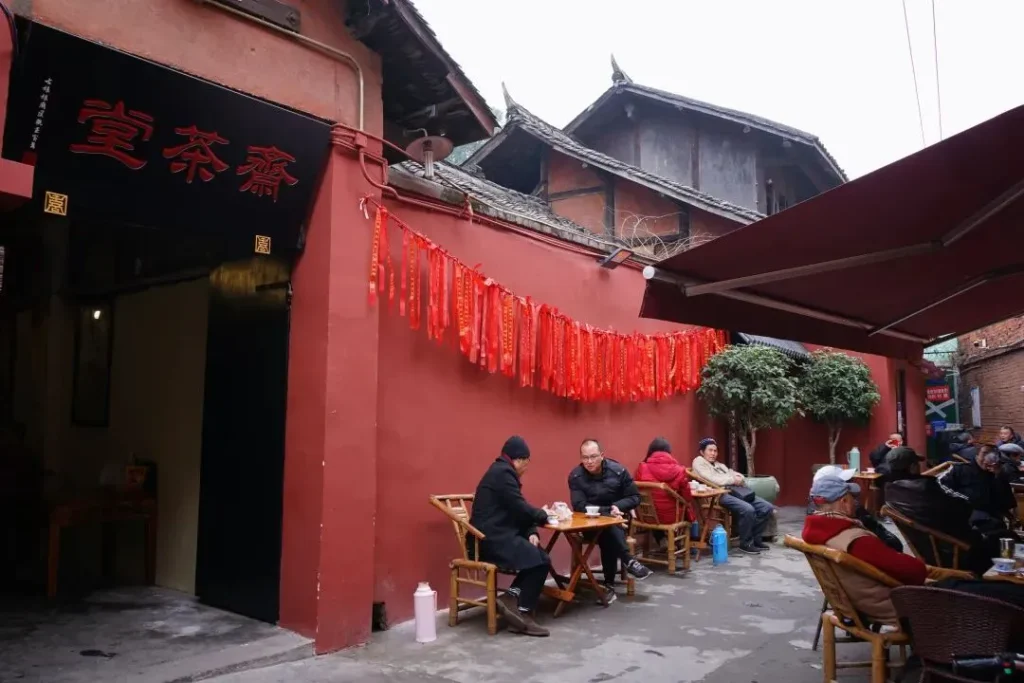
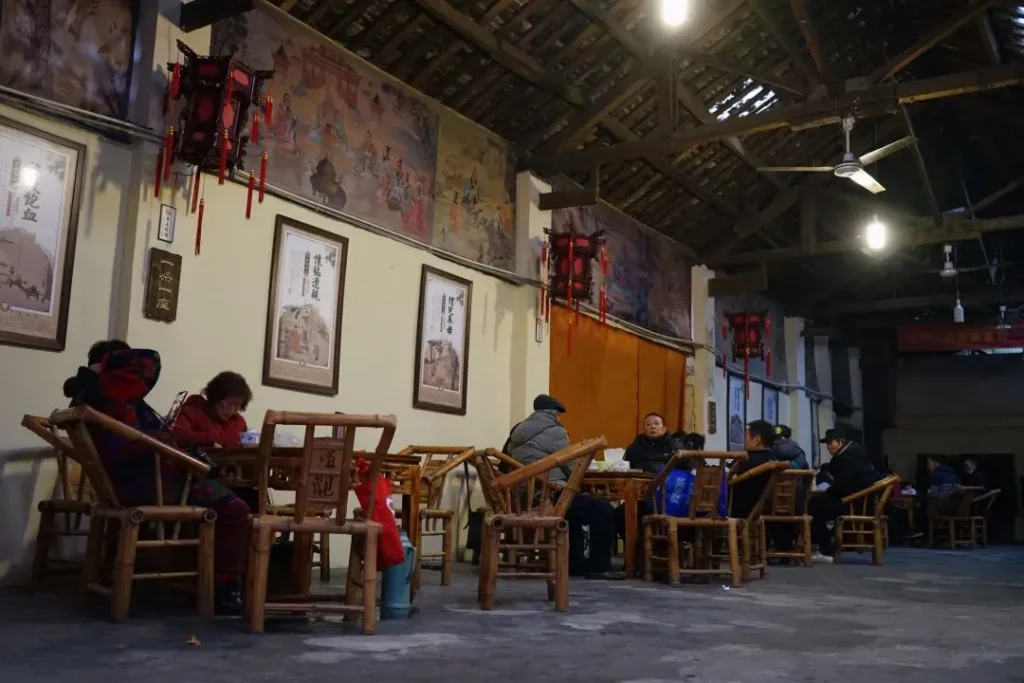
Rather than a huge sea of bamboo chairs, the appeal lies in drinking tea inside a space layered with local history. The pace is quieter, the menu is simple, and the atmosphere feels less geared toward sightseeing.
Local accounts connect the site with stories from the Three Kingdoms period. Those stories are best understood as part of local tradition rather than the main reason to visit.
Come for the courtyard atmosphere, simple tea and contrast with Chengdu's louder park teahouses.
Location: Fuqin area, Jinniu District
Best for: Community atmosphere
Travel reality: Urban and relatively easy to reach
Time to allow: 1–2 hours
Best order: Jasmine gaiwan tea
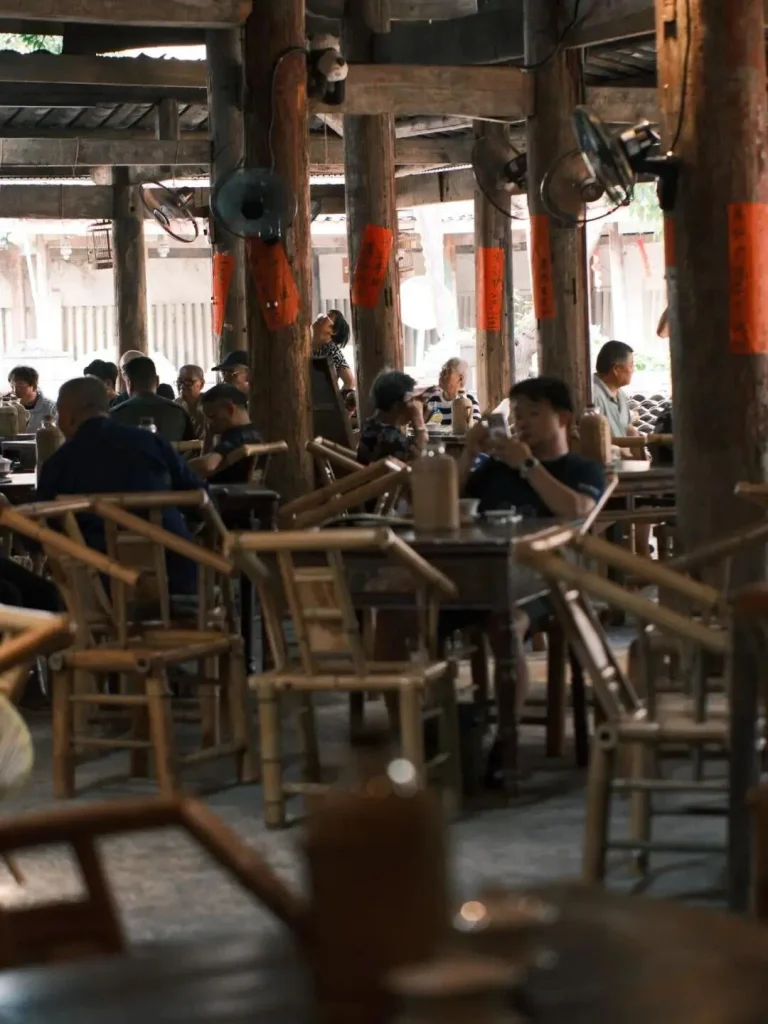
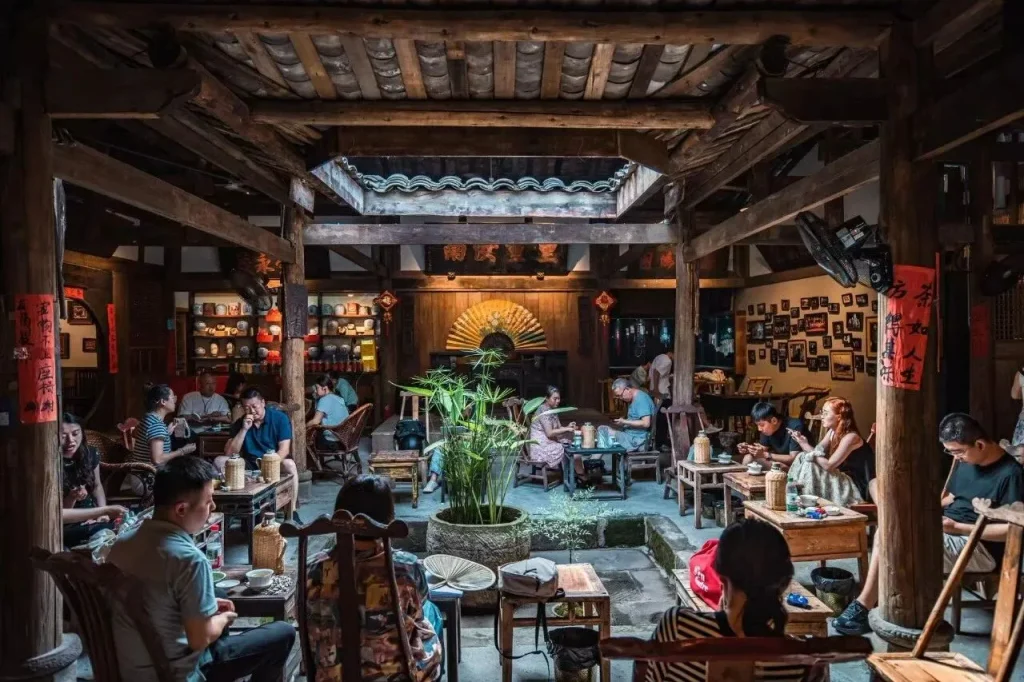
Jinqin works because people actually use it.
The courtyard-style environment may look historical, but the building should not be mistaken for an untouched centuries-old teahouse. Its character comes from traditional design, older architectural materials and its modern community role.
Residents gather. Workers stop in. People talk, rest and spend time together. It behaves like the “second living room” that writers often use to describe Chengdu teahouses.
For visitors staying in central Chengdu, that makes it an efficient glimpse of neighborhood tea culture without spending hours traveling to an outer town.
Location: Dongmen Market, beside the Li Jieren cultural area Navigation Spot: 东门市井
Best for: Literature, architecture and combining tea with food
Travel reality: Urban and metro-friendly
Time to allow: 2–3 hours
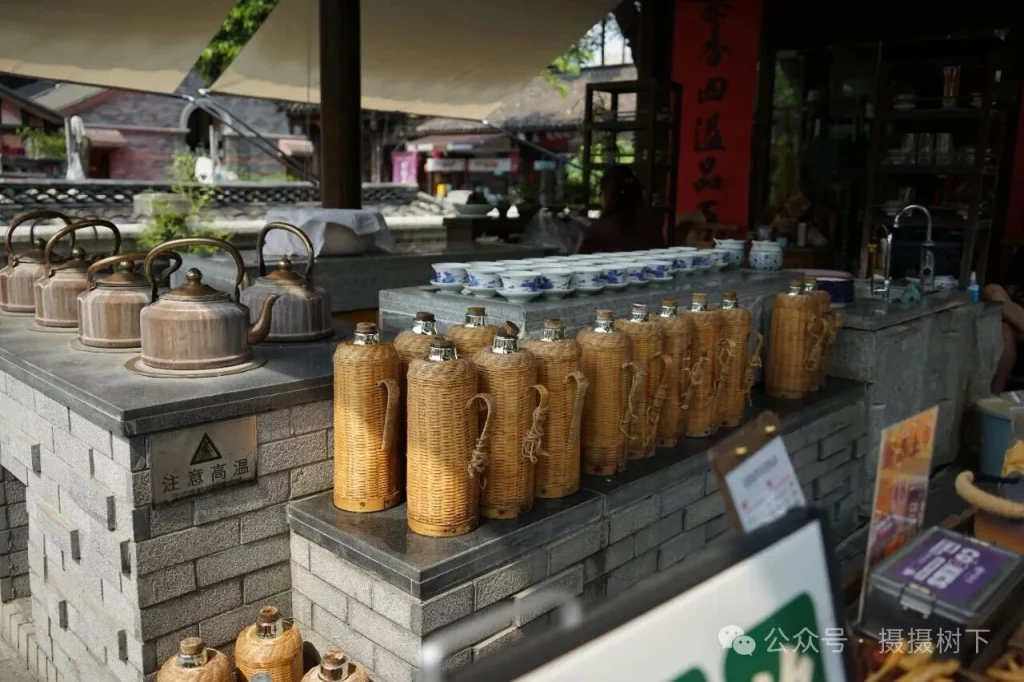
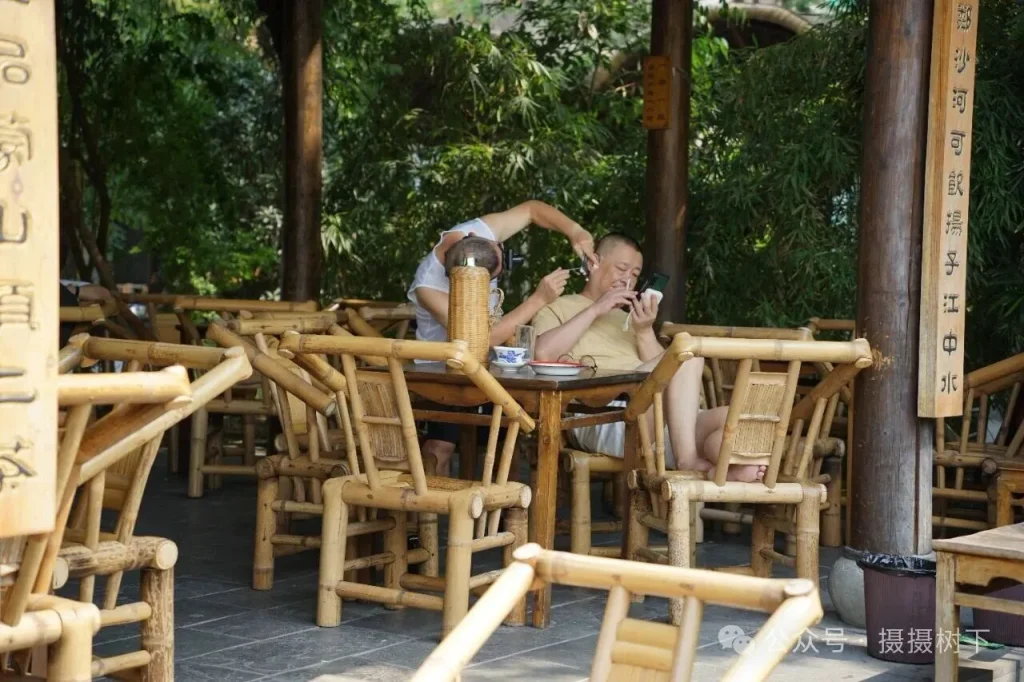
Lingke is named after the studio associated with Li Jieren (李劼人), one of Sichuan's important modern writers.
The surrounding Dongmen Market environment recreates elements of older Chengdu streetscape, so this is more curated than Guanyinge. That is not necessarily a weakness.
You can have tea, explore the surrounding neighborhood-style complex, eat local food and connect the experience with Li Jieren's literary world without committing an entire day to a distant destination.
The trade-off is simple: if your definition of authenticity requires an untouched old neighborhood teahouse, this is not it. Think of Lingke as a modern cultural space interpreting old Chengdu.
Location: Jinjiang Theatre / Huaxing Street area
Best for: Travelers specifically interested in Sichuan opera
Travel reality: Central Chengdu
Time to allow: Depends on the performance
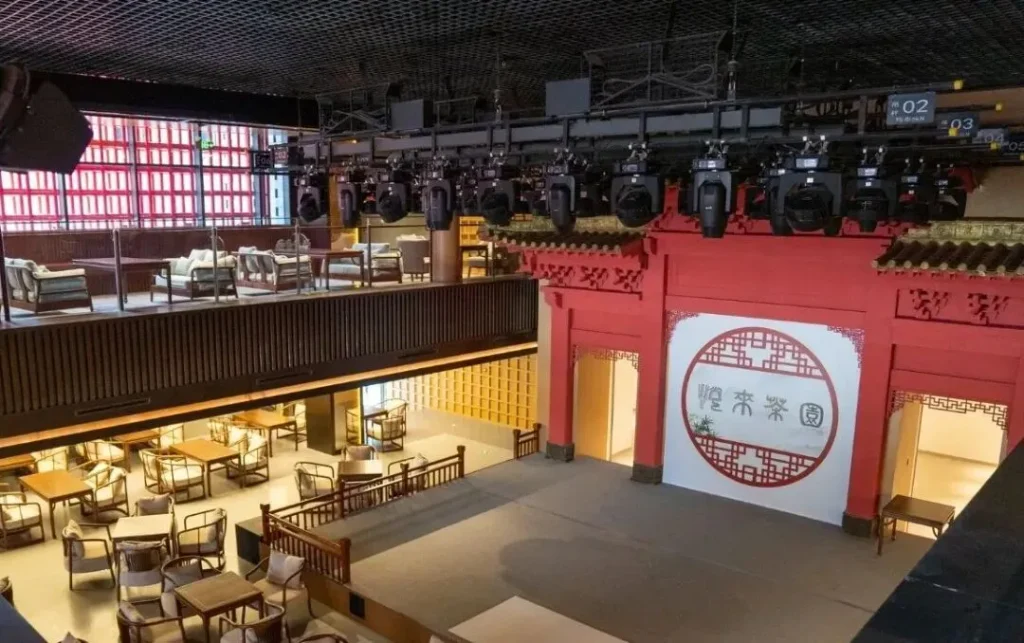
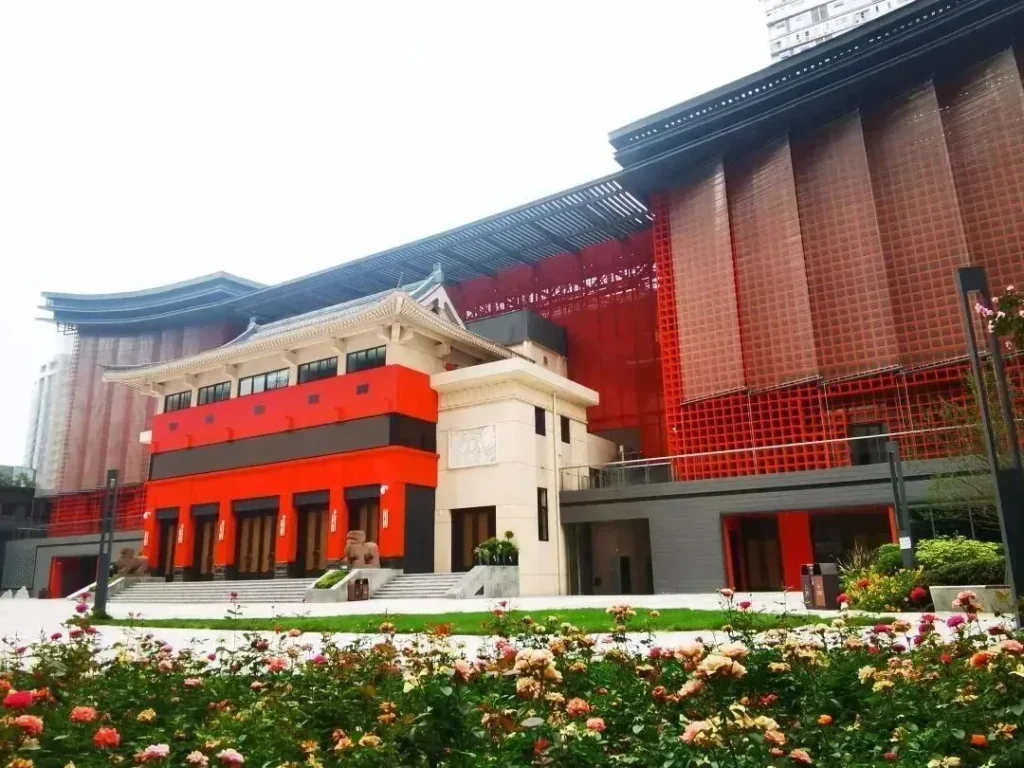
Yuelai belongs in this guide for a different reason from Guanyinge or Heming.
This is not primarily about finding the cheapest bowl of tea or photographing bamboo chairs. Its identity is tied to Chengdu's long relationship between tea and performance.
That makes it a specialist choice: choose Yuelai because you are interested in Sichuan opera, not simply because a list calls it one of Chengdu's “best teahouses.”
Why choose it over Heming? Choose Yuelai when Sichuan Opera heritage is the reason for your visit; choose Heming when you primarily want to watch everyday Chengdu teahouse life.
For a broader comparison of the city's performance options, see our Chengdu Sichuan Opera & Face-Changing Guide.
Location: Dongjiao Memory, 99 Jianshe South Road
Nearest Metro: Line 8, Dongjiao Memory Station, Exit B1; about 1 km on foot
Best for: Evening performance + tea
Time to allow: 2–3 hours
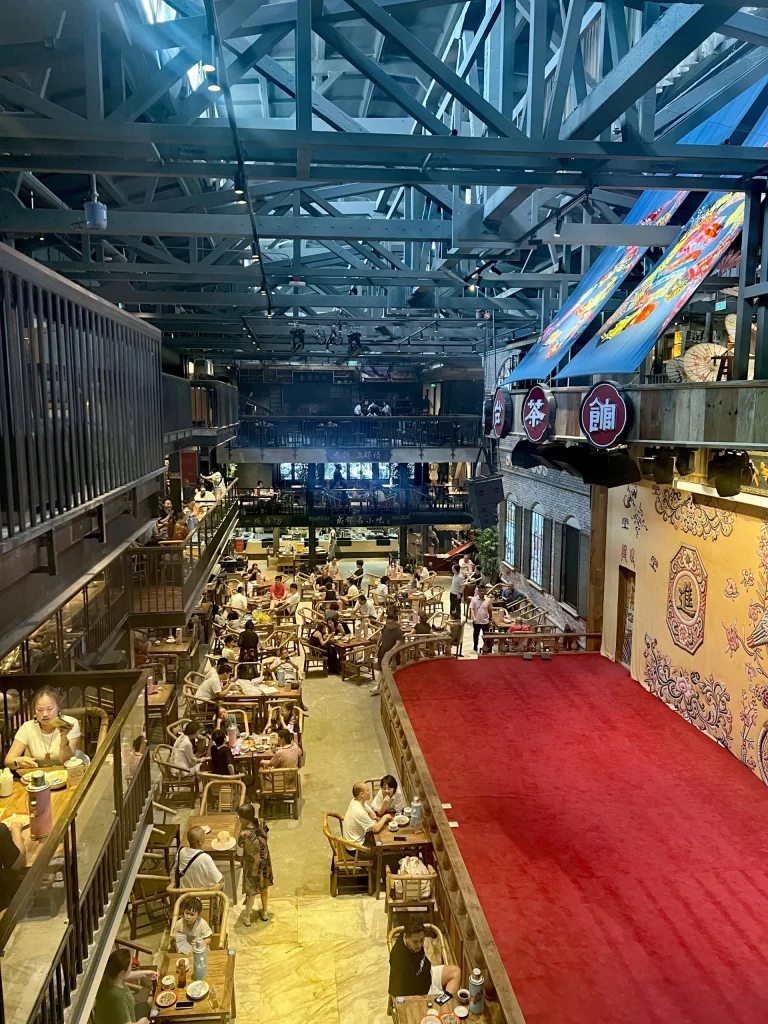
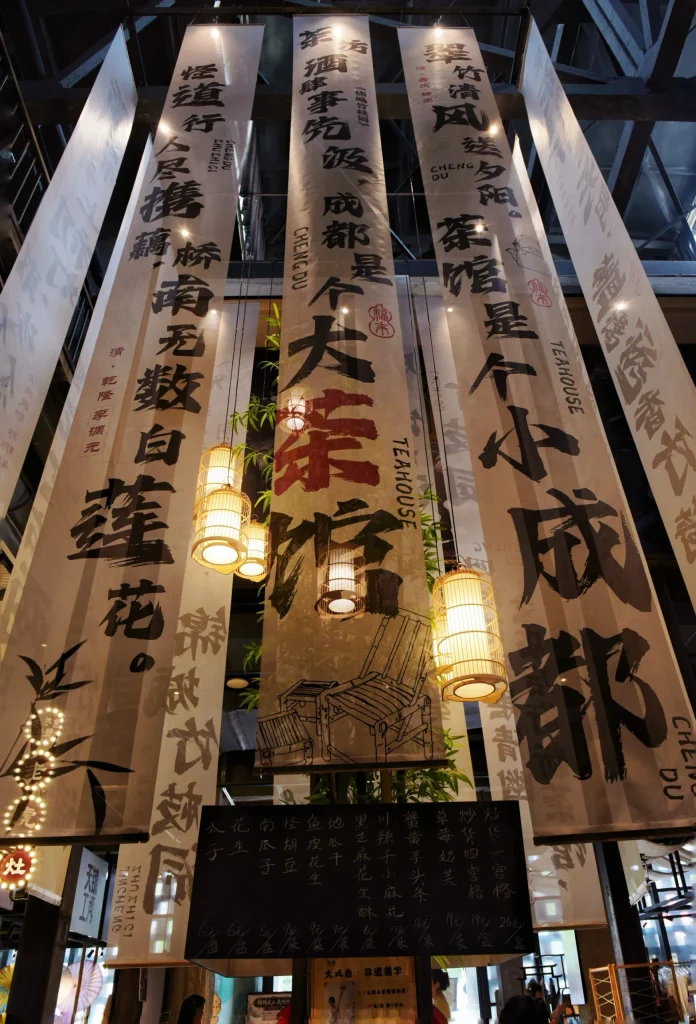
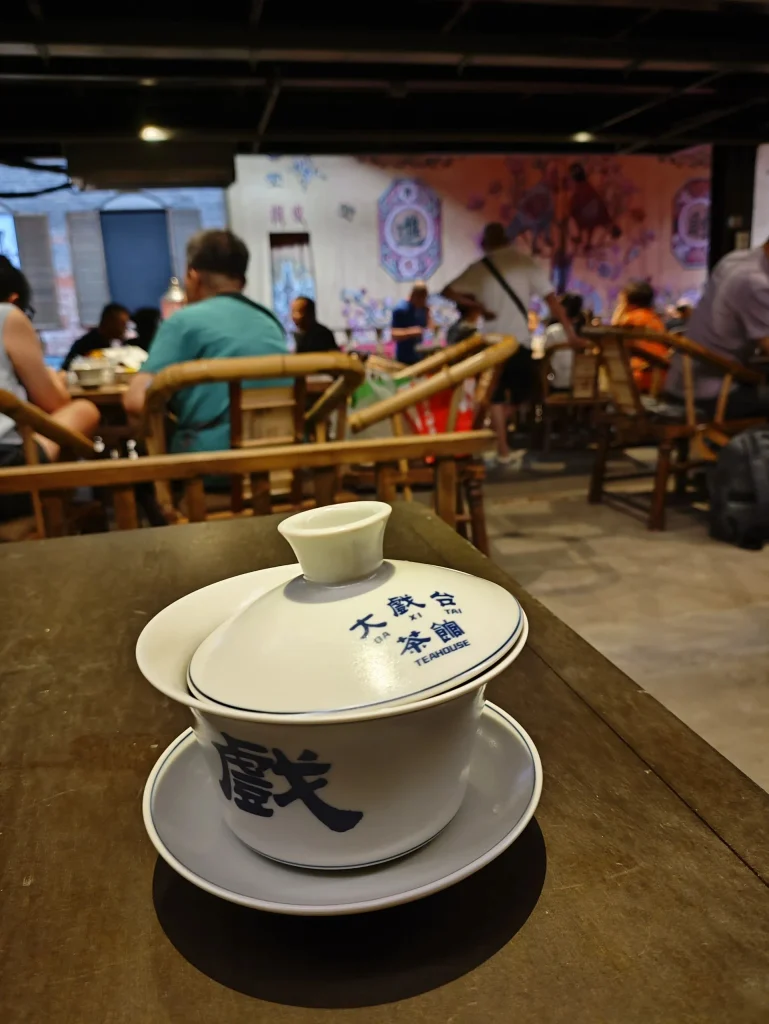
This is where it helps to distinguish traditional teahouse life from a staged cultural experience.
Both can be worthwhile. They simply answer different travel needs.
As of June 2026, GoChengdu described the venue inside Eastern Suburb Memory as a purpose-designed tea-and-performance space combining industrial architecture with western Sichuan elements. It reported two 70-minute evening shows featuring Sichuan Opera excerpts, face-changing, fire-spitting, acrobatics and magic. The official transport guidance is Metro Line 8 to Dongjiao Memory Station, Exit B1, followed by a walk of approximately one kilometer.
Don't go expecting the spontaneous neighborhood life of Guanyinge. This is a show — and sometimes a show is exactly what a traveler needs.
Location: No. 3 Huangyuan East Street, Jinniu District
Nearest Metro: Yipintianxia Station, Line 7, Exit B; or Shuhan Road East Station, Line 2, Exit A; about 1 km on foot
Best for: Sichuan folk music and intangible cultural heritage
Time to allow: 1.5–2.5 hours
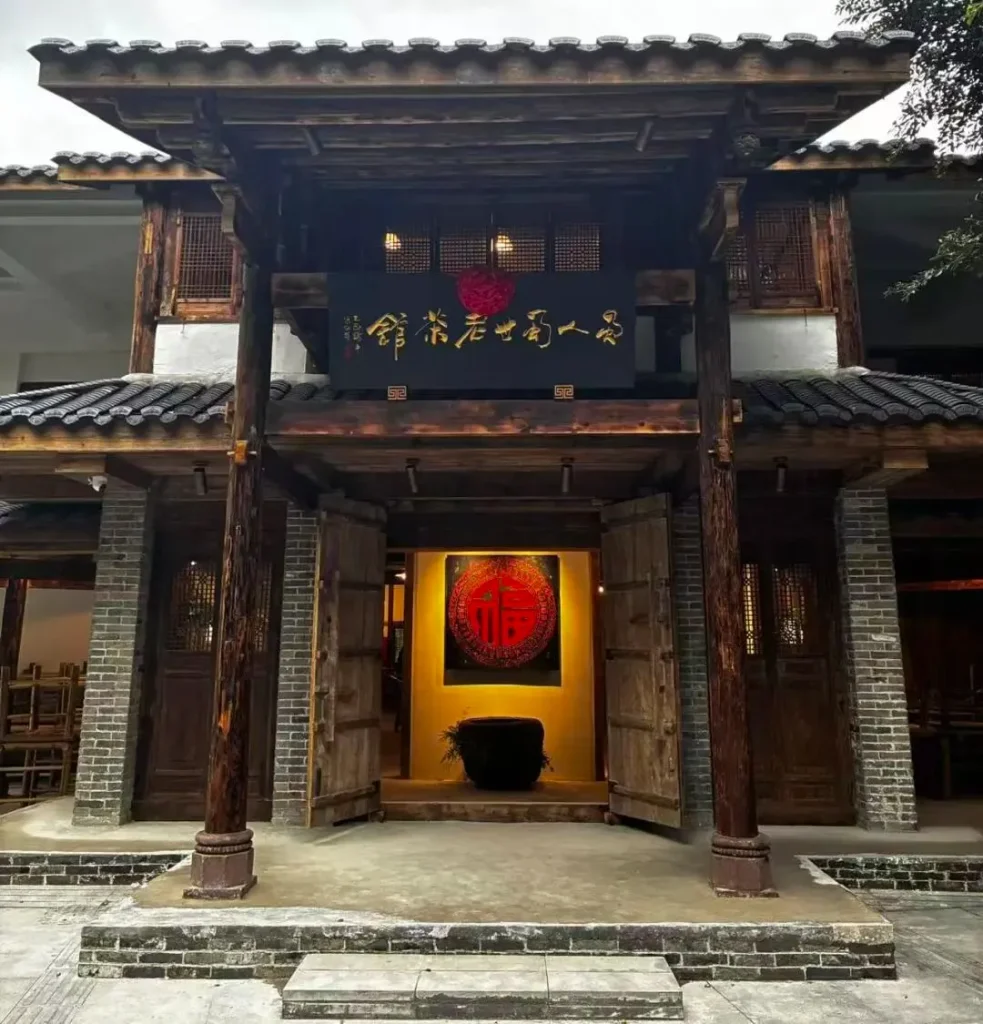
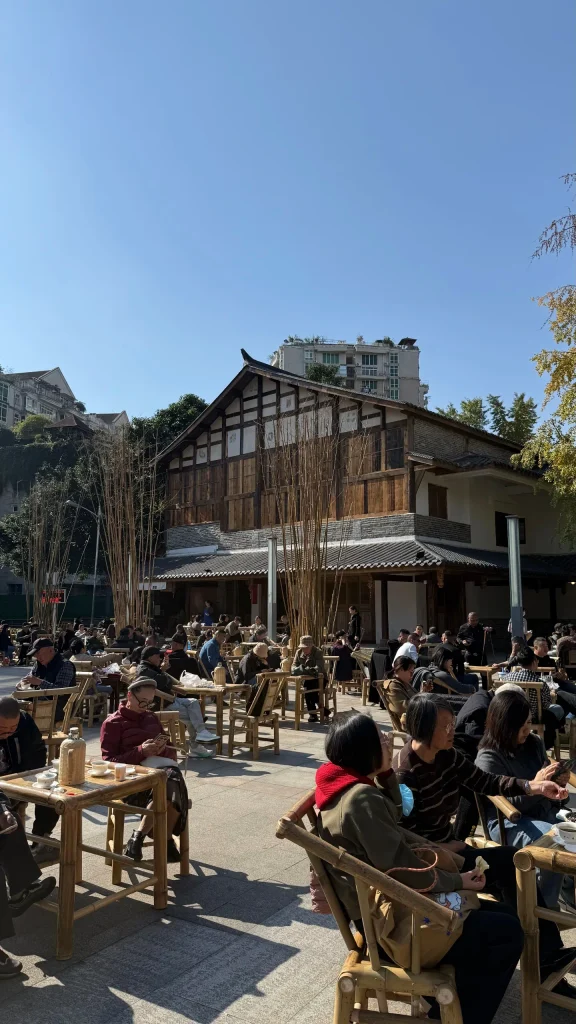
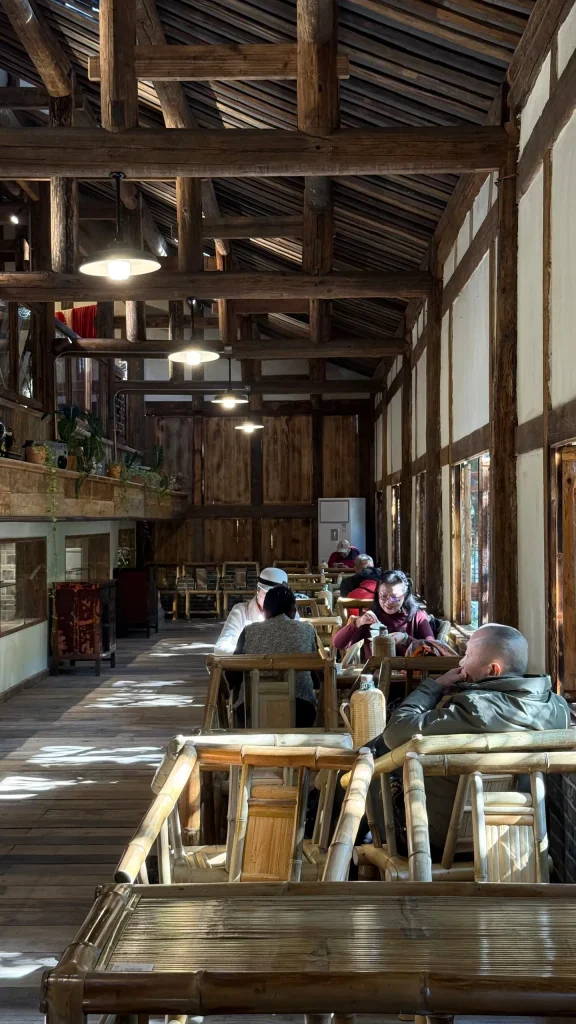
The atmosphere here leans toward traditional crafts and folk arts rather than spectacle.
GoChengdu's 2026 coverage describes gray-tiled roofs, carved wooden windows, bamboo chairs and displays of Shu embroidery, lacquerware and vintage objects. It also reports a Saturday program bringing together four traditional Sichuan vocal and instrumental forms: Jinqianban, Zhuqin, Qingyin and Yangqin. The same source confirms both metro approaches above.
Why choose it over Heming? Heming is better for classic everyday teahouse atmosphere; Shuren Shishi is the stronger choice when traditional Sichuan vocal and instrumental arts are what you actually want to experience.
Location: Living Water Garden area, along the Jinjiang River
Best for: Greenery, riverside sitting and a slower urban break
Travel reality: Urban Chengdu; use the Chinese venue name and Living Water Garden as map references for the final approach
Time to allow: 1–2 hours
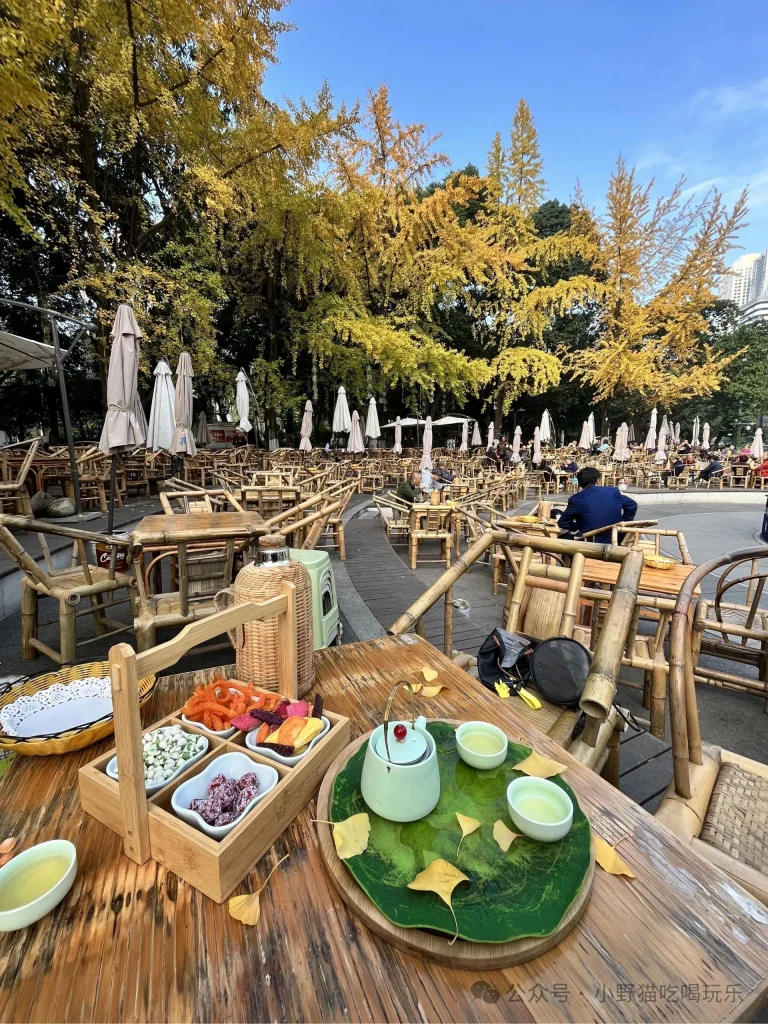
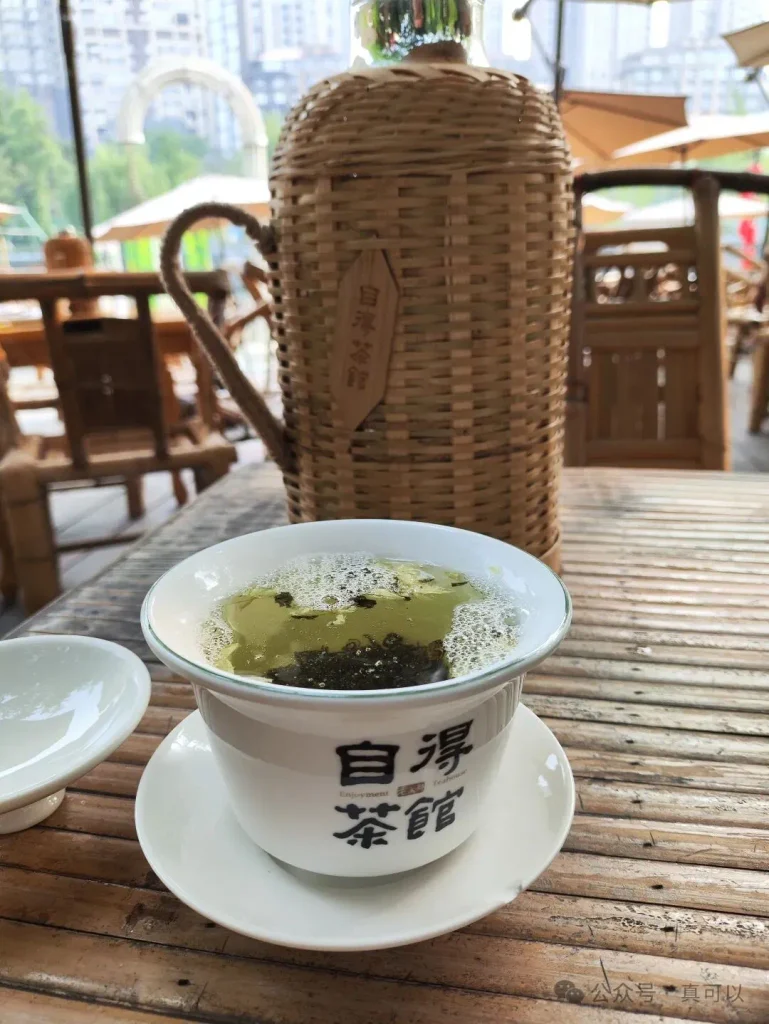
This is the option for travelers who want to slow down without spending half the day reaching an outer town.
Living Water Garden sits beside the Jinjiang River and covers approximately 24,000 square meters. Instead of building a trip around “a famous teahouse,” use tea here as part of a park-and-river afternoon.
For many foreign visitors, that flexibility is more useful than chasing a supposedly more authentic teahouse several districts away.
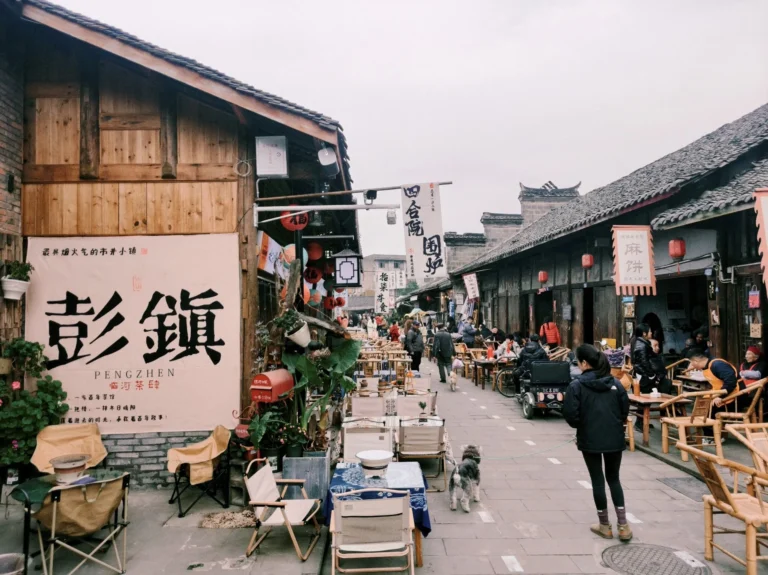
Two places stand apart from the central group: Guanyinge in Pengzhen and Baijia in Shuangliu.
They are useful choices when local atmosphere itself is part of your itinerary rather than simply a break between major attractions.
Location: Pengzhen, Shuangliu District
Address: 64 Mashi Dam Street (马市坝街64号)
Best for: Old-school atmosphere, photography and local life
Time to allow: Half a day works best
Best order: Simple jasmine-style tea
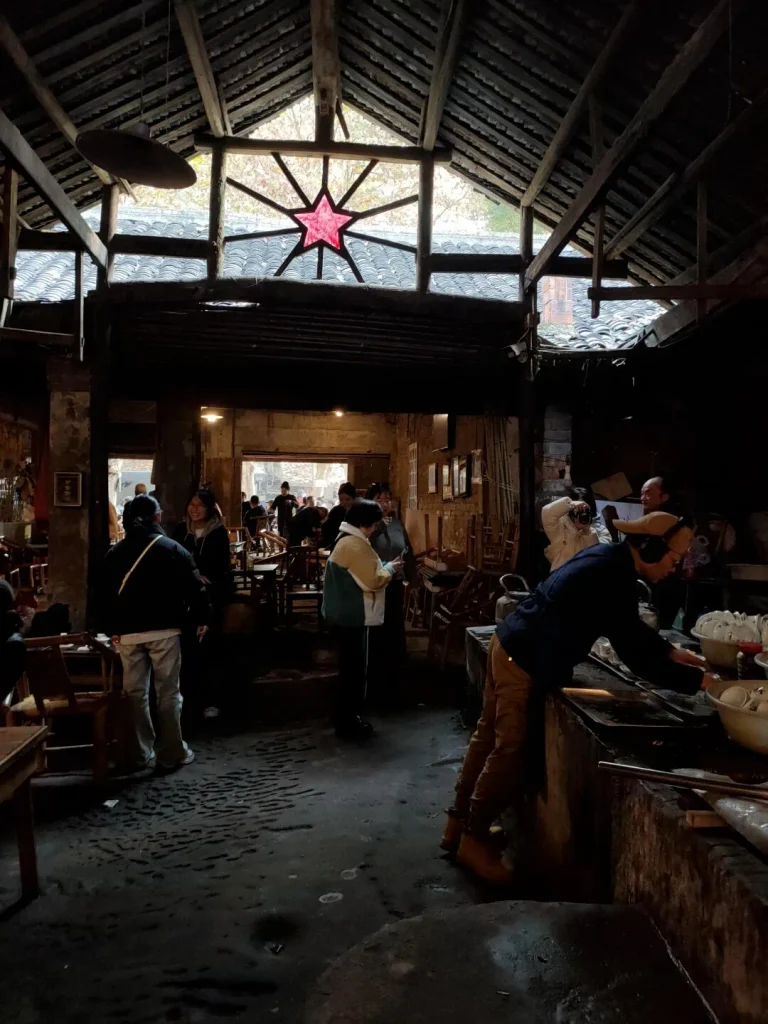
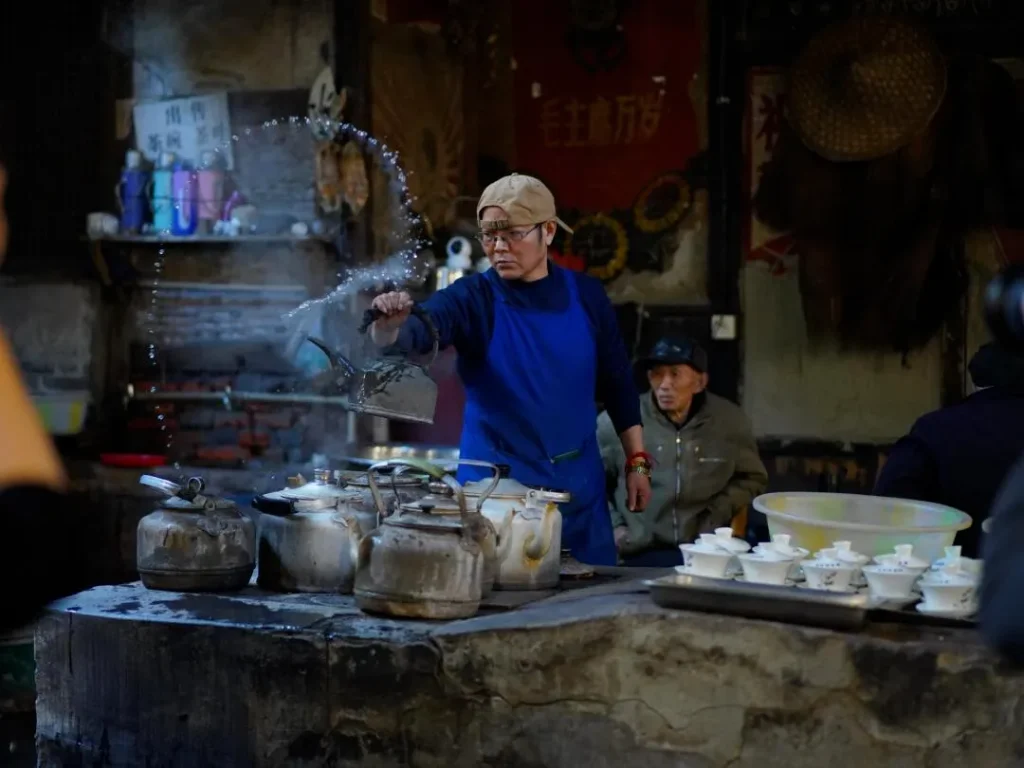
The Sichuan provincial government's Chengdu historic-building register lists Guanyinge Old Teahouse at No. 64 Mashi Dam Street in Pengzhen, so that is the address used throughout this guide.
Historical accounts trace the site to 1768, when it was known as Zhishui'an (止水庵), an old nunnery. It later became associated with teahouse use in the early 20th century. The building's age and its long role as a community space are part of what gives Guanyinge such a distinctive atmosphere.
Walk inside and the first thing you notice is the floor. It is not polished tile or decorative concrete. The dark, uneven surface carries the accumulated wear of generations of feet. Wooden furniture, steam, old walls and kettles create an environment that feels used rather than staged.
Author's observation: This is the place that best explains why an old teahouse can be more interesting than a beautiful one.
Morning is particularly atmospheric if photography matters to you.
The trade-off is travel time. Guanyinge is worth the journey when old neighborhood life or documentary-style photography is genuinely part of what you came to Chengdu to experience.
Location: Xihanggang, Shuangliu District
Best for: Inexpensive tea and community life
Time to allow: 2–3 hours including travel
Typical tea: Simple local gaiwan tea
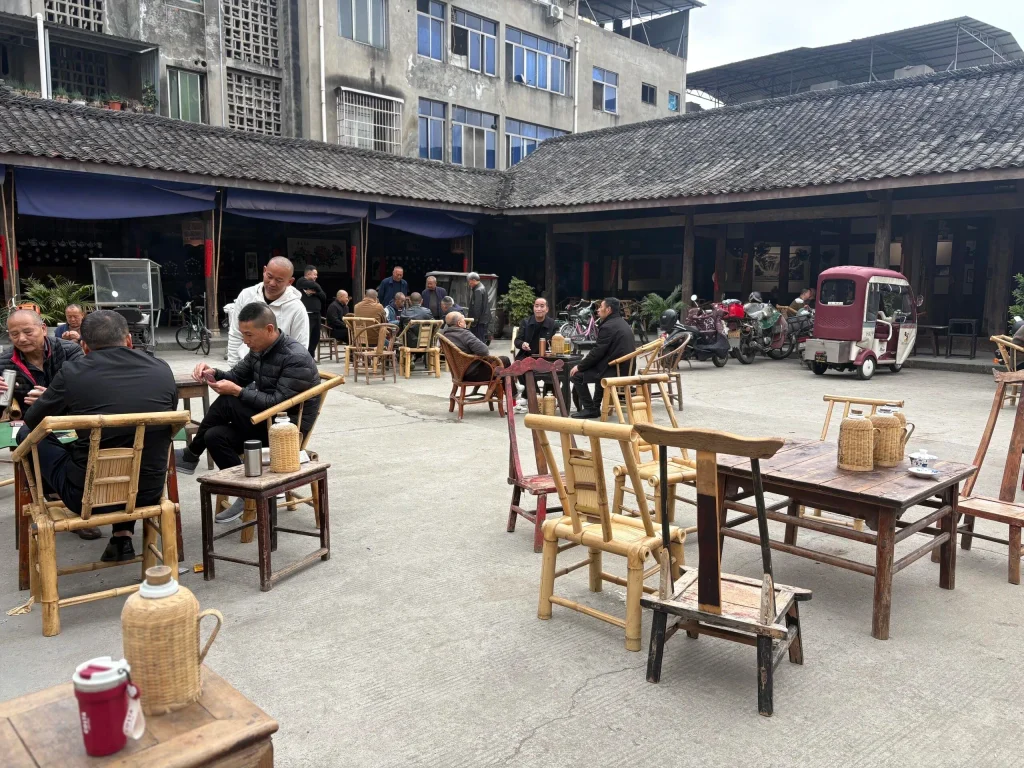
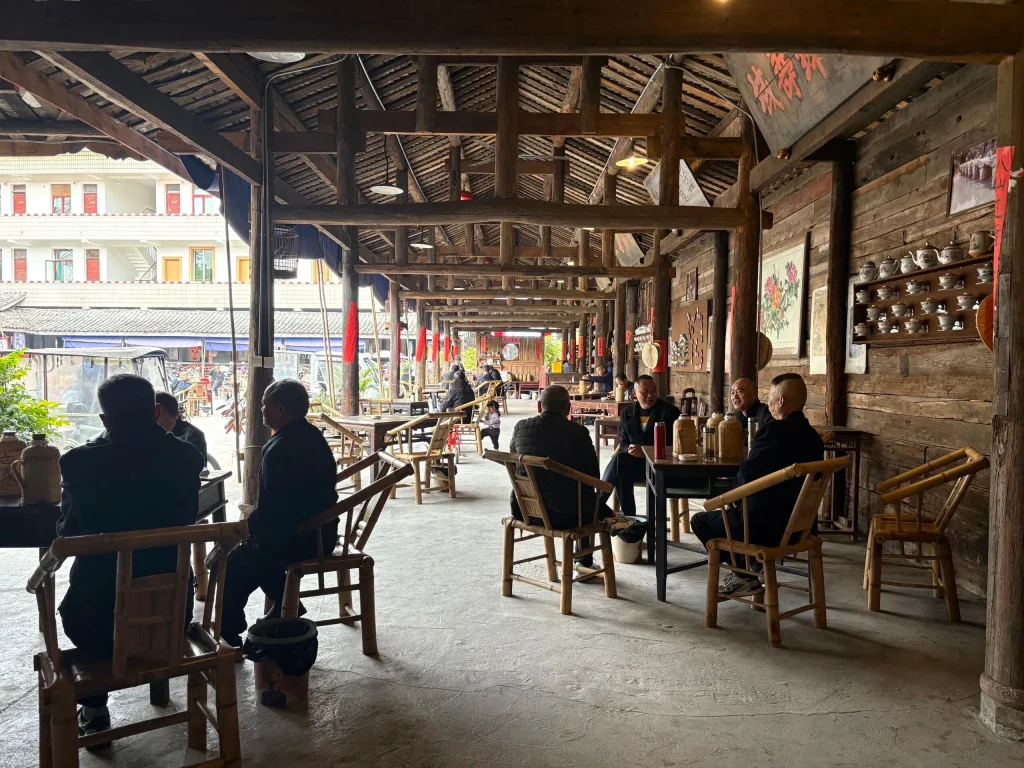
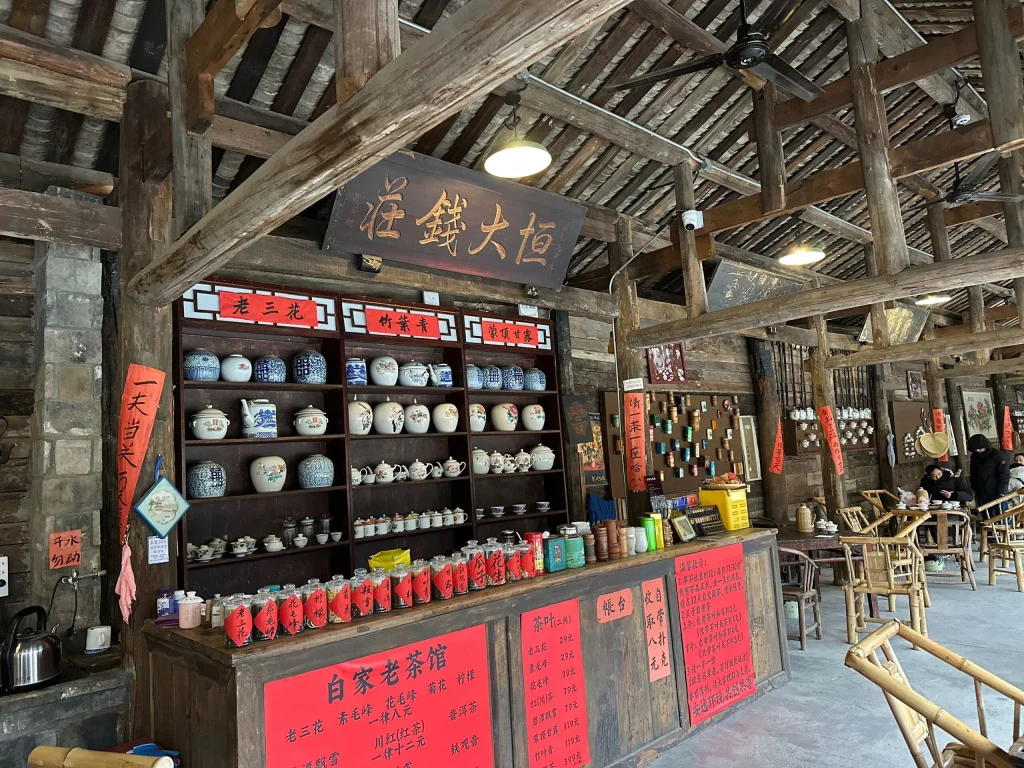
Baijia is almost the opposite of a polished tourist teahouse.
The appeal is not elaborate décor or ceremonial tea. It is watching people treat a tea space as an ordinary extension of daily life — reading, talking, resting and sometimes doing very little for a very long time.
Some local information has reported extremely inexpensive hot-water or bring-your-own-tea arrangements, including prices around ¥2. Treat that as a reference rather than a guaranteed current price.
What matters more is what Baijia demonstrates: a chair, hot water, tea and time are enough to make a Chengdu teahouse work.
The trade-off is location. Saving a few yuan is not a reason to travel to Shuangliu. Go because the community atmosphere itself interests you.
Huanglongxi deserves to be treated as one destination rather than three separate “faraway Chengdu teahouses.”
Huanglongxi Ancient Town sits roughly 40 km southwest of central Chengdu, making it a day-trip destination rather than a quick stop from downtown.
So the useful question is not:
“Should I travel to Huanglongxi just for tea?”
It is:
“If I'm already spending the day in Huanglongxi, which teahouse fits me?”
| Teahouse | Best For | Atmosphere | Choose It If... |
|---|---|---|---|
| Fuxing 复兴老茶馆 | Old-town atmosphere, photography | Lively, weathered, traditional | You want the classic old-teahouse feel |
| Longjian 龙见茶社 | Riverside relaxation, families | Slow, scenic, relaxed | You want to escape the busiest lanes |
Location: Fuxing Street, Huanglongxi Ancient Town
Best for: Old-town atmosphere and photography
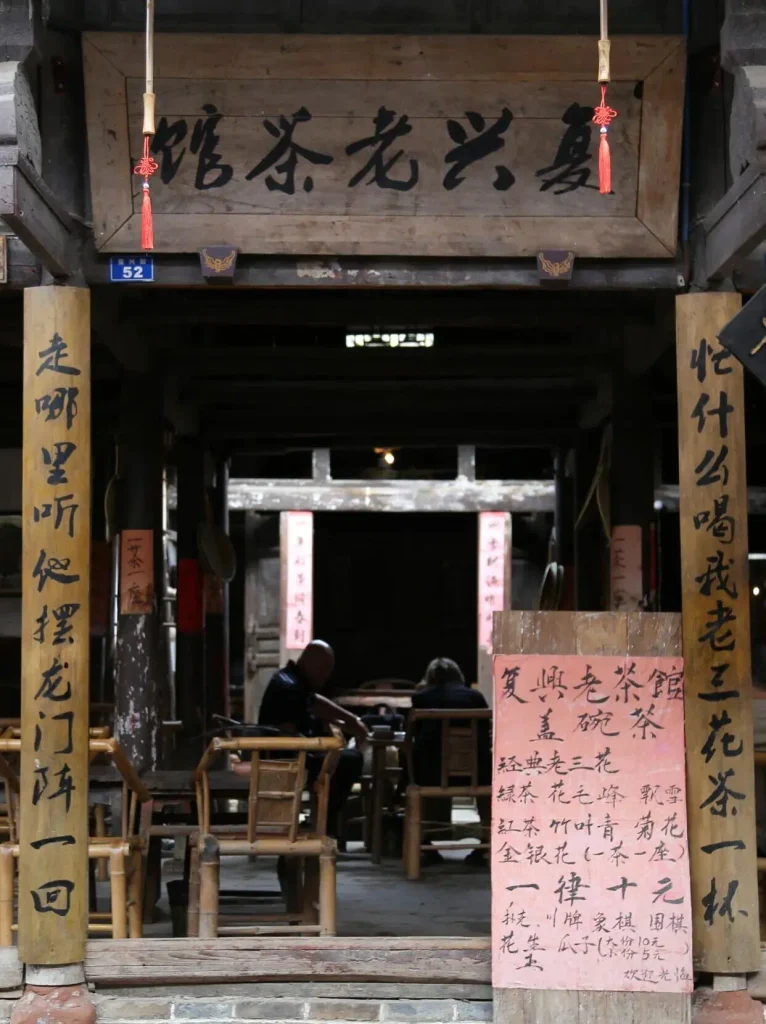
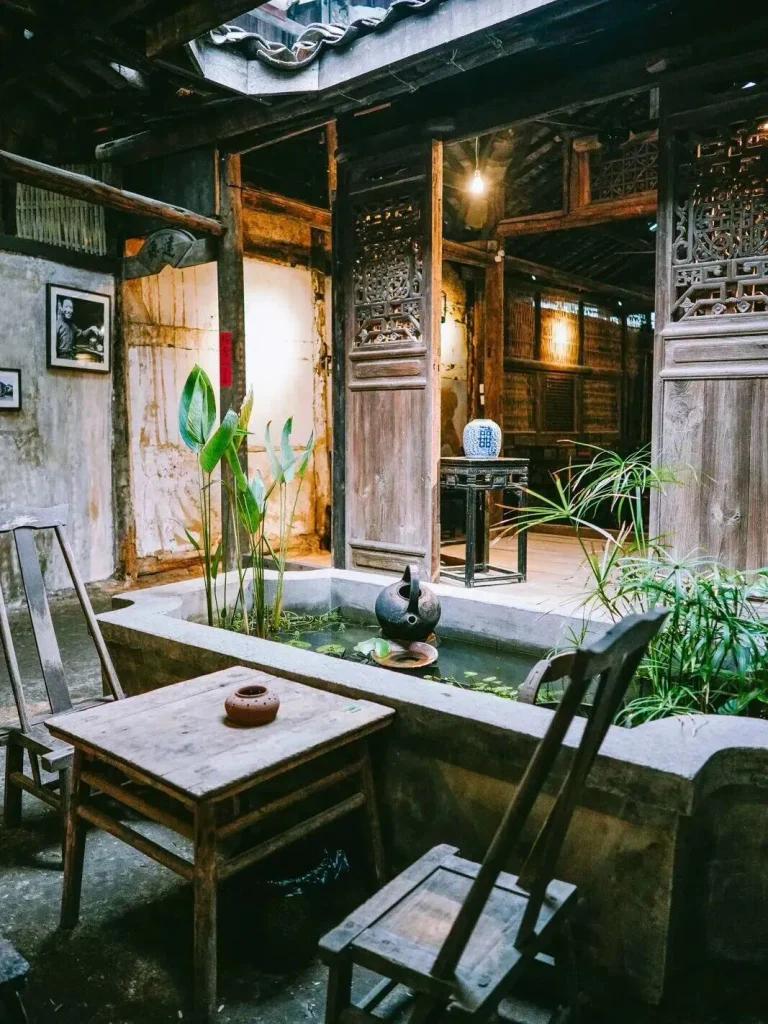
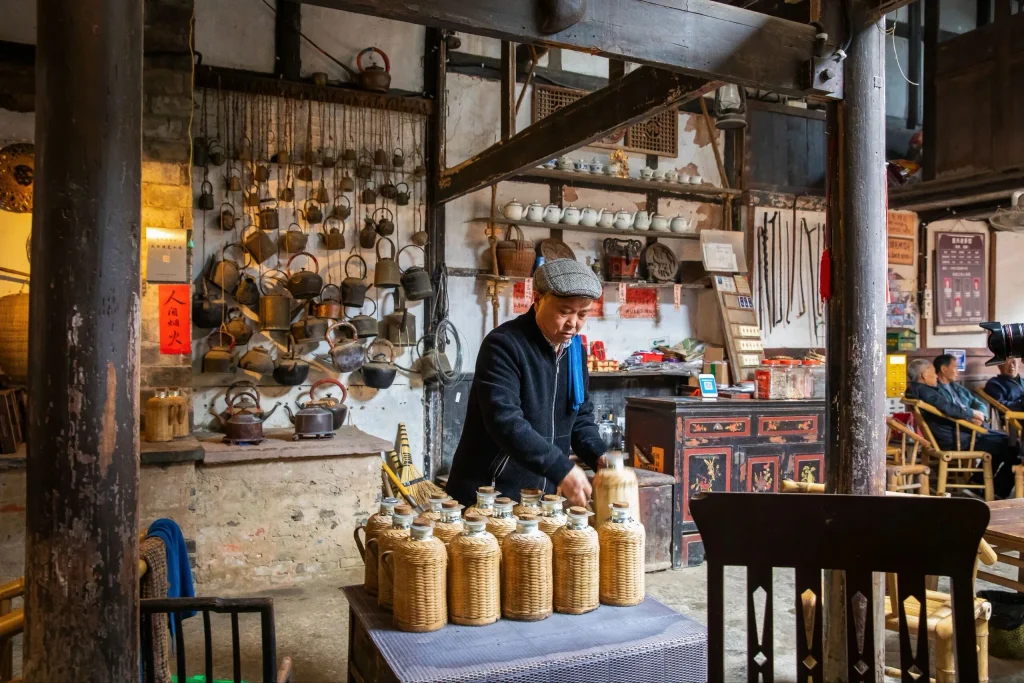
Fuxing comes closest to what many foreign visitors imagine when they hear “old Sichuan teahouse.” Its weathered interior, bamboo-woven details, traditional tiger stove (老虎灶) and long-spouted copper kettles create a much more tactile old-town atmosphere than a polished modern tea room.
If the upper floor is open, the windows offer another perspective over the old street. Local reference material has listed basic tea at around ¥10, but treat that as a reference price rather than a guaranteed current menu price.
Huanglongxi is the destination; Fuxing is part of the destination.
Location: Huanglongxi area, near the Jinjiang–Luxi river confluence
Best for: Quiet scenery, families and a slower stop
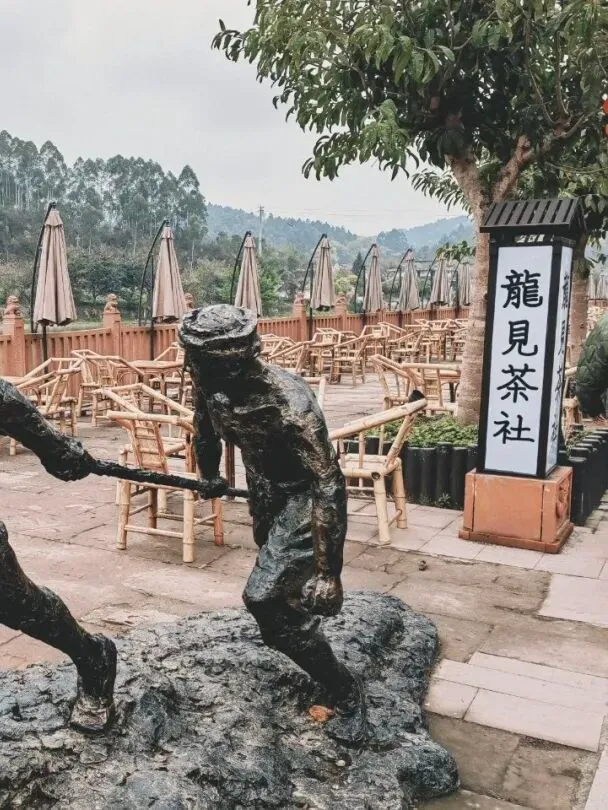
Longjian is the least about checking off a famous teahouse name. Its appeal comes from the riverside and more pastoral setting around the meeting of the waterways, giving families and slower travelers more room to decompress after the ancient town's crowded lanes.
The surrounding Longjian food-and-leisure setting also makes it easier to treat this as a longer rest rather than a quick bowl of tea.
If Fuxing is about old-town character and tea and aesthetics, Longjian is about space and slowing down.
| If You Want... | Choose |
|---|---|
| Old Sichuan atmosphere + photographs | Fuxing |
| Riverside + family-friendly slow time | Longjian |
There is no need to drink a full bowl at all three. Pick the one that fits the rest of your Huanglongxi day.
| You Want... | Choose | Why |
|---|---|---|
| Classic first experience | Heming | Bamboo chairs, gaiwan tea, central location |
| Old-school photography | Guanyinge | Strongest time-worn atmosphere |
| Neighborhood life | Jinqin | Local community without a long journey |
| Budget local experience | Baijia | Simple, everyday tea culture |
| Tea + folk performances | Da Qi | Easy cultural combination |
| Professional evening show | Grand Stage | Tea + staged Sichuan performance |
| Sichuan folk arts | Shuren Shishi | Traditional regional performances |
| Quiet historic setting | Guangshenggong | Smaller-scale atmosphere |
| Green urban break | Zide | Riverside setting |
| Literature + food | Lingke | Cultural stop that combines easily with a half-day |
| Ancient-town tea | Fuxing / Longjian | Three moods within Huanglongxi |
For most first-time international visitors, convenience deserves more weight than Instagram gives it.
A teahouse ten minutes from the rest of your itinerary can produce a better afternoon than a “hidden gem” that requires two extra hours of transportation.
| Time Available | Best Strategy |
|---|---|
| About 1 hour | Heming, Jinqin or Zide |
| 2–3 hours | Da Qi, Lingke, Grand Stage or Shuren Shishi |
| Half a day | Guanyinge / Pengzhen |
| Most of a day | Huanglongxi + its teahouses |
The important point is not to turn “one hour” into a stopwatch.
If you order tea, photograph it and leave 20 minutes later, you have seen the furniture but missed the point.
People's Park → Heming Teahouse → Kuanzhai Alley
Start at People's Park, give Heming at least an hour, then continue toward the historic central neighborhoods. This is the easiest combination for a first-time visitor and requires the least transportation.
Baijia → Pengzhen → Guanyinge
This works better for travelers who have already seen Chengdu's major sights and want to spend time in less polished neighborhood environments.
Allow roughly 30–45 minutes between the Baijia area and Pengzhen by car under normal traffic, and leave extra buffer during peak periods. Use this as a flexible planning estimate, not a guaranteed transfer time; always verify on your mapping app on the day.
Use ride-hailing for the awkward sections rather than trying to optimize every transfer. Before going, set up DiDi for foreign travelers.
Fuxing → explore Huanglongxi → Longjian
You do not need to drink full bowls of tea at all three. Start with Fuxing for the old-town atmosphere, explore the streets, then choose Longjian for a slower riverside finish.
For old neighborhood teahouses, weekday mornings often give you the clearest view of ordinary local routines. Sunny afternoons produce the fuller social atmosphere people associate with Chengdu's bamboo-chair tea culture.
Performance-oriented venues are different. Your timing should follow the performance rather than the tea.
Chinese map apps are much more useful than relying only on Google Maps for small local venues. Before leaving your hotel, see our China Navigation Apps Guide for Foreign Visitors.
The first is treating every teahouse as interchangeable. A neighborhood tea hall, a park teahouse, a craft-tea room and a ticketed Sichuan-opera venue may all serve gaiwan tea, but they provide completely different experiences.
The second is ignoring geography. Pengzhen is not People's Park, and Huanglongxi is not central Chengdu.
The third is rushing. You can see a teahouse in 20 minutes. To understand why it matters in Chengdu, stay a little longer.
The fourth is going too far purely in search of “authenticity.” Local life exists inside central Chengdu too. You do not automatically receive a more authentic experience for every kilometer you travel away from Chunxi Road.
And the fifth is arriving without working navigation, payment or ride-hailing.
For payment, our China Payment Guide for Foreigners explains Alipay, WeChat Pay, foreign cards and cash. I would still carry some RMB cash when visiting small traditional businesses.
Less than you think.
Chengdu's traditional teahouses are generally relaxed rather than ceremonial. If a table is partly occupied, ask before sharing it. Don't move another customer's tea bowl or chair without permission. Jasmine tea is an easy first order if you are unsure what to choose.
With a gaiwan, use the lid gently to move floating leaves aside and sip slowly. Hot-water refills are common in traditional teahouses, although the exact arrangement varies.
You may see experienced customers tapping their fingers on the table after a refill or positioning the gaiwan lid in particular ways. Foreign visitors do not need to memorize a list of “secret signals.”
A smile and a simple xièxie (谢谢) work perfectly well.
The most important etiquette is simpler: don't turn someone else's ordinary afternoon into your photo shoot. Ask before taking close-up photographs of people.
The tea may be traditional. Getting there is a very modern China travel problem.
Save the Chinese name and address before leaving your hotel. This is particularly useful for Pengzhen, Shuangliu and Huanglongxi, where searching only an English venue name can be frustrating.
Set up mobile payment before the trip, but keep cash as a backup.
And don't wait until you're standing on a side street in Shuangliu to discover your phone has no usable data. If connectivity is still confusing, compare your options in our China eSIM vs SIM Guide.
These preparations are boring. They are also what allow you to enjoy the unhurried part once you arrive.
If your trip is extremely short, you do not need to cross the city just to drink tea.
But I would make room for one teahouse.
Pandas tell you something about Sichuan's wildlife. Museums explain its history. Hot pot reveals its appetite. A teahouse shows you something harder to put behind glass: how people occupy time together.
Sit long enough and the attraction itself starts disappearing. You stop noticing the bamboo chairs. You stop photographing the gaiwan. Someone nearby begins another conversation. A kettle arrives, cards hit a table, and someone falls asleep.
Nothing particularly important happens.
That is why I remember it.
Yes. Save the Chinese name and address in a Chinese map app before you go. At most traditional teahouses, pointing to a tea option and using a few basic words is enough; you do not need to understand a formal tea ceremony.
Sometimes, but it depends on the teahouse. A few neighborhood venues have historically offered bring-your-own-tea or hot-water arrangements, while most tourist-facing teahouses expect you to order from their menu. Ask before sitting down rather than assuming.
Usually you should order something. A bowl of tea effectively pays for your seat and, at many traditional teahouses, includes subsequent hot-water refills. The culture encourages lingering, but that does not mean the seat is free.
Photographing the room, tea or general atmosphere is usually straightforward, but ask before taking identifiable close-up portraits. This matters especially at places such as Guanyinge, where ordinary customers have become part of the visual attraction for visiting photographers.
Usually not for ordinary tea drinking. Ticketed performances are different: venues offering scheduled Sichuan opera or evening shows may require advance booking, especially on busy dates.
Many ordinary teahouses are social public spaces and can work well for families. Outdoor park teahouses and Huanglongxi stops are generally easier with children than quiet specialist tea rooms or longer ticketed performances.
Choose the teahouse that fits the trip you are already taking, not the one with the most romantic photograph online.
For a first visit, Heming is the easiest introduction: central, historic and unmistakably Chengdu. If old-school atmosphere and photography matter enough to justify a special journey, choose Guanyinge. If you want tea and performance without leaving urban Chengdu, look at Da Qi or Grand Stage.
And if Huanglongxi is already on your itinerary, don't rush through the ancient town just to collect sights. Choose Fuxing for old-town atmosphere, Longjian for a slower riverside break.
If you read nothing else: Heming for your first Chengdu teahouse. Guanyinge only if you're willing to give it half a day.
The one rule that matters most is still the simplest:
You don't go to a Chengdu teahouse to do something. You go there to stop needing to do something.
Give it an hour. Two is better.
GoChengdu — Come Here for Tea and Operas
GoChengdu — Huanglongxi Ancient Town
GoChengdu — Chengdu Tourism Guide
Sichuan Provincial Government — Chengdu Historic Buildings Register
Updated September 2026. This guide was checked against Chengdu tourism information and Sichuan government records, with particular attention to location and travel-time decisions for overseas visitors. Stable facts such as district, official address and venue type are separated from changeable details such as prices and performance schedules. For small independent teahouses, check current operating details shortly before visiting.
TripChina.me creates practical China travel guides shaped by real local experience, helping independent travelers navigate transport, payments, food, neighborhoods, and the cultural details that make traveling in China easier and more meaningful. Find the guide for your destination at tripchina.me.