Our Location:
No. 99, Jiazi Road, Chengdu

 authorChris Lee
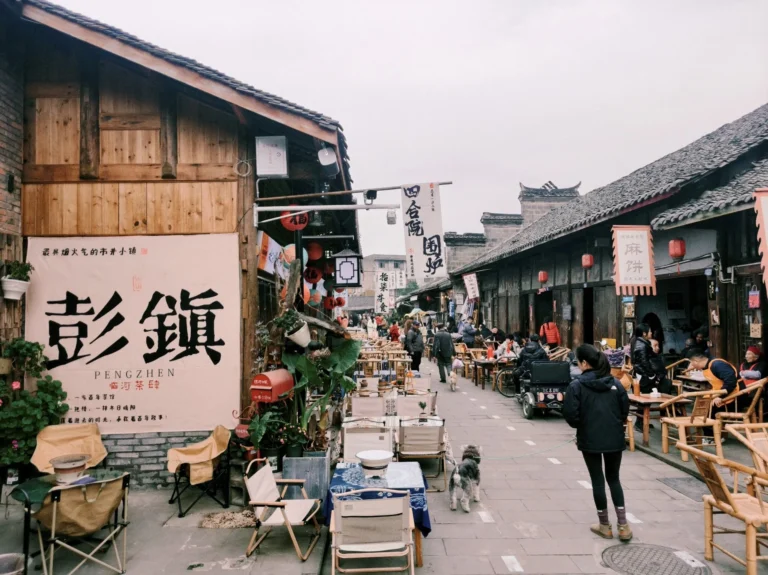
Tangchang Ancient Town(唐昌古城) sits in Pidu District, roughly 40 kilometers northwest of central Chengdu. Unlike better-known ancient towns built around tourism, Tangchang still works as an ordinary local town: people shop, drink tea, eat lunch and live behind its old facades. This guide covers the current public-transport route, market days, historic sights, local food, walking routes and the practical details foreign travelers need before making the trip.
Yes—if you value local life, historic streets and food more than polished attractions or entertainment.
| What to Know | Quick Answer |
|---|---|
| Admission | The old-town streets are free to explore |
| Location | Tangchang, Pidu District, roughly 40 km northwest of central Chengdu |
| Travel time | Around 50–70 minutes by car; public transport usually takes longer |
| Time needed | Half a day for the old lanes, lunch and tea |
| Best for | Old lanes, heritage buildings, local food, market culture and slow travel |
| Best time | Weekday mornings; even-numbered market days are livelier |
| Main sights | Chongning Confucian Temple, Liang Family Courtyard area, Dachun Lane, Chongning Park and old streets |
| Public transport | Metro to Xipu + Bus P212 is the clearest currently verified route |
| Booking | No general ancient-town ticket or advance reservation is required |
| Main drawback | Fewer conventional “must-see attractions” and less English support |
Information checked as of September 2026. Bus departure times, heritage-building access, restaurant hours and temporary events can change, so verify dynamic details on the day you travel.
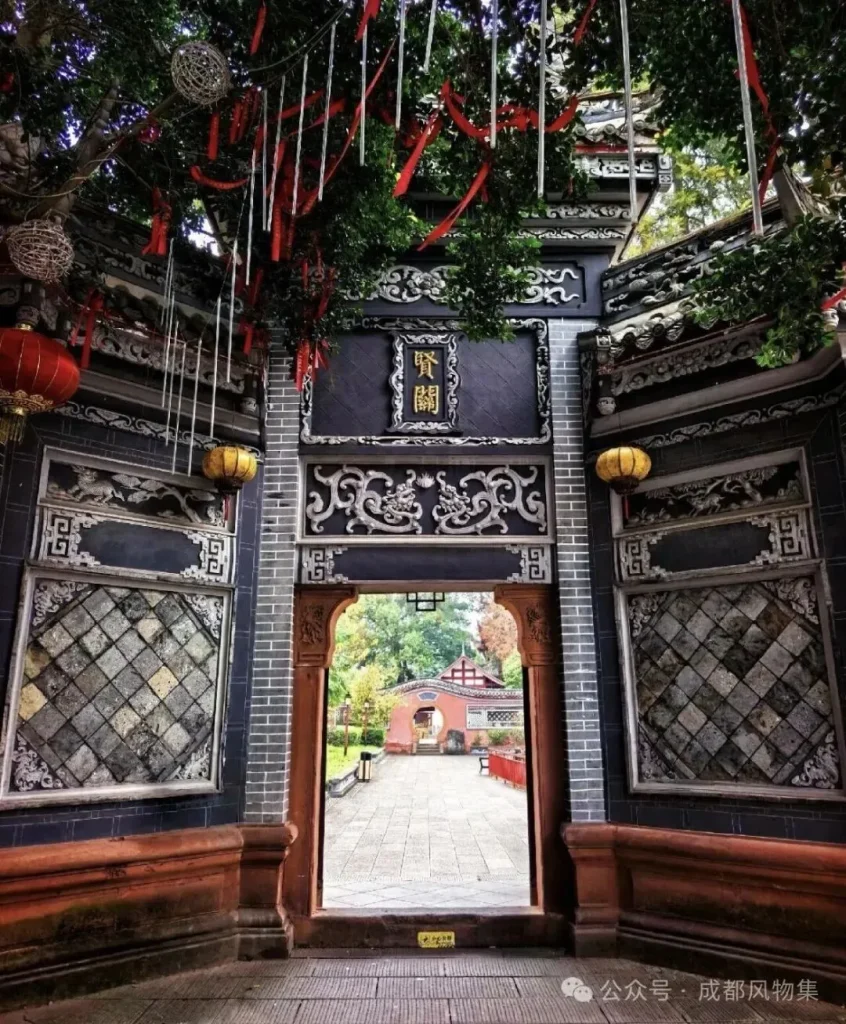
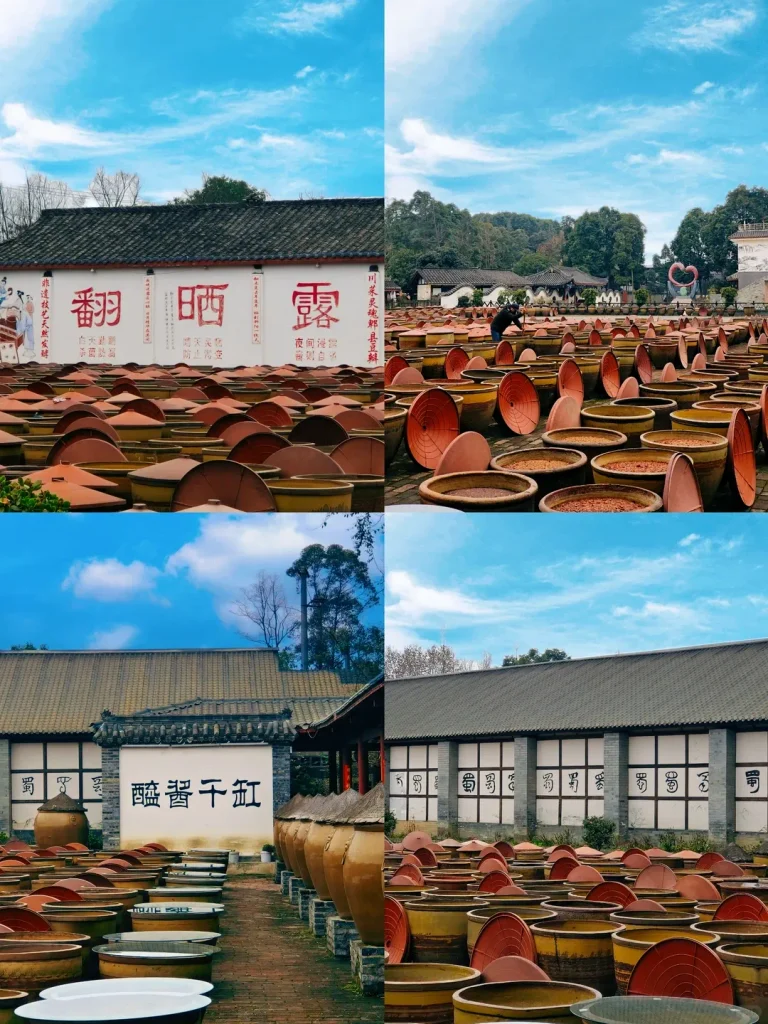
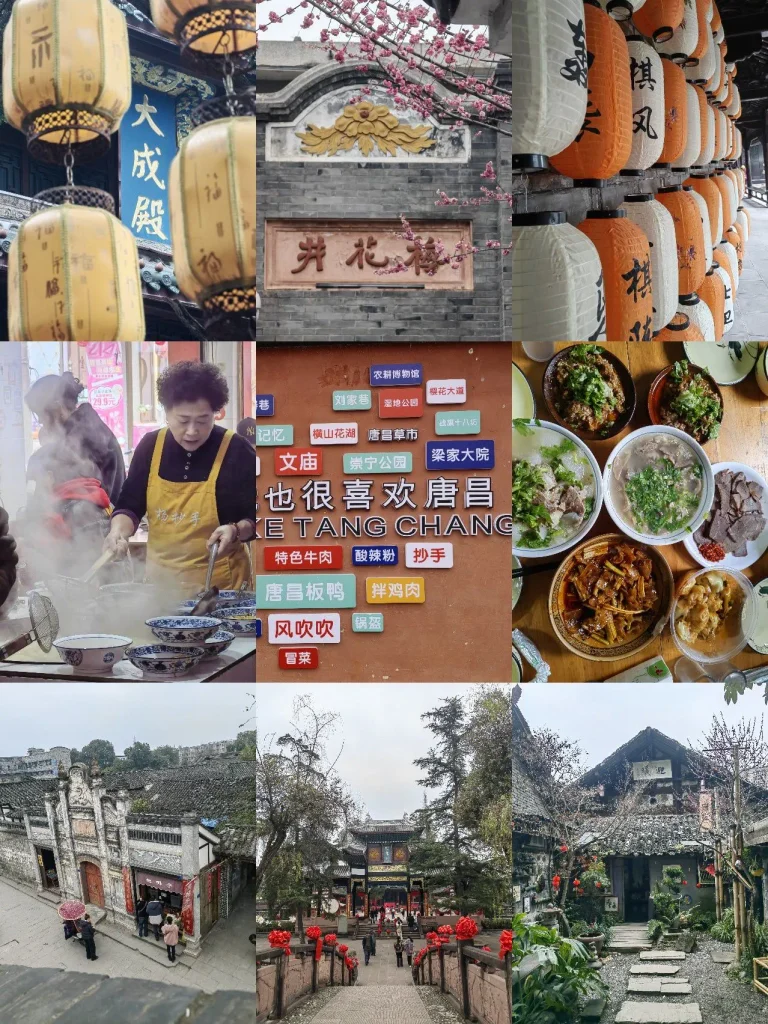
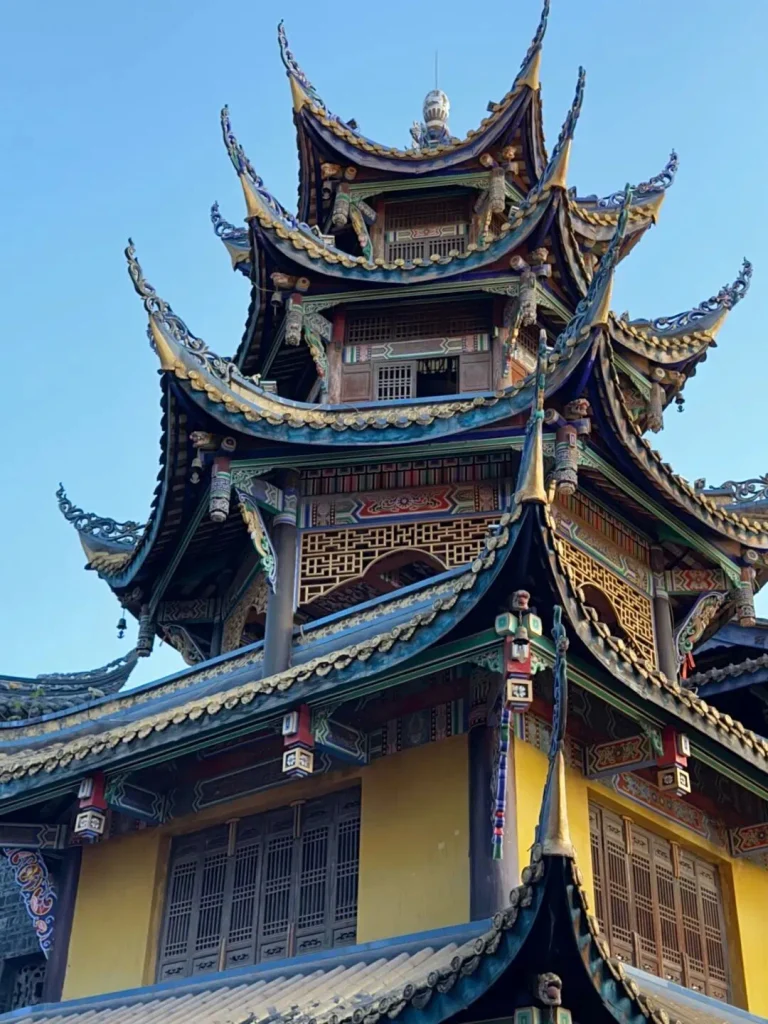
Tangchang (唐昌) is not the kind of ancient town where every storefront has been converted into a souvenir shop.
Its appeal is that the historical core still overlaps with everyday life.
Local historical accounts trace Tangchang’s establishment to the Tang Dynasty, and the settlement later served for centuries as the seat of Chongning County. That history survives not only in names such as Chongning Confucian Temple, but also in old courtyards, lanes, walls and the layout of the former county town.
Today, Tangchang is changing. Streets have been improved, local businesses are being organized into tourism-focused districts, and cultural events are bringing more visitors. But it still feels markedly more residential than Chengdu’s famous downtown historic streets. A 2026 local report described more than 400 businesses operating around the Tangchang historic area while emphasizing the continued coexistence of residents, merchants and visitors.
If you have already experienced central attractions such as Kuanzhai Alley, Tangchang offers almost the opposite rhythm.
Do not come expecting one spectacular landmark.
Come to walk, eat, watch local life and sit down for tea without feeling that you need to keep moving.
Tangchang has no metro station inside the old town, so you need either road transport or a metro-and-bus transfer.
The good news is that there is now a clearly documented public-transport route.
| Transport | Typical Time | Cost Level | Best For | What to Know |
|---|---|---|---|---|
| DiDi / private car | About 50–70 min | Higher | Couples, groups, families | Simplest door-to-door option |
| Metro + Bus P212 | Around 1.5–2 hr depending on connection | Low | Budget travelers | Most practical verified public route |
| Chartered car | Around 1 hr each way | Highest | Multi-stop countryside day | Useful if combining nearby places |
Before leaving Chengdu, save the Chinese names in the table below. They are useful for navigation, bus transfers and showing a driver where you want to go.
| English | Chinese | Why You Need It |
|---|---|---|
| Tangchang Ancient Town | 唐昌古镇 | Main destination |
| Chongning Confucian Temple | 崇宁文庙 | Easiest historic landmark |
| Dachun Lane | 大椿巷 | Old residential lane |
| Chongning Park | 崇宁公园 | Tea/rest stop |
| Xipu Station | 犀浦站 | Metro connection |
| Tangchang Bus Stop | 唐昌公交站 | P212 connection |
For most first-time foreign visitors, yes.
Enter one of these Chinese names into your ride-hailing or navigation app:
唐昌古镇 — Tangchang Ancient Town
崇宁文庙 — Chongning Confucian Temple
Using the Chinese destination is important because English transliterations are not always handled consistently by local apps.
From central Chengdu, road travel is typically around an hour under normal traffic, although your exact journey depends heavily on where you start.
For two or more travelers, the time saved can justify the extra cost.
If you have not used ride-hailing in mainland China before, set it up before leaving your hotel. Our DiDi guide for foreign travelers explains the setup, payment and pickup process.
As of September 2026, the clearest officially published route is:
Chengdu Metro Line 2 → Xipu Station (犀浦站) → walk to Xipu Bus Stop → Bus P212 → Tangchang Bus Stop → walk about 10 minutes to the old town.
GoChengdu published this route for the 2026 Tangchang Cherry Blossom Season, making it much more reliable than older blog posts that list several historical bus combinations.
Still, do not copy a departure time from an old webpage and build your entire day around it.
Open Amap (Gaode Maps) or Baidu Maps on the morning of your trip and search:
唐昌古镇
Then check the current P212 departure and return options.
If Xipu is part of your route, our Chengdu Metro guide for foreign travelers explains payment methods, station navigation and common mistakes.
Xipu also has a completely different side after dark; if you return through the area late enough and still want food, our Xipu Night Market guide covers what to expect.
Tangchang is better explored as a walking area than as a checklist.
The historic center is compact, so the most satisfying route links its heritage sites with residential lanes, food streets and a long tea stop.
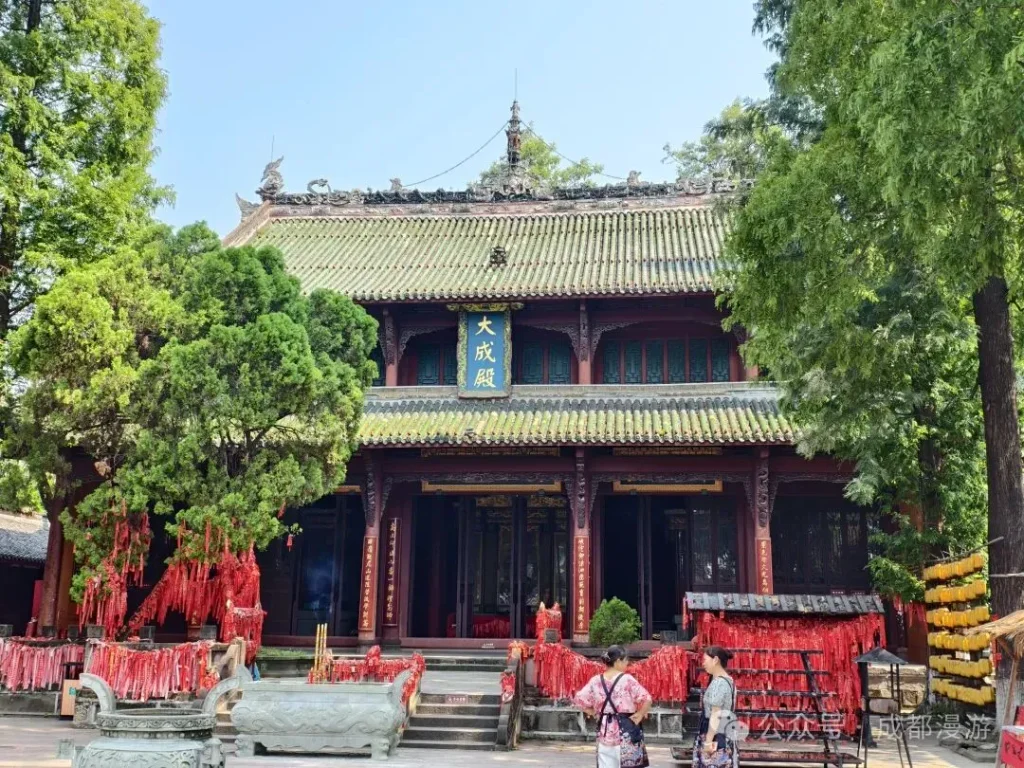
Chongning Confucian Temple (崇宁文庙) is Tangchang’s most important surviving heritage complex.
The site has roots in the Song period, while much of the surviving architecture reflects later rebuilding and Qing-era form. Chongning Confucian Temple is officially listed as protected cultural heritage in Sichuan, and the name itself has been included in provincial historic-place-name protection records.
Look for the red walls, ceremonial axis, pond and traditional hall architecture.
It is particularly photogenic when afternoon light falls across the red walls and old trees.
The old drafts and traveler reports often state that the temple is free and sometimes closed on Mondays. Because current access arrangements can change and opening information online is inconsistent, I would not plan a long-distance trip around a specific interior opening hour without checking locally.
Even when individual interiors are closed, the surrounding historic district is still worth exploring.
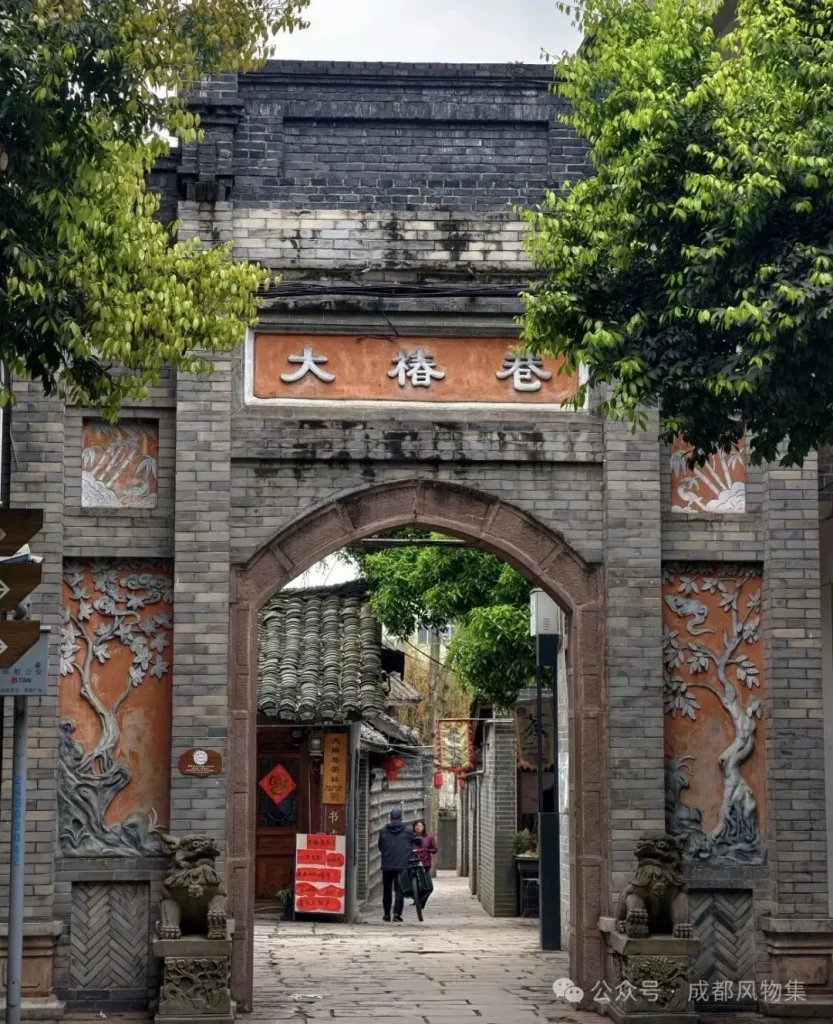
Dachun Lane (大椿巷) is one of the places where Tangchang feels least like a conventional attraction.
Expect narrow lanes, old doorways, grey tiles, timber details and ordinary homes rather than rows of identical tourist shops.
Walk slowly.
You will notice far more if you look at rooflines, old firewalls, doorway carvings, tiny repair shops and the way newer homes have been inserted among older structures.
Morning is particularly good here because daily activity has started but day-trippers remain limited.
Remember that many courtyards are still private residences. An open doorway is not an invitation to enter.
Liang Family Courtyard (唐昌梁家大院) is historically important and is officially listed as a provincial-level protected Qing-era building.
Its traditional courtyard form and tall defensive firewalls help explain the architecture of wealthy households on the western Sichuan plain.
However, do not assume every part will always be open for unrestricted sightseeing.
Heritage access can change because of conservation work, private use or local management. Check the entrance when you arrive rather than budgeting a fixed amount of time for an interior visit.
Chongning Park (崇宁公园) is where I would deliberately slow the trip down.
This is not a major attraction in the conventional sense. It is a local public space with trees, garden features and a strong everyday social atmosphere.
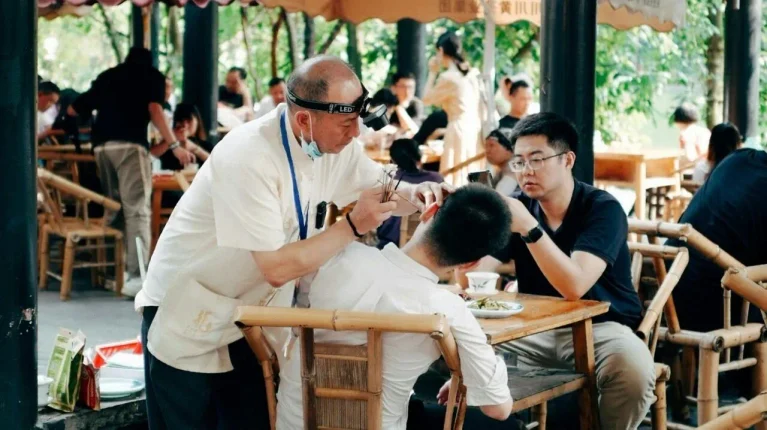
Find a teahouse, order gaiwan tea and sit for 30–60 minutes.
Locals may be chatting, playing cards or simply passing the afternoon. That tells you more about western Sichuan’s everyday tea culture than another ten minutes of photographing old buildings.
Prices at simple local teahouses are generally low, but do not treat old ¥3 or ¥5 online quotes as guaranteed current prices.
If this part of Tangchang appeals to you, our guide to Chengdu’s local teahouses explains the different kinds of tea experiences you will find around the city.
Yes, but keep expectations realistic.
Tangchang preserves traces of its former county-town structure, including old walls, historic street alignments and architectural remains rather than a fully reconstructed city-wall attraction.
The real reward is wandering away from the most obvious central route.
South Street, West Street and the small lanes around the historic core still mix local shops, homes, food businesses and older architecture.
That mix is exactly why Tangchang feels different from purpose-built tourist streets.
Tangchang is arguably as much a food trip as a heritage trip.
Local tourism coverage has repeatedly highlighted Tangchang’s duck and beef dishes, while regional reports continue to treat Tangchang Banya as one of the town’s signature food traditions.
| Food | What It Is | Why Try It |
|---|---|---|
| Tangchang Banya 唐昌板鸭 | Seasoned and cured duck associated with the town | Signature local specialty |
| Local beef dishes 牛肉 | Braised, steamed or seasoned beef from long-running local shops | Good lunch choice |
| Chaoshou 抄手 | Sichuan wontons, often served with chili oil | Quick local meal |
| Local pork dishes | Home-style Sichuan pork preparations | Better for a sit-down lunch |
| Gaiwan tea 盖碗茶 | Traditional lidded-bowl tea | Best taken slowly in a local teahouse |
Tangchang Banya is the food I would prioritize if you only try one local specialty.
Several local producers have operated for generations, and duck remains one of Tangchang’s strongest food identities. Current town-development reports still specifically promote local Tangchang duck brands, so this is not simply an old travel-guide recommendation.
You can eat it locally or buy some to take away.
If you plan to fly home, note that cured meat and poultry products may face import restrictions in your destination country. Verify the rules before packing Tangchang Banya.
For travelers entering the United States, USDA APHIS requires all agricultural products to be declared, and poultry products are subject to country-specific animal-health restrictions. Do not assume a packaged duck product is automatically admissible; check the current USDA/CBP rules before travel.
Do not automatically choose the first renovated restaurant facing the main visitor area.
Walk farther into the old streets and look for places with local customers eating lunch.
Some traditional beef and noodle shops do much of their business around breakfast and lunch, so arriving before 1 PM gives you a better chance of finding the full menu.
If you want a broader introduction to Sichuan food before deciding what to order, our Chengdu hot pot and food guide provides useful context on local flavors and spice levels.
You do not need an elaborate itinerary.
The old town rewards wandering, but having a loose sequence stops you from accidentally missing the main historic area.
Use this order:
Chongning Confucian Temple → Dachun Lane → nearby historic lanes → local snack stop → Chongning Park → gaiwan tea → return.
This is enough for travelers who mainly want architecture and atmosphere.
It is also a good route for older travelers because there are no major climbs.
Use this route:
Chongning Confucian Temple → Liang Family Courtyard area → Dachun Lane → old streets and wall remains → early lunch → Chongning Park → long tea break → South Street / West Street wandering.
The extra time is not for another major attraction.
It is for lunch and tea.
That difference matters because Tangchang becomes less interesting when you rush through it as though every old doorway were another item to “complete.”
Spring and autumn are the easiest seasons for walking.
Spring brings greener streets and seasonal flowers. In March 2026, Tangchang also hosted a dedicated cherry-blossom season with cultural activities, markets and food events, showing how seasonal events can temporarily make the town much busier than usual.
Autumn brings cooler temperatures and comfortable walking conditions.
Summer is warm and humid, and stone surfaces can become slippery after rain.
Winter is colder but often quieter.
This is one of the most useful details to know before choosing your date.
Tangchang traditionally holds its market on even-numbered dates of the regular calendar—the 2nd, 4th, 6th, 8th and so on—not according to lunar-calendar dates. Local Chengdu cultural coverage describes residents gathering on these “double-numbered” mornings, when produce, food and everyday goods fill the area.
For travelers, that creates two very different experiences:
| Visit Day | What Tangchang Feels Like | Best For |
|---|---|---|
| Even-numbered market day | Busier, more vendors, more local activity | Street life, food, photography |
| Non-market weekday | Quieter, easier wandering | Architecture, tea, slow travel |
| Weekend | More Chengdu day-trippers | Travelers limited to weekends |
| Public holiday | Potentially much busier | Usually best avoided if you want calm |
Market activity is strongest in the morning.
If you specifically want to see it, aim to arrive before 10 AM rather than turning up late in the afternoon.
Because local market arrangements can shift around holidays or special events, confirm locally if the market itself is the main reason for your trip.
For the quietest experience, choose a non-market weekday.
Arrive between about 8 and 10 AM, walk the lanes first, have an early lunch, and save tea for later.
If you want more local energy rather than empty streets, deliberately choose an even-numbered market morning.
Major Chinese public holidays are the exception. Even lesser-known towns can become substantially busier when domestic travel surges.
Check the China public holiday calendar before choosing your day.
Tangchang should not automatically replace Huanglongxi, Luodai or Jiezi.
They serve different kinds of travelers.
| Ancient Town | Character | Best For | Crowds | Main Trade-Off |
|---|---|---|---|---|
| Tangchang | Living old county town | Local life, food, tea, architecture | Usually low | Fewer major attractions |
| Huanglongxi | Busy waterside tourism town | Families, food, lively atmosphere | High on busy days | More commercial |
| Luodai | Hakka heritage town | Guild halls and cultural history | Medium–high | More structured tourism |
| Jiezi | River + mountain setting | Tea, scenery, light hiking | Medium | Farther and more spread out |
Choose Tangchang if you would rather spend an hour watching local life over tea than an hour shopping for souvenirs.
Choose Huanglongxi if you want entertainment and a lively waterside atmosphere.
Choose Luodai if Hakka heritage is your main interest.
Choose Jiezi if mountain scenery matters as much as the ancient town itself.
Tangchang’s strongest advantage is not spectacle.
It is the feeling that the town has reasons to exist beyond tourism.
Tangchang is not difficult, but it is less internationally oriented than central Chengdu.
A few preparations make the trip much easier.
QR payments dominate.
Small restaurants, food stalls and teahouses may not accept an international credit card directly, so set up Alipay or WeChat Pay before leaving Chengdu.
I would also carry ¥100–200 in cash as backup.
Our China payment guide for foreign visitors explains how foreign cards, Alipay, WeChat Pay and cash work together.
English signage is limited, and you should not expect small restaurants, bus stops or local vendors to have English-speaking staff.
The Chinese names listed in the transport section are worth saving as screenshots before departure. Showing the characters directly to a driver or station employee is often faster than trying to pronounce a place name.
Use Amap or Baidu Maps rather than relying exclusively on Google Maps in mainland China.
This matters more in Tangchang because the trip involves a suburban bus connection, smaller streets and Chinese-only place names.
Our navigation app guide for foreign travelers explains which map apps are most practical and how to work around the language barrier.
Comfortable flat walking shoes are enough.
Tangchang has no serious hiking, but old stone paving and thresholds can be uneven. After rain, polished stone can become slippery.
Bring an umbrella during wetter months and drinking water in summer.
This sounds obvious, but it matters more here than in a fully commercial attraction.
People still live in many of the old streets.
Do not walk into private courtyards because a door happens to be open. Avoid photographing residents at close range without asking, and keep noise down around homes and the Confucian Temple.
That respect is part of preserving the very atmosphere people travel to Tangchang to experience.
Yes, especially with a car or DiDi. Both are in the western Chengdu/Pidu area, so the combination works well for travelers interested in food culture. Public transport makes a two-stop day less efficient, so check your return route before attempting both.
Generally, yes. The core sightseeing area is relatively flat and there are plenty of places to stop, especially around Chongning Park. Uneven paving, curbs and old thresholds can still be inconvenient for travelers with limited mobility.
A lightweight stroller works on the wider streets, but some old lanes and building entrances have uneven stones, curbs or steps. If you are traveling with a baby, treat small side lanes as optional rather than trying to cover every historic alley.
There are local accommodation options in and around Tangchang, but the selection is much smaller than in central Chengdu. Foreign travelers should confirm that the property can properly handle overseas guest registration before booking; our China hotel booking guide for foreigners explains what to check.
Probably not on a first trip. With only two days, the panda base, central neighborhoods and major city sights usually deserve priority. Tangchang works best when you have an extra half-day or full day and specifically want something slower and less tourist-oriented.
Tangchang Ancient Town is worth visiting because it does not try very hard to impress you.
There is no dramatic mountain backdrop, giant ticketed attraction or carefully staged tourist circuit. Instead, you get a protected Confucian temple, old courtyards, residential lanes, local market mornings, Tangchang duck and the simple pleasure of spending too long over a bowl of gaiwan tea.
Allow three to five hours.
Choose a market morning if you want energy and local street life; choose a non-market weekday if you want quiet lanes.
If your idea of a good Chengdu day trip is seeing how people actually live rather than collecting another famous landmark, Tangchang is one of the more rewarding low-key choices around the city.
GoChengdu — 2026 Tangchang Cherry Blossom Season & Transport Guide
Red Star News — Tangchang Historic District Development, 2026
Sichuan Provincial Department of Civil Affairs
YOU Chengdu / The Paper — Tangchang Market Day
Updated September 2026. This guide was checked against current Chengdu tourism information, Sichuan heritage records, local official media and recent Tangchang reporting. The 2026 Xipu–P212 transport route was prioritized over older bus timetables. Historic-building access, restaurant hours, tea prices and market activity remain locally variable, so exact dynamic details should be reconfirmed on the travel day.
Planning your China trip? TripChina.me provides practical travel guides covering transport, food, neighborhoods, and local experiences. When you are ready for a smoother journey, our Premium Travel Guides offer ready-to-follow plans designed for independent travelers.