Our Location:
No. 99, Jiazi Road, Chengdu

 authorChris Lee
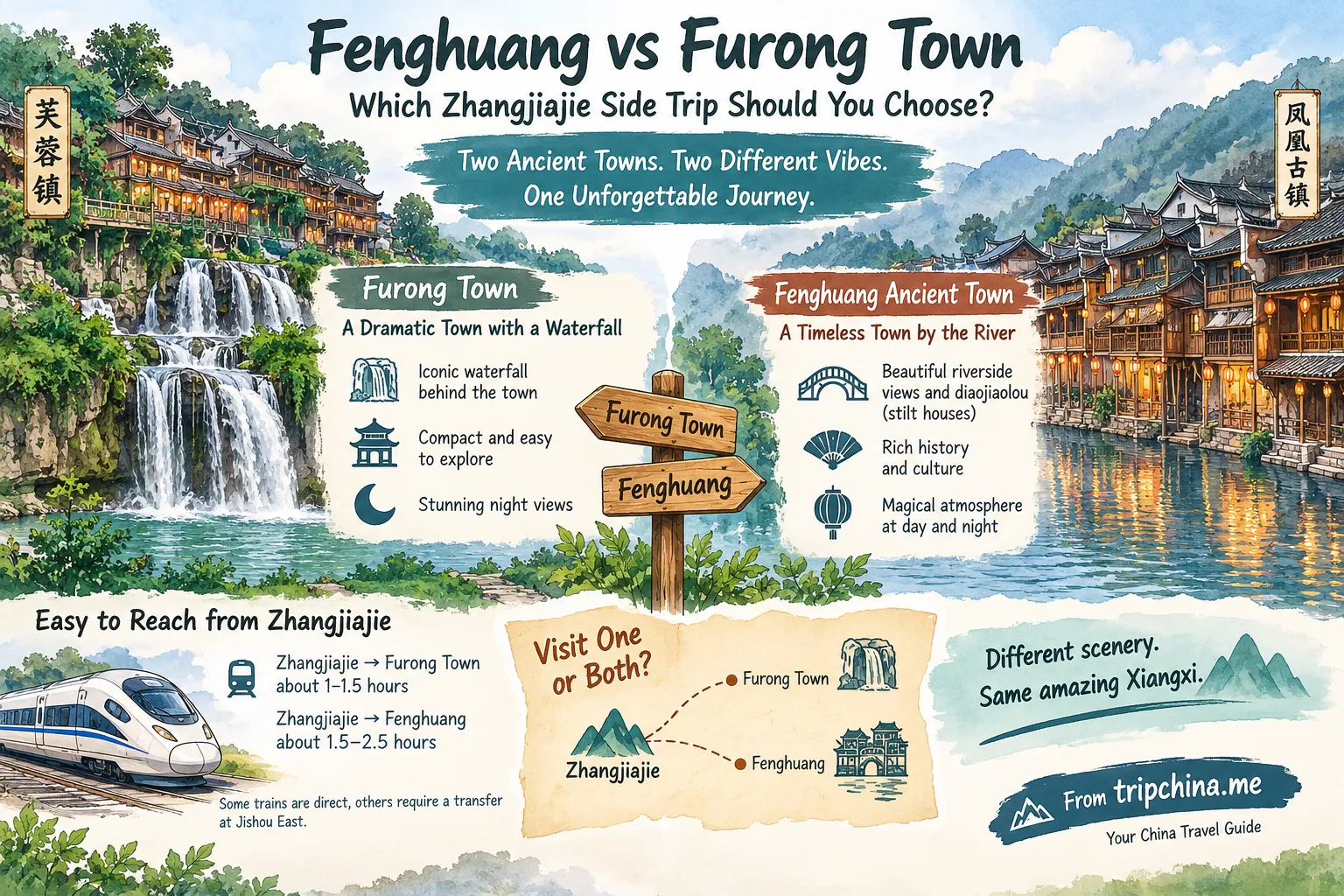
Fenghuang and Furong Town are often bundled into the same Zhangjiajie itinerary, but they are not interchangeable. Furong is compact, dramatic and built around a waterfall; Fenghuang is larger, more atmospheric and rewards slow wandering along the Tuojiang River. This guide explains which one fits your trip—and how to visit both without turning your Xiangxi extension into a rushed checklist.
TL;DR: Pick Furong Town for a dramatic half-day waterfall stop. Pick Fenghuang for a fuller one- to two-night ancient-town experience. If you have two or more extra days after Zhangjiajie, visiting both makes more sense than choosing between them.
• Choose Furong Town for the waterfall, cliffside Tujia architecture and a compact half-day or overnight stop.
• Choose Fenghuang Ancient Town for riverside stilt houses, historic lanes, boat rides and a fuller one- to two-night old-town experience.
• If you are coming from Zhangjiajie, visit both if you have at least two extra days. The Zhangjiajie–Jishou–Huaihua high-speed railway connects Zhangjiajie West, Furong Town and Fenghuang Ancient City railway stations.
• Fenghuang's historic streets can be explored without buying the attraction packages. Paid attractions and Tuojiang boat trips are separate products. As of September 2026, the official tourism website lists packages from ¥128 and daytime boating at ¥85.
• Furong Town is the easier stopover; Fenghuang is the better place to slow down. That distinction matters more than deciding which town is “better.”
The easiest way to understand the two towns is this:
Furong Town is built around one unforgettable visual. Fenghuang is built around an atmosphere.
Furong Town, historically known as Wangcun, rises above a large waterfall in Yongshun County. Traditional Tujia-style buildings cling to the slopes around the falls, stone lanes descend through the settlement, and part of the visitor route passes behind the cascading water.
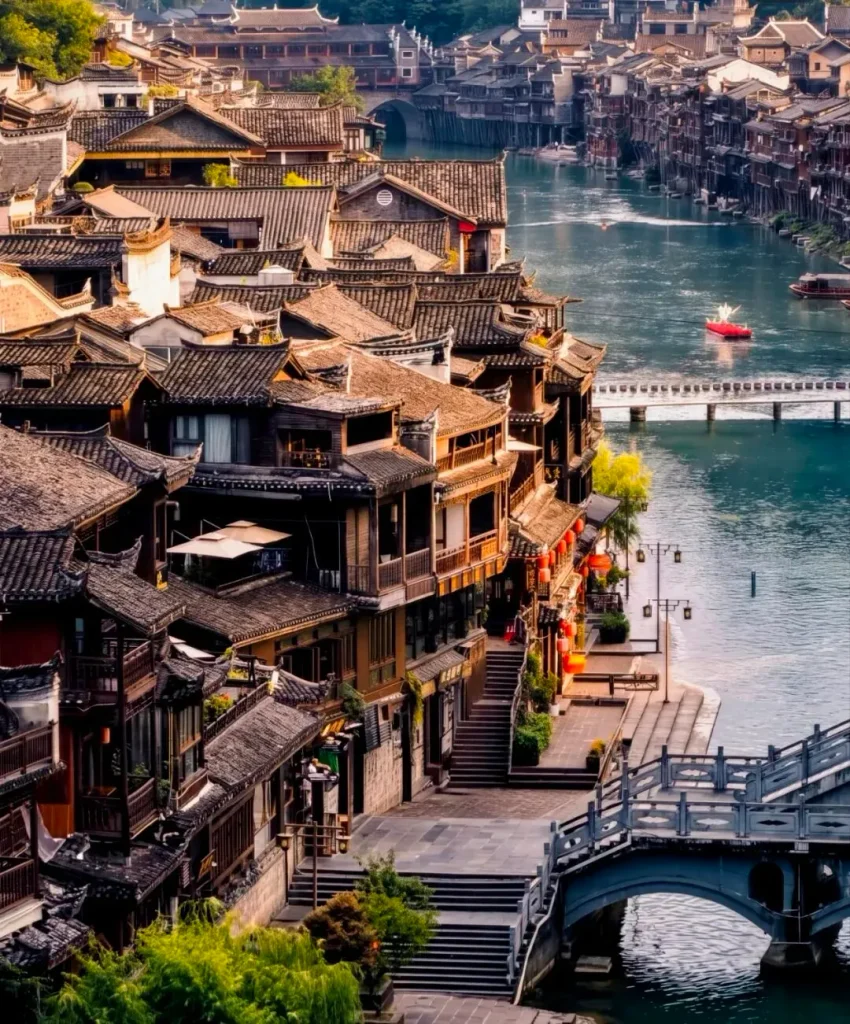
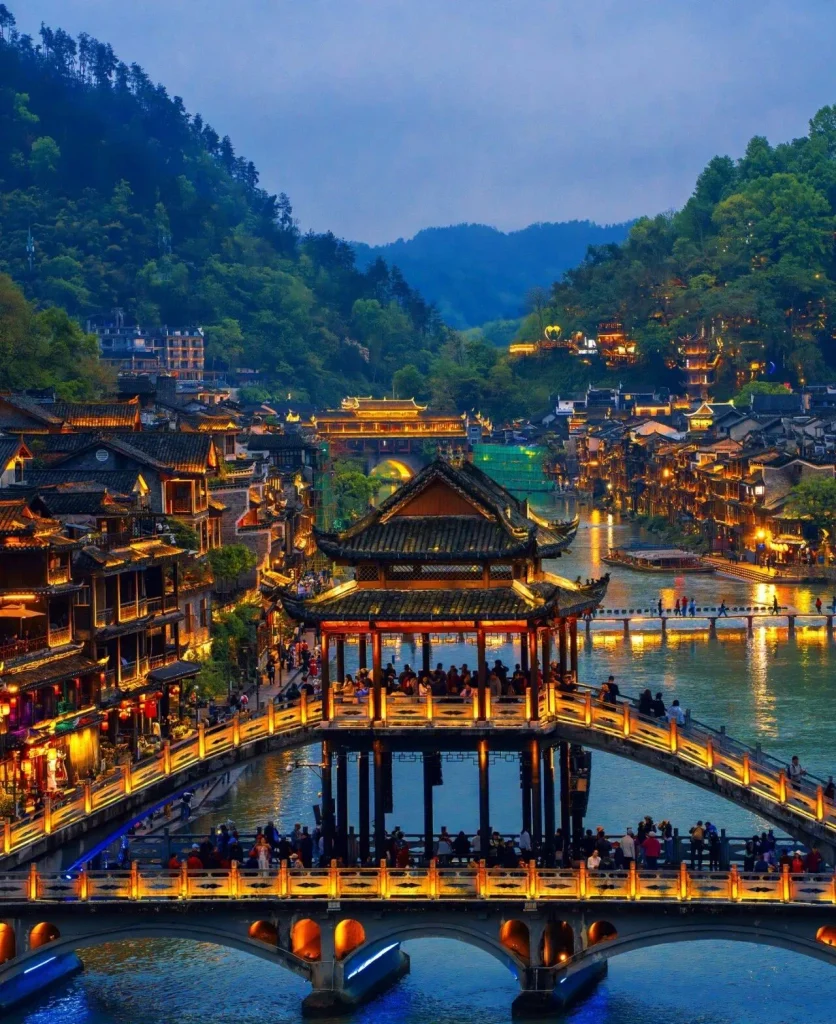
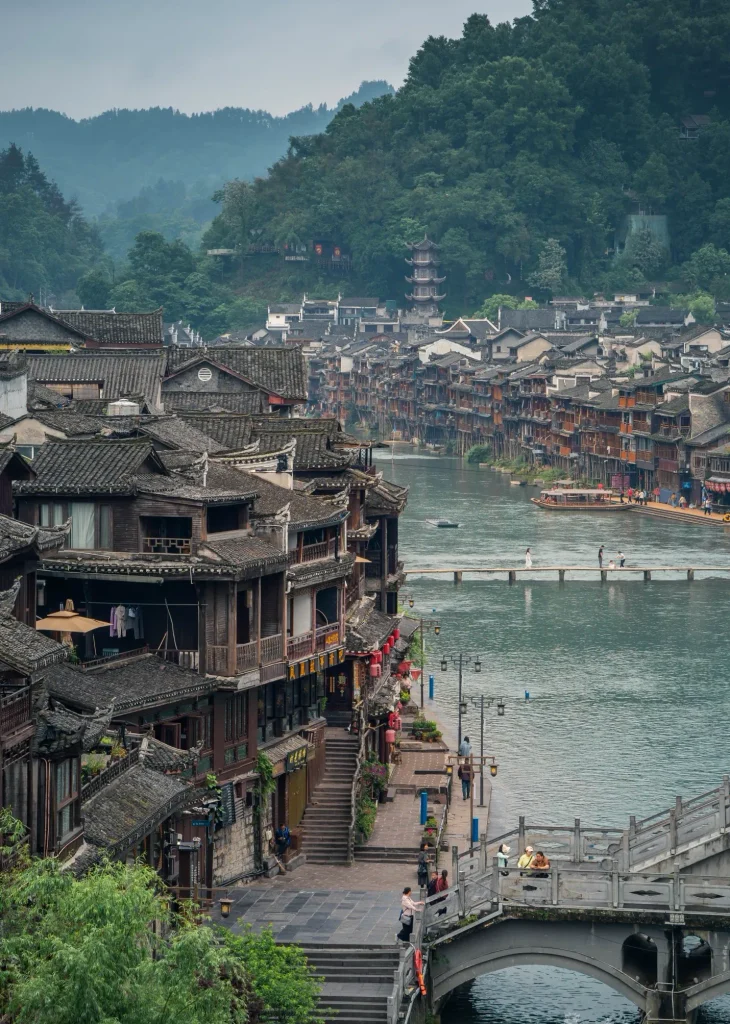
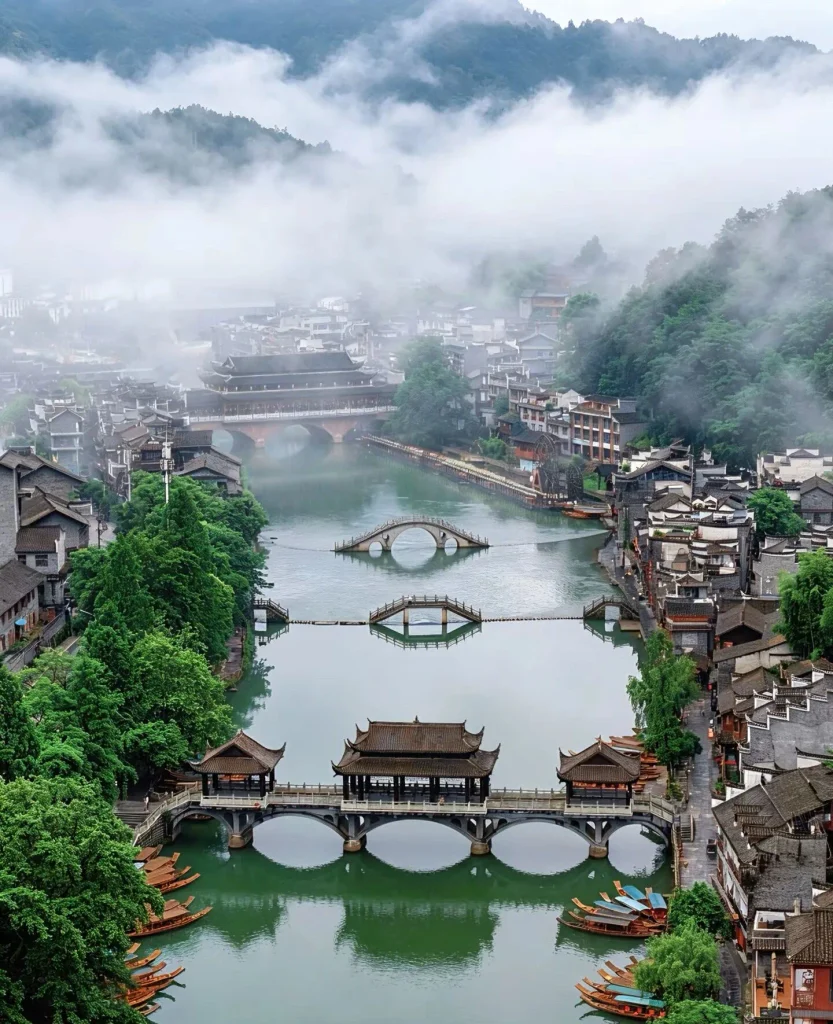
Fenghuang Ancient Town spreads along the Tuojiang River. Its appeal comes less from one single landmark and more from the combination of diaojiaolou (stilt-style wooden houses), old lanes, bridges, city gates, riverboats and the town's changing mood from early morning to late evening.
That difference affects how you should plan them.
Table: Key Comparison — Furong Town vs Fenghuang Ancient Town
| Comparison | Furong Town | Fenghuang Ancient Town |
|---|---|---|
| Signature experience | Waterfall running through the old town | Tuojiang River and riverside stilt houses |
| Cultural emphasis | Tujia heritage | Multi-ethnic Xiangxi heritage, especially Miao and Tujia influences |
| Best for | Dramatic scenery and photography | Wandering, culture and atmosphere |
| Typical visit | Half day to 1 night | 1–2 nights |
| Walking | Steeper, wetter, more stairs | Longer distances but generally easier along the river |
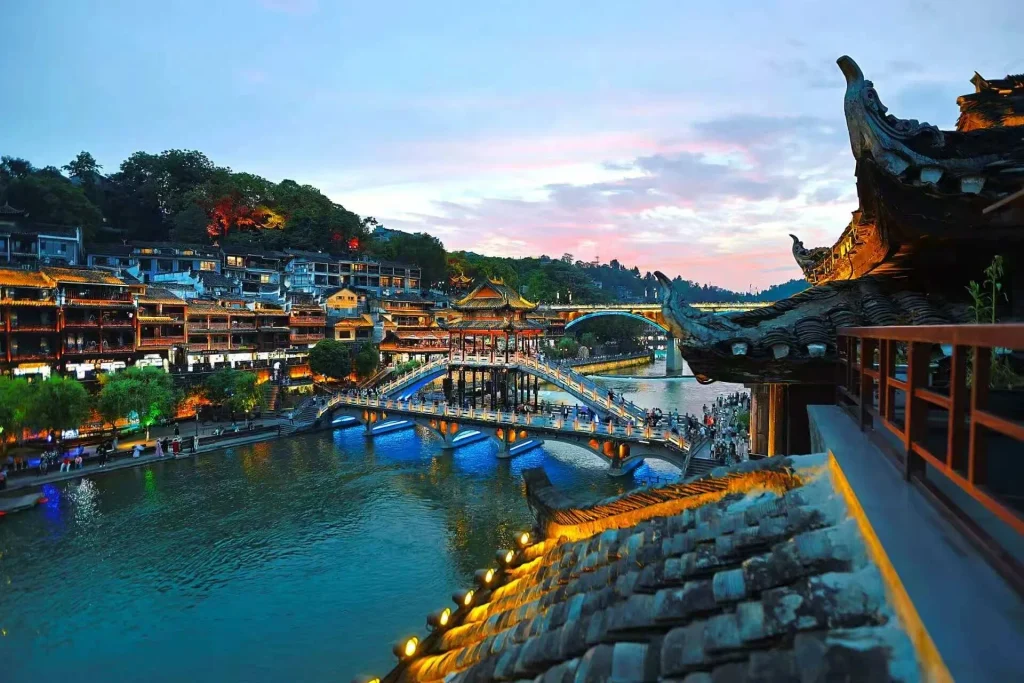
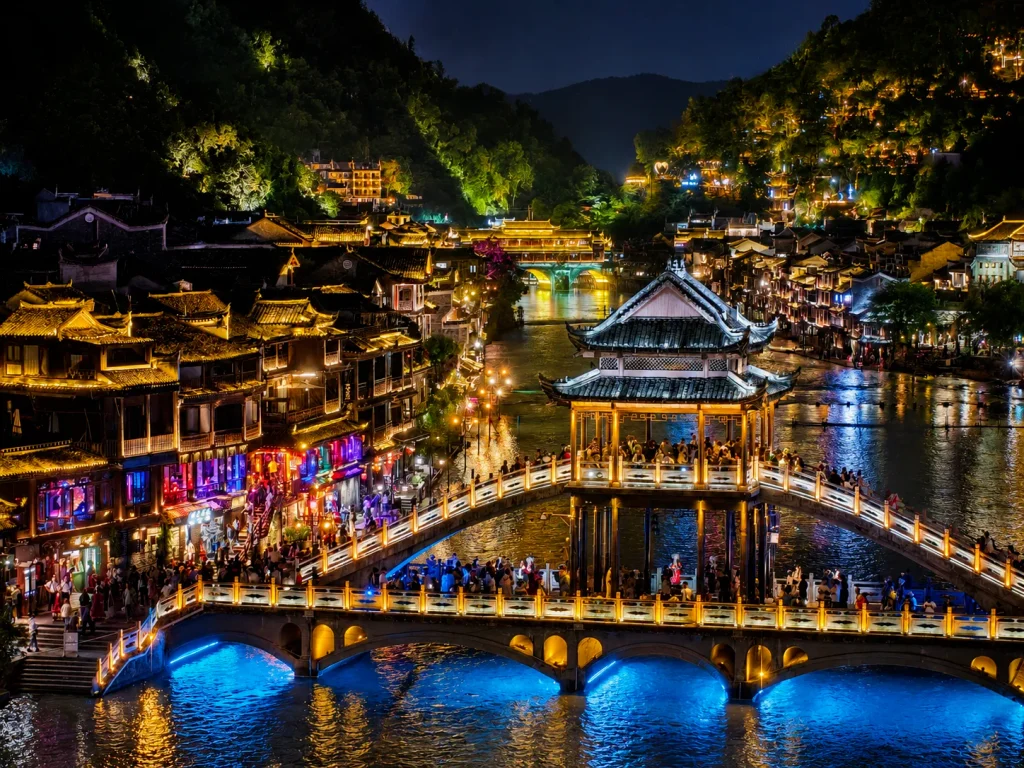
| Night experience | Illuminated waterfall and cliffside buildings | Lantern-lit riverfront, boats, bridges and nightlife |
| Main-town access | Ticketed scenic area | Historic streets can be walked without an attraction package |
| Best if short on time | Yes | Better when you can stay overnight |
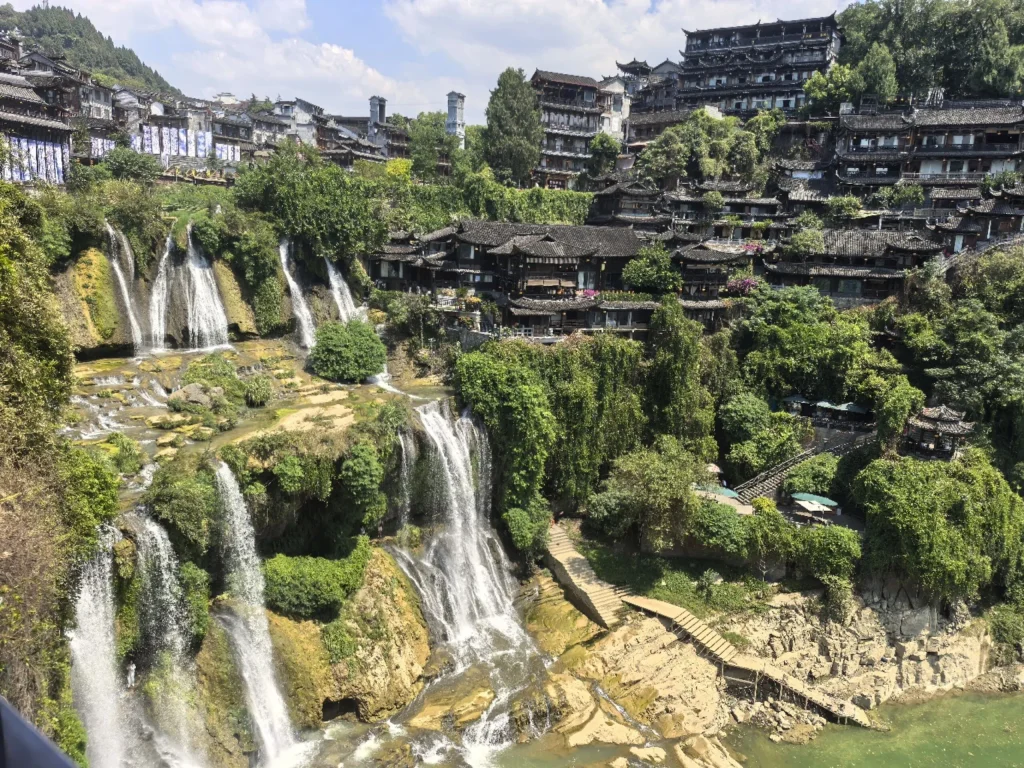
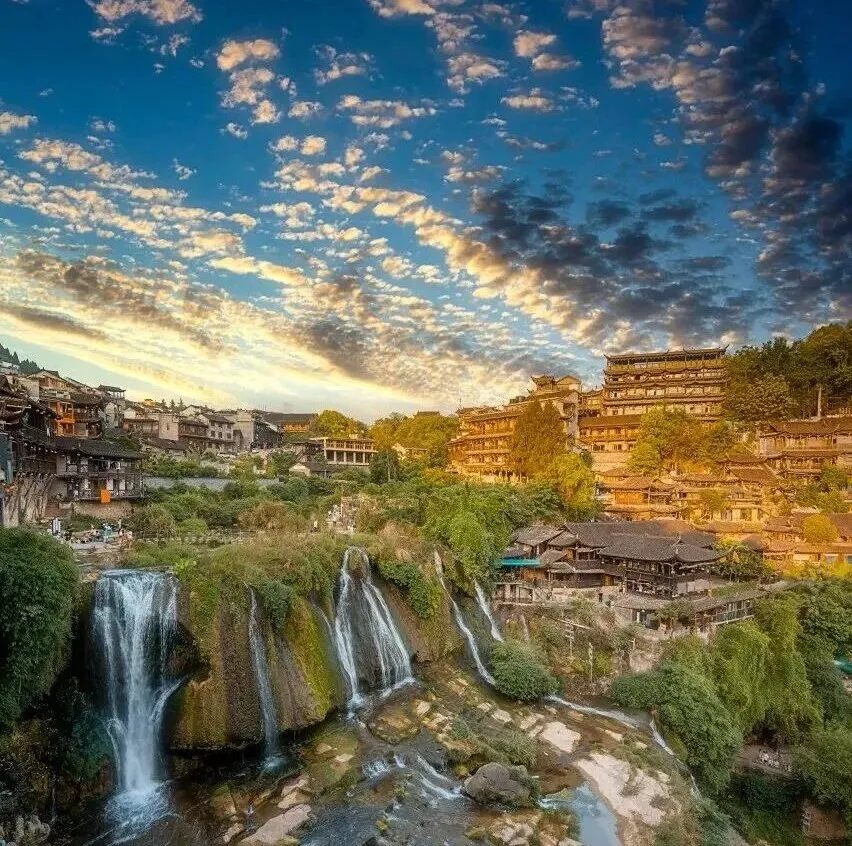
Yes—especially if you are already traveling between Zhangjiajie and Fenghuang.
Furong Town's geography is what makes it special. Instead of sitting beside a river or lake, much of the historic settlement climbs the hillside above and around the waterfall.
The sound of falling water follows you through parts of the town, and viewpoints reveal wooden buildings stacked above the valley. That physical setting is difficult to appreciate from photographs alone.
Furong has also become an important international stop on the wider Zhangjiajie route. According to 2026 reporting citing local official data, the town received 6.53 million visitors in 2025, including 338,000 overseas visitors from more than 70 countries and regions.
Walk behind the waterfall.
This is the experience I would not skip. The walking route takes you close enough to the falls to feel the spray, and stone surfaces can become extremely slick.
Wear shoes with real grip. This is not the place for smooth-soled fashion shoes simply because you want better photos.
During wetter periods, the spray can be considerably heavier. A lightweight rain-resistant jacket is useful even when the forecast does not call for all-day rain.
Walk Wuli Slate Street.
The old stone street gives you a better sense of the settlement beyond its famous waterfall. Shops, food stalls and traditional wooden buildings line the route.
Go earlier in the day if you want to see the street before large tour groups dominate the narrowest sections.
Try local rice tofu.
Rice tofu is one of the town's best-known inexpensive snacks and is closely associated with Furong Town's modern tourism story and the 1980s film that helped make the town famous nationally.
Stay until after dark if your schedule allows.
The waterfall and hillside architecture look completely different after the lights come on.
Furong's scenic lighting generally becomes part of the experience around or after dusk, but lighting and performance schedules can vary by season and operating arrangement.
If you arrive in the afternoon, ask your hotel or the ticket office for the evening lighting schedule as soon as you check in. This will help you decide whether to wait for nightfall or catch an earlier train out.
Don't make the common mistake of arriving only for the illuminated version: the landscape itself is much easier to understand in daylight.
My preferred sequence would be late afternoon → daylight waterfall → dinner → night view, rather than seeing only one version of the town.
A focused visitor can see the core scenic area in roughly 3–4 hours.
But an overnight stay changes the experience. You get the illuminated waterfall after some day-trip groups begin leaving, then quieter streets the following morning.
If you stay overnight, avoid choosing a room directly beside the waterfall just because the booking photo looks spectacular. The constant roar of the water can be surprisingly loud when you are trying to sleep.
As of September 2026, ¥108 remains the commonly published full-price adult admission rate for the Furong Town scenic area. Promotions, package products and online prices can vary, so check the current price before purchasing rather than relying on an old screenshot or blog post.
If you plan to leave the ticketed scenic area—for example, for lunch or to collect luggage—and return later for the night view, check whether your specific ticket allows same-day re-entry before you exit. Ticket conditions can vary by product and sales channel.
All scenic-area prices are quoted in Chinese yuan. Mobile QR payment is common in China, including accounts linked to eligible overseas cards, but foreign physical cards should not be treated as universally accepted at small local counters or shops.
Carry a modest amount of RMB cash as backup rather than relying on foreign currency notes.
For foreign visitors, bringing your physical passport is the safest approach when purchasing or collecting tickets.
If Furong is part of a larger Zhangjiajie trip, also read TripChina's Zhangjiajie ticket-booking guide for foreign visitors before you start reserving the region's major attractions.
Yes—but Fenghuang works differently from Furong.
There is no single “waterfall moment.” Instead, the town gradually reveals itself as you walk along the Tuojiang River, cross bridges, enter narrow stone lanes and move between busy commercial streets and quieter residential corners.
The classic visual is the line of wooden diaojiaolou beside the water.
But Fenghuang is at its best when you stop treating it as a photo location.
Walk the Tuojiang River twice—once in daylight and once after dark.
During the day, you can actually see the construction of the stilt houses, old city walls and bridges. At night, reflections from the illuminated buildings transform the river.
Cross the jumping stones.
The stepping-stone crossing near the North Gate is one of Fenghuang's simplest experiences and one of its most recognizable views.
It can become crowded around sunset. Early morning is much calmer.
Take a Tuojiang River boat if the river perspective matters to you.
The official Fenghuang tourism website currently lists daytime Tuojiang boating at ¥85, with daytime service generally from 08:00 to 17:30. Night products operate separately.
As of September 2026, the official site also lists:
Table: Official Fenghuang Ancient Town Ticket Products
| Official Fenghuang Product | Listed Price |
|---|---|
| Eight attractions + daytime Tuojiang boat | ¥128 |
| Eight attractions + nighttime Tuojiang boat | ¥208 |
| Fenghuang Ancient Town all-in-one product | ¥228 |
| Daytime Tuojiang boat only | ¥85 |
These products and operating hours can change, so check the official booking page before paying.
Decide whether the paid historic attractions actually interest you.
The bundles are not necessary simply to enjoy the old town. They are more useful if you want to go inside heritage sites such as the Former Residence of Shen Congwen, historic gate structures such as the East Gate Tower, and other enclosed attractions included in the current official sightseeing products.
If your priority is photography, food and riverside wandering, you may not need the full package.
Get away from the main riverfront.
This is where many rushed visitors miss Fenghuang.
The waterfront gives you the postcard. The lanes behind it give you the town: old houses, small shops, local food and a much less staged atmosphere.
See Fenghuang early in the morning.
If you stay overnight, walk the river before breakfast.
The difference between Fenghuang at 7 AM and Fenghuang at 8 PM is enormous. Early morning can bring mist, quiet water and nearly empty stone lanes; evening brings lights, music and crowds.
If misty river photos are your priority, late-autumn and winter mornings generally offer a better chance of atmospheric mist, although it is never guaranteed.
You really need both morning and evening to understand why people stay here.
You do not need to buy one of the attraction packages simply to walk the main historic streets and riverfront.
Paid historic attractions, riverboat experiences and bundled products are separate.
As of September 2026, the official Fenghuang tourism website lists several attraction-and-boat combinations, so choose according to what you actually want to visit rather than assuming you need a package simply to explore the town.
A river-view guesthouse gives you the classic experience, but location matters.
Rooms directly facing the busiest bar sections can remain noisy late into the evening. If sleep matters more than opening your curtains to the Tuojiang River, choose an inner lane a few minutes' walk from the waterfront.
Also confirm stairs and luggage access before booking. “Ancient town charm” sometimes means carrying a suitcase through stone lanes that were never designed for rolling luggage.
Small guesthouses may also ask to see your original passport at check-in. Keep a phone photo as backup, but do not assume a digital copy will be accepted instead of the physical document.
For the broader China accommodation issue, TripChina's hotel-booking guide for foreign travelers in China explains what to check before confirming smaller guesthouses.
This route became dramatically easier after the Zhangjiajie–Jishou–Huaihua high-speed railway opened in December 2021.
The railway directly serves Zhangjiajie West → Furong Town → Guzhang West → Jishou East → Fenghuang Ancient City → Huaihua South.
The Hunan provincial government's current railway-station directory confirms that Furong Town Railway Station is approximately 2.5 km northeast of the Furong Town Scenic Area.
That is why I strongly prefer rail over arranging a long private transfer for most independent travelers.
Book from:
Zhangjiajie West Railway Station → Furong Town Railway Station (芙蓉镇站)
Train times vary by service and date. Rather than building your itinerary around a fixed duration copied from a blog, check the live timetable on Railway 12306 when booking.
From Furong Town Railway Station, take a taxi or local transfer to the scenic area.
If you are staying in Wulingyuan near Zhangjiajie National Forest Park, remember that Zhangjiajie West Railway Station is not beside the park entrance. Build the transfer from Wulingyuan into your schedule.
TripChina's Zhangjiajie Travel Guide explains how the park, city and transport hubs fit together.
Search:
Furong Town Railway Station → Fenghuang Ancient City Railway Station (凤凰古城站)
Both stations sit on the same Zhangjiajie–Jishou–Huaihua high-speed rail corridor, and direct services may be available.
However, not every train stops at every station. If no suitable direct service matches your date and time, 12306 may show alternative routings, including connections through another Xiangxi station such as Jishou East.
Do not assume a specific connection pattern in advance. Check the actual 12306 results for your travel date before locking in hotels or scenic-area tickets.
This is also why I would not book an inflexible Furong itinerary before checking the onward train.
Fenghuang Ancient City Railway Station is outside the historic riverfront area.
Local public transport, tourist transfers and taxis connect the station with the old town. Fenghuang also has a sightseeing maglev connection linking the high-speed railway station with the ancient-town area.
Allow a buffer rather than planning to leave your hotel at the last possible minute.
For first-time visitors using Chinese trains, read TripChina's China train boarding guide for foreign travelers. If you have not bought your tickets yet, the 12306 vs Trip.com train-ticket guide covers the booking side.
I would not squeeze Zhangjiajie, Furong and Fenghuang into one frantic day.
A better sequence is:
Leave Zhangjiajie after breakfast.
Take the high-speed train from Zhangjiajie West to Furong Town. Store your luggage or arrange a practical transfer, then spend the middle of the day exploring Wuli Street and the waterfall area.
Do not assume luggage storage will always be available at the railway station itself. If Furong is only a stopover, confirm storage with the station, scenic area, accommodation provider or transfer service before finalizing a tight connection.
Many travelers instead use scenic-area lockers or luggage storage arranged through local guesthouses, where available. Confirm the service and opening hours before relying on it.
If your priority is efficiency rather than Furong's night lights, continue to Fenghuang in the late afternoon.
Check into Fenghuang and spend your first evening walking along the Tuojiang River.
Start early.
Walk the river before the crowds, cross the jumping stones and explore the historic lanes. Add a daytime boat ride or paid historic attractions only if they genuinely interest you.
Stay through sunset and experience the riverfront after dark.
Use the morning for anything you missed, then transfer to Fenghuang Ancient City Railway Station.
This version gives Fenghuang the time it deserves while still using Furong as a natural stop on the rail corridor.
If Furong's illuminated waterfall is a priority, reverse the overnight balance: stay one night in Furong and continue to Fenghuang the next morning.
If your wider China itinerary brings you into western Hunan from Guizhou, it can make more sense to visit the towns in reverse:
Guizhou → Fenghuang Ancient Town → Furong Town → Zhangjiajie
Spend your first night in Fenghuang, then travel north toward Furong Town before continuing to Zhangjiajie.
This avoids unnecessary backtracking and is especially useful for travelers combining Guizhou with a Zhangjiajie itinerary.
For most travelers, spring and autumn offer the easiest balance of temperatures, walking conditions and scenery.
Summer can make Furong's waterfall particularly impressive, especially during wetter periods when water flow is stronger, but it also brings heat, humidity, rain and heavier domestic tourism.
If the waterfall itself is your main photography priority, the wetter summer to early-autumn period can produce a more powerful scene, though exact flow depends on recent rainfall rather than the calendar alone.
Autumn and winter can be especially atmospheric in Fenghuang. If misty river photography is one of your priorities, late-autumn and winter mornings generally give you a better chance, although mist depends on temperature, humidity and weather conditions and is never guaranteed.
Winter is quieter but colder. Damp stone surfaces can also become uncomfortable and slippery.
The bigger issue is often not the season but the Chinese holiday calendar.
Early October's National Day Golden Week is particularly busy. Chinese New Year can also affect accommodation, transport and local operating schedules. Hotel prices can rise sharply during peak holiday dates, while popular train services may sell out quickly once tickets are released.
Rather than assuming a fixed “double or triple” price increase, check accommodation and train availability as early as possible if your dates overlap a major Chinese holiday.
Before choosing dates, check TripChina's China public-holiday and crowd calendar.
The mountains are not the difficult part of this trip. The digital logistics can be.
Carry your physical passport.
You may need it for railway travel, accommodation registration and some ticketing procedures. Smaller guesthouses may require the original document at check-in, so keep a digital copy as backup rather than as a replacement.
Set up mobile payment before arriving.
Small restaurants, taxis and shops commonly rely heavily on QR payments. TripChina's guide to paying in China with Alipay, WeChat Pay, cards and cash covers the practical options for overseas visitors.
Prices are quoted in RMB. Do not expect shops or ticket counters to accept US dollars, euros or other foreign cash directly. Keep some RMB cash as a backup even if your Alipay or WeChat Pay setup works normally.
Download translation and navigation tools before you leave a major city.
English signage has improved substantially along popular tourist routes, but you should not assume every driver, guesthouse owner or restaurant worker speaks English.
Wear shoes with grip and carry light rain protection.
Furong's waterfall spray and both towns' polished stone paving can create genuinely slippery surfaces after rain. A compact rain-resistant jacket is particularly useful around Furong during wetter months.
Keep some itinerary flexibility.
Train schedules, scenic-area operating hours, ticket packages, performances and lighting arrangements can change.
For entry requirements, check your nationality and itinerary against the latest information from China's National Immigration Administration before departure. Visa exemptions and transit arrangements depend on nationality and specific travel conditions.
Choose Furong Town if your priority is:
• a dramatic waterfall landscape
• photography
• a compact stop between destinations
• Tujia architecture in a striking natural setting
• seeing a lot in half a day
Choose Fenghuang Ancient Town if your priority is:
• wandering rather than sightseeing from a checklist
• river scenery and stilt houses
• old streets and cultural sites
• morning and nighttime atmosphere
• spending one or two nights in an ancient town
If this is your first trip to Xiangxi and you genuinely have to choose only one, I would give Fenghuang the edge for the more complete travel experience.
But if you are already traveling between Zhangjiajie and Fenghuang, Furong is too conveniently positioned—and too visually different—to dismiss without considering a stop.
Yes. For most independent travelers, visiting both is practical because Furong Town and Fenghuang Ancient Town sit on the same high-speed rail corridor connecting the wider Zhangjiajie–Xiangxi region.
The most comfortable plan is to allow at least two days: use Furong as a half-day or overnight stop and give Fenghuang at least one night.
Technically, it can be possible with favorable high-speed-rail schedules, but it is highly rushed.
You would spend much of the day moving between stations and miss the experiences that make the two towns different—Furong around nightfall and Fenghuang's early-morning or nighttime atmosphere. Allow at least two days for both destinations if your itinerary permits.
Yes, parts of Furong Town can be challenging. The scenic area includes slopes, stone steps, uneven paving and wet surfaces around the waterfall.
Travelers with significant mobility limitations should check current accessibility arrangements before purchasing a ticket rather than assuming the entire waterfall route is step-free.
Luggage-storage options may be available around tourist transport points and the scenic area, but station storage should not be treated as guaranteed.
If Furong is a stopover rather than an overnight stay, confirm storage before finalizing a tight rail connection. Scenic-area lockers or local guesthouses may provide alternatives, depending on current availability.
Ride-hailing can be useful, but availability is less predictable than in major Chinese cities, particularly late at night or around smaller transport hubs.
In practice, Fenghuang generally offers more transport options than smaller Furong Town, but you should still keep taxis and official local transfers as backups rather than relying on DiDi alone.
If you have never used the app in China, see TripChina's DiDi guide for foreign travelers.
Simple vegetable dishes, tofu and rice are widely available, but “vegetable” does not necessarily mean vegetarian: meat stock, lard or small amounts of cured meat may be used for flavor.
Instead of relying only on the English word “vegetarian,” save a Chinese note on your phone and show it when ordering:
请问这个菜有没有肉、猪油或肉汤?我不吃这些。
It means: “Does this dish contain meat, lard or meat-based broth? I don't eat these.”
If you follow a stricter vegan diet or have allergies, explain those requirements separately rather than relying on this sentence alone.
Yes, but it can be inconvenient. Stone paving, stairs and guesthouses without elevators make large rolling luggage much harder to handle than it looks on a map.
If these towns sit in the middle of a longer China trip, traveling with one manageable suitcase will make the experience noticeably easier.
Furong Town and Fenghuang are close enough to appear interchangeable on an itinerary, but they solve two completely different travel desires.
Go to Furong Town for the moment: the waterfall, the cliffs, the spray and the illuminated town after dark.
Go to Fenghuang for the experience: an early walk beside the Tuojiang, stilt houses reflected in the water, old lanes in the afternoon and a completely different town after sunset.
If you have enough time, don't choose. The high-speed railway has made visiting both one of the most logical extensions to a Zhangjiajie trip.
Just don't rush them simply because the train is fast.
Fenghuang Ancient Town Tourist Area — Official Ticket & Tuojiang Boat Information
Hunan Provincial Government — Hunan Railway Stations
Hunan Provincial Government — Furong Town 2025 Visitor Data
Updated September 2026. This guide cross-checked current Fenghuang ticket products and boat hours against the official scenic-area website, railway infrastructure against Hunan government sources, and Furong Town visitor figures against official-data reporting. Overseas visitor statistics are annual reported figures and may fluctuate substantially from year to year. Exact train services, fares, ticket promotions, re-entry rules, lighting schedules and operating hours remain variable; travelers should verify them shortly before travel.
Planning your China trip? TripChina.me provides practical travel guides covering transport, food, neighborhoods, and local experiences. When you are ready for a smoother journey, our Premium Travel Guides offer ready-to-follow plans designed for independent travelers.