Our Location:
No. 99, Jiazi Road, Chengdu

 authorChris Lee
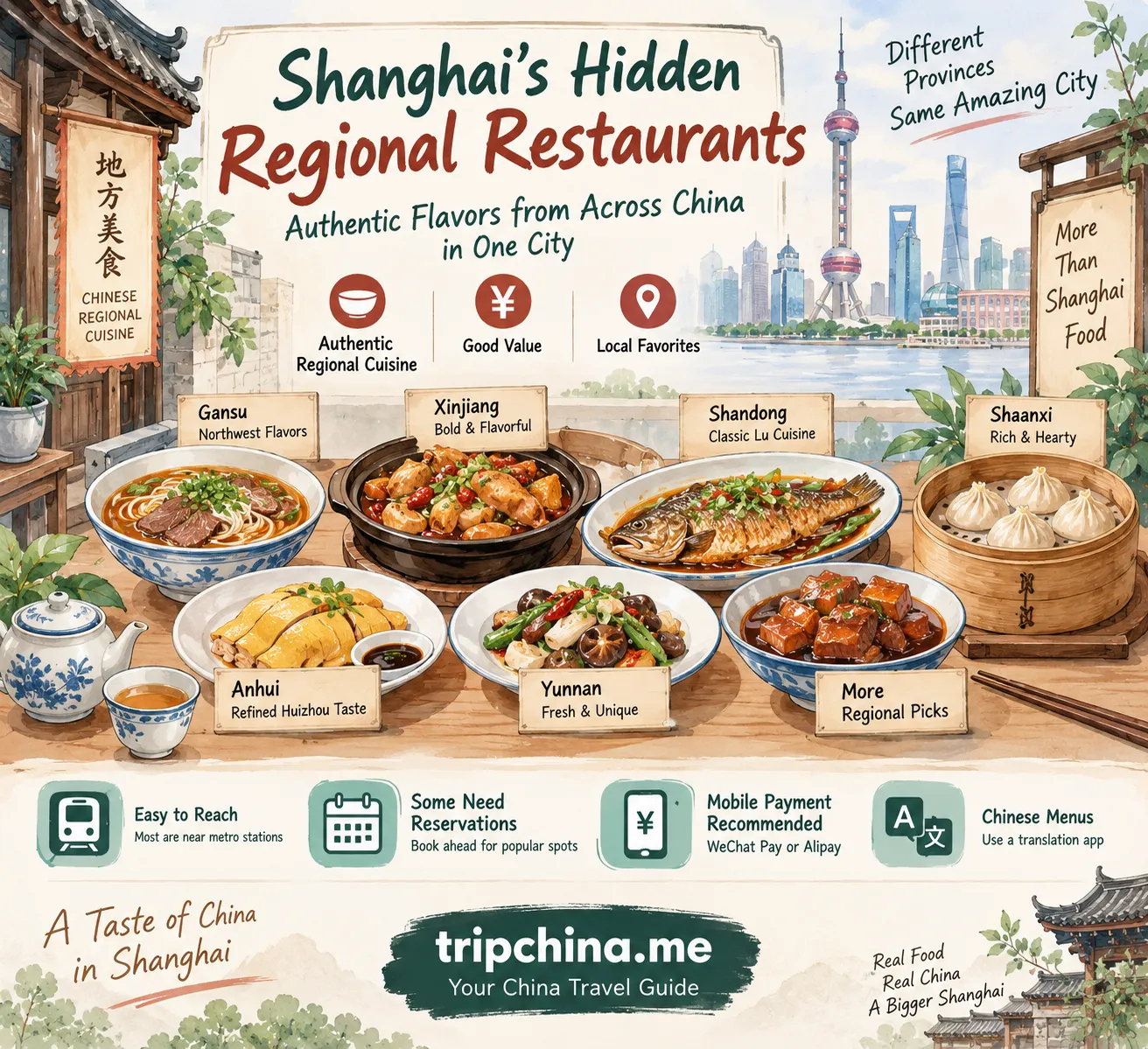
Some of Shanghai’s most authentic regional restaurants grew out of, or developed around, provincial liaison offices known in Chinese as 驻沪办 (zhù hù bàn). Originally serving staff and visitors from their home regions, several later opened to the public — bringing regional chefs, ingredients and cooking traditions to Shanghai.
Shanghai is one of the easiest places in China to taste regional cuisines without leaving the city. One of the most interesting ways to do it is through provincial and municipal liaison-office restaurants — commonly grouped under the informal label 驻沪办餐厅.
Some have direct government or state-linked backgrounds; others are simply long-running regional restaurants popular with officials and migrants from the same province. This guide separates the two and focuses on what is actually worth ordering.
For another side of Shanghai’s old-school dining culture, see our Shanghai authentic old restaurant guide.
Most casual venues fall around ¥60–150 per person, but premium dishes such as sea cucumber — and the private-room Anhui experience — can push the bill much higher.
Chinese provinces and many cities maintain liaison or representative offices in Shanghai. Historically, some operated dining rooms to feed staff, visiting officials and guests from their home regions.
Over time, a number of these restaurants opened more broadly to the public.
Their appeal is not that every dish is automatically better than an independent restaurant. It is that many have unusually strong regional connections: chefs from the home province, specialty ingredients shipped in, and menus designed for diners who already know what the cuisine is supposed to taste like.
That often means less adaptation to Shanghai tastes.
However, the term “provincial government canteen” is used loosely online.
This guide therefore uses two categories:
Official or institution-linked venues: Located inside provincial buildings, government guesthouses, or operated by state/government-linked regional organizations.
Unofficial regional favorites: Not government-run, but strongly associated with a particular province and often patronized by people from that region.
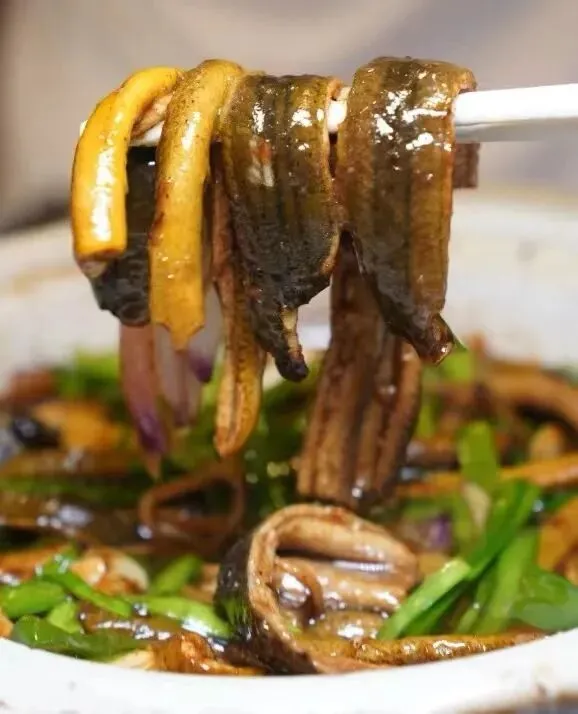
For a broader introduction to regional dishes before choosing a restaurant, see our Shanghai food guide.
Address: 2150-8 Zhongshan North Road, Putuo District (普陀区中山北路2150号-8)
📍 Open in Amap — Yixiang Dunhuang Tower (伊祥·敦煌楼)Transport: Zhenping Road Station (镇坪路站), Lines 3/4/7, about 2–5 minutes on foot
Price: About ¥70–100 per person
Hours: 08:30–14:30, 16:30–22:00 on weekdays; current listings show continuous service on some weekends
Shanghai’s Putuo District government currently lists the restaurant at this address and gives 08:30–14:30 and 16:30–22:00 as its operating schedule.
This is probably the easiest provincial-canteen-style restaurant for a first-time visitor to understand.
The dining room is simple, prices are approachable, and you can come for something as basic as a bowl of noodles rather than committing to a banquet.
Must-order dishes:
TripChina Verdict: The easiest recommendation on this list for first-time visitors. Come for noodles and lamb rather than the building or service.
Honest take: Queues can be long around lunch and dinner, and the atmosphere is functional. That is part of the point.
If this is your first time navigating Shanghai’s metro system, our Shanghai Metro guide explains tickets, payment and transfers for foreign visitors.
Address: Yunnan Building, 2088 Zhongshan North Road, Putuo District (普陀区中山北路2088号云南大厦)
📍 Open in Amap — Yuncai Yunnan Cuisine (云采云南菜)Transport: Zhenping Road Station, Lines 3/4/7, about 5 minutes on foot
Price: About ¥90–150 per person
Hours: Current listings vary. Most place lunch roughly between 10:00/11:00 and 14:00 and dinner around 17:00–21:00. Confirm on your visit date.
Apple Maps currently lists 10:00–14:00 and 17:00–21:00, while another current local listing gives 11:00–13:30 and 17:00–21:00.
The restaurant sits inside the Yunnan Building and gives you a much broader view of Yunnan cuisine than a generic mushroom hotpot restaurant.
This is especially worthwhile if you have not yet traveled to Yunnan.
Must-order dishes:
TripChina Verdict: The best choice if you want a meal built around ingredients you are unlikely to encounter in mainstream Shanghai Chinese restaurants.
Honest take: Not every dish is equally memorable. Prioritize tofu, ham, dairy products, herbs and sour flavors that actually showcase Yunnan.
Dinner and weekends can be busy, so reserving ahead is sensible even though walk-ins may still be accepted.
Address: Lane 185, Xinhua Road, Changning District (长宁区新华路185弄)
📍 Open in Amap — Anhui Government Guesthouse (安徽省驻沪办招待所)Transport: Jiaotong University Station, Lines 10/11, around 10 minutes on foot
Price: Recent diner reports commonly fall around ¥290–500+ per person
Hours: Current platform listing: 11:00–14:00, 17:00–22:00
Current Trip.com listings continue to identify the venue at Xinhua Road and show reservation support; recent diner reports put average spending around ¥290, with private-room meals easily costing more.
This is very different from Dunhuang Tower.
The restaurant operates more like private institutional dining than a casual canteen. Rooms are private, group dining is the norm, and the experience is poorly suited to someone who simply wants to walk in and eat one bowl of noodles.
Contact the restaurant several days ahead if this is an important part of your trip. Do not rely on spontaneous walk-in availability.
Meals have traditionally been arranged around group size and budget rather than a simple tourist set menu.
Must-order dishes:
TripChina Verdict: The most distinctive institutional dining experience here — but not the best value.
Honest take: This is better for a small group of serious food travelers than a solo backpacker. The experience, private setting and regional identity matter as much as the food.
Address: 6/F, Jinsui Building, 379 Pudong South Road, Pudong (浦东新区浦东南路379号金穗大厦6楼)
📍 Open in Amap — Jinsui Building (金穗大厦)Transport: Dongchang Road Station, Line 2, around 8 minutes on foot
Price: Around ¥80–200 per person; premium seafood can raise the bill dramatically
Hours: Current Apple Maps listing: 11:00–13:30, 16:30–21:30. Some older listings extend dinner later.
The restaurant has been serving Shandong cuisine in Pudong for years and retains an unmistakably old-school feel.
Do not come for fashionable interiors.
Come for one of China’s foundational northern cuisines.
Must-order dishes:
TripChina Verdict: One of the strongest choices for adventurous eaters who want traditional Shandong cooking rather than modernized northern Chinese food.
Honest take: Lunch can be hectic, and dishes such as sea cucumber quickly destroy the “cheap government canteen” stereotype. Order selectively.
Address: 2/F, Henghui International Building, 477 Tianmu West Road, Jing’an District (静安区天目西路477号恒汇国际大厦2层)
Transport: Shanghai Railway Station, Lines 1/3/4, about 10 minutes on foot
Price: Roughly ¥100–150 per person; current Apple Maps average is around ¥126
Hours: 11:00–14:00, 17:00–21:30
The Shanghai restaurant does exist at Henghui International Building; the older Jinsui Building address was incorrect. Apple Maps currently lists the restaurant at Tianmu West Road 477 with daily 11:00–14:00 and 17:00–21:30 service.
Its connection with Huai’an is also more substantial than a simple name.
Huai’an government material describes the city’s long-running program of expanding Huaiyang Cuisine Tasting Hall locations to cities including Shanghai, while corporate documents from the Huai’an cultural-tourism group identify a directly operated Shanghai restaurant at 477 Tianmu West Road.
This is therefore better understood as a Huai’an government/state-linked regional restaurant, rather than a Jiangsu provincial liaison-office canteen.
Must-order dishes:
TripChina Verdict: One of the best options for visitors who prefer refined technique over lamb, noodles and heavy spice.
Honest take: The office-building setting is forgettable. The food is the reason to come.
Address: 2, Lane 438, Ningguo Road, Yangpu District (杨浦区宁国路438弄2号)
📍 Open in Amap — 潞安酒店Transport: Ningguo Road Station, Line 12, about 5 minutes on foot
Price: Around ¥80–110 per person
Hours: Listings vary; lunch and dinner are usually separated by an afternoon break. Check the same day before traveling across town.
Lu’an Hotel is associated with Shanxi’s Lu’an Group rather than a provincial government office in the narrow sense.
Its reason for inclusion is culinary: the kitchen has long specialized in Shanxi food, particularly noodles and vinegar-driven dishes.
Must-order dishes:
TripChina Verdict: Come here if noodles are your priority.
Honest take: The room is basic and the restaurant is not built around tourists. That is also part of its appeal.
Address: 4/F, Shaanxi Business Hotel, 658 Yan’an Middle Road, Jing’an District (静安区延安中路658号)
📍 Open in Amap — 陕西大厦中餐厅Transport: Nanjing West Road is the more practical nearby metro hub; Jing’an Temple is also reachable depending on your route.
Price: Around ¥70–130 per person
Hours: 11:00–14:00, 17:00–22:00
Current Trip.com listings confirm the restaurant at Yan’an Middle Road 658 and list service until 22:00. Shanghai’s official tourism promotion site also identifies the Shaanxi Business Hotel and its Chinese restaurant at this address.
The menu covers more than Shaanxi cuisine, but the regional dishes are why it belongs in this guide.
Must-order dishes:
TripChina Verdict: An easy choice for travelers who want several recognizable Shaanxi staples in one meal.
Honest take: Do not expect a specialist noodle shop atmosphere. This is a hotel restaurant with a broader menu.
The next restaurants should not be presented as government-run canteens.
They are included because of strong regional connections and their popularity among diners seeking food from those provinces.
Address: Quyang Road, Hongkou District — confirm the map pin before going
📍 Open in Amap — 艾尼巴亿餐厅Transport: Dabaishu Station, Line 3
Price: Around ¥80–120 per person
Hours: Roughly 10:00–22:00; some listings extend slightly later
There is still an address conflict worth acknowledging.
Trip.com, Tripadvisor and Shanghai local listings currently give No. 759 Quyang Road, while Amap and some Chinese directories continue to show No. 739.
Do not type the street number manually. Search “艾尼巴亿餐厅” in your map app and navigate to the live business pin.
The restaurant sits near the Xinjiang representative-office area and has long been associated with Xinjiang diners and staff, but it should not be labeled an officially operated government restaurant.
Must-order dishes:
TripChina Verdict: Best choice here if your priority is lamb, cumin and big shared portions.
Honest take: Peak periods can feel chaotic, and recent reviews are not uniformly positive. Go for the food style rather than polished service.
Address: 3/F, Area A1, Xinyi Street, 706 Yishan Road, Xuhui District (徐汇区宜山路706号新宜街A1区F3层)
📍 Open in Amap — 博望坡饭店Transport: Guilin Road Station, Lines 9/15, about 4 minutes on foot
Price: Around ¥60–100 per person
Hours: Around 10:00–22:00
This is a regional favorite rather than a government restaurant.
The owner is from Nanyang, Henan, and the menu leans toward hearty Central Plains food rather than polished banquet cuisine.
Must-order dishes:
TripChina Verdict: One of the better budget choices.
Honest take: The restaurant has moved before, so verify the address before making a dedicated trip.
Address: 1486 Dongfang Road, Pudong (浦东新区东方路1486号)
📍 Open in Amap — 甲东南Transport: Lancun Road Station, Lines 4/6, about 3 minutes on foot
Price: Around ¥65–80 per person
Hours: Around 10:30–14:00, 17:00–22:00
Jia Dongnan is another regional restaurant rather than a government-operated canteen.
Its strength is range: the menu pulls from Fuzhou, Quanzhou and Putian traditions.
Must-order dishes:
TripChina Verdict: Excellent value if you want a regional cuisine many international visitors rarely try.
Honest take: Small room, straightforward service, strong food.
| Venue | Status | Best For | Typical Spend | Reservation? | Main Trade-Off |
|---|---|---|---|---|---|
| Yixiang Dunhuang Tower | Gansu-linked | First-timers, noodles, lamb | ¥70–100 | Usually no; peak queues | Busy |
| Yuncai Yunnan | Yunnan Building | Distinctive Yunnan ingredients | ¥90–150 | Recommended for dinner | Price |
| Anhui Guesthouse | Official guesthouse | Private regional dining | ¥290–500+ | Yes | Expensive |
| Laodong Shandong | Regional/institutional favorite | Classic Shandong cuisine | ¥80–200+ | Useful for groups | Premium dishes |
| Huaiyang Tasting Hall | Huai’an state-linked | Refined Jiangsu/Huai’an food | ¥100–150 | Recommended for groups | Office-building setting |
| Lu’an Hotel | State-enterprise linked | Shanxi noodles | ¥80–110 | Usually not essential | Basic room |
| Shaanxi Building | Provincial-building hotel restaurant | Shaanxi staples | ¥70–130 | Usually not essential | Broad hotel menu |
| Aini Bayi | Unofficial | Xinjiang lamb dishes | ¥80–120 | Useful for groups | Address listings conflict |
| Bowangpo | Unofficial | Henan food, budget | ¥60–100 | Usually no | Has moved before |
| Jia Dongnan | Unofficial | Fujian cuisine, value | ¥65–80 | Usually no | Small dining room |
The labels matter because “驻沪办餐厅” is a food-media category, not a guarantee that every restaurant is literally owned and operated by a provincial government office.
It depends heavily on the restaurant.
Definitely contact ahead: Anhui Government Guesthouse. It is private-room oriented and is a poor choice for spontaneous walk-ins.
Worth booking: Yuncai Yunnan for weekend dinners, and any venue where you are bringing a larger group.
Usually walk-in friendly: Dunhuang Tower, Lu’an Hotel, Bowangpo and Jia Dongnan — but queues can still develop at standard meal times.
Summer travel season and major Chinese holidays can make popular restaurants much busier. If your itinerary is fixed, reserving is safer than building your day around a famous restaurant and discovering a long queue.
For lunch, arriving around 11:00–11:30 is usually easier than appearing at 12:15.
For dinner, 17:00–17:30 is a useful early window at restaurants that are already open.
This matters especially at Dunhuang Tower, where Shanghai government coverage explicitly notes long meal-time queues.
Alipay and WeChat Pay are the most reliable choices.
Some restaurants and current map listings indicate card acceptance, but international-card acceptance is not consistent enough to rely on venue by venue.
Cash in RMB remains useful as a backup.
Set up payment before the meal using our Alipay guide for foreign visitors and WeChat Pay guide.
Do not count on it.
Some larger restaurants may have photographs or tablet ordering, but English menus and English-speaking staff are inconsistent.
Save the restaurant’s Chinese name and the Chinese names of two or three dishes before arriving. Camera translation makes ordering considerably easier.
Our essential apps for China guide covers translation and other digital tools worth installing before your trip.
Do not expect every venue to feel like a destination restaurant.
Several of the best choices here are inside office buildings, provincial hotels or older institutional spaces.
Service may be efficient rather than warm. Interiors may be dated.
The advantage is the regional cooking.
This article is part of the Shanghai Travel Guide Hub.
Do not rely on a foreign physical card as your only payment method. Some larger venues list card acceptance, but Alipay and WeChat Pay are far more useful across the group.
Bind your overseas card to a mobile-payment app before visiting and keep a small amount of RMB as backup.
Some are excellent; others are a poor fit.
Dunhuang Tower is one of the easiest solo options because you can have noodles or a small meal without ordering banquet-style dishes. Lu’an Hotel and Shaanxi Building also work reasonably well if you order a noodle dish plus one side.
The Anhui Guesthouse is the opposite: private-room dining and higher per-person spending make it much better for groups.
Yes. These are restaurants, not restricted government facilities.
Many have noodles, rice, soup, bread or mild dishes suitable for children, although regional menus may contain chili, offal, lamb and strongly fermented flavors.
If your child is sensitive to spice, say:
不要辣。
Bú yào là.
No spicy food.
Only partially.
Most of the signature dishes in this guide revolve around lamb, pork, fish, seafood or meat broths. Yunnan cuisine generally offers more vegetable, tofu and mushroom possibilities, but even apparently vegetarian dishes may use animal stock.
Strict vegetarians should confirm ingredients explicitly rather than relying on the dish name.
Sometimes.
Mainstream public restaurants such as Dunhuang Tower, Yuncai Yunnan and several unofficial venues may list group-buying packages or coupons. Institutional venues such as the Anhui Guesthouse are much less likely to fit that model.
Check Dianping on the day rather than assuming a promotion shown in an older guide still exists.
Shanghai certainly has excellent Sichuan and Hunan restaurants, but this guide does not currently include a verified official Sichuan or Hunan liaison-office canteen that meets the same evidence standard as the venues above.
If those cuisines are your priority, use a dedicated regional restaurant rather than forcing the “government canteen” concept.
Start with Yixiang Dunhuang Tower if you want something inexpensive, easy to order and immediately different from standard Shanghai food.
Choose Yuncai Yunnan if you want the broadest ingredient contrast.
Choose Huaiyang Cuisine Tasting Hall if you prefer refined cooking.
And choose Anhui Government Guesthouse only if the private-room, no-standard-menu format is part of the experience you actually want.
The useful idea behind these restaurants is not simply that they are “secret government cafeterias.” It is that Shanghai’s role as a national commercial center has brought remarkably specific regional food traditions into one city — sometimes through government institutions, sometimes through state-linked businesses, and sometimes through restaurants that became unofficial gathering places for people far from home.
Continue exploring the city with our Shanghai travel guide.
Shanghai Municipal Government – Putuo Northwest Cuisine Recommendations
Shanghai Municipal Tourism Promotion – Shaanxi Business Hotel
Huai’an Municipal Government – Huaiyang Cuisine Development
The Paper – Shanghai Regional Cuisine Guide
This guide was updated in September 2026 using Shanghai municipal information, Huai’an government records, current restaurant and map listings, and recent diner data. Restaurant ownership and the informal “驻沪办餐厅” label were separated more carefully: not every popular regional restaurant is literally government-operated. Current hours conflict across some platforms, particularly Yuncai Yunnan and Aini Bayi, so time-sensitive details are presented conservatively and should be reconfirmed before a dedicated trip.
TripChina.me creates practical China travel guides shaped by real local experience, helping independent travelers navigate transport, payments, food, neighborhoods, and the cultural details that make traveling in China easier and more meaningful. Find the guide for your destination at tripchina.me.