Our Location:
No. 99, Jiazi Road, Chengdu

 authorChris Lee
Shanghai’s famous lao zi hao (老字号), or time-honored brands, can be confusing for first-time visitors. A famous name does not automatically mean the food is still exceptional, while several less glamorous old-school shops remain genuinely interesting.
TripChina.me reviewed current official brand records, Michelin listings, local diner feedback and 2026 food sampling to separate worthwhile classics from places where history may be more impressive than the meal.
For the wider trip, see our Shanghai Travel Guide for First-Time Visitors.
| Restaurant | Best For | TripChina Take | Typical Spend* |
|---|---|---|---|
| Lao Zheng Xing 老正兴 | Proper Shanghainese dinner | Best traditional full meal | ¥150–250+ |
| Ren He Guan 人和馆 | Modern Shanghainese cuisine | Best special dinner | ¥150–250+ |
| De Xing Guan 德兴馆 | Historic noodles | Order the signature dish only | ¥40–70 |
| Da Hu Chun 大壶春 | Old-school shengjian | Excellent for traditional style | ¥20–40 |
| Guang Ming Cun 光明邨 | Fresh pork mooncakes | Good if the queue is reasonable | ¥20–80 |
| Park Hotel Bakery 国际饭店西饼屋 | Butterfly pastry | Excellent pastry, notorious queue | ¥40–100+ |
| Wan Shou Zhai 万寿斋 | Xiao long bao | Good neighborhood stop | ¥20–50 |
| Xing Hua Lou 杏花楼 | Cantonese dim sum | Reliable, but not Shanghainese cuisine | ¥150–250+ |
| Xiao Shao Xing 小绍兴 | White-cut chicken | Simple old-school local meal | ¥40–80 |
*Prices are approximate dining ranges as of September 2026. Premium dishes, seasonal ingredients and holiday periods can increase the final bill.
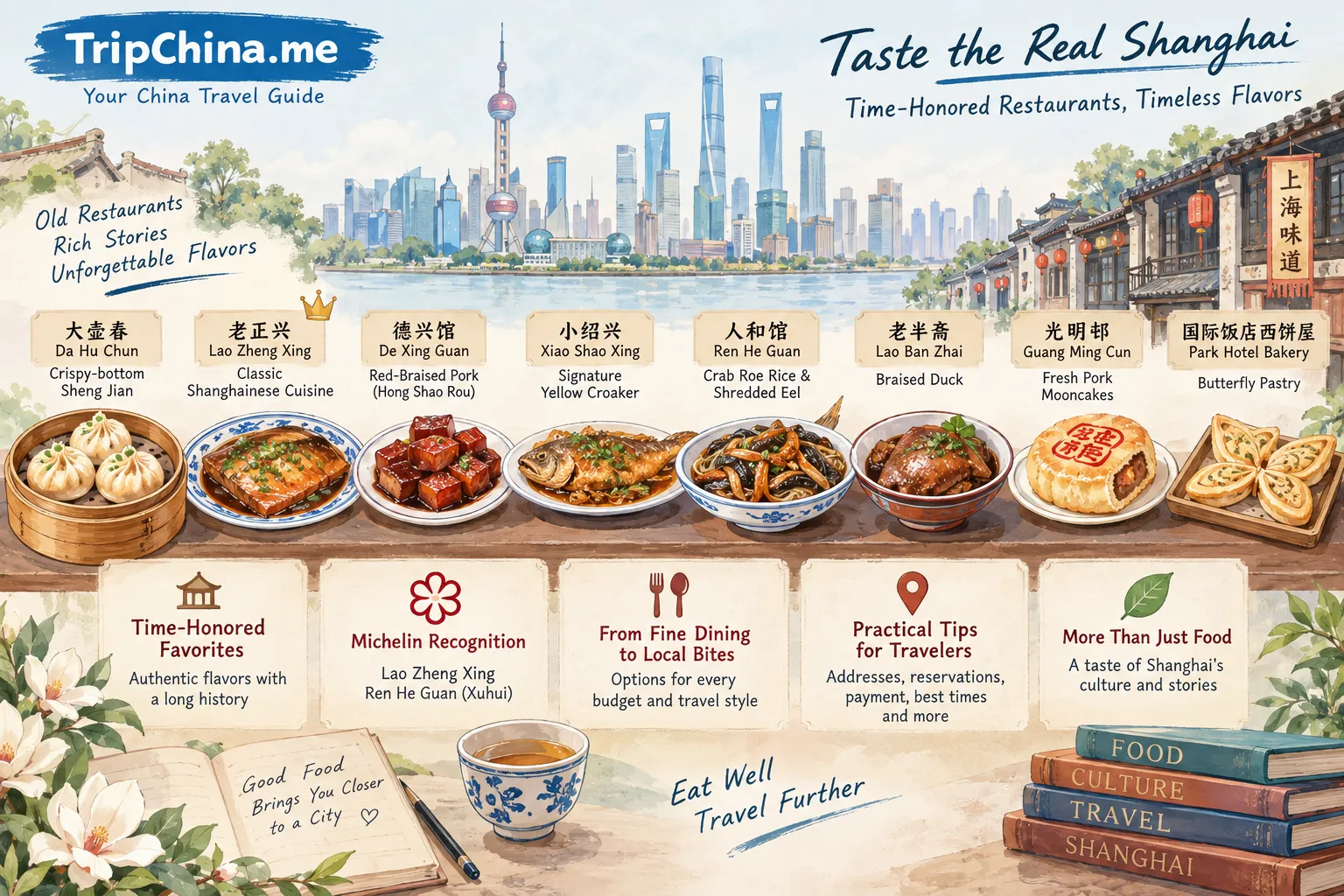
If you only want one proper Shanghainese dinner, choose Lao Zheng Xing or Ren He Guan. If you want something casual and historically distinctive, try Da Hu Chun. For takeaway, Park Hotel’s butterfly pastry and Guang Ming Cun’s fresh pork mooncake are the most memorable options.
For a full list of what to order across Shanghai—not just old brands—see our Shanghai food guide.
As of September 2026, both Lao Zheng Xing and Ren He Guan (Xuhui) appear among Michelin’s starred Shanghai restaurants. Lao Zheng Xing is a One MICHELIN Star restaurant rather than a Bib Gourmand.
The phrase lao zi hao carries real cultural weight, but travelers should distinguish history, official designation and present-day food quality.
Some restaurants have operated for well over a century. Others are younger local institutions that travelers frequently group with Shanghai’s old brands. And official “Shanghai Time-Honored Brand” or “China Time-Honored Brand” recognition is an administrative heritage designation—not a restaurant review score.
That distinction matters. A restaurant can have an impressive historical pedigree while serving an inconsistent meal, just as a newer restaurant can execute traditional Shanghainese cooking extremely well.
Shanghai continues to update its municipal old-brand system. The official 2025 Shanghai Time-Honored Brand list was published by the Shanghai Municipal Commission of Commerce in March 2026 and includes restaurant brands such as Da Hu Chun, Lao Ban Zhai and Xiao Yang Sheng Jian.
The biggest mistake is assuming that age guarantees consistency.
Many historic brands now operate several branches, and the experience can vary considerably between a long-established flagship and a newer location. Staff, kitchen teams, preparation methods and customer volume all affect the result.
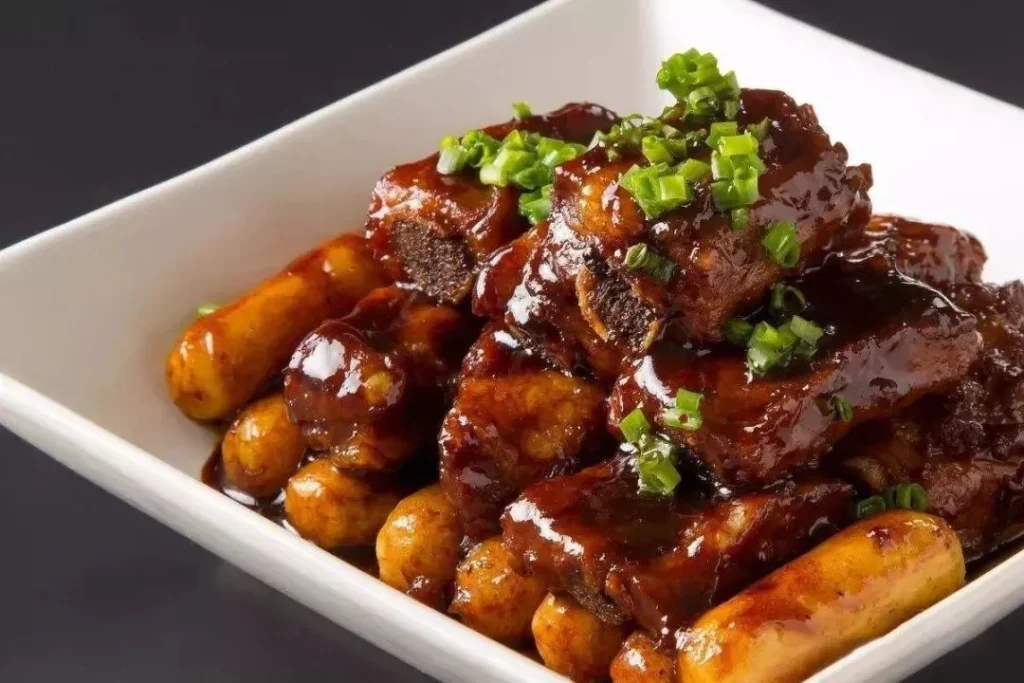
Traditional Shanghainese red-braising, for example, depends on balancing soy sauce, sugar, aromatics and cooking time. Poor execution quickly turns the same basic recipe overly sweet, overly salty or simply heavy.
Expansion itself is not proof that a restaurant has declined. But when trying a historic brand for the first time, I generally prefer the long-established central-city branch over a newer branch unless there is a specific reason not to.
TripChina.me local tip: do not judge a restaurant only by the number of tourists outside. Look at what repeat local diners are actually ordering. The signature dish is often a much safer choice than randomly exploring a 50-item menu.
Founded: 1883; some historical signage and sources cite 1878
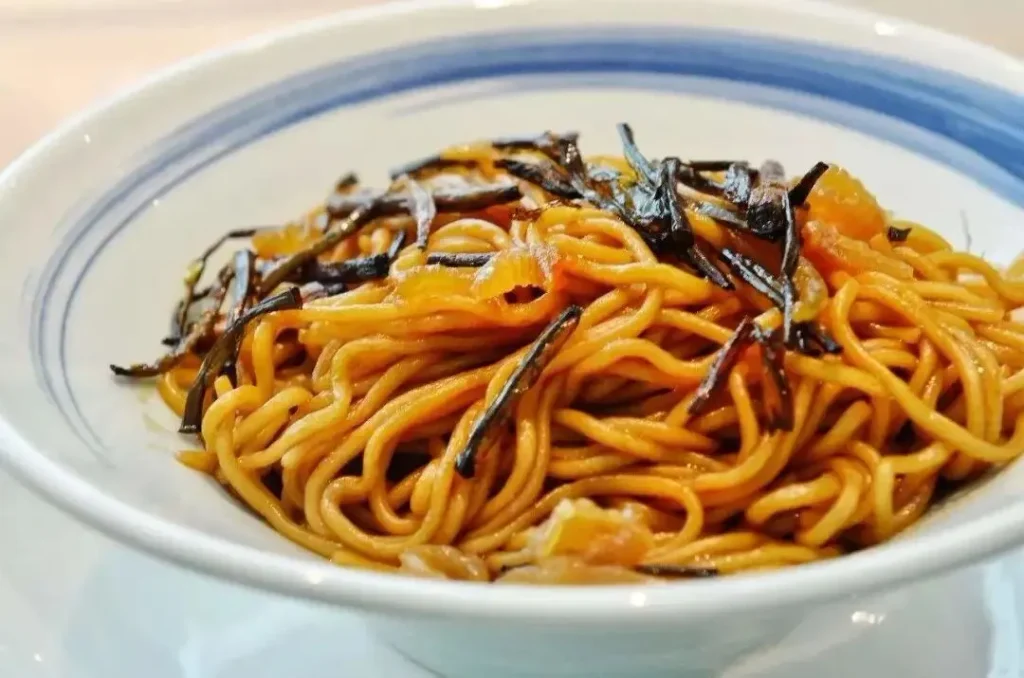
Signature dish: Braised pork knuckle noodles, 焖蹄面
Typical spend: about ¥40–70
Address: 471 Guangdong Road, 广东路471号
De Xing Guan is one of Shanghai’s best-known historic food names. Shanghai’s official English-language city portal dates the restaurant to 1883, although some brand histories and signage use 1878. For travelers, the difference does not change the practical point: it is a late-Qing-era Shanghai institution.
Its Guangdong Road restaurant remains the branch I would choose if you want to understand why the brand became famous.
The dish to order is braised pork knuckle, particularly men ti liang xian (焖蹄两鲜), which combines braised pork with smoked fish and noodles. The pork should be soft enough to pull apart easily, with a deep soy-based flavor.
Do not arrive expecting every noodle bowl to be extraordinary. The brand’s modern reputation is mixed, and branch-to-branch consistency is part of the problem.
Verdict: visit for the history and the braised pork knuckle rather than for a large multi-course meal. If possible, choose a long-established central Shanghai branch instead of picking a random outlet.
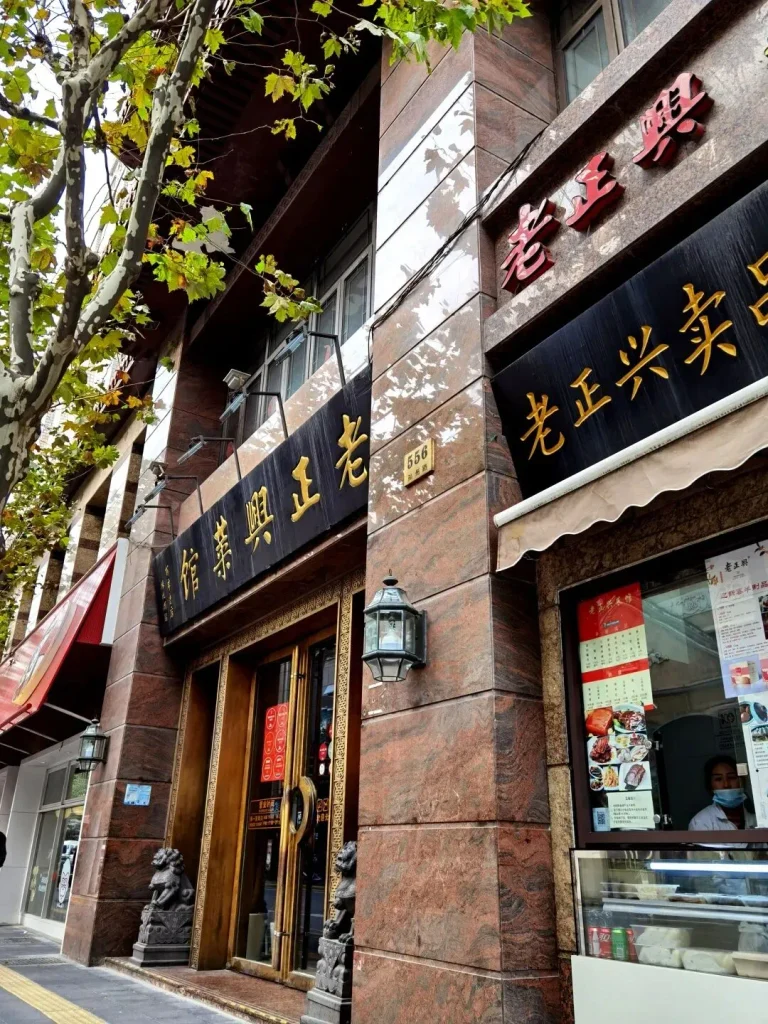
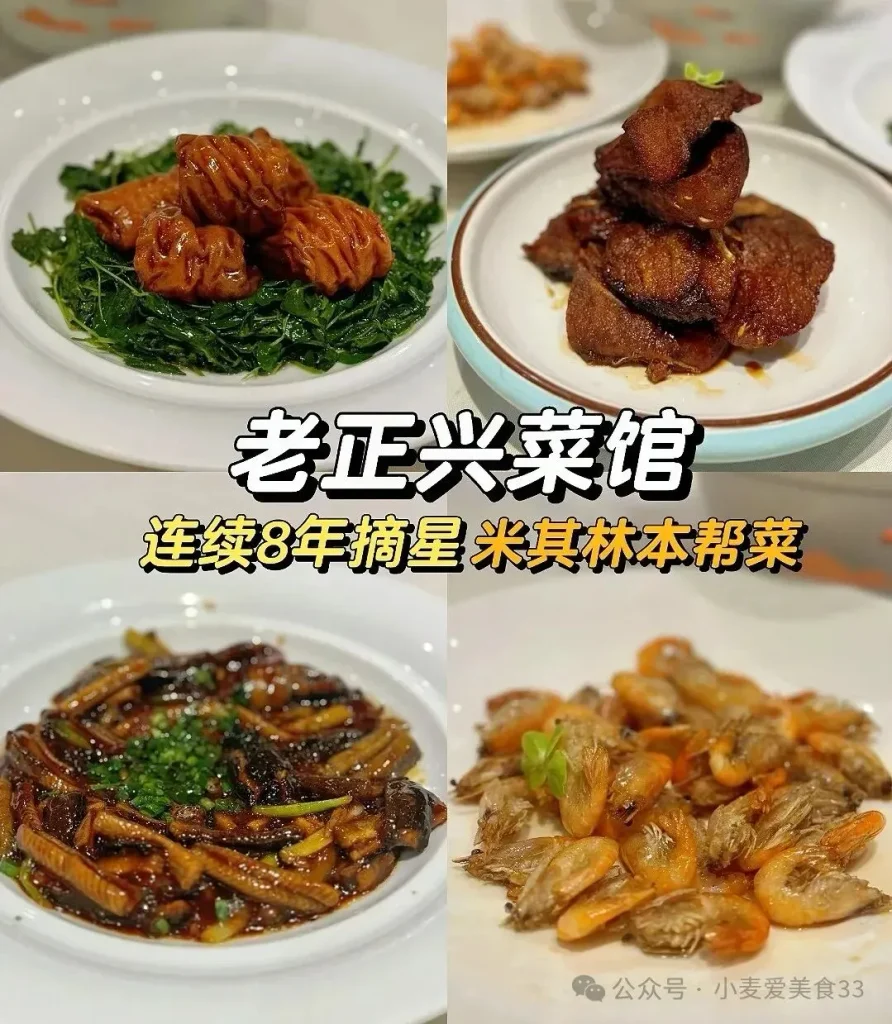
Founded: 1862
MICHELIN status: One MICHELIN Star, as of September 2026
Signature dishes: Yellow croaker fillet in wine lees sauce, stir-fried river shrimps and classic Shanghainese specialties
Typical spend: about ¥150–250+
Address: 556 Fuzhou Road, 福州路556号
Yes. For a first-time foreign visitor who wants a full sit-down Shanghainese dinner rather than snacks, Lao Zheng Xing remains one of the safest choices in this guide.
Michelin describes Lao Zheng Xing as dating to 1862 and highlights two dishes in particular: yellow croaker fillet in wine lees sauce and stir-fried river shrimps. These are safer ordering choices if you want to follow the dishes Michelin itself specifically praises rather than selecting unfamiliar items from a large menu.
The restaurant’s other classic Shanghainese specialties remain worth considering, but the Michelin-highlighted dishes give first-time visitors a useful starting point.
The dining room is more formal than a noodle shop or shengjian counter, so this is where I would bring someone who wants to experience old Shanghai cuisine without sacrificing comfort.
Verdict: highly recommended for a proper traditional meal. Michelin notes that the restaurant manages its own bookings, so contact the restaurant directly for popular dinner periods.
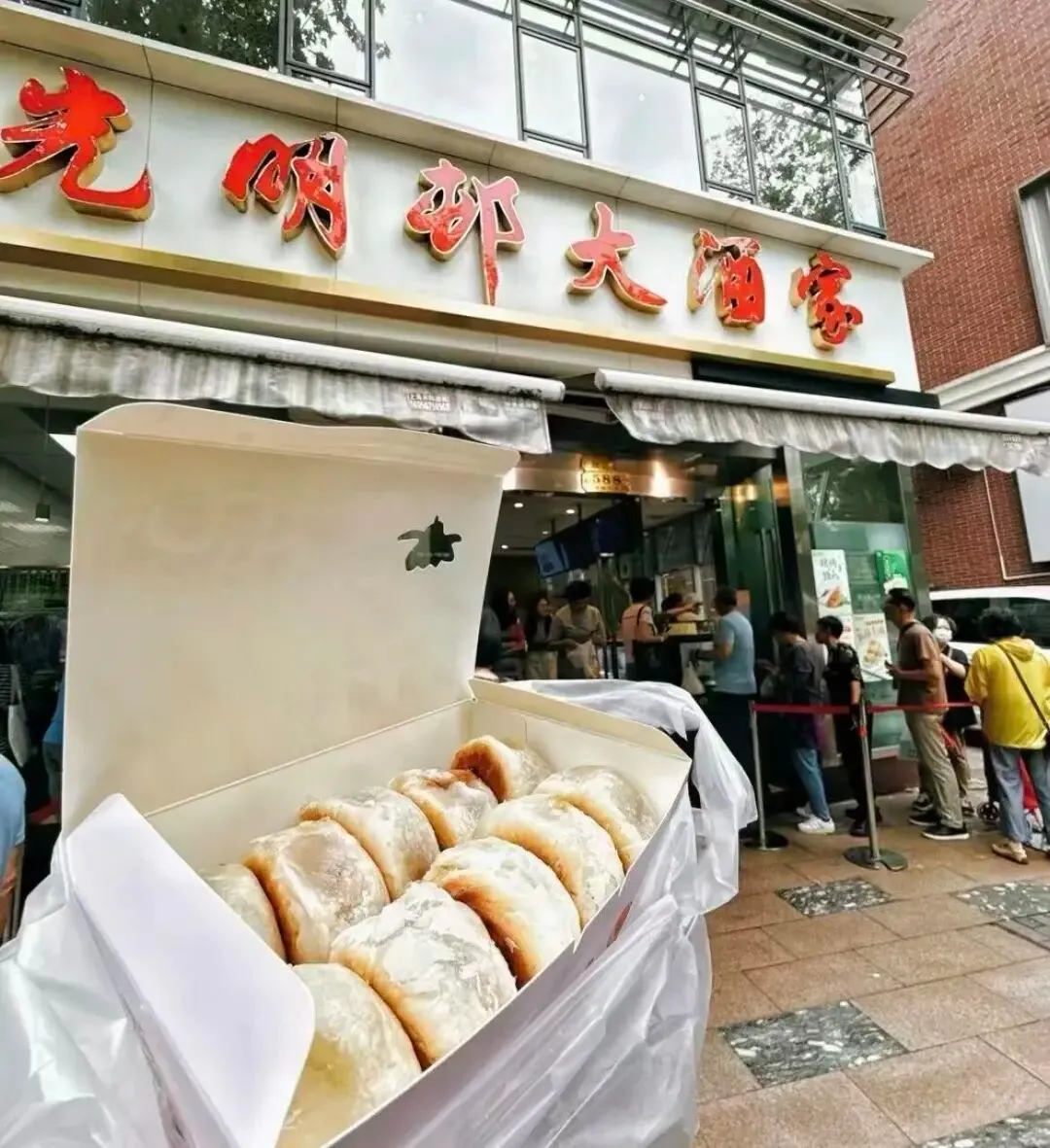
Founded: 1956
Signature dish: Fresh pork mooncake, 鲜肉月饼
Typical spend: about ¥20–80
Address: 588 Huaihai Middle Road, 淮海中路588号
Guang Ming Cun is not a century-old restaurant. Founded in 1956, it belongs to a younger generation of Shanghai institutions frequently grouped with much older lao zi hao in food guides and local media.
Its fresh pork mooncakes are the main reason to stop. A good one combines flaky pastry with hot, savory pork filling and should be eaten as fresh as possible.
The problem is not the mooncake. It is the queue.
During busy periods and around Mid-Autumn Festival, waiting can consume far more of your Shanghai itinerary than the snack justifies.
Verdict: buy one if you are already on Huaihai Road and the line is manageable. Do not sacrifice a major attraction or an hour-plus of sightseeing simply to check it off a list.
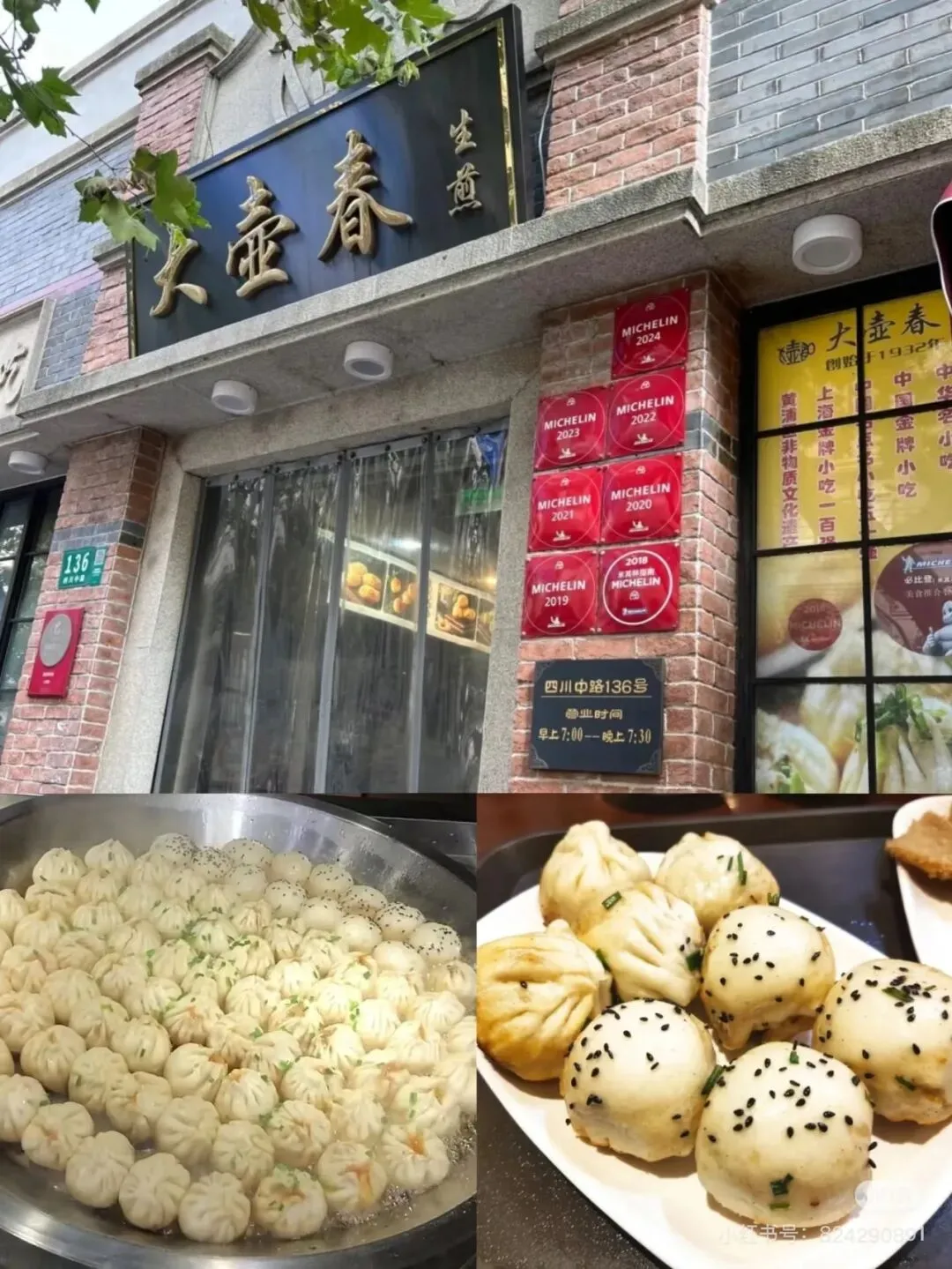
Founded: 1932
Signature dish: Pan-fried pork buns, 生煎包
Typical spend: about ¥20–40
Address: 136 Sichuan Middle Road, 四川中路136号
Because that is the style.
Da Hu Chun is one of the places where foreign visitors’ expectations can completely distort the experience. Modern tourists often expect shengjian to behave like a fried xiao long bao: thin skin, lots of broth and an explosive soup-filled center.
Da Hu Chun represents an older style. The dough is thicker and fluffier, the base is fried crisp, and the pork filling is comparatively dry rather than swimming in soup.
That is not automatically a quality defect.
Order the classic fresh pork shengjian or shrimp version and pair it with curry beef soup. If you specifically want the thin-skinned, soup-heavy modern style, you will probably prefer Xiao Yang Sheng Jian.
Da Hu Chun appears in the official 2025 Shanghai Time-Honored Brand list. Interestingly, Xiao Yang Sheng Jian—the modern, soup-filled alternative—was also newly recognized in the same list. Both styles now have formal Shanghai time-honored-brand recognition, even though they represent very different approaches to shengjian.
Verdict: one of the most interesting stops in this article precisely because it tastes different from what many overseas visitors think “shengjian” should be.
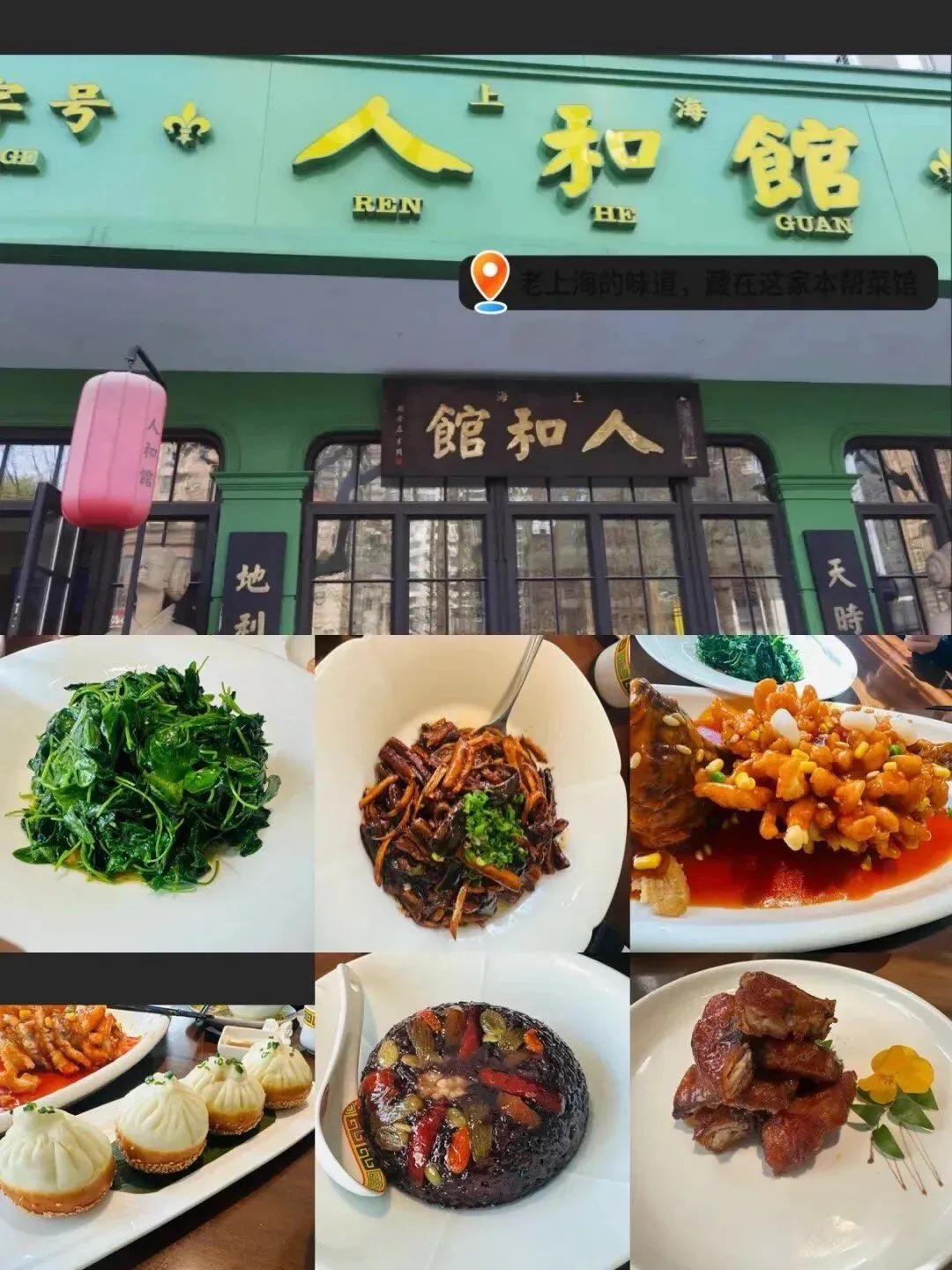
Founded: modern restaurant rather than a century-old brand
MICHELIN status: One MICHELIN Star, as of September 2026
Signature dish: Crabmeat and roe over rice, 蟹粉捞饭
Typical spend: about ¥150–250+
Address: 407 Zhaojiabang Road, 肇嘉浜路407号
Ren He Guan is here as a benchmark.
It does not have the age of De Xing Guan or Lao Zheng Xing, but it demonstrates an important point: traditional food does not have to come from a century-old institution to be convincing.
Michelin currently awards Ren He Guan (Xuhui) one star. Its guide entry specifically highlights crabmeat and roe on rice and fried shredded eel with water bamboo, while noting that the Shanghainese cooking rather than the nostalgic 1930s décor is what keeps the restaurant busy.
The interior leans deliberately into old Shanghai nostalgia, but the food is not merely decoration for the theme.
Verdict: one of the strongest options for travelers who care more about the meal than the age printed on the restaurant sign.
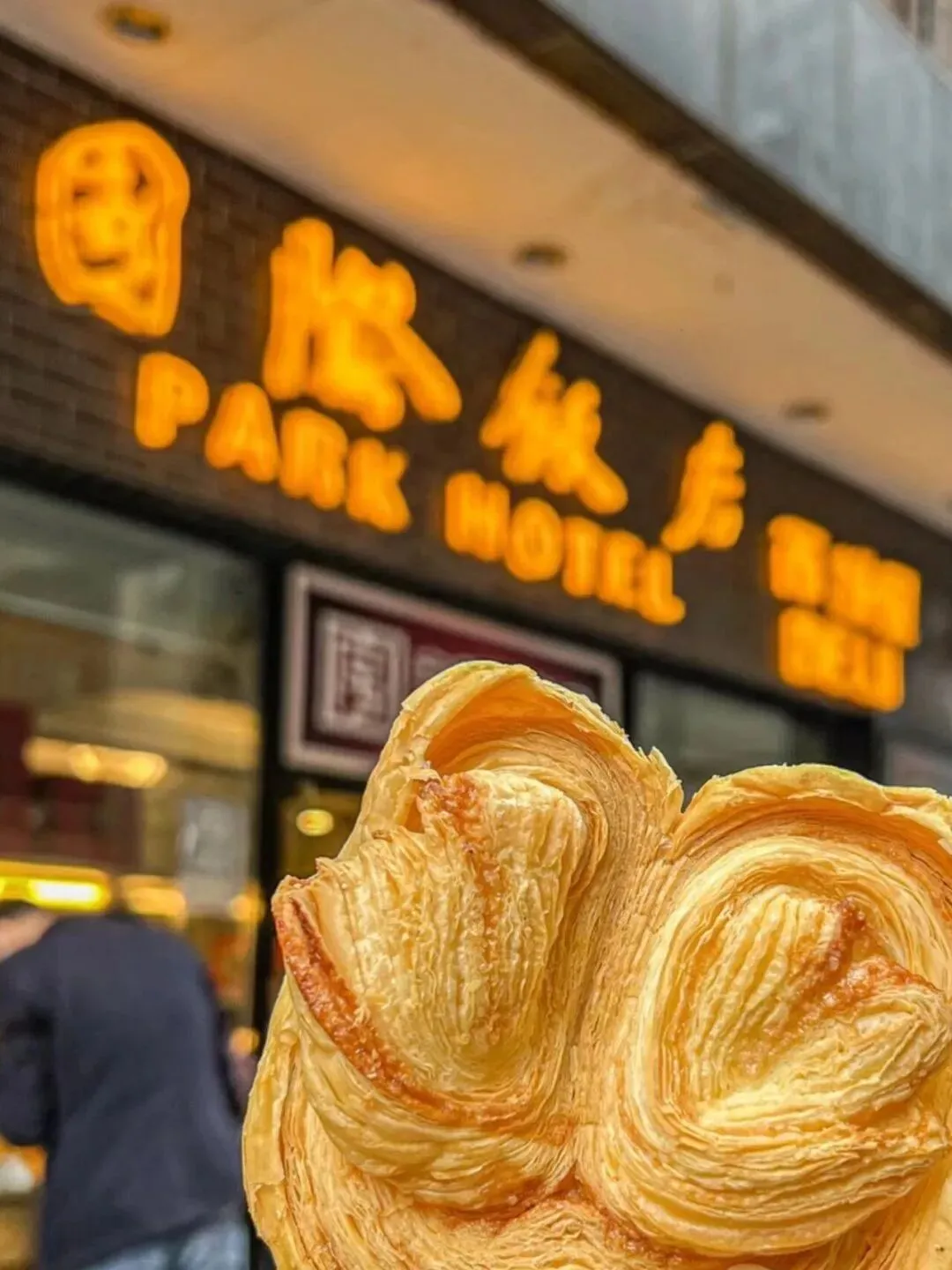
Founded: 1934
Signature item: Butterfly pastry, 蝴蝶酥
Typical spend: about ¥40–100+ depending on quantity
Address: 170 Nanjing West Road, 南京西路170号
Park Hotel Bakery is one of those Shanghai food stops where the product and the queue need to be judged separately.
The small butterfly pastries are crisp, buttery and sweet without needing elaborate presentation. They also travel reasonably well, making them a practical edible souvenir.
The queue is the problem. There is no reliable universal 2026 waiting time because it changes sharply by weekday, season and holiday traffic. Shanghai media still describes Park Hotel butterfly pastries as one of the city’s well-known “queue king” foods during peak periods.
A practical strategy is to try a weekday morning, ideally before the main sightseeing crowds build. Avoid weekends, public holidays and the days immediately before Mid-Autumn Festival if minimizing the queue matters.
My rule is simple: if the line looks reasonable, buy the small butterfly pastries. If the estimated wait approaches 90 minutes, move on. A good pastry should not cost you two hours of a Shanghai itinerary.
Verdict: excellent takeaway, but not worth an extreme queue.
If you combine this stop with central Shanghai sightseeing, our Shanghai City Walk routes can help you avoid crossing the city just for one pastry shop.
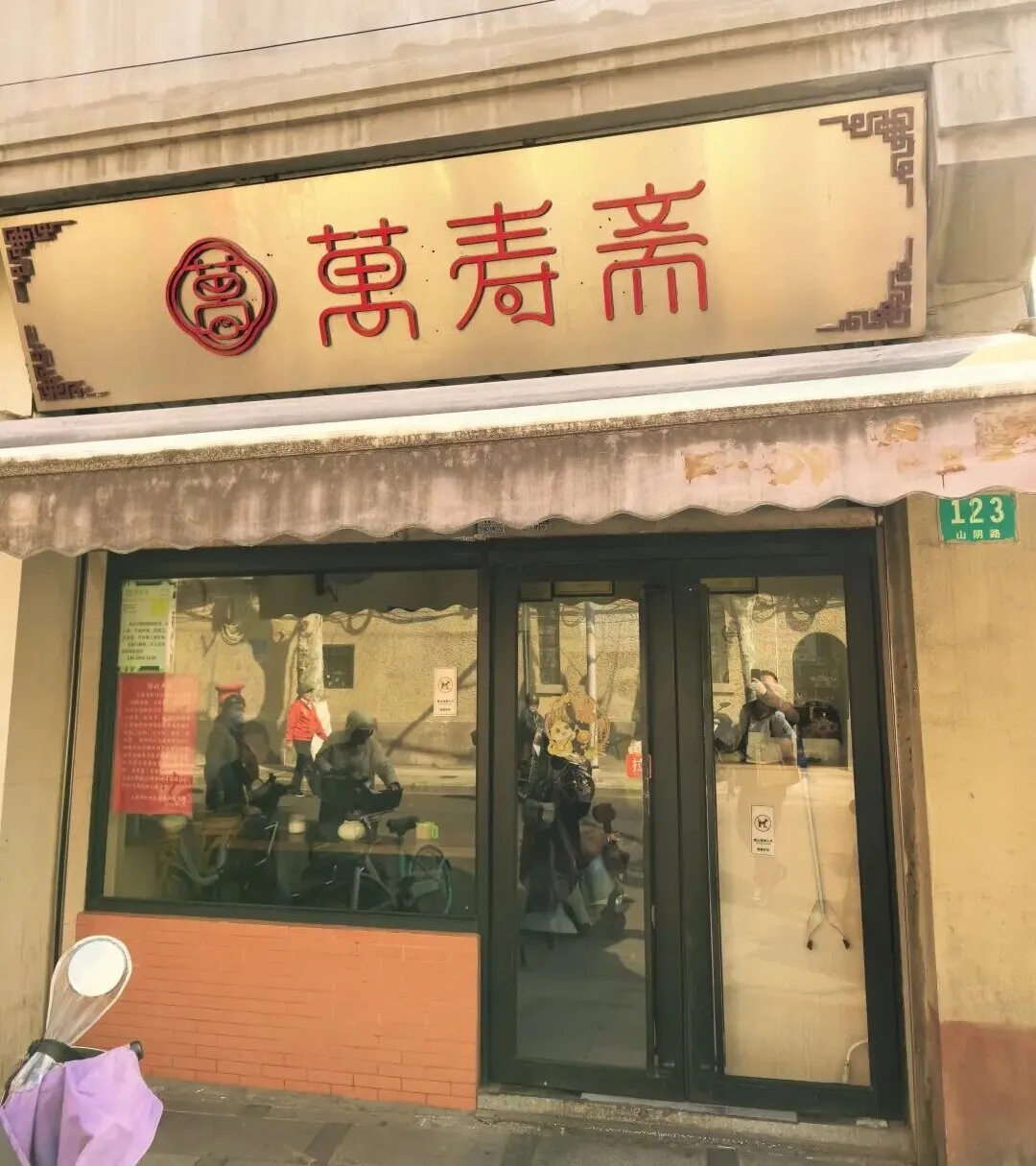
Brand origin: around the 1950s
Signature dish: Fresh pork xiao long bao, 鲜肉小笼
Typical spend: about ¥20–50
Address: 123 Shanyin Road, 山阴路123号
Wan Shou Zhai is a tiny neighborhood-style shop rather than a grand historic dining room.
Its xiao long bao are known for thin wrappers and generous filling, while the three-delicacy wontons are an easy second dish.
The shop’s small size is part of its charm and part of the inconvenience. Meal-time queues can be uncomfortable, and flavor can feel sweeter than some foreign visitors expect.
The brand’s roots are generally traced to the mid-20th century. The current registered operating entity is much newer, so it is more accurate to distinguish the brand’s historical origin from the legal age of the present business entity.
Verdict: worthwhile if you are exploring the area. I would not cross Shanghai solely for it.
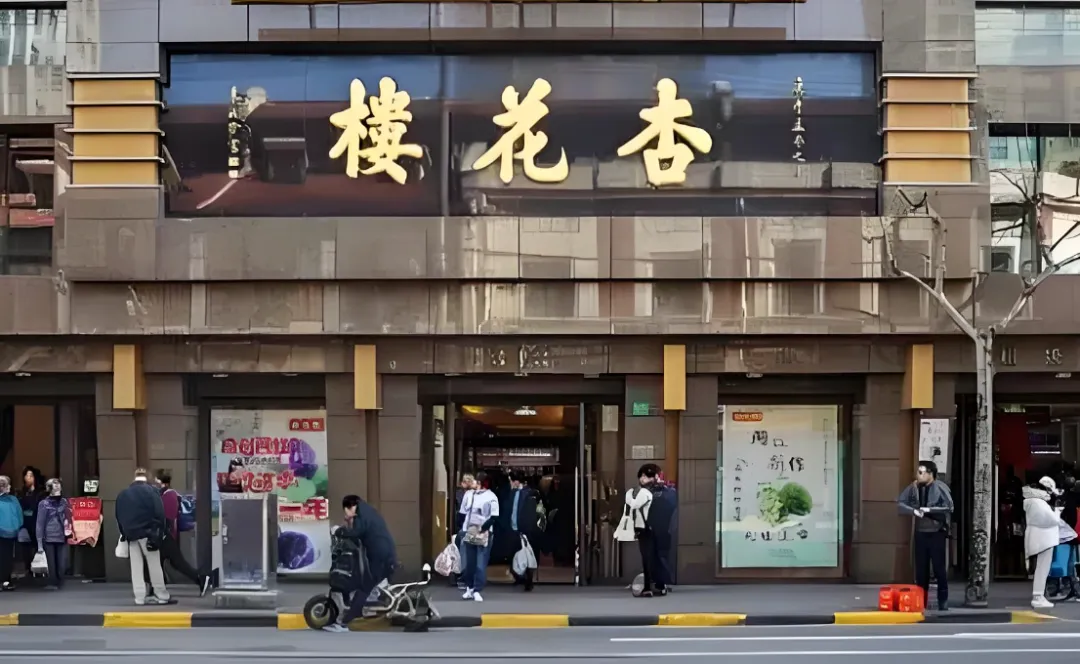
Founded: 1851
Signature dishes: Cantonese dim sum and traditional pastries
Typical spend: about ¥150–250+
Address: 343 Fuzhou Road, 福州路343号
Yes—but with a clear label.
Xing Hua Lou is historically important in Shanghai, but it is a Cantonese restaurant, not a benchmark for Benbang or Shanghainese cuisine.
That distinction is easy for overseas visitors to miss because “old Shanghai restaurant” and “traditional Shanghai food” are often treated as interchangeable online.
Come for dim sum, shrimp dumplings, char siu and the institution’s famous pastry tradition. Do not come expecting a pure introduction to classic local Benbang cooking.
Verdict: a reliable historic Cantonese option, especially for groups who can share several dishes.
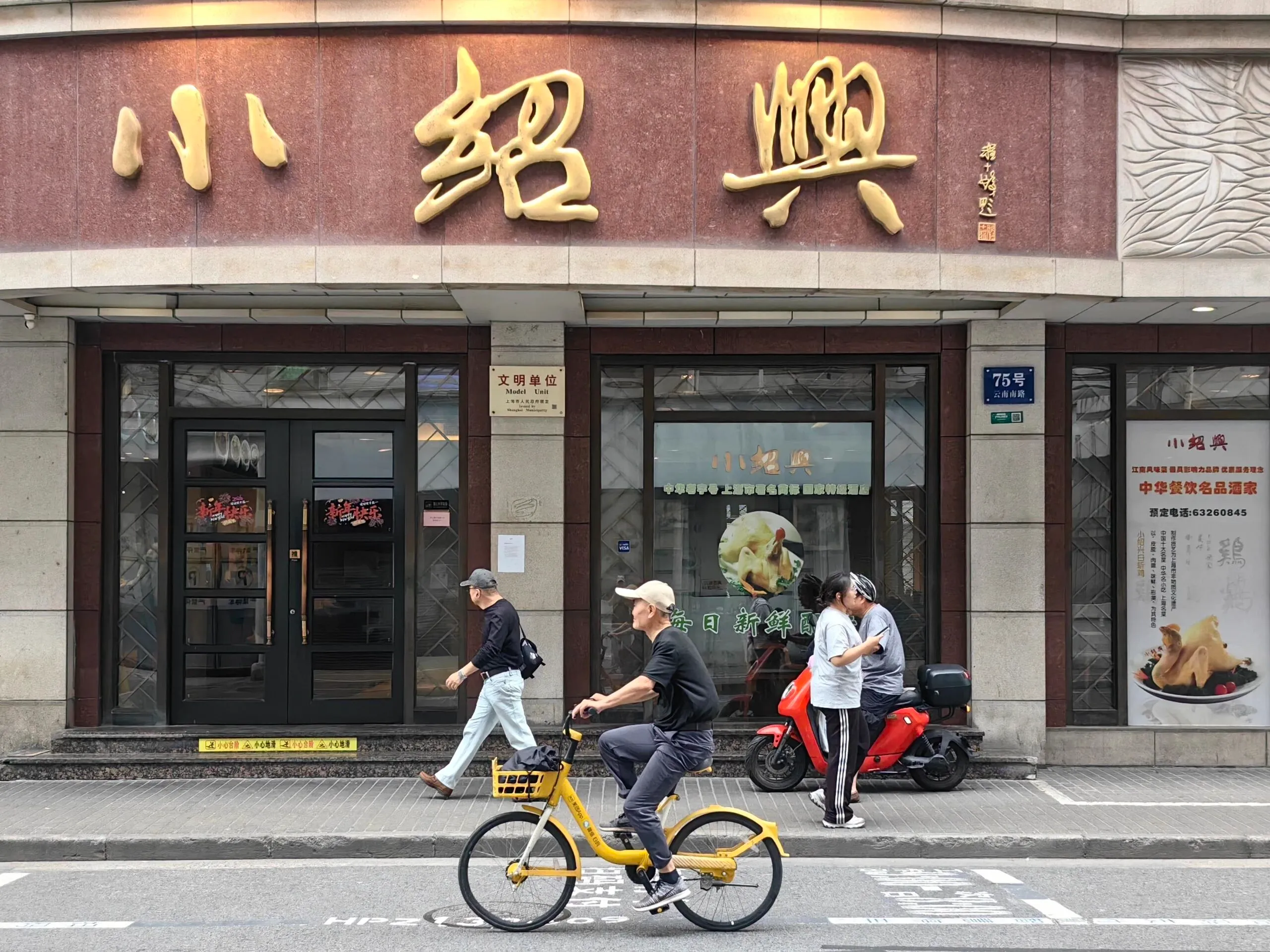
Founded: 1943
Signature dish: White-cut chicken, 白斩鸡
Typical spend: about ¥40–80
Current flagship address: 185–191 South Shanxi Road, 山西南路185–191号
Xiao Shao Xing focuses on one of the simplest-looking dishes in Shanghai cuisine: bai zhan ji.
The chicken is gently cooked, cooled and served with its skin intact, with a dipping sauce providing much of the seasoning. Good white-cut chicken is about texture and chicken flavor rather than heavy sauce.
The address is important in 2026. Xiao Shao Xing moved from its long-associated Yunnan South Road location during the redevelopment of the Yunnan Road food district. Its current flagship is on South Shanxi Road, where the relocated old-brand food cluster reopened in February 2026.
Pair the chicken with chicken congee if you want a simple local-style meal.
Verdict: a solid specialist stop for travelers who specifically enjoy chicken. It is less essential if you have only one or two meals in Shanghai.
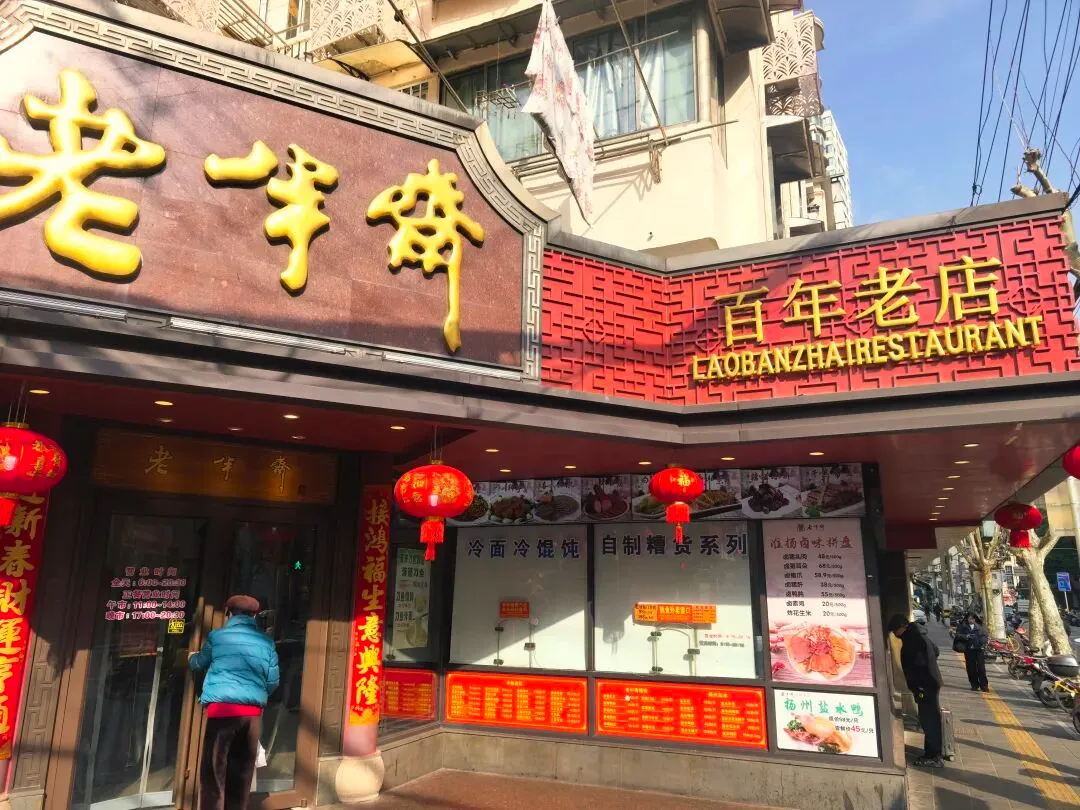
Be careful with outdated claims about its official status.
Older articles may describe Lao Ban Zhai as having “lost its old-brand status,” which helps explain why online information now appears contradictory.
What is current and verifiable is that Lao Ban Zhai Restaurant was formally included as a newly recognized brand in the 2025 Shanghai Time-Honored Brand list published in March 2026.
In practical terms, its formal Shanghai heritage recognition is now current again. That does not automatically settle questions about present-day kitchen consistency, so official status should not be treated as proof that every dish is outstanding.
Its traditional noodle and fish dishes may still interest travelers specifically exploring old Shanghai food culture, but I would prioritize the nine restaurants above for a first visit.
| If You Want... | Choose | Why |
|---|---|---|
| One classic Shanghainese dinner | Lao Zheng Xing | Historic, formal and One MICHELIN Star |
| A modern but traditional-feeling dinner | Ren He Guan | One MICHELIN Star with strong Shanghainese execution |
| Historic Shanghai noodles | De Xing Guan | Go specifically for braised pork knuckle |
| Traditional dry-style shengjian | Da Hu Chun | Distinctive old-school style |
| Fresh pork mooncake | Guang Ming Cun | Excellent when the queue is short |
| A takeaway pastry | Park Hotel Bakery | Easy souvenir if waiting time is reasonable |
| Neighborhood xiao long bao | Wan Shou Zhai | Casual and inexpensive |
| Cantonese dim sum | Xing Hua Lou | Historic institution, but not Benbang cuisine |
| White-cut chicken | Xiao Shao Xing | Specialist rather than broad-menu destination |
The biggest lesson is simple: choose the restaurant for a specific dish, not simply because the sign says lao zi hao.
A restaurant may be famous because it spent decades perfecting one or two dishes, not because every item on its menu is equally good.
At De Xing Guan, order the pork knuckle. At Da Hu Chun, order shengjian. At Xiao Shao Xing, order white-cut chicken. At Park Hotel, buy the butterfly pastry.
You will usually get a more memorable meal and spend less.
Several historic brands now have multiple locations.
When the historical experience matters, use the best-established branch rather than assuming every newer outlet will reproduce it perfectly.
For casual restaurants, arriving around 11:00 AM for lunch or roughly 5:00–5:30 PM for dinner can reduce waiting.
The exception is takeaway products that develop their own queues throughout the day, particularly around major Chinese holidays.
For holiday crowd planning beyond restaurants, check our China public holiday guide.
Traditional Benbang cuisine often combines sweet and savory flavors with soy sauce and rich braising, but describing the whole cuisine as “very sweet” oversimplifies it.
If your first dish is a rich red-braised specialty, balance it with wontons, vegetables, soup or another lighter dish.
Official heritage recognition tells you that a brand has historical and cultural significance.
It does not guarantee that you will prefer its food to a newer restaurant.
Use heritage status to understand the restaurant. Use the dish, branch, current execution and your own taste to decide whether to eat there.
As of September 2026, Shanghai supports cash, mobile payment and bank-card payment, but acceptance of a physical foreign Visa or Mastercard still varies by individual merchant and terminal.
Large restaurants such as Lao Zheng Xing and Ren He Guan are more likely to support card payment; Michelin currently lists credit-card acceptance for both.
For smaller noodle shops, snack counters and bakeries, Alipay or Weixin Pay is often the easiest option. Carrying some RMB cash as backup is also sensible.
Before eating your way around the city, set up payment using our foreign visitor payment guide or Alipay setup guide.
Language is usually manageable even when staff speak little English. At casual shops, save the Chinese name of the signature dish on your phone and show it to staff. At formal restaurants, translated menus or photographs are more common, but a translation app still makes ordering much easier.
Not for every restaurant.
Snack counters such as Park Hotel Bakery and casual shops such as Da Hu Chun normally work on a queue or walk-in basis.
For full-service restaurants such as Lao Zheng Xing and Ren He Guan, reserving ahead is sensible for weekend dinners, Chinese public holidays or a fixed itinerary. Do not rely on a universal “book exactly 3–7 days ahead” rule because availability changes by date and party size.
Lao Zheng Xing and Ren He Guan both manage their own bookings according to Michelin. A weekday lunch walk-in may work, especially before the main noon rush, but dinner is less predictable. If the restaurant is important to your itinerary, contact it directly or ask your hotel to call.
For payment setup, translation and other app essentials before you go, see our China travel apps guide.
This article is part of the Shanghai Travel Guide Hub.
Options are limited. Traditional Shanghainese cooking uses pork, seafood, chicken stock and animal fat frequently, including in dishes that may not look meat-heavy.
Vegetarian travelers should confirm ingredients rather than relying only on the dish name. Bakeries and traditional snack stores may have meat-free-looking pastries or rice cakes, but strict vegetarians should still ask about lard, stock and fillings.
Fresh pork mooncakes are not limited to Mid-Autumn Festival and can commonly be found outside the festival season.
Late summer and early autumn bring the strongest seasonal attention, but they also bring the longest queues. If your goal is simply to taste a hot fresh pork mooncake rather than participate in the festival atmosphere, visiting outside the Mid-Autumn rush is often easier.
It is a One MICHELIN Star restaurant, not merely a historically famous name. Michelin specifically praises its yellow croaker fillet in wine lees sauce and stir-fried river shrimps, which makes those sensible choices for a first visit.
Expect carefully executed classic Shanghainese cooking rather than an avant-garde tasting-menu experience. Its appeal is the combination of history and traditional food prepared at a consistently high level.
Possibly, especially for an early weekday lunch, but there is no guarantee.
Michelin states that Lao Zheng Xing manages its own bookings. If dinner is important to your itinerary—particularly Friday through Sunday or during a Chinese holiday—contact the restaurant in advance rather than relying on a walk-in.
There is no reliable fixed 2026 waiting time.
Queues change by weekday, season and holiday demand. A weekday morning is usually a better bet than weekends or holiday periods, and if the apparent wait is approaching 90 minutes, I would skip it and continue sightseeing.
Use them as one signal, not the final answer.
Old brands attract nostalgia, tourist hype and strong personal preferences, so reviews can swing from “the best in Shanghai” to “completely ruined.” Look for recent reviews of the exact branch and exact dish you intend to order rather than judging an entire brand from a dramatic one-line comment.
Do not try to collect Shanghai’s famous restaurant names like tourist attractions.
For a full traditional dinner, Lao Zheng Xing remains the strongest historic choice, while Ren He Guan is a compelling modern alternative. Da Hu Chun is worth trying because its old-school shengjian teaches you something about Shanghai food history. Park Hotel and Guang Ming Cun make more sense as opportunistic takeaway stops than destinations worth sacrificing an hour for.
Most importantly, order what each place is famous for.
That strategy will tell you far more about Shanghai’s food culture than blindly eating through a list of “100-year-old restaurants.”
MICHELIN Guide: Lao Zheng Xing
MICHELIN Guide: Ren He Guan (Xuhui)
2025 Shanghai Time-Honored Brand List
Shanghai Government: Time-Honored Food Brands Return Near Nanjing Road
Updated September 2026. TripChina.me cross-checked the original restaurant guide against current Michelin listings, Shanghai’s official 2025 Time-Honored Brand list, 2026 municipal information on relocated old-brand restaurants, recent diner feedback and local food observations. Prices and queues fluctuate, so spending and waiting figures are approximate. Historical designation is treated separately from present-day food quality: heritage recognition confirms cultural status, not that every branch or dish is equally worth visiting.
TripChina.me creates practical China travel guides shaped by real local experience, helping independent travelers navigate transport, payments, food, neighborhoods, and the cultural details that make traveling in China easier and more meaningful. Find the guide for your destination at tripchina.me.