Our Location:
No. 99, Jiazi Road, Chengdu

 authorChris Lee
Xicang is one of the easiest places in Xi’an to visit incorrectly. Search online and you may see bird cages, old books and crowded lanes in one photo, then cafés, exhibitions and renovated warehouses in the next.
They are connected—but they are not the same experience. This guide explains the two Xicangs, when to visit each one, what you will actually find and how to experience both in one half-day.
Here is the practical version if you are planning your Xi’an itinerary.
| What You Need to Know | Quick Answer |
|---|---|
| Best days | Thursday or Sunday |
| Traditional market hours | Roughly 7:00 AM–3:00 PM; best before noon |
| Entry | Traditional market free; general creative-park entry currently free |
| Nearest metro | Line 1 → Sajinqiao Station (洒金桥站) → Exit B |
| Best strategy | Old market in the morning → Sajinqiao lunch → creative park |
| Key caveat | Park and programmed-market schedules can change; check before visiting |
Park and programmed-market hours can change by season. Check the latest park notice or Amap before visiting.
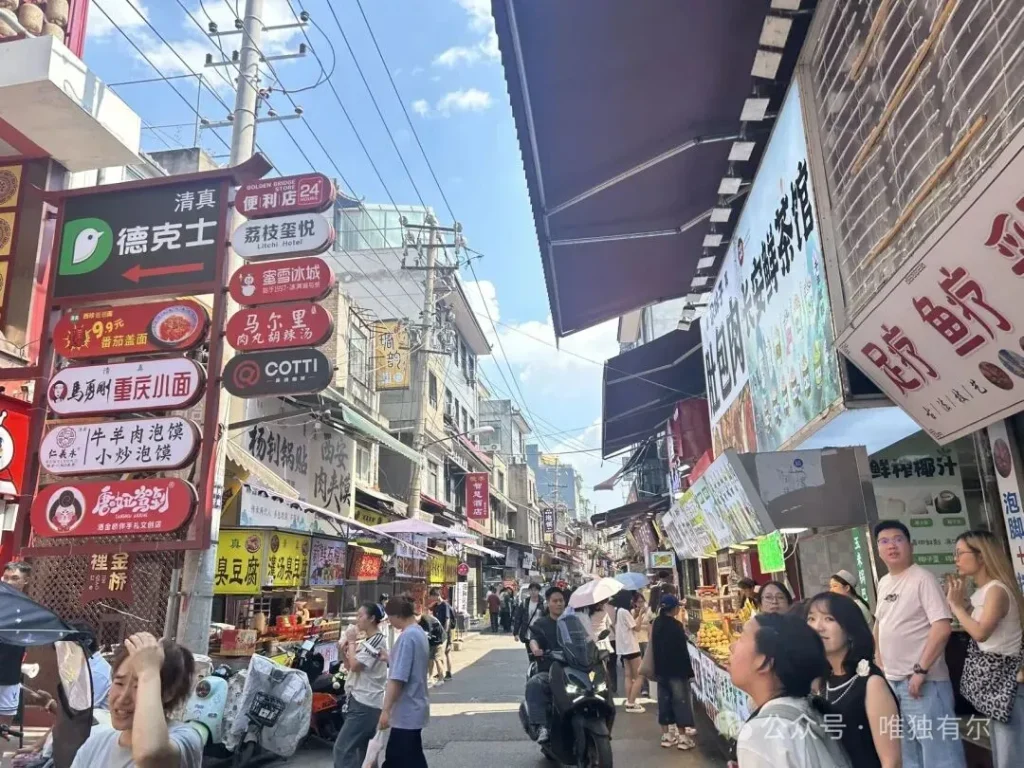
For the traditional Xicang street market, Thursday or Sunday morning is the time that matters. The lanes fill with the old-style market locals associate with guàng dàngzi (逛档子): birds, fish, plants, used books, old objects and everyday goods.
Local sources vary slightly on the exact operating window. Some describe activity beginning around 6:00 AM and winding down around 2:00 PM, while others give roughly 7:00 AM–3:00 PM. For practical trip planning, 7:00 AM–3:00 PM is a useful range, with 8:00–11:30 AM the best browsing window.
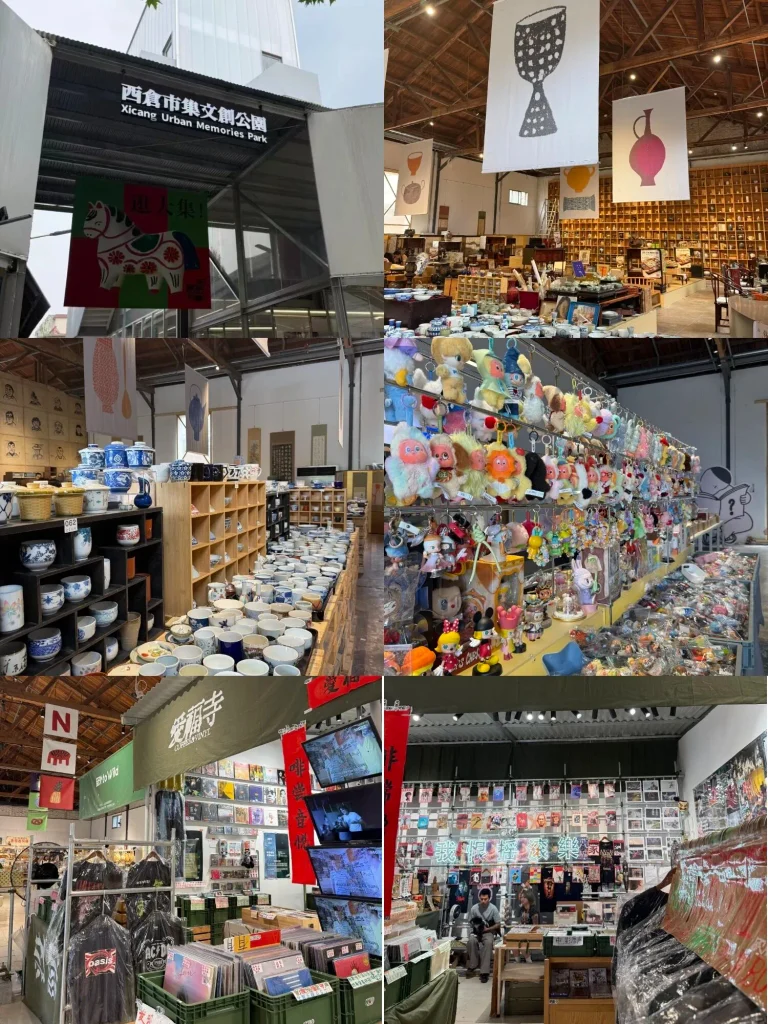
Xicang Urban Memories Park (西仓市集文创公园) is different. It occupies the renovated historic compound and contains exhibitions, creative retail, cafés and contemporary markets.
TripChina tip: If you have only one chance to visit Xicang, choose Thursday or Sunday morning. See the traditional market first and the creative park afterward.
Even outside traditional market days, the creative park can still be worthwhile for exhibitions, permanent shops and the historic setting. Just treat it as a design and exhibition visit—not the full traditional Xicang experience.
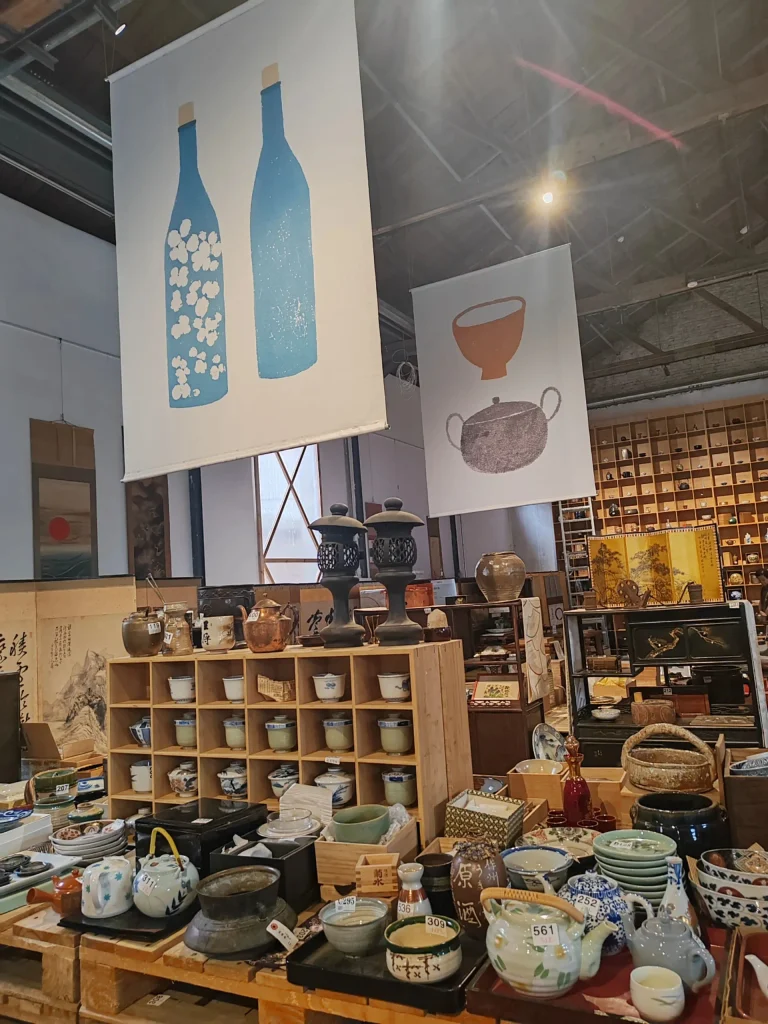
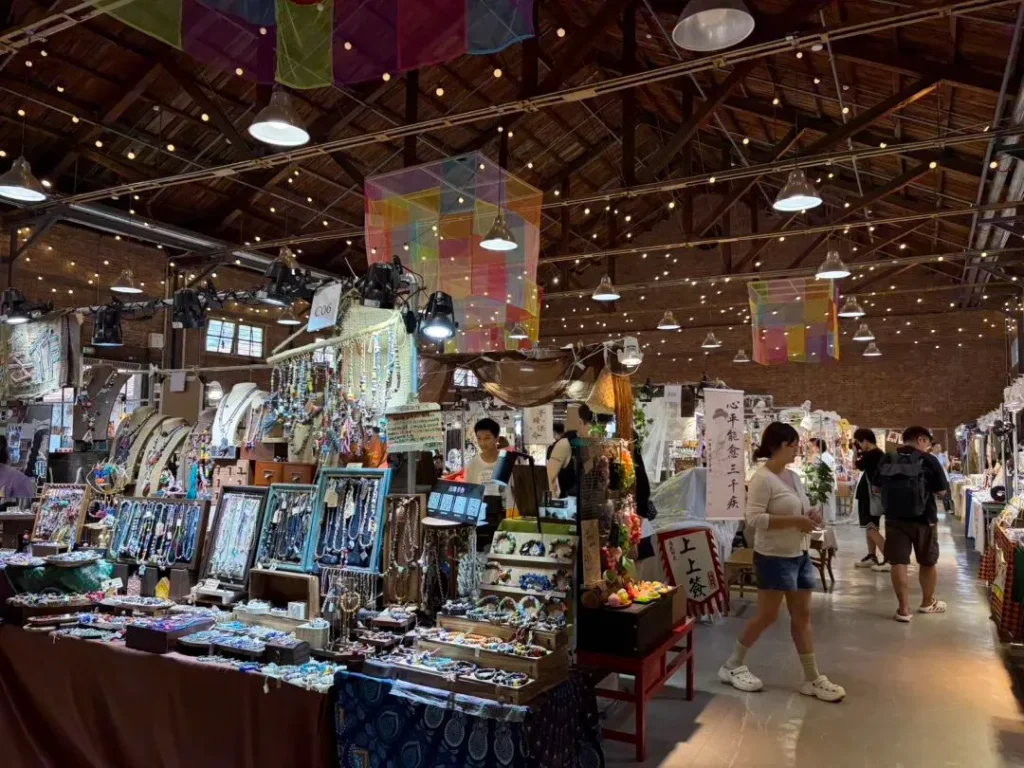
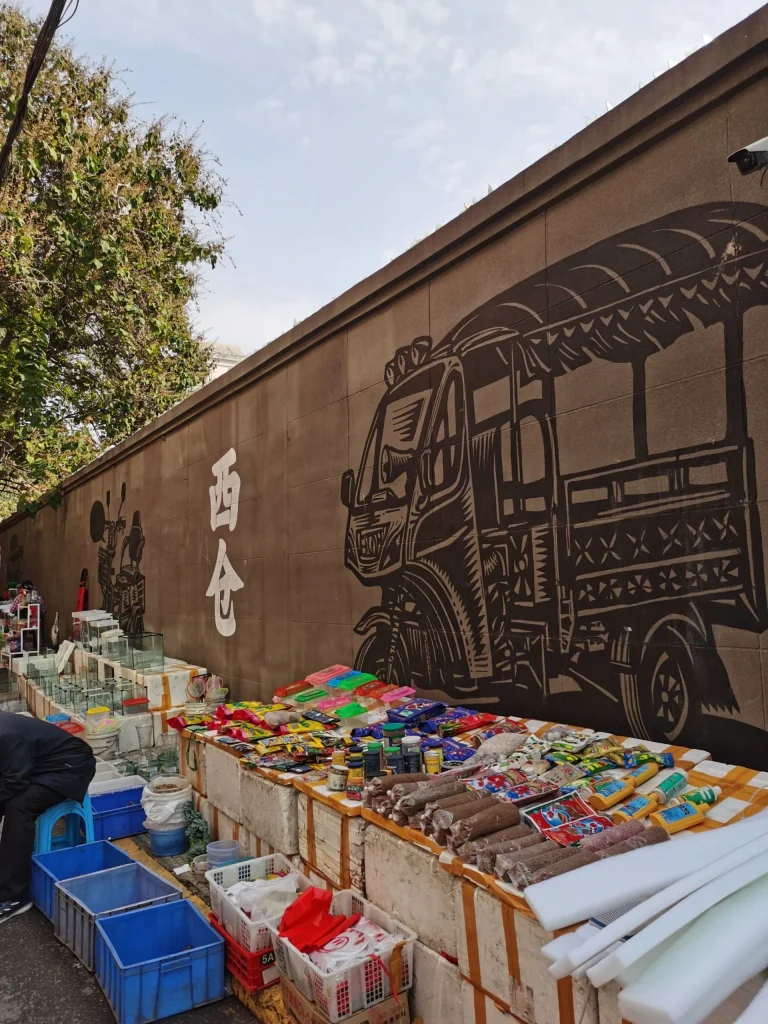
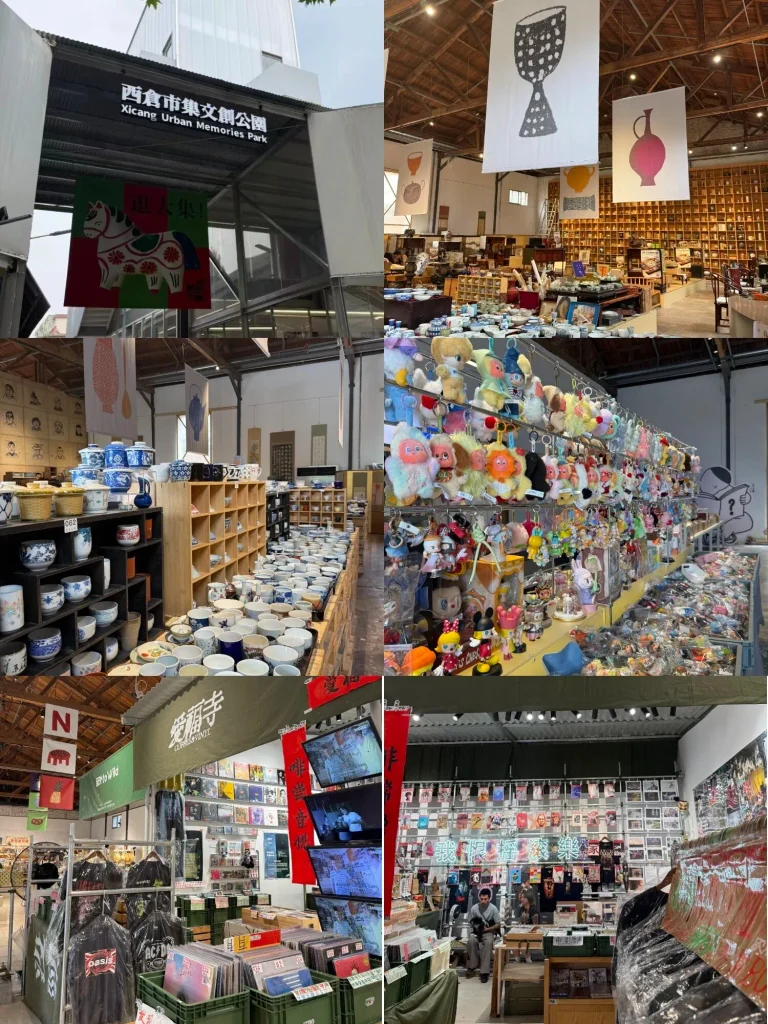
Think of Xicang as two overlapping versions of the same neighborhood.
Outside the historic compound, the four narrow lanes around Xicang still host the traditional market that locals associate with 逛档子.
The key days are:
Thursday and Sunday
The traditional market generally begins early in the morning and gradually winds down during the afternoon. This is not a controlled attraction with gates and fixed vendor hours.
Weather, season and foot traffic affect when individual stalls appear and pack up.
The practical rule is simpler:
Arrive before noon.
The late-morning period gives you the best chance of seeing the market near its busiest without having to arrive at dawn.
Inside the historic compound is the newer Xicang Urban Memories Park (西仓市集文创公园).
The project developed through a “micro-renewal, light intervention” approach rather than demolishing the old compound and replacing it with a newly built tourist street.
Today you may find:
It is considerably more curated than the street market outside.
| Traditional Xicang Market | Xicang Urban Memories Park | |
|---|---|---|
| Location | Four narrow lanes around the old compound | Inside the historic compound |
| Main days | Thursday & Sunday | Currently open throughout the week |
| Typical experience | Birds, plants, books, used goods, household items | Exhibitions, design retail, cafés, programmed markets |
| Entry | Free | General park entry currently free |
| Atmosphere | Crowded, informal, local | Curated, slower, contemporary |
| Best for | Street life, local culture, browsing | Design, exhibitions, architecture, relaxing |
| TripChina priority | ★★★★★ | ★★★★☆ |
TripChina priority ratings are editorial judgments for international travelers, not official attraction ratings.
The biggest mistake is arriving when the traditional market is not running, seeing only the creative park and thinking:
“So this is the famous Xicang Market.”
It is only half the story.
You may hear locals use the expression:
逛档子 — guàng dàngzi
In local usage, it means going to browse the Xicang market.
The exact origin is not certain, and several explanations have circulated over generations.
One widely repeated folk explanation connects the term with Qing-era military drills. Banner soldiers who enjoyed keeping birds and crickets supposedly left their cages and cricket containers with attendants outside the fenced training ground while they drilled. The fence, according to this story, became associated with the word “档子.”
Other explanations link the term to rows of market stalls or even the pronunciation of “担子,” referring to goods once carried on shoulder poles.
These are better understood as local folklore rather than settled historical fact.
What matters more is what “逛档子” came to mean socially.
For generations of Xi’an residents, going to Xicang was not simply shopping. It meant browsing without knowing what you might find, meeting acquaintances, comparing birds or old objects, talking and spending a morning in the neighborhood.
That social function is one reason Xicang survived while the retail city around it changed.
Xicang is associated with Yongfeng Granary (永丰仓) and a much older grain-storage tradition.
But one distinction matters:
The buildings visitors see today are not surviving Tang Dynasty granaries.
Historical accounts connect the wider granary tradition with earlier dynasties, while the existing Xicang compound reflects later historical layers.
The site contains old granary architecture, later institutional and industrial structures, walls, courtyards, mature trees and traces of different periods of Xi’an’s urban development.
This is what makes the creative park more convincing than many purpose-built “ancient streets” in China. It grew from an existing urban compound rather than being constructed from scratch as a tourism backdrop.
The modern transformation accelerated with Xi’an’s urban-renewal work. The current cultural park retained much of the old spatial character while introducing new public and commercial uses.
The exact mix changes from one market morning to another.
That unpredictability is part of its appeal.
Animal and hobby trading has long been associated with Xicang.
Depending on the day and season, you may encounter:
Traditional Chinese hobbyist culture includes keeping songbirds and crickets. Local animal-care practices here may differ from those in your home country.
If animal welfare is a priority, you may wish to avoid these stalls. The lanes are narrow and different categories of vendors overlap, so avoiding every animal stall can be difficult on busy market mornings.
You will find objects that look old.
That does not make them genuine antiques.
Typical stalls can contain old books, coins, badges, cameras, household objects, ceramics, furniture, vintage electronics, collectibles and reproductions.
Unless you know the category well, treat them as interesting second-hand or decorative objects rather than investments.
“Treasure hunting” is part of the mythology of Xicang.
Guaranteed treasure is not.
No.
There are snacks and small food vendors, but Xicang is fundamentally a mixed local market rather than one of Xi’an’s major food destinations.
If eating is your priority, walk toward Sajinqiao afterward. Sajinqiao is particularly useful for local foods such as hulatang, roujiamo and sour-soup dumplings. It generally feels less tourist-oriented than the busiest section of the Muslim Quarter.
TripChina’s Xi’an Muslim Quarter Food Guide explains where to eat beyond the most tourist-heavy main street.
If breakfast markets are what you actually want, the Xi’an Morning Markets Guide is a better starting point.
The renovated park represents the other side of modern Xicang.
Instead of clearing the old compound, the redevelopment retained brick walls, warehouse forms, old structural textures and much of the original spatial pattern while inserting contemporary cultural uses.
The development concept is known as Three Museums and Ten Markets (三馆十集).
This is a planning concept, not literally three conventional museums and ten permanent markets operating side by side.
It describes a collection of exhibition and cultural spaces alongside rotating themed markets covering areas such as books, food, tea, coffee, flowers, music, performance, creative work and second-hand goods.
The New Second-Hand Market (新2手市集 / 新贰手市集) is a programmed component of the creative park. It is not the same thing as the old Thursday-and-Sunday street market.
Its schedule has changed between seasons.
For current planning, treat Thursday through Sunday, roughly 1:00 PM–9:00 PM as the safer operating window. Government reporting on the 2026 night program lists the New Second-Hand Market from 1:00 PM, while some later visitor-oriented listings show an 11:00 AM start.
If this market is one of your main reasons for visiting, arriving after 1:00 PM is the safer bet.
Depending on the current edition, stalls may include:
Entry note: General park entry is currently free. Earlier editions of the New Second-Hand Market used a separate RMB 9.9 entry voucher, redeemable at participating brands inside the park.
Ticket arrangements have changed between seasons, so do not assume the RMB 9.9 system is still in effect. Check the current event notice before paying.
For visits in September 2026, use the following as your planning baseline:
| Area | Current Planning Guidance | Best Time |
|---|---|---|
| Traditional street market | Thu & Sun, roughly 7:00 AM–3:00 PM | ~8:00–11:30 AM |
| Xicang Urban Memories Park | Currently 11:00 AM–9:00 PM daily | Afternoon–evening |
| New Second-Hand Market | Thu–Sun, safest planning window ~1:00 PM–9:00 PM | After 1:00 PM |
| Exhibitions & special events | Varies by program | Check current notice |
The creative park itself is currently promoted as an 11:00 AM–9:00 PM daily venue. The New Second-Hand Market is more variable because its programming changes by season.
For the New Second-Hand Market, 2026 sources differ on whether trading begins at 11:00 AM or 1:00 PM. Planning for after 1:00 PM avoids that uncertainty.
The traditional market works differently. It is an informal neighborhood market rather than a gated attraction, so individual vendors do not follow one exact timetable.
The traditional outdoor market is free.
General entry to Xicang Urban Memories Park is also currently free, but visitors should expect a QR-code reservation process.
Recent visitor information describes reserving free entry through the park’s official WeChat account:
西仓市集文创公园
Search 西仓市集文创公园 in WeChat, follow the official account and use its reservation function.
For foreign visitors, the practical approach is simple:
Have WeChat available and keep your phone connected to the internet.
On-site QR-code registration at the entrance is also commonly available. If you cannot complete the WeChat reservation in advance, arriving and scanning the code at the gate is usually sufficient. If the Chinese-language screen is difficult to complete, ask entrance staff for assistance.
Individual exhibitions, workshops and special events can have separate registration or ticket requirements.
If your schedule is flexible, Thursday or Sunday gives you the most complete experience.
Start in the outside lanes while the traditional market is at its most active.
Do not rush. Xicang works because you do not know whether the next stall contains an old camera, a stack of books, bird cages, household tools or something you cannot immediately identify.
This is an easy way to turn Xicang into a half-day old-city experience without forcing two unrelated attractions together.
If you are unfamiliar with Xi’an’s food scene, the broader Xi’an Food Guide can help you distinguish local specialties from dishes mainly marketed to tourists.
Return to or continue through the renovated compound.
This gives you the contrast that makes Xicang unusual:
old neighborhood market in the morning → contemporary reinterpretation of market culture in the afternoon
Arriving after 1:00 PM also gives you a better chance of catching the New Second-Hand Market when it is operating.
If you visit on a non-market day, skip the first stage and treat Xicang primarily as an urban-history, exhibition and design stop.
If you still have time afterward, Xi’an City God Temple (西安都城隍庙) lies a short walk south of the Xicang area and is an easy addition without turning the afternoon into a cross-city itinerary.
The easiest route for most visitors is:
Metro Line 1 → Sajinqiao Station (洒金桥站) → Exit B
From there, allow roughly 10–15 minutes on foot toward Xicang South Lane. Locals familiar with shortcuts through the lanes may cover the distance faster.
The creative park address is:
146 Xicang South Lane, Lianhu District, Xi’an
西安市莲湖区西仓南巷146号
Save this Chinese name:
西仓市集文创公园
Search the Chinese name in Amap (Gaode Maps), since English place-name results can be inconsistent.
For a broader explanation of the subway system, fares and payment options, see the Xi’an Metro Guide for Foreign Travelers.
If you are still setting up navigation for China, TripChina’s China Navigation App Guide explains why a China-friendly map app is useful.
DiDi works well, but avoid asking drivers to enter the narrow market lanes on busy Thursday or Sunday mornings.
A drop-off on a nearby main road followed by a short walk is usually simpler.
If this is your first trip to China, the DiDi Guide for Foreign Visitors explains setup and payment without requiring a Chinese phone number.
They solve different travel problems.
| Xicang | Muslim Quarter / Sajinqiao | |
|---|---|---|
| Best for | Local market culture | Food |
| Main experience | Browsing and observing | Eating and neighborhood exploration |
| Used/vintage goods | Strong | Limited |
| Historic street life | Strong | Strong |
| Tourist presence | Generally lower in old market | Much higher on main tourist streets |
| Best combined? | Yes | Yes |
Xicang is about objects, hobbies, second-hand trading and neighborhood memory.
The Muslim Quarter and Sajinqiao are much more useful when your main question is what should I eat?
They are close enough that combining them makes more sense than choosing one as a substitute for the other.
These also serve different travel interests.
| Experience | Xicang | Xi’an Morning Markets |
|---|---|---|
| Main focus | Objects, hobbies, used goods | Breakfast, produce, everyday food |
| Best days | Thursday & Sunday | Depends on market |
| Food importance | Secondary | Central |
| Vintage/used goods | Strong | Usually limited |
| Street photography | Excellent | Excellent |
| Best for food-first travelers | Secondary | Better |
| Local-market culture | Excellent | Excellent |
If your idea of “local market” means eating breakfast beside Xi’an residents, start with the Xi’an Morning Markets Guide.
If it means rummaging through old objects while bird cages hang above a crowded lane, choose Xicang.
They overlap in second-hand goods and treasure-hunting appeal, but the experiences are quite different.
| Xicang | Panjiayuan | |
|---|---|---|
| Character | Neighborhood market | Large established market complex |
| Scale | Four narrow lanes around a residential block | Multi-hectare market complex; allow several hours to explore |
| Typical goods | Books, household items, birds, plants, miscellaneous second-hand goods | Antiques, reproductions, crafts, collectibles, books |
| Visitors | Predominantly local | More domestic and international visitors |
| Bargaining | Common at informal stalls | Common in many market sections |
| Best for | Local market life | Antique/collectible browsing |
Panjiayuan is the stronger choice if antique-style goods and collectibles are your primary goal.
Xicang is different. Its appeal comes from seeing second-hand trading embedded in an active neighborhood rather than visiting a destination built primarily around market shopping.
Foreign buyers are less routine at many informal Xicang stalls, so keep bargaining friendly and expectations modest.
Buy something because you like it—not because someone tells you it is rare.
Lower-risk things to browse include old books, posters, postcards, small decorative objects, vintage household pieces, records and inexpensive second-hand items.
The creative park is better for contemporary local design and more conventional souvenirs.
At informal street stalls without displayed prices, light bargaining can be normal.
Keep it friendly.
Permanent shops and curated creative-market stalls are more likely to use fixed prices.
For payments, QR systems dominate in China, but a small amount of RMB cash can still be useful with tiny informal vendors. TripChina’s Payment Guide for Foreign Visitors explains Alipay, WeChat Pay, cards and cash before you arrive.
Xicang is particularly worthwhile if you enjoy neighborhood life, street photography, flea markets, used books, vintage objects, urban history, people-watching and places that are still actively used by residents.
It is a lower priority if you have only one or two days in Xi’an and have not yet seen the city’s major historical sights.
Families with young children should consider the difference between the two areas. The traditional market can be crowded, the lanes are narrow and the animal sections may be uncomfortable for some families.
The creative park is easier to manage with children, although it offers less of the traditional market atmosphere.
Xicang works best as the place you add when you want to understand another layer of Xi’an, not as a substitute for the Terracotta Warriors or City Wall.
For a short first trip, use the Xi’an Travel Guide to decide where Xicang fits in your itinerary, or compare neighborhoods in the Where to Stay in Xi’an Guide.
Do not assume you can take a live animal or insect across an international border. Export, quarantine and destination-country import rules can apply even to animals legally sold in the market.
For most international travelers, observing rather than purchasing live animals is the simplest option.
Yes for general street scenes, but ask before taking close-up portraits of vendors, customers or their merchandise. This is especially considerate around animal stalls and people conducting private transactions.
The creative park is generally easier than the traditional market. The old outdoor lanes can be uneven and extremely crowded on market mornings, making predictable step-free movement difficult.
The creative park can still be worthwhile, but the traditional outdoor market becomes less predictable. Rain can reduce stall numbers and cause vendors to leave earlier.
Assume very limited English in the traditional market. Save 西仓市集, 西仓市集文创公园 and 洒金桥站 on your phone and keep a translation app ready for prices and simple questions.
Xicang is worth adding when you want to move beyond Xi’an’s headline attractions and see how an old neighborhood market is adapting without completely losing its local character.
Its real value is not one particular stall or souvenir. It is the contrast between the informal street market outside and the renewed cultural space inside.
Give it a morning, continue into Sajinqiao for lunch, and build your full Xi’an old-city travel plan with TripChina’s local market and food guides.
This guide was reviewed in September 2026 using Xi’an tourism information, district-government reporting, current cultural-programming materials and local visitor reports. Traditional market days and hours were cross-checked across multiple sources. Creative-park hours, reservations, event schedules and New Second-Hand Market programming can change, so verify time-sensitive details shortly before visiting.
Current Operations
Xi’an Tourism Information Center (2026): Xicang Urban Memories Park
Current park information covering the 11:00 AM–9:00 PM daily schedule, free entry and traditional Thursday/Sunday market.
Lianhu District Government (2026): Xicang Urban Memories Park Renewal
District-government reporting on the historic compound, urban renewal, night programming and Xicang’s cultural development.
Xi’an News / Xi’an Daily (2025-11): “Reunion with Old Times at Xicang Market”
People’s Daily Shaanxi (2021): Xicang Market and “Dangzi” Culture
Historical reference for the traditional Thursday/Sunday market, bird-market culture and local explanations of the term “dangzi.”
TripChina.me creates practical China travel guides shaped by real local experience—helping independent travelers navigate transport, payments, food, neighborhoods, and the cultural details that make traveling in China easier and more meaningful. Find the guide for your destination at tripchina.me.