Our Location:
No. 99, Jiazi Road, Chengdu

 authorChris Lee
Harbin in winter is one of China’s most distinctive city trips—but timing matters. Arrive too early and major ice attractions may still be under construction; choose the wrong hotel and short journeys become painful in extreme cold. This Harbin winter travel guide focuses on the decisions that matter most: when to go, what to prioritize, how many days you need, where to stay, what to budget, and how to handle the cold.
2026–27 Season Note: As of September 6, 2026, final opening dates, ticket prices and operating rules for several major attractions for the coming winter have not yet been officially announced. Where necessary, this guide uses confirmed 2025–26 information as a planning reference—not as confirmed 2026–27 policy.
For most first-time visitors, 3–4 full days is the sweet spot.
A strong first trip combines:
If you have only two days, stay focused on central Harbin and the major ice-and-snow attractions. Do not force Xuexiang or Yabuli into an already rushed itinerary.
For the lowest opening-date risk, late December through mid-January is generally the safest planning window. Check China’s public-holiday calendar before booking, because holiday periods can mean much heavier crowds and substantially higher hotel prices.
Overall, first-time travelers should prioritize Harbin’s core winter attractions, avoid rushed day trips, and build indoor warm-up time into every outdoor-heavy day.
If the major ice-and-snow attractions are the reason for your trip, late December through January is generally the most reliable period.
Do not assume everything will be operating by December 15.
During the 2025–26 season:
Ice attractions depend on construction progress and weather, so dates change from winter to winter. The 2025–26 Ice and Snow World opening date and its ¥298 opening promotion followed by a ¥328 standard adult ticket were officially reported. Sun Island’s December 31 formal opening and ¥198 standard ticket were also officially confirmed.
TripChina Pick: For a once-in-a-lifetime trip where the ice attractions are non-negotiable, I would aim for late December to mid-January, while avoiding major holiday dates where possible.
That is a better way to think about the best time to visit Harbin in winter than choosing a date based only on average temperature.
Below is a ranked comparison to help first-time visitors decide where their limited winter time is best spent.
| Attraction | Best For | Typical Time | Previous-Season Reference | Priority |
|---|---|---|---|---|
| Ice and Snow World | Illuminated ice architecture | 5–7 hrs | ¥328 adult | ★★★★★ |
| Central Street | Architecture and evening atmosphere | 2–3 hrs | Free | ★★★★★ |
| Sun Island Snow Expo | Large-scale snow sculpture | 3–5 hrs | ¥198 adult | ★★★★☆ |
| Songhua River Carnival | Interactive winter activities | 1–3 hrs | Activity prices vary | ★★★★☆ |
| Old Daowai / Zhonghua Baroque | Food and local architecture | 2–4 hrs | Free to explore | ★★★★☆ |
| Yabuli | Skiing | Full day+ | Package-dependent | ★★★★☆ for skiers |
| Volga Manor | Russian-style architecture | Half/full day | Seasonal pricing | ★★★☆☆ |
| Xuexiang / Snow Town | Deep-snow scenery | 1–2 days | Seasonal pricing | ★★★☆☆ |
★★★★★ = Must-visit for a typical first trip
★★★★☆ = Highly recommended
★★★☆☆ = Optional or interest-dependent
Important: These ratings reflect a typical first-time international visitor’s itinerary. A lower rating does not mean an attraction is bad; it means it is less essential when your time is limited.
Prices above are previous-season references, not confirmed 2026–27 prices.
Yes—for most first-time winter visitors, this is the seasonal attraction I would be least likely to skip.
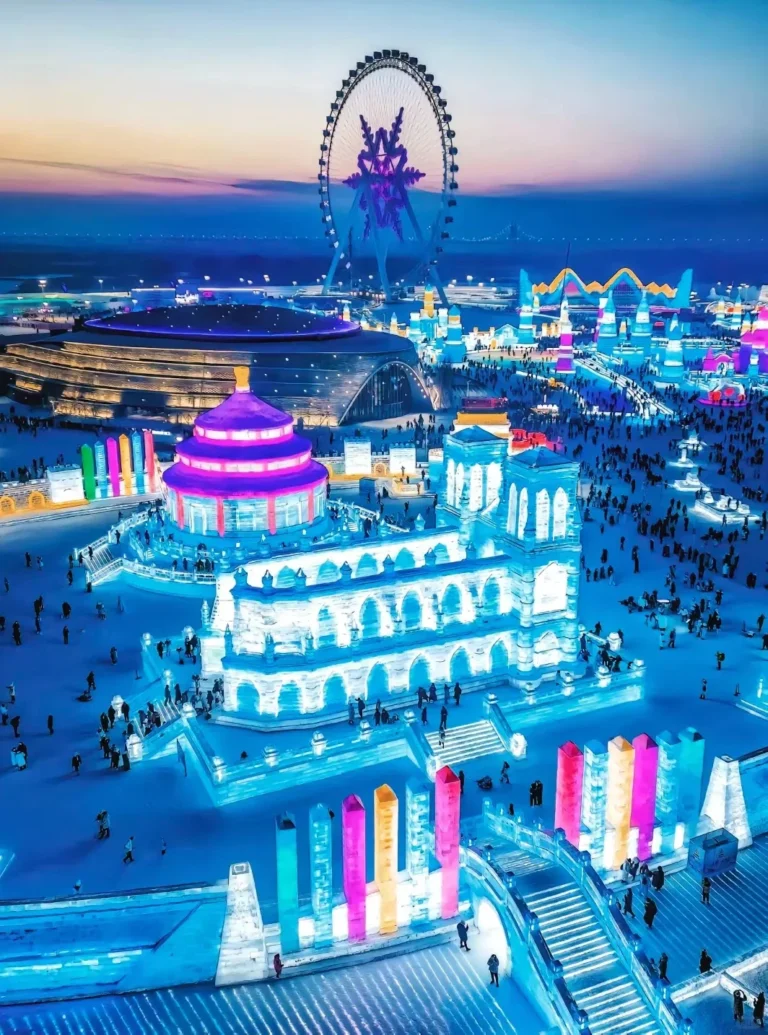
Ice and Snow World is Harbin’s signature winter spectacle: a huge temporary city of illuminated ice architecture, entertainment areas and winter activities.
The 27th edition opened on December 17, 2025. The park covered about 1.2 million square meters and used roughly 400,000 cubic meters of ice and snow. Adult admission was promoted at ¥298 from December 17–23 before returning to ¥328.
The 2026–27 opening date and ticket policy should be checked once officially announced.
For the complete ticket, timing and ride-reservation strategy, see our Harbin Ice Festival timing and ticket guide.
For most first-timers, I prefer arriving in the afternoon and staying after dark.
You see the ice structures in daylight, watch the park change around dusk, then experience the illumination that makes the attraction famous.
Do not build the entire visit around one famous ride. Reservation rules and availability can change by season, and popular attractions may involve timed booking or long waits.
TripChina Tip: The mistake is not missing one ride. The mistake is spending most of a ¥300+ visit staring at a reservation screen instead of seeing the park.
Check the official park platform on the day of your visit for operating changes, weather-related notices and current ride rules.
Yes. They complement each other rather than duplicate each other.
Ice and Snow World is primarily about illuminated ice architecture and entertainment.
Sun Island International Snow Sculpture Art Expo is primarily about monumental sculptures made from snow and is best experienced in daylight.
During the 2025–26 season, the 38th Sun Island Snow Expo officially operated with:
That season’s ticket also included several snow activities and access to the Sun Island panda facility under its applicable reservation rules.
Yes, and it is efficient when you have only 2–3 days.
A practical sequence is:
Sun Island in the morning → indoor lunch and warm-up → Ice and Snow World in the afternoon and evening
Metro Line 2 helps make this combination practical; the official Ice and Snow World site specifically lists Line 2 access from Central Street, Harbin Station and other areas.
But this creates a long outdoor day. If you have four days or more, separating the two attractions is more comfortable.
Visit both—but for different reasons.
| Central Street | Old Daowai / Zhonghua Baroque | |
|---|---|---|
| Best for | Architecture, lights, first visit | Food, local history |
| Best time | Late afternoon–evening | Morning–early afternoon |
| Atmosphere | Polished and tourist-oriented | More local and food-focused |
| Cost | Free | Free |
| Time needed | 2–3 hrs | 2–4 hrs |
| TripChina Pick | Essential evening walk | Best daytime food detour |
Central Street—Zhongyang Dajie (中央大街)—is Harbin’s best-known pedestrian street and one of the easiest places to see the city’s Russian and European architectural influence.
A simple first-time walking route is:
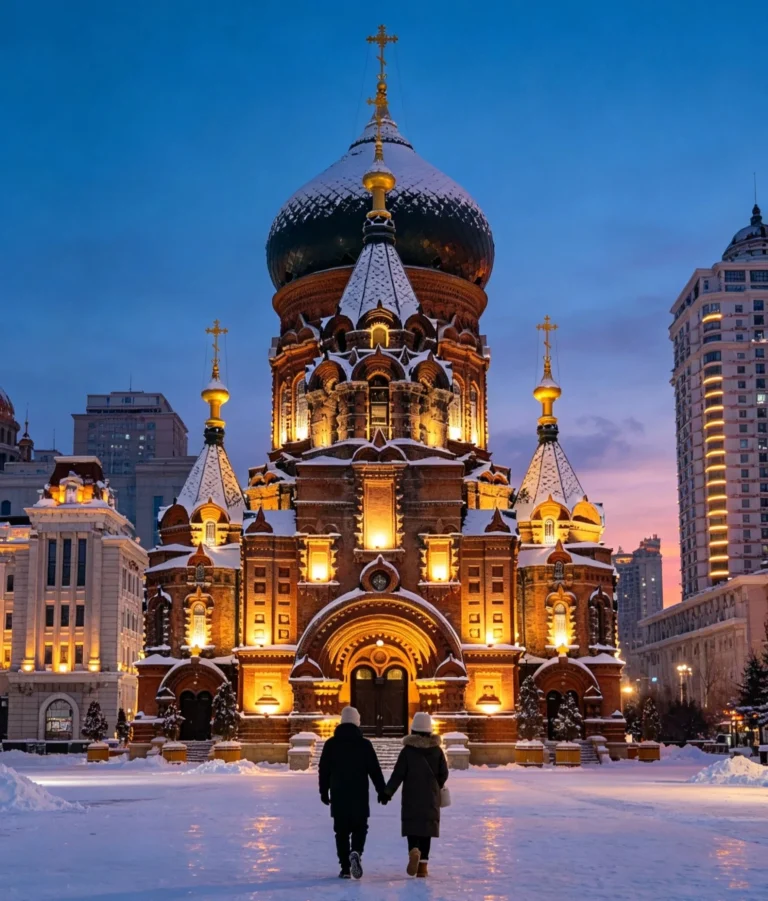
Saint Sophia Cathedral → Central Street → Flood Control Monument → Songhua River
Winter evenings are especially atmospheric, but icy pavement changes the experience. Good footwear matters.
Old Daowai and the Zhonghua Baroque Historic District show a different side of Harbin: Chinese-European architecture mixed with traditional local food businesses.
Treat it as a food-and-neighborhood experience, not simply another landmark to photograph.
For specific restaurants and dishes, use our Harbin Food Guide.
Yes—particularly if you want hands-on winter activities without committing another full day to a major ticketed attraction.
For the 2025–26 winter, official promotional information described the Songhua River Ice and Snow Carnival as covering about 1.45 million square meters, with around 60 ice-and-snow recreation activities.
Individual activities and prices vary, so treat it differently from a single-ticket theme park.
Use officially opened and managed recreation areas only.
Never assume seemingly solid river ice is safe to walk on because other visitors are standing on it. Conditions change, particularly near the beginning and end of the winter season.
These trips serve very different purposes.
| Trip | Choose It If You Want | Time | Main Trade-Off |
|---|---|---|---|
| Volga Manor | Architecture and quieter scenery | Half/full day | Less essential than central Harbin |
| Yabuli | Serious skiing | Full day+ | Packages and equipment add complexity |
| Xuexiang | Deep-snow scenery and photography | 1–2 days | Long transfer and tourist-heavy environment |
| Snow Valley | Hiking and quieter snow scenery | 1–2 days | More logistics and fewer services |
It works best for travelers interested in architecture, photography and a quieter winter setting.
Allow at least half a day. Do not substitute it for Ice and Snow World merely because both contain Russian-influenced architectural elements—the experiences are very different.
If skiing is a major reason you are visiting Northeast China, yes.
If you simply want to experience snow, Harbin itself is easier.
Yabuli contains multiple ski facilities with different lift, equipment, lesson and package structures, so a single generic “Yabuli ski price” is not very useful.
If traveling by rail, verify your exact station and train before departure. Our China train ticket guide for foreign travelers explains passport booking and 12306.
Xuexiang—China Snow Town (中国雪乡)—is most compelling for travelers specifically seeking deep-snow landscapes, photography and its distinctive snow-covered roofs.
It is not another Harbin city attraction.
Treat Xuexiang as an overnight extension rather than squeezing it into a normal sightseeing day.
For most first-time travelers:
Start with:
Saint Sophia Cathedral → Central Street → Flood Control Monument → Songhua River
Have dinner around Central Street or Daoli.
I deliberately keep Day 1 lighter. Clothing that felt perfectly adequate when packing at home often needs adjustment after your first hour outdoors in Harbin.
Morning: Sun Island Snow Expo
Midday: indoor lunch and warm-up
Afternoon–evening: Ice and Snow World
This is the most demanding outdoor day of the itinerary.
Morning: Old Daowai / Zhonghua Baroque
Lunch: Harbin local food
Afternoon: Songhua River winter activities
Evening: Central Harbin or another Daoli neighborhood
Four days is my preferred length for a first visit because it avoids turning every day into an endurance test.
Day 1: Saint Sophia → Central Street → Flood Control Monument
Day 2: Sun Island Snow Expo → relaxed afternoon → local dinner
Day 3: Old Daowai → Songhua River Carnival → Ice and Snow World
Day 4: choose one extra experience:
If Xuexiang is important, add another night rather than forcing it into Day 4.
For most first-time international visitors, Daoli / Central Street is the easiest base.
You can walk to restaurants and central attractions, while Metro Line 2 provides useful access across the city and toward Ice and Snow World.
Nangang can offer better value when central accommodation becomes expensive.
Songbei makes more sense when Ice and Snow World is your overwhelming priority rather than general city sightseeing.
Winter hotel prices are highly date-sensitive, so a hotel that looks inexpensive on one weekday can be dramatically more expensive around major peak periods.
For the full neighborhood comparison, read our Where to Stay in Harbin guide.
International travelers should also confirm that the property can process their passport details correctly rather than relying on vague third-party listing language. Our guide to booking hotels in China as a foreign traveler explains what to check before paying.
For most independent travelers:
Metro + DiDi + walking is the simplest combination.
The metro is unusually valuable in winter because it reduces outdoor waiting and long exposed walks.
DiDi becomes useful when:
See our DiDi guide for foreign travelers in China for setup and payment details.
Official taxis are also legitimate. Avoid unsolicited rides from unofficial drivers around airports, railway stations and major tourist sites.
The best choice depends more on luggage, arrival time and group size than on finding the absolute cheapest fare.
| Option | Best For | Main Advantage | Trade-Off |
|---|---|---|---|
| Airport bus | Budget travelers | Low cost | Less convenient with luggage |
| DiDi | Most independent travelers | Door-to-door, app-based | Higher cost |
| Official taxi | Travelers without ride-hailing | Direct | Communication can be harder |
| Private transfer | Families/groups | Simplest arrival | Usually most expensive |
At −20°C with two suitcases, paying more for door-to-door transport can be a rational decision rather than a luxury.
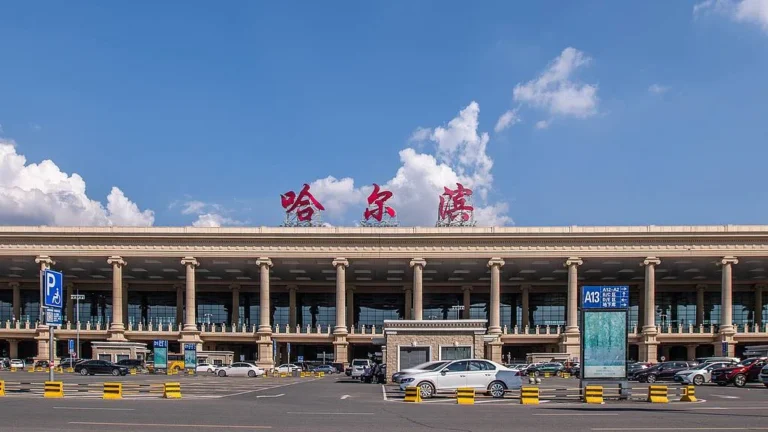
For current routes and pickup details, use our Harbin Airport to City transport guide.
Harbin can become extremely cold, particularly in the heart of winter.
Do not plan your clothing around one average temperature. Actual comfort depends on temperature, wind, how long you remain outside and whether you are moving.
For travelers, the practical pattern is often:
very cold outdoors → heavily heated indoors → very cold outdoors again
That repeated transition is why adjustable layers work better than simply wearing the biggest coat you can find.
Use layers rather than relying on one enormous coat.
Traction matters almost as much as insulation. Polished snow and ice can make ordinary fashion footwear frustrating or unsafe.
A neck gaiter or other appropriate face covering is particularly useful during extended outdoor periods when wind makes exposed skin uncomfortable.
TripChina Local Tip: Dress so you can remove layers indoors. Staying fully wrapped inside a heavily heated restaurant or mall can make you sweat, which becomes uncomfortable when you return outside.
For the complete layering, boot and local shopping strategy, see our What to Wear in Harbin Winter guide.
Cold can reduce battery performance.
Keep your phone in an inner pocket when you are not using it and carry a charged power bank.
Hand warmers can help preserve battery life, but avoid applying excessive direct heat to batteries.
For cameras, condensation is another problem. Moving a freezing camera directly into warm, humid indoor air can cause moisture to form.
Keep the camera protected inside its bag while it gradually warms.
Costs vary sharply by date, especially around major winter travel periods, weekends and Chinese public holidays.
A useful planning range for one traveler, excluding transport to Harbin:
| Category | Budget | Mid-Range |
|---|---|---|
| Hotel | ¥200–400/night | ¥500–1,000+/night |
| Food | ¥80–150/day | ¥150–300/day |
| Local transport | ¥20–60/day | ¥60–150/day |
| Major attractions | ¥200–600/day | ¥300–800+/day |
| Day trips | Variable | Variable |
These are planning ranges, not fixed prices. Accommodation is usually the most volatile part of a Harbin winter budget.
I would not use a blanket claim such as “hotels rise 100%–300% at Christmas or Spring Festival” because the increase varies too much by property, date and booking lead time to support one universal percentage.
Book cancellable accommodation early if your dates fall in a peak winter period, then recheck prices later.
| Mistake | Better Choice |
|---|---|
| Assuming every attraction opens by Dec. 15 | Check official seasonal announcements |
| Planning Ice and Snow World around one ride | Treat rides as bonuses |
| Wearing fashion boots with poor grip | Use insulated, high-traction footwear |
| Spending an entire day outside | Schedule indoor warm-up periods |
| Booking far from useful transport | Prioritize location, especially in winter |
| Accepting unsolicited station/airport rides | Use official transport |
| Treating Xuexiang as a quick city attraction | Plan an overnight extension |
| Walking onto unmanaged river ice | Stay in designated recreation areas |
| Following old booking screenshots | Recheck current procedures |
| Assuming last winter’s prices still apply | Verify current-season prices |
For the broader set of winter mistakes involving transport, tourist traps and extreme-cold logistics, see our complete Harbin winter survival guide.
Harbin deserves more than a checklist of “must-eat” dishes.
Start with:
Yes, eating ice cream outdoors in a Harbin winter is part of the experience.
For Guo Bao Rou, Lao Chu Jia (老厨家) is a useful starting point because the restaurant is closely associated with the dish’s Harbin origin story. But where you eat matters as much as which dishes you order.
Use our Harbin Food Guide for restaurants, neighborhoods and ordering advice.
Yes, especially if ice architecture, snow sculpture, winter photography and Northeast Chinese culture interest you. Winter is when Harbin’s identity is most distinctive.
If you strongly dislike extreme cold or have difficulty walking on icy surfaces, however, it requires more careful planning.
As of September 6, 2026, the 2026–27 Ice and Snow World opening date and final ticket policy have not been officially announced on the park’s current official site. Do not treat tickets marketed months in advance as proof that the new season’s dates are confirmed.
International visitors can visit the attraction, but I would not state that every major Harbin attraction universally accepts foreign passports through every online booking channel until the 2026–27 procedures are published.
Check the current official booking channel before purchase and carry the passport associated with your reservation.
They are strongly recommended because payments, ride-hailing, attraction services and mini-programs in China often use these apps.
Set them up before your trip rather than troubleshooting payment accounts outdoors in a Harbin winter. See our essential China travel apps guide and guide to paying in China as a foreign traveler.
Not necessarily. Many short-term visitors can use international roaming or a travel eSIM.
A mainland Chinese SIM becomes more useful when you specifically need a +86 phone number or are staying in China longer. Our China eSIM vs SIM guide explains the trade-offs.
Yes, but preparation helps.
Save important destinations in Chinese and keep a translation app available. This becomes especially useful when dealing with drivers, smaller restaurants and addresses outside the main tourist areas.
Yes, with a less aggressive itinerary.
Children generally need more frequent indoor warm-up breaks and careful protection of hands, feet and exposed skin. For older travelers, icy surfaces and repeated outdoor transfers can be as important as temperature itself, so prioritize a convenient hotel and avoid packing too many outdoor attractions into one day.
Yes—but Harbin rewards travelers who plan around weather and timing, not travelers who simply collect attraction names.
For a first trip, keep the formula simple:
3–4 days + late December or January + a well-located hotel + proper winter clothing + Ice and Snow World + Sun Island + Central Harbin.
Then add Yabuli, Volga Manor or Xuexiang only if they match your interests and you genuinely have enough time.
Harbin’s winter can look intimidating on a weather app. In practice, the bigger difference between a difficult trip and a memorable one is usually not whether the temperature says −18°C or −25°C—it is whether you planned for what that temperature changes.
Harbin Ice and Snow World — Official Website — current official park information, transport guidance and seasonal announcements.
Heilongjiang Department of Culture and Tourism — 38th Sun Island Snow Expo Opening Notice — previous-season ticket prices, operating hours, booking information and admission policies.
State Council Information Office / Xinhua — 27th Harbin Ice-Snow World Opening — December 17 opening, park scale and ¥298/¥328 previous-season ticket pricing.
People's Daily — Harbin Winter Tourism Update — winter attraction scale, Songhua River activities and visitor-service improvements.
TripChina reviewed this guide on September 6, 2026, cross-checking the latest available official park information, Heilongjiang tourism notices and government-backed reporting against confirmed 2025–26 operating data. Particular attention was given to opening dates, ticket prices, transport, winter safety and information that could affect an international traveler’s itinerary. Because the 2026–27 winter season has not yet been fully announced, previous-season figures are explicitly labeled and should be replaced by new official information once released.
TripChina.me creates practical China travel guides shaped by real local experience, helping independent travelers navigate transport, payments, food, neighborhoods, and the cultural details that make traveling in China easier and more meaningful. Find the guide for your destination at tripchina.me.