Our Location:
No. 99, Jiazi Road, Chengdu

 authorChris Lee
Sanxingdui is unlike almost any other museum in China: monumental bronze masks, a nearly four-meter sacred tree, gold objects and an ancient Shu culture that still leaves major questions unanswered. But for overseas visitors, the difficult part is often not the museum — it is getting the ticket, arriving in the right time window and choosing a sensible route from Chengdu.
This guide focuses on exactly those problems, updated as of September 2026.
| Question | Quick Answer |
|---|---|
| How do foreigners book? | Use the official Sanxingdui booking system. The official website provides a dedicated “Inbound Tourists Purchase Tickets” channel. |
| When are tickets released? | Regular tickets are released at 20:00, up to 5 days ahead. Holiday releases may follow special arrangements. |
| How much is admission? | Standard admission is 72 RMB. Bring the original passport used for booking. |
| Best way from Chengdu? | High-speed rail from Chengdu East to Guanghan North, then taxi or DiDi. |
| Best time to visit? | Opening time is best. Late afternoon is a good backup. |
The biggest mistake is treating Sanxingdui like a normal city museum you can simply walk into. Ticket inventory, real-name verification and transport all need to be planned before you leave Chengdu.
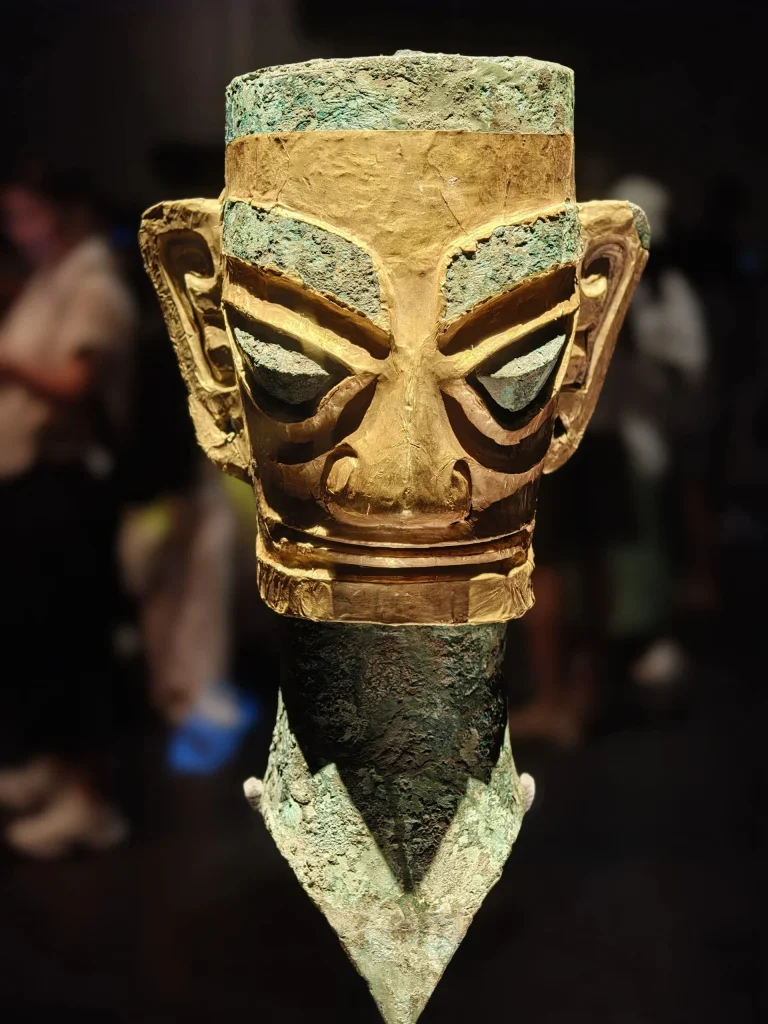
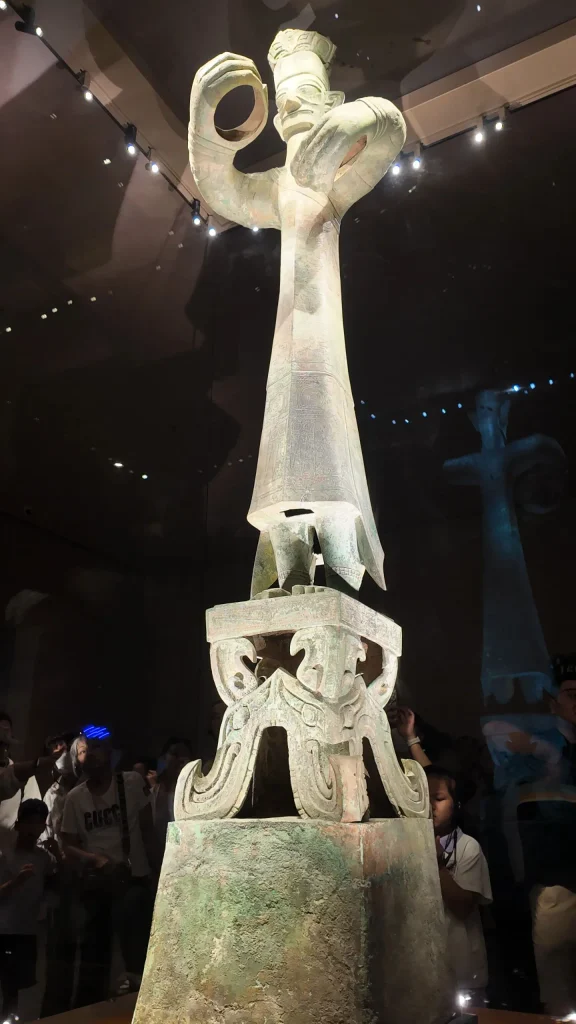
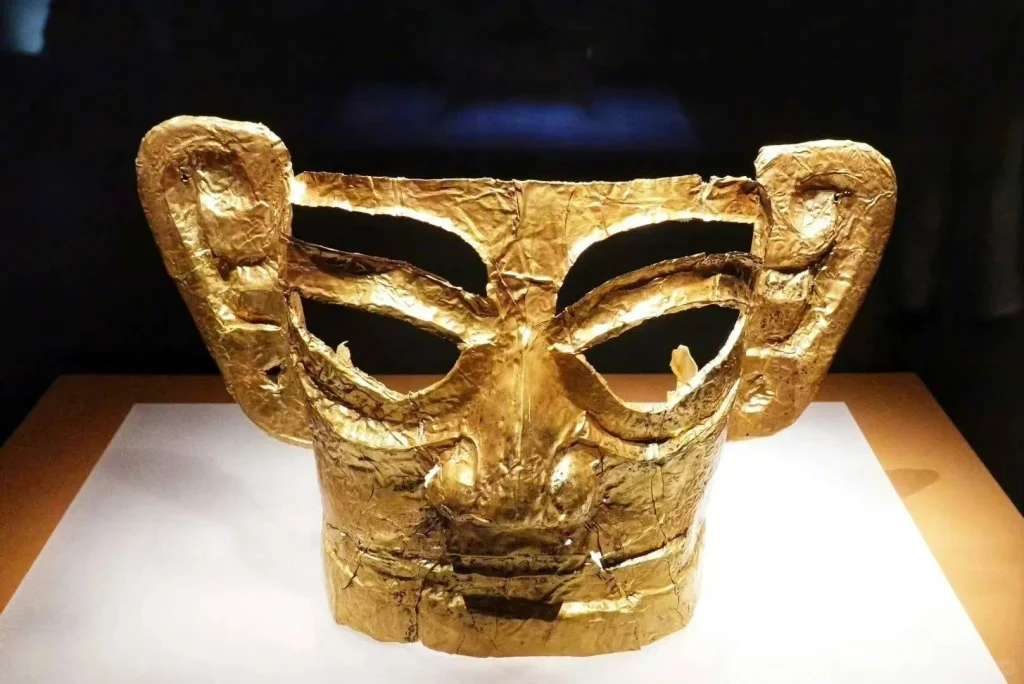
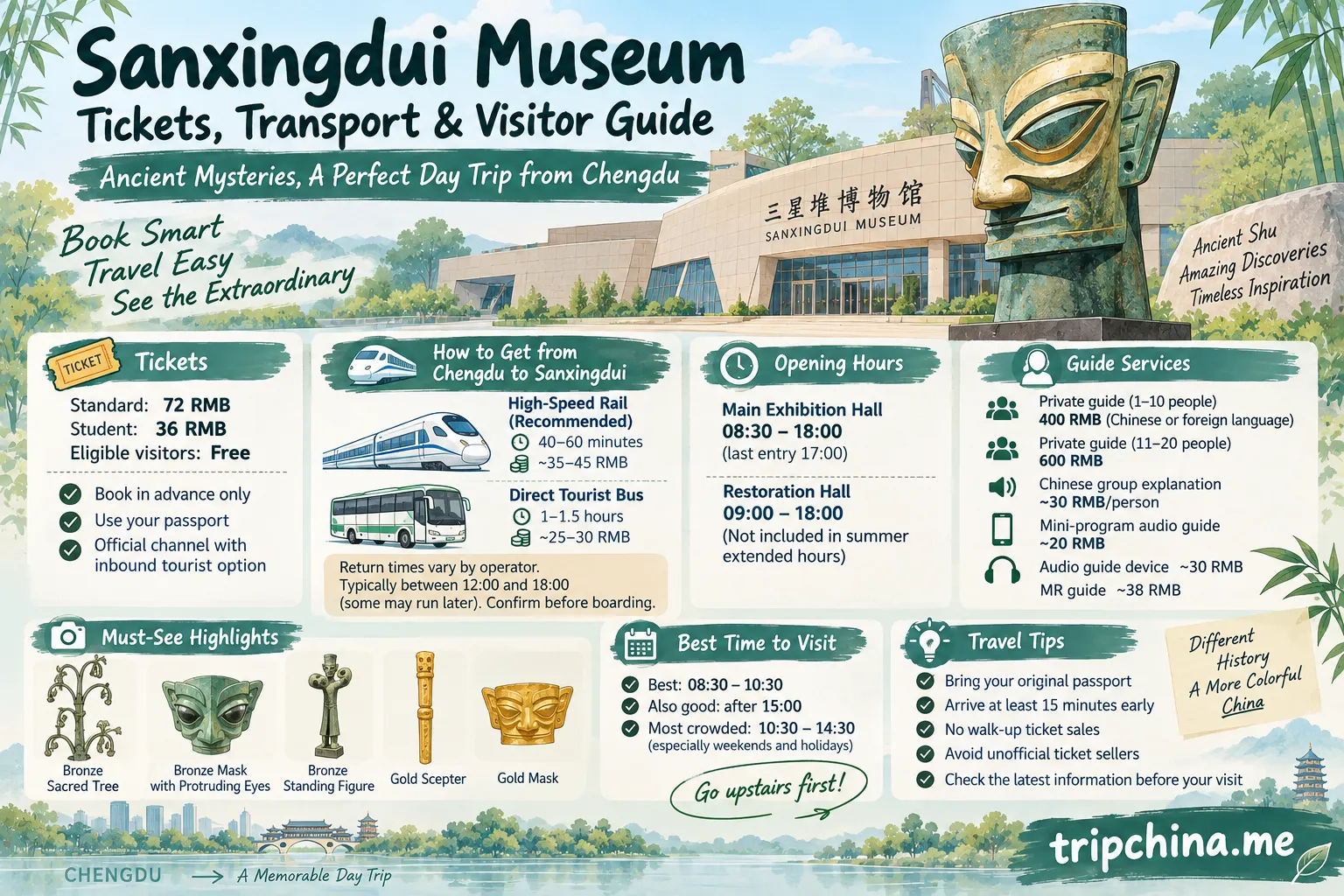
Sanxingdui Museum uses real-name advance reservations. As of September 2026, the official channels include the museum website, official WeChat account and official booking interfaces.
The most important option for overseas travelers is the dedicated official website channel labeled:
入境游客购票 — Inbound Tourists Purchase Tickets
This channel is specifically intended for inbound visitors. If you cannot find a workable passport option in the regular WeChat booking flow, use this inbound-visitor channel rather than assuming the standard Mainland China interface is your only option.
Foreign visitors should enter passport details exactly as shown on the document. After booking, keep the confirmation on your phone and bring the original document used for the reservation.
Foreign visitors should follow the document-verification instructions shown with their reservation. Depending on the booking channel and document type, staff may direct you to the ticket service area for verification before entry. Keep both your original passport and booking confirmation ready rather than assuming an automated gate will handle everything.
Do not book one ticket under another person’s identity and expect to use it yourself. Sanxingdui operates a real-name system in which the visitor, booking information and identification document must match.
If passport-based reservation systems at other attractions are also causing problems, TripChina’s Chengdu Attraction Tickets Guide for Foreign Visitors explains how real-name booking works across major Chengdu attractions.
As of September 2026, the standard online ticket release time is:
20:00 — up to 5 days before your visit
For a popular weekend or holiday date, have your passport details ready before 20:00 rather than beginning registration after tickets appear.
During Golden Week and other designated major holidays, the museum may use a special release arrangement for daytime and extended-hour tickets five days before the holiday begins.
Holiday rules can change, and special-period inventory may be released differently from ordinary dates. Check the official booking interface rather than assuming the normal weekday schedule applies.
| Ticket | Reference Price | Important Note |
|---|---|---|
| Standard admission | 72 RMB | Standard full-price ticket |
| Student ticket | 36 RMB | Eligibility and accepted documents are restricted |
| Eligible free admission | 0 RMB | Depends on the museum’s current eligibility rules |
Foreign passport holders should not assume that an overseas student card, senior status or foreign concession card automatically qualifies for a Chinese domestic discount.
Check the eligibility shown in the official booking system before paying.
Do not plan around walk-up ticket sales.
Sanxingdui directs visitors to its official advance-reservation channels and warns against unauthorized ticket sellers. Popular dates can sell out before the day of the visit.
Occasional returned inventory or newly available slots may appear online, but that is not a reliable travel strategy.
The practical rule is simple:
If Sanxingdui is important to your trip, secure the ticket before arranging the rest of that day.
There is no reliable official basis for the old claim that being “more than 30 minutes late” automatically means rejection.
Your reservation is still tied to a specific admission period, however, and arriving outside the valid window can create entry problems.
Aim to reach the entrance at least 15 minutes before your booked time, with more buffer during holidays.
As of September 2026, regular opening hours are:
| Area | Regular Hours |
|---|---|
| Main Exhibition Hall | 08:30–18:00 |
| Last regular entry | 17:00 |
| Restoration Hall | 09:00–18:00 |
| Regular closing day | Normally open except Chinese New Year’s Eve and temporary closures |
Sanxingdui does not follow the Monday-closing rule common at many Chinese museums.
The 2026 summer extended-hours window, July 1–August 31, has already concluded. During that seasonal arrangement, the main museum operated from 08:30 to 20:00, with extended-hour ticket checking beginning at 17:00 and admission ending at 18:00.
The Restoration Hall did not participate in the summer extension and closed at 18:00 even when the main exhibition building stayed open later.
Do not assume the same arrangement will return automatically next summer. Restoration Hall hours can also be temporarily adjusted. Check the museum’s latest announcement before planning an evening or holiday visit.
Sanxingdui Museum is in Guanghan, outside central Chengdu. There is no Chengdu Metro station at the museum.
For most independent overseas travelers, there are two practical choices.
| Option | Typical Travel Time | Typical One-Way Cost | Best For | Main Drawback |
|---|---|---|---|---|
| High-Speed Rail + Taxi/DiDi | About 40–60 min after reaching Chengdu East | About 35–45 RMB | Speed and predictability | Requires a transfer |
| Direct Tourist Bus | About 1–1.5 hr | About 25–30 RMB | Simplicity | Traffic and operator-specific schedules |
This remains the most predictable choice for most independent visitors.
Take the metro to Chengdu East Railway Station, then:
Rail fares and schedules vary by train, so check the current departure rather than planning around one fixed train number.
For overseas travelers unfamiliar with Chinese railway stations, TripChina’s China train travel guide for foreigners explains passport boarding, station security and boarding procedures, while the 12306 train ticket guide covers buying the rail ticket itself.
If you are starting from central Chengdu, the Chengdu Metro Guide for Foreign Travelers explains metro payment, QR codes and reaching major railway hubs.
From Guanghan North, a taxi or ride-hailing car is usually easier than the local bus for a first-time overseas visitor. If you plan to use ride-hailing elsewhere in China too, see TripChina’s DiDi guide for foreign travelers.
The direct bus is easier if you dislike transfers or are staying near one of the downtown departure points.
Services have operated from locations including Chunxi Road / IFS and other central tourist areas. The journey typically takes around 1–1.5 hours, depending on traffic and the service used.
The important detail is that return timetables vary by operator.
One Chunxi Road tourist-bus product lists flexible return departures between 12:00 and 18:00, while other operators have offered later departures. These are operator-specific schedules, not a single official timetable for every Chengdu–Sanxingdui bus.
Before boarding in Chengdu, ask:
末班车几点从三星堆回来?
Mòbān chē jǐ diǎn cóng Sānxīngduī huílái?
“What time is the last bus back from Sanxingdui?”
Also confirm exactly where the return bus departs.
For a fixed museum reservation, rail + taxi is usually easier to control. The direct bus makes more sense when simplicity matters more than precise timing.
Trying to land at Tianfu International Airport and rush directly to a fixed Sanxingdui reservation leaves little margin for immigration, baggage, airport transfers and traffic.
If possible, stay in Chengdu first and visit Sanxingdui the following morning.
TripChina’s Chengdu Airport to City Transport Guide explains the very different transfer times from Tianfu and Shuangliu airports.
The museum is large enough that wandering without a plan can leave you exhausted before reaching its most important objects.
For a comfortable first visit, allow 2.5–3 hours. Add more time if you want the Restoration Hall, detailed explanations or a slow visit.
The first floor introduces the archaeological discovery of Sanxingdui and the development of ancient Shu civilization.
Bronze Standing Figure — At about 2.62 meters tall, this monumental figure is one of Sanxingdui’s defining objects. Its enormous hands appear to have once held something, but what that object was remains debated.
Gold Scepter — A long gold object decorated with human heads, birds and fish. It is one of the clearest symbols of elite power in the Sanxingdui assemblage.
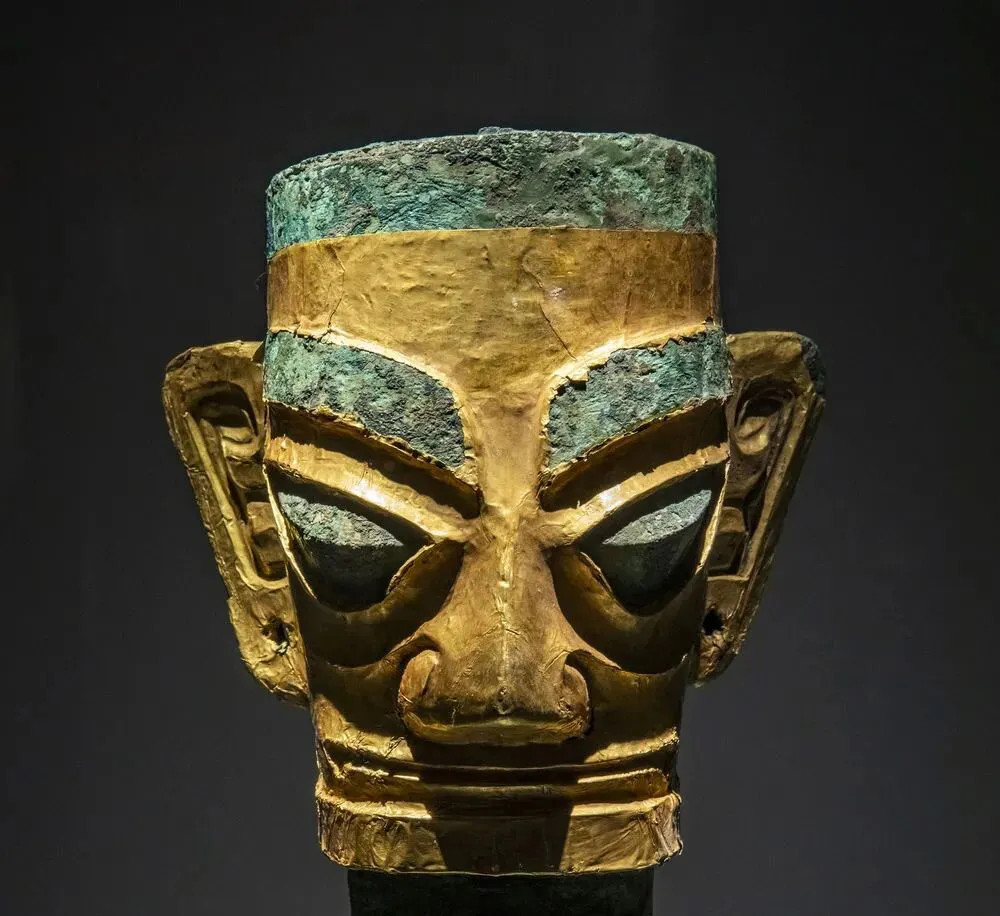
Gold Mask — One of the museum’s most visually striking gold finds and an excellent example of the sophisticated metalworking associated with ancient Shu.
As of September 2026, Sanxingdui is also displaying 12 artifacts from the Jinsha Site Museum in the “Magnificent Kingdom” section. The loan began in February 2026 while the Jinsha Site Museum is closed for renovation and is expected to continue until shortly before Jinsha reopens in 2027.
Temporary exhibition arrangements can still change, so check the museum’s current exhibition information if seeing the Jinsha objects is important to you.
For many visitors, this is the most memorable part of the museum.
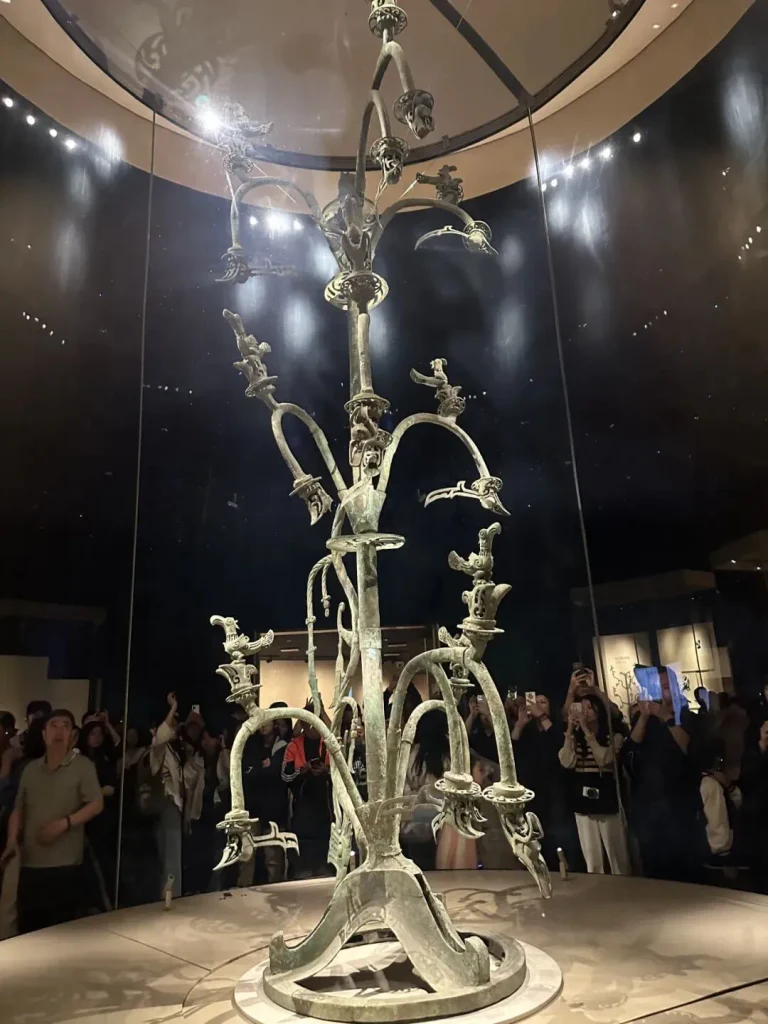
Bronze Sacred Tree — Nearly four meters tall, the tree is one of the museum’s signature objects. Its branches, birds and mythological imagery make it unlike almost anything else surviving from Bronze Age China.
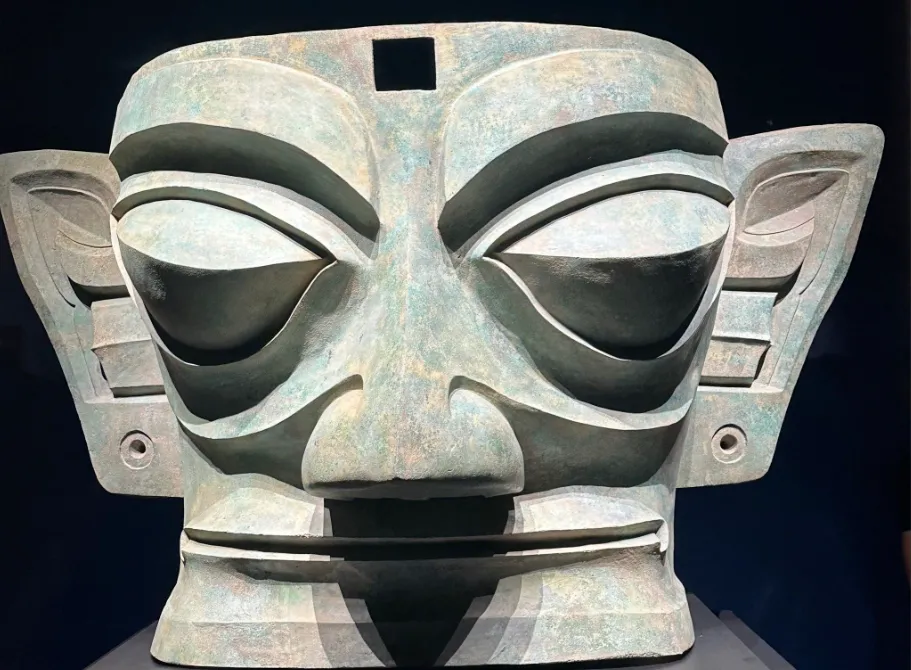
Bronze Mask with Protruding Eyes — The exaggerated projecting eyes are among the most recognizable images associated with Sanxingdui.
Bronze Sun Wheel — A mysterious circular bronze object whose interpretation remains debated.
Avoid explanations that present every symbol at Sanxingdui as a solved historical fact. Part of the museum’s fascination is precisely how much remains open to interpretation.
If you arrive at opening time, there is one simple tactic that can dramatically improve the experience:
Go upstairs first.
Most organized groups naturally begin downstairs. Heading to the second floor immediately can give you a quieter first look at the museum’s most dramatic bronzes.
Second Floor — 60–75 minutes
Bronze Sacred Tree → Bronze Mask with Protruding Eyes → Bronze Sun Wheel → surrounding ritual bronzes
Then move downstairs.
First Floor — 60–75 minutes
Bronze Standing Figure → Gold Scepter → Gold Mask → archaeological and ancient Shu displays
Optional — 20–30 minutes
Restoration Hall → museum shop → rest
The Restoration Hall normally operates from 09:00 to 18:00 and does not follow seasonal summer extended evening hours.
If Sanxingdui has made you want more archaeological context, TripChina’s Chengdu Museums Guide for Foreign Travelers compares other worthwhile museums in and around Chengdu.
Sanxingdui’s biggest practical problem is its popularity. The headline objects can become surrounded by tour groups, especially around midday.
10:30–14:30: usually the most difficult period for viewing headline objects.
Weekends and Chinese public holidays: expect much heavier visitor numbers.
Summer vacation: family and student travel significantly increases demand.
If your China itinerary overlaps a major national holiday, check TripChina’s China public holiday guide before locking in your Chengdu dates.
08:30–10:30 is the strongest choice.
Enter at opening and head upstairs rather than following the natural flow of the crowd.
If you cannot get an early slot, after about 15:00 is generally preferable to the midday rush.
If you are stuck with a midday slot, move past a crowded headline object and return a few minutes later. Crowds at Sanxingdui move in waves; waiting five minutes can be more effective than pushing through.
Sanxingdui benefits from explanation more than many museums. The objects are visually spectacular, but without archaeological context it is easy to reduce the museum to a collection of strange-looking bronzes.
As of September 2026, published guide-service options include:
| Guide Option | Reference Price | Best For |
|---|---|---|
| Official private guide, 1–10 people | 400 RMB/group | Families and small groups |
| Official private guide, 11–20 people | 600 RMB/group | Larger groups |
| Official Chinese group explanation | About 30 RMB/person | Solo travelers who can wait |
| Mini-program audio guide | About 20 RMB | Budget-conscious independent visitors |
| Audio guide device | About 30 RMB/device | Independent visitors |
| MR guide | About 38 RMB/device | Interactive experience |
The standard human-guided session is about 90 minutes.
Foreign-language human guiding is offered, but availability is much more limited than Chinese-language guiding. If you specifically want an English-speaking human guide, confirm the language and availability at the museum service desk rather than assuming an English guide will be waiting when you arrive.
For independent overseas visitors, the museum also maintains multilingual digital interpretation. Official public information has documented Chinese, English, Japanese, Korean, German, French and Russian in its WeChat audio-guide system, as well as Chinese-English self-service guide devices.
The official mini-program has also offered free introductory audio for selected signature artifacts, while fuller digital interpretation may require payment. Check the current mini-program menu because digital products and prices can change.
For one or two travelers, an English audio option is usually much better value than paying for a private human guide.
Bring your original passport, booking confirmation and a charged phone.
Comfortable shoes matter. A serious museum visit involves several hours of standing and walking.
A light layer is useful in summer because indoor air-conditioning can feel cool after the heat outside.
If you depend on WeChat for reservations, payments or communication, set it up before your museum day. TripChina’s WeChat Pay guide for foreigners covers international-card setup and common payment problems.
Yes. Luggage storage is available around the visitor-service and exhibition-hall areas.
If you arrive with a suitcase or large backpack, store it before entering the galleries. Small daypacks are generally much easier to manage inside.
Photography is generally permitted where no prohibition sign is displayed, but:
A phone camera is sufficient for most visitors. The challenge is usually the crowd around the object, not the camera.
| Your Situation | Best Plan | Why |
|---|---|---|
| First-time independent visitor | High-speed rail + taxi/DiDi | Most predictable |
| Staying near Chunxi Road | Direct tourist bus | Minimal transfers |
| Want the quietest experience | Opening-time ticket + rail | Better control over arrival |
| Traveling with children or luggage | Direct bus or private car | Fewer transfers |
| Starting late | Rail + taxi | Less exposed to road traffic |
| Tight budget | Direct tourist bus | Lower one-way cost |
| Only 2 hours inside | Second floor first | Prioritizes signature bronzes |
This is the mistake most likely to ruin the entire day. Do not travel from Chengdu hoping to solve the ticket problem at the museum.
Use the museum’s official booking channels and make sure the ticket is issued against your own passport details.
For broader ticket and transport problems around the city, TripChina’s Chengdu Travel Pitfall Guide covers the mistakes that most often affect first-time overseas visitors.
A train journey of around 20 minutes does not mean the entire trip takes 20 minutes.
You still need to reach Chengdu East, clear station security, wait for the train, exit Guanghan North and transfer to the museum. Build a buffer.
If you arrive at opening time, heading upstairs first is one of the easiest ways to improve the visit.
You will hear dramatic theories about aliens, lost civilizations and mysterious rituals.
The real archaeology is already extraordinary. You do not need the sensational version.
Wonder how an ancient civilization with mysterious bronze masks remained hidden for thousands of years?
This video reveals the incredible artifacts, unique designs, and archaeological discoveries that make Sanxingdui one of China’s most fascinating cultural treasures.
This article is part of the Chengdu Travel Guide Hub.
Payment methods can change, so check the options shown in the official Inbound Tourists Purchase Tickets checkout rather than assuming a foreign Visa or Mastercard will work directly.
If online payment fails, contact the museum through its official support channels rather than using an unofficial ticket agent or asking someone to make a real-name reservation under the wrong identity. TripChina’s foreign visitor payment guide explains WeChat Pay, Alipay, international cards and cash.
For most independent visitors, yes — but expectations matter.
The museum has official multilingual digital interpretation and Chinese-English self-service guide devices, while main displays also use bilingual identification and explanatory material. Overseas visitors report that the English audio guide provides useful context, although the quality and depth can vary between exhibits.
Confirm the return pickup location with the driver or staff before leaving the outbound bus.
Overseas visitors have reported that the return waiting area near the museum bus parking zone is not immediately obvious. If you are unsure after leaving the museum, show staff your bus ticket or the Chinese destination 春熙路 (Chunxi Road) rather than guessing which queue to join.
Yes. You do not need a tour package.
Recent independent travelers continue to use both the direct Chunxi Road bus and the Chengdu East → Guanghan North train + taxi route. The latter gives you more control over your return time because you are not tied to a tourist-bus departure.
No — not as part of a normal museum ticket.
The archaeological excavation area is separate from the museum visitor experience and should not be assumed to be open to ordinary tourists. Be cautious with tours advertising “excavation-site access” unless that access is explicitly confirmed by Sanxingdui Museum.
Yes. Sanxingdui is unusually accessible visually because its monumental masks, sacred tree, gold objects and human figures do not require detailed knowledge of Chinese dynasties to make an impression.
Understanding one thing before you arrive is enough: Sanxingdui represents an ancient Shu culture that developed in the Sichuan Basin and produced objects strikingly different from many better-known Bronze Age traditions elsewhere in China.
Yes — especially if you are interested in archaeology, ancient civilizations or museums that show something genuinely different from the standard imperial-China itinerary.
The difficult part is logistics, not the museum itself.
Book first. Bring the original passport used for the reservation. Give yourself enough time to reach Guanghan. If possible, enter at 08:30 and head upstairs before the main tour groups arrive.
If you only remember one route, make it:
Bronze Sacred Tree → Protruding-Eye Mask → Sun Wheel → Bronze Standing Figure → Gold Scepter → Gold Mask.
If your time in Chengdu is limited, Sanxingdui works best as a dedicated half-day or day trip rather than something squeezed between unrelated city attractions.
For a very different period of Sichuan history, TripChina’s Wuhou Shrine & Jinli route is an easy comparison: Sanxingdui takes you into the mysterious Bronze Age Shu world, while Wuhou Shrine brings you into the much later Three Kingdoms tradition.
Sanxingdui Museum — Official Website
Sichuan/Deyang Government — Sanxingdui Visitor and Guide Services
Sichuan Online — Sanxingdui Museum Opening Hours & Visitor Rules
Sanxingdui Museum — Official Guide-Service Pricing
Updated September 2026. Ticketing, passport procedures, opening hours, interpretation services and published guide options were checked against Sanxingdui and Sichuan/Deyang public sources. Recent overseas traveler discussions were used only to identify practical questions and on-the-ground issues, including English audio guides and return-bus navigation. Tourist-bus return times are operator-specific rather than a fixed museum timetable. Prices, transport schedules, temporary exhibitions and seasonal opening arrangements should be rechecked shortly before visiting.
TripChina.me creates practical China travel guides shaped by real local experience, helping independent travelers navigate transport, payments, food, neighborhoods, and the cultural details that make traveling in China easier and more meaningful. Find the guide for your destination at tripchina.me.