Our Location:
No. 99, Jiazi Road, Chengdu

 authorChris Lee
Xi'an is one of China's great food cities: wheat noodles, slow-cooked lamb, crisp flatbreads, chili, vinegar and Hui Muslim cooking all overlap here. But first-time visitors often spend their entire meal on Beiyuanmen, the Muslim Quarter's most tourist-heavy street. This guide shows you the seven foods worth prioritizing, where locals actually eat, how much to order and which tourist traps are easy to skip.
Updated: September 7, 2026
If you have only a few meals, prioritize these:
For a first meal, the easiest introduction is the classic Sanqin Set (三秦套餐): roujiamo + liangpi + Bingfeng orange soda.
For where to eat, Dapiyuan and Xiyangshi give first-time visitors the best balance of local flavor, convenience and price. Go to Sajinqiao when you want a more neighborhood-style breakfast or dinner.
For authentic Xi'an street food, skip the busiest stretch of Beiyuanmen and use the 50-Meter Rule below to find where locals eat in Xi'an.
| Area | Best For | Best Time | Price Level | Tourist Density | Main Trade-Off |
|---|---|---|---|---|---|
| Dapiyuan & Xiyangshi | First visit, halal lunch, multi-dish sampling | 11 AM–1 PM | Low–Medium | Low–Medium | Less English than main street |
| Sajinqiao | Breakfast, paomo, local atmosphere | 6–9 AM or dinner | Low | Low | Little English signage |
| Xiaonanmen Morning Market | Breakfast and local daily life | 7–9 AM | Low | Low | Must arrive early |
| Yongxingfang | Families, Shaanxi-wide snacks | Lunch–evening | Medium | Medium | Curated rather than neighborhood-style |
| Beiyuanmen Main Street | Atmosphere, photos, convenience | Evening | Medium–High | Very high | Higher prices and tourist-oriented food |
| Dongxin Street area | Evening food crawl | After 6 PM | Medium | Low–Medium | Less convenient for Muslim Quarter sightseeing |
TripChina Pick: Start with Dapiyuan and Xiyangshi, then use Sajinqiao for a separate breakfast if food is a major part of your trip.
The Muslim Quarter is not one street. It is a network of streets and alleys around the Drum Tower.
Beiyuanmen is the photogenic main strip: bright signs, crowds, souvenirs and easy-to-understand food displays.
But walk away from the main pedestrian flow into Xiyangshi and Dapiyuan, and the dining scene changes quickly. Go farther west toward Sajinqiao, and it becomes even more neighborhood-oriented.
The exact distance is not literally 50 meters from every shop. Think of the “50-Meter Rule” as a local decision rule:
Don't judge Xi'an's Muslim Quarter food by the busiest tourist street. Walk one or two lanes away before choosing where to eat.
A queue of residents is usually a more useful signal than a giant illuminated “famous old shop” sign.
For a deeper street-by-street breakdown, read TripChina's Xi'an Muslim Quarter local food guide.
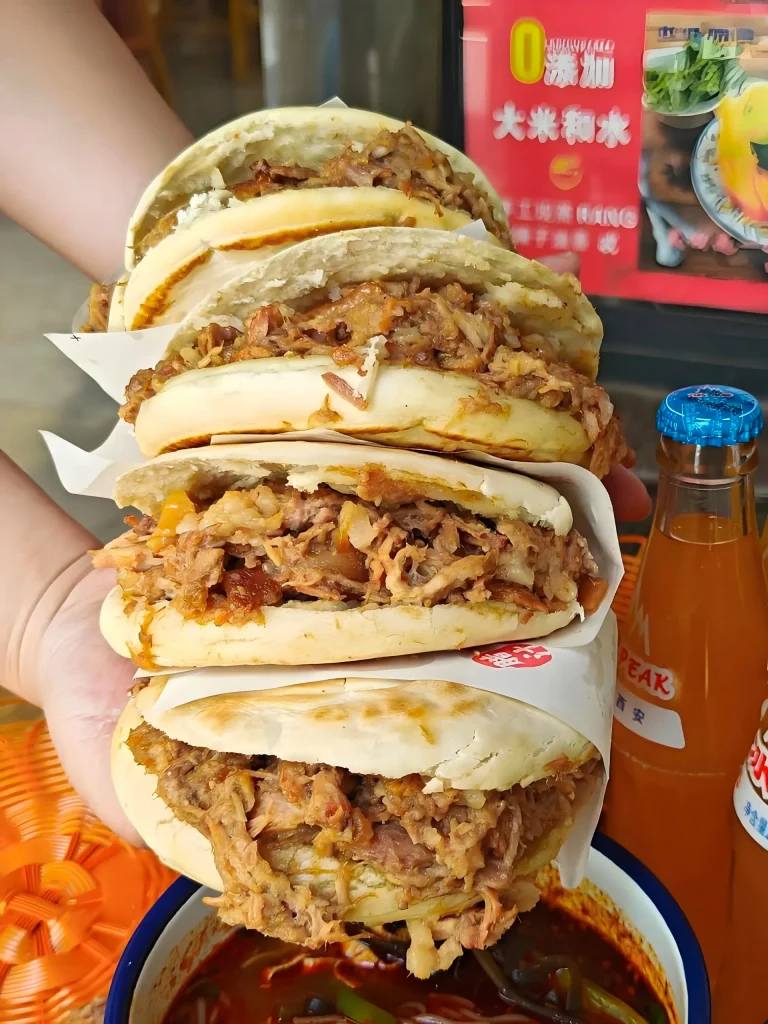
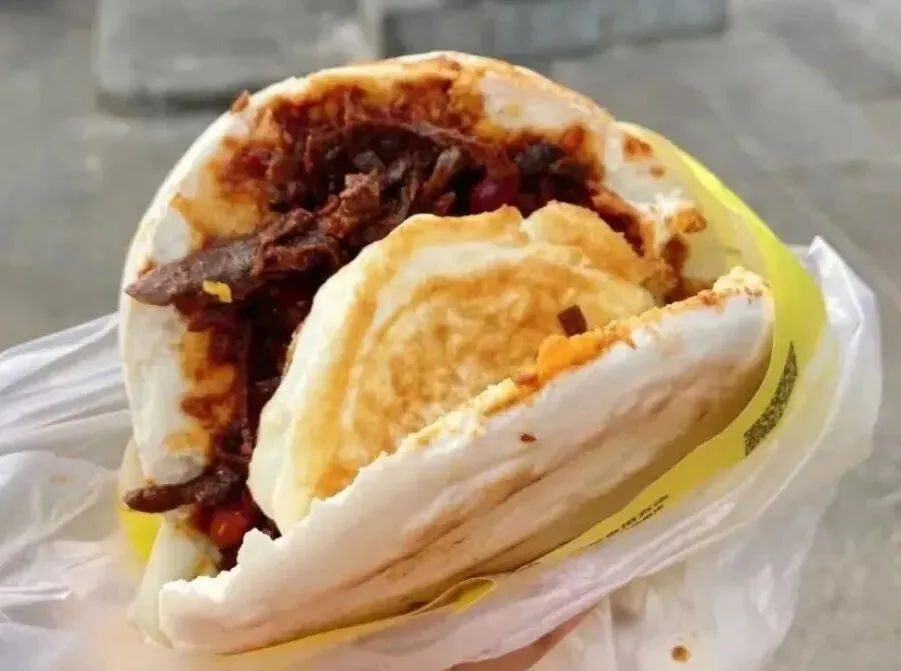
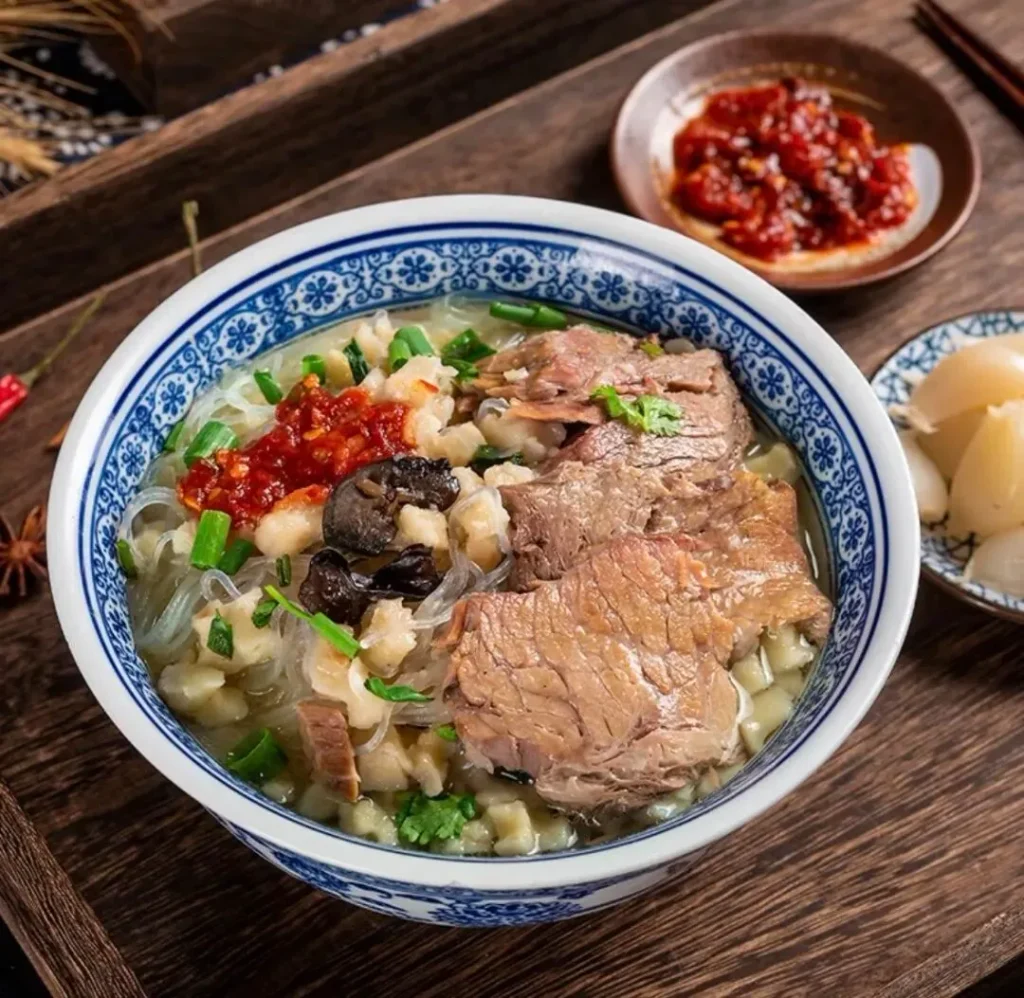
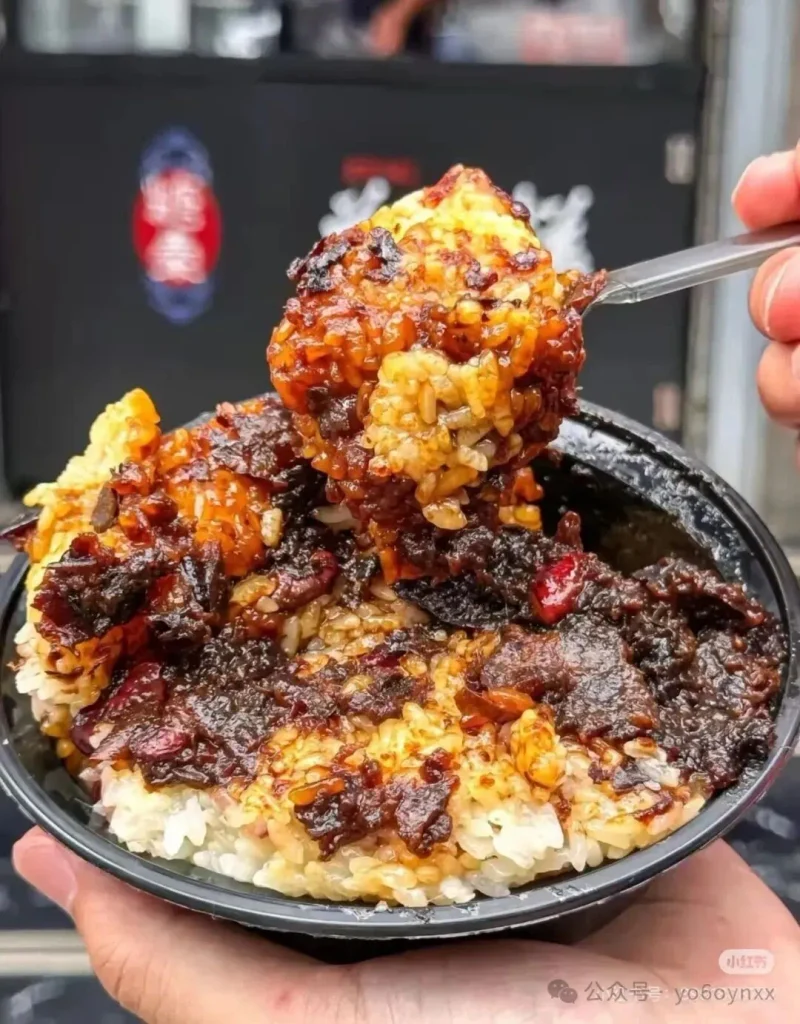
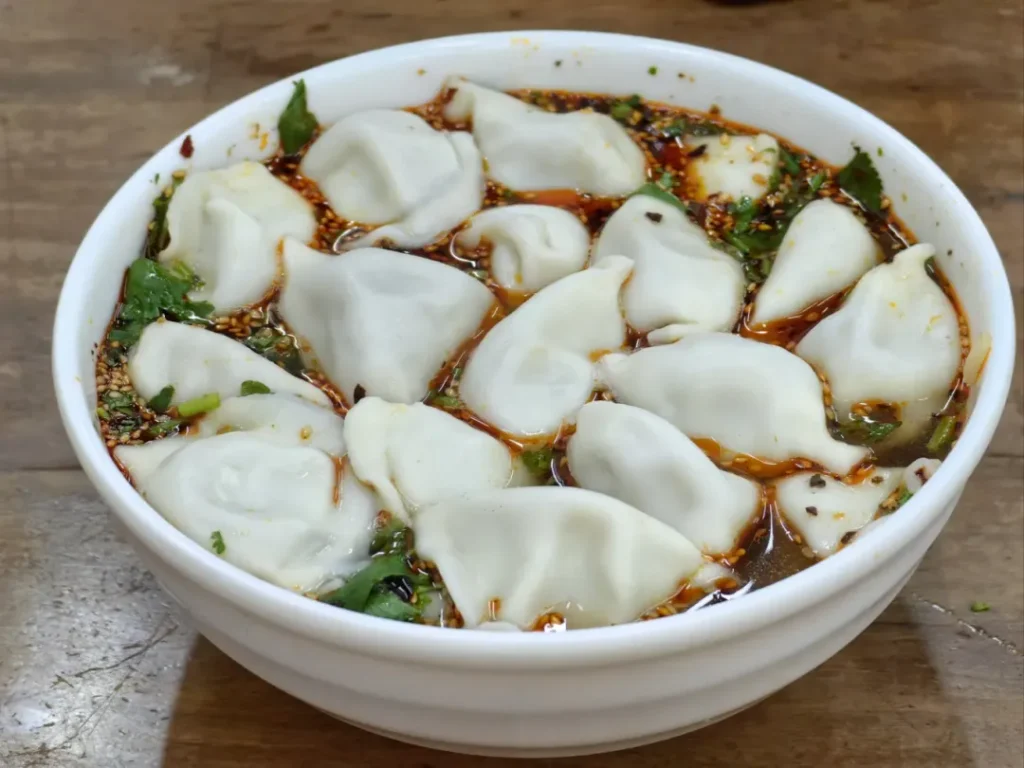
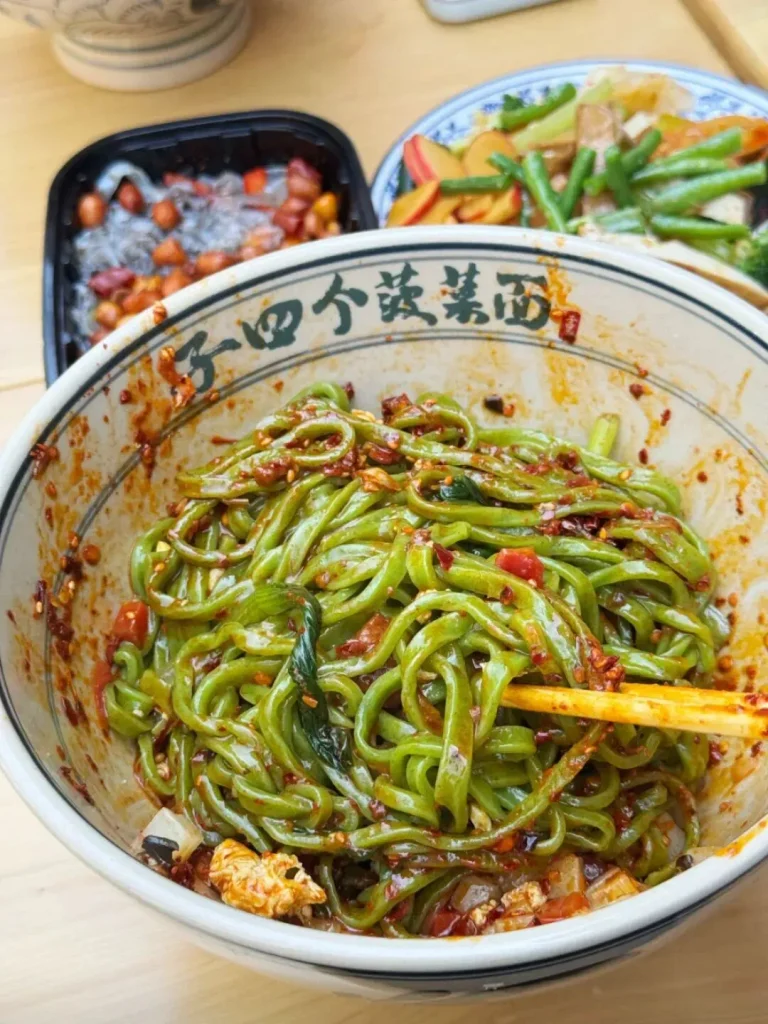
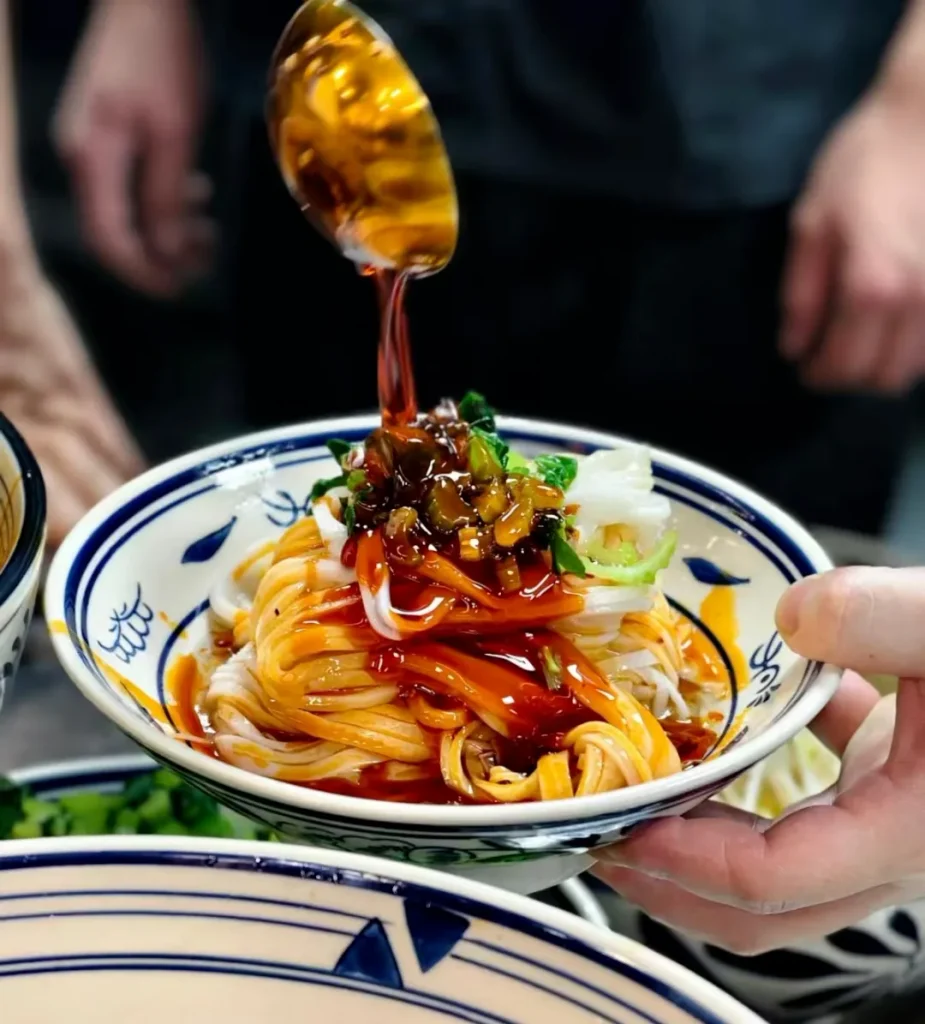
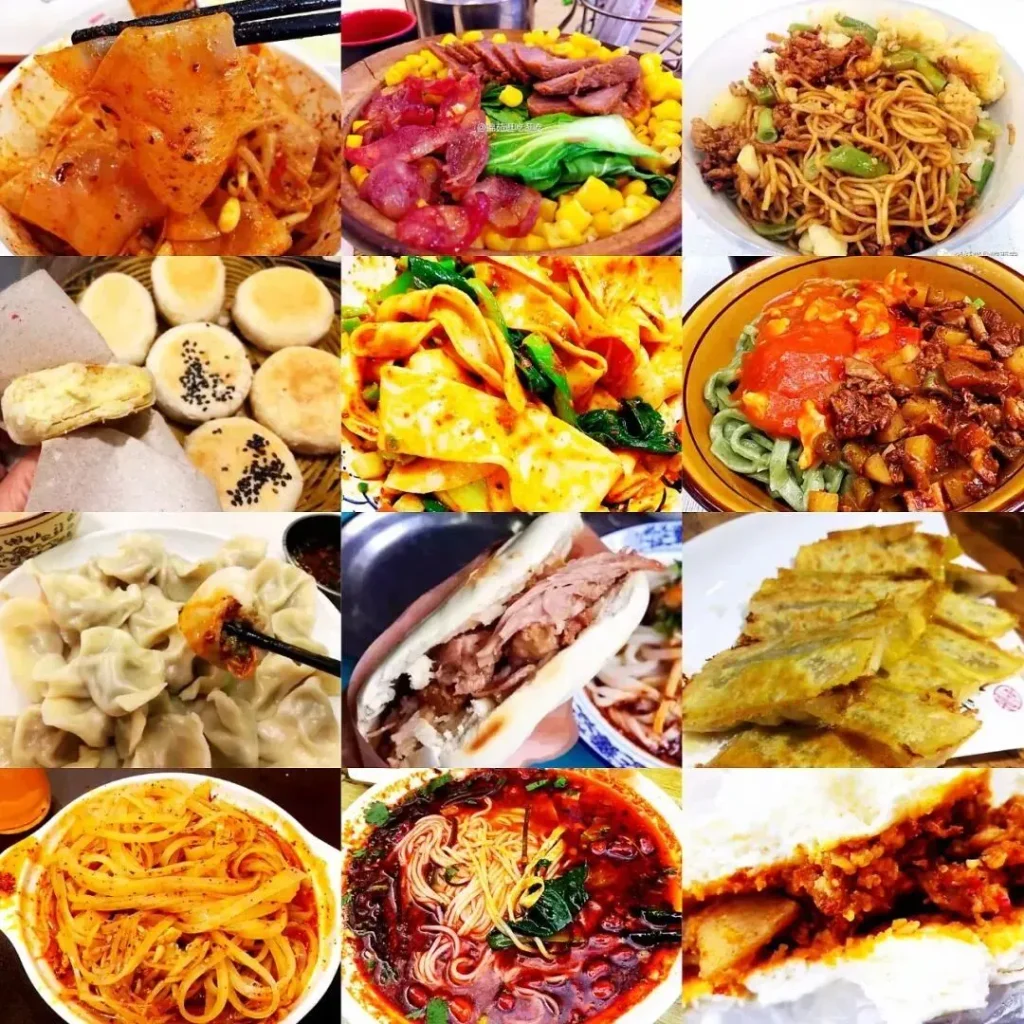
Roujiamo is one of the city's defining foods: freshly baked baijimo flatbread split open and filled with chopped braised meat.
One detail matters for foreign visitors:
Roujiamo is not always the same meat.
Outside Muslim areas, the classic version is usually pork. Inside Hui Muslim food areas, you will commonly encounter beef or lamb versions.
Eat it immediately. A good freshly baked bread should still have a crisp exterior rather than feeling soft and steamed.
Good choices:
• Ziwu Road Zhangji Roujiamo (子午路张记肉夹馍) — Cuihua Road area; expect roughly ¥12–18 depending on filling and premium/lean versions, but check the current menu because branch pricing varies.
• Qinyu Roujiamo (秦豫肉夹馍) — 19 Dongmutoushi; a long-established local name. Go earlier in the day rather than assuming it stays open late.
• Wangkui Roujiamo (王魁肉夹馍) — another established neighborhood option.
Zero-mistake order: Ask for 肥瘦 (féi shòu) if you want a mixture of lean and fatty meat rather than an especially dry filling.
See the ordering-phrase table farther down for féi shòu and other useful phrases you can show directly to staff.
This is not merely lamb soup with bread.
You are usually given dense flatbread and tear it into small pieces yourself. The kitchen then adds lamb broth, meat and other ingredients.
The smaller and more even your bread pieces, the more evenly they absorb the broth.
How to eat it:
Do not rush the bread-tearing. The ritual is part of the dish.
Recommended shops:
• Guoyuanzhai Mijia Paomo (果渊斋米家泡馍) — Beiguangji Street area
• Tongshengxiang (同盛祥) — 5 West Street (西大街5号), near the Bell Tower
• Laomijia Dayu Paomo (老米家大雨泡馍) — 127 Xiyangshi (西羊市127号) in the Muslim Quarter area
What not to do: Do not automatically pay extra for a “luxury” paomo just because the name sounds better. Often the upgrade mainly buys additional meat rather than a fundamentally different broth or preparation.
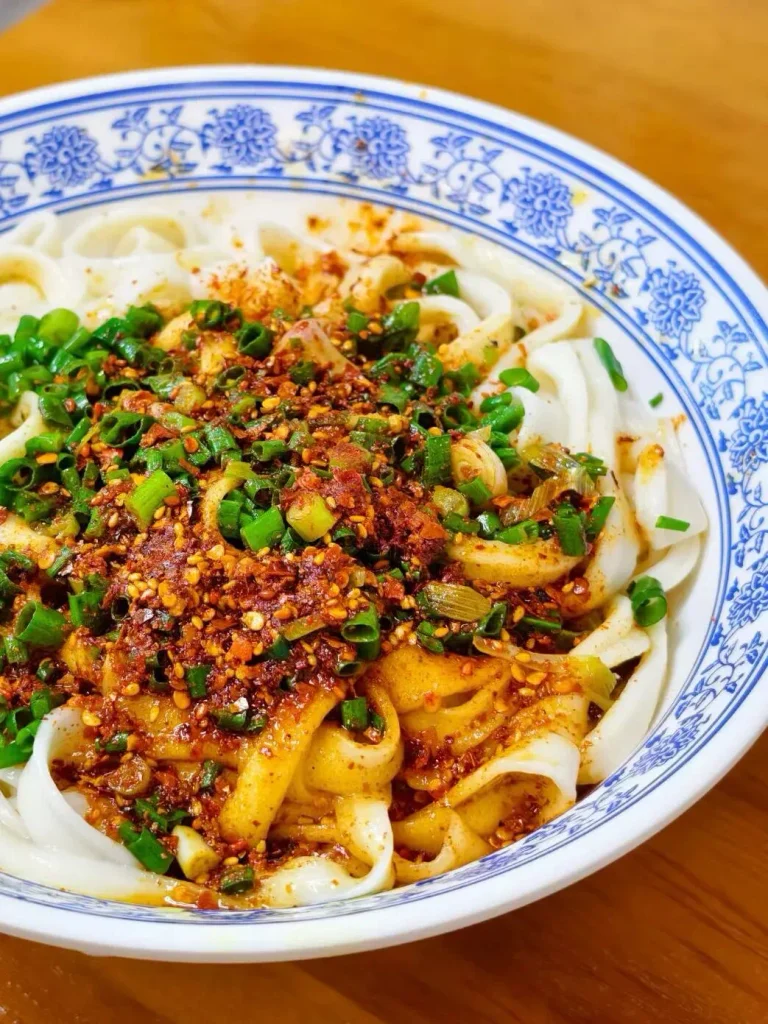
Biangbiang noodles are wide, thick and chewy. The classic oil-splashed version combines garlic, chili and vinegar before hot oil is poured over the seasonings.
The result should be aromatic and slightly sharp, not simply “hot.”
Mix the bowl thoroughly before eating. Chili oil frequently sits on top while vinegar and sauce collect underneath.
If you want less chili, say:
少辣一点。
Shǎo là yìdiǎn.
“Less spicy, please.”
If you want no chili at all, say:
不要辣椒。
Bú yào làjiāo.
“No chili.”
Liangpi is served cold, usually with vinegar, chili oil and other seasonings.
Different Shaanxi styles vary in texture. Some are soft and smooth; others are noticeably firmer and chewier.
Inside the Muslim Quarter, sesame-paste niangpi / liangpi is particularly worth trying.
A reliable local name is:
Shengzhiwang Sesame Niangpi (盛志望麻酱酿皮) — 225 Dapiyuan West Entrance (大皮院西口225号) in the Muslim Quarter area.
If you are eating alone and want to sample more than one thing, this is the easiest dish to pair with half or one roujiamo rather than ordering another heavy bowl of noodles.
Zenggao combines glutinous rice, red dates and beans into a dense, sticky breakfast sweet.
The timing matters more than the shop decor.
The freshest versions are sold in the morning, and popular carts may finish their best batches well before lunch.
Pangzi Zenggao (胖子甑糕) around Sajinqiao is one of the best-known names.
If zenggao is important to you, arrive before 9–10 AM rather than building it into an afternoon food crawl.
This Hui-style breakfast soup is thick, warming and peppery, with beef meatballs and vegetables.
It is not “spicy” in exactly the same way as chili-heavy noodles. Black pepper and spices contribute much of the character.
Locals commonly tear bread into the bowl and let it absorb the soup.
Go early. The best breakfast-focused places may run out by mid-morning rather than operating like an all-day restaurant.
Shuipen yangrou is a clearer lamb soup, generally lighter than bread-heavy paomo.
It is usually served with flatbread on the side.
Dip part of the bread into the soup while eating the rest separately. That keeps some contrast between crisp bread and broth-soaked bread.
This is a particularly good choice in cold weather—or after several meals of heavy noodles and paomo.
Bingfeng (冰峰) is not just another orange soda in Xi'an.
The local company dates back to 1948, and its glass-bottle orange soda has become strongly associated with Xi'an dining culture. The company itself identifies Bingfeng + liangpi + roujiamo as the famous Sanqin Set (三秦套餐).
Why does the combination work?
Roujiamo is rich and savory. Liangpi is sour, spicy and oily. Cold orange soda cuts through both.
You do not need to romanticize it as a craft beverage. The point is cultural: ordering a bottle with roujiamo and liangpi is one of the easiest ways to experience a completely ordinary Xi'an lunch rather than another “must-eat tourist dish.”
Note: The classic glass-bottle version is not stocked at every stall. Some smaller Muslim Quarter vendors may carry only cans or other drinks.
If you do get the returnable glass bottle, drink it at the restaurant rather than walking off with the bottle.
| Time | Best Area | What to Eat | Crowd Advice |
|---|---|---|---|
| 6–9 AM | Sajinqiao | Hulatang, zenggao, beef roujiamo | Best before breakfast items sell out |
| 7–9 AM | Xiaonanmen Morning Market | Breakfast snacks, market foods | Earlier feels more local |
| 11 AM–1 PM | Dapiyuan & Xiyangshi | Paomo, niangpi, soups | Arrive before peak lunch queue |
| 2–5 PM | Yongxingfang | Shaanxi snacks | Easier for casual sampling |
| 6–8 PM | Muslim Quarter side lanes | Skewers, paomo, snacks | Weekends/holidays get much busier |
| After 8 PM | Night-market areas | Grills, noodles, snacks | Better suited to a food crawl |
Timing note: Breakfast-only specialties such as zenggao and hulatang commonly sell out by mid-morning. Do not assume you will find the classic morning versions during a 2–5 PM Yongxingfang visit.
Chinese public holidays, summer weekends and major travel periods can also make famous stores substantially busier.
For famous individual restaurants, verify the current opening status on a live map before making a special trip.
For a dedicated breakfast crawl, see TripChina's Xi'an morning markets guide.
The biggest mistake is ordering seven “must-eats” as seven full meals.
| Group | Easy First Order | Why It Works |
|---|---|---|
| Solo traveler | 1 roujiamo + 1 small liangpi + Bingfeng or 1 bowl paomo | Enough for one meal without destroying the rest of your food crawl |
| 2 people | 1 paomo + 1 roujiamo + 1 liangpi + 1 small sweet/snack | Lets you taste four styles without ordering four huge mains |
| 3–4 people | 2 mains + 2 cold/snack dishes + skewers + dessert | Best format for sampling Xi'an broadly |
| Food crawl | One item per shop, shared | Keeps you moving and lets you compare places |
If a portion arrives larger than expected, stop ordering.
Xi'an rewards sharing and grazing much more than trying to finish a full bowl at every famous shop.
Sajinqiao is a working Hui neighborhood rather than a polished “food attraction.”
Go in the morning for hulatang, zenggao and beef-based foods, or return at dinner for paomo and skewers.
English signage is limited. That is not a problem if you keep the Chinese dish names saved on your phone.
These lanes are the easiest upgrade from Beiyuanmen.
You remain inside the historic Hui food area but encounter more long-established shops and fewer souvenir-focused storefronts.
For something sweet after several savory dishes, look for Xiaojia Babaozhou (小贾八宝粥) in Dapiyuan. Current listings place the shop in the middle section of Dapiyuan, although online address numbering is inconsistent between platforms, so search the Chinese business name on your live map rather than relying on a single street number.
Yongxingfang is more curated and commercial than Sajinqiao.
That is not automatically a bad thing.
If you have only one hour, are traveling with children, or want to sample foods from across Shaanxi Province, the organized format is useful.
Think of it as a sampler rather than “where the neighborhood eats every day.”
Come early.
This is as much about watching Xi'an wake up as it is about a checklist of famous foods.
If your goal is breakfast rather than photography, prioritize hot, freshly cooked stalls with strong turnover.
This matters more than whether a particular snack is “authentic.”
For dried fruit, sweets, jerky and cut fruit, confirm whether the displayed price is:
• per piece
• per portion
• per 50 grams / liang (两)
• per 500 grams / jin (斤)
Ask:
这个多少钱一份?
Zhège duōshao qián yí fèn?
“How much is one portion?”
Do that before the vendor cuts, weighs or packages it.
The main reason I do not recommend premium paomo for first-timers is value.
The defining parts of paomo—broth, bread-tearing ritual and preparation—do not suddenly become twice as interesting because a more expensive bowl contains more lamb.
Start with the standard version.
Maobi su—pastries shaped like Chinese calligraphy brushes—are designed to photograph well.
They are a modern viral food gimmick, not a traditional everyday Xi'an staple. There is no reason to prioritize them on a first-time food list.
Spend your appetite on something that actually reflects the city's food culture.
If someone around a station or tourist zone offers a suspiciously cheap “all-inclusive” Terracotta Warriors day tour, be cautious.
These cheap coach tours often prioritize shopping stops over actual sightseeing; avoid them entirely unless you have independently verified the itinerary and operator.
For a straightforward independent visit, use TripChina's Terracotta Warriors route and mistakes guide.
The Muslim Quarter is not a themed food market. It is part of a living Hui Muslim community.
Keep the rules simple:
• Do not bring pork into a halal restaurant.
• If a restaurant does not serve alcohol, do not insist that staff accommodate outside alcohol.
• Look for 清真 (qīngzhēn) signage when halal food matters to you.
• Ask before taking close-up photographs of vendors or customers.
• Around mosques and religious spaces, behave as you would in any active place of worship rather than treating it as a food-street photo prop.
This is enough. You do not need a complicated list of invented “Muslim Quarter rules” to eat respectfully.
You need surprisingly little Chinese.
| What You Need | Chinese | Pinyin |
|---|---|---|
| One of these | 一个这个 | Yí ge zhège |
| How much? | 多少钱? | Duōshao qián? |
| Less spicy | 少辣一点 | Shǎo là yìdiǎn |
| No chili | 不要辣椒 | Bú yào làjiāo |
| Lean and fatty mixed | 肥瘦 | Féi shòu |
| Is this halal? | 这是清真的吗? | Zhè shì qīngzhēn de ma? |
| Thank you | 谢谢 | Xièxie |
For roujiamo, 肥瘦 (féi shòu) is the useful phrase if you want both lean and fatty meat.
The easiest method is still pointing at the menu or another diner's dish and showing the Chinese text.
For payment, small restaurants increasingly rely on QR payments. Set up Alipay or WeChat Pay before your trip and carry some cash as backup.
TripChina's China payment guide for foreign travelers explains the current setup process.
| Mistake | Better Move |
|---|---|
| Ordering several full noodle/soup mains | Share and order progressively |
| Treating Beiyuanmen as the entire Muslim Quarter | Explore Xiyangshi, Dapiyuan and Sajinqiao |
| Showing up for breakfast food at noon | Go early for hulatang and zenggao |
| Assuming every roujiamo is halal | Look for 清真 signage; downtown versions commonly contain pork |
| Trusting old restaurant opening hours | Check a current map listing before making a special trip |
| Ordering only famous “internet foods” | Prioritize foods locals actually eat as meals |
Yes, but you need to order more deliberately than meat eaters.
Liangpi, vegetable noodles, breads and some Shaanxi snacks can work well, but broth, cooking oil and sauces may contain meat ingredients.
Hui Muslim halal restaurants in the Muslim Quarter rarely specialize in vegetarian food, and many soups and broths are meat-based. Strict vegetarians should confirm ingredients rather than assuming “halal” means vegetarian-friendly.
Yes.
Search for the Chinese characters 清真 on maps or storefronts. Xi'an has a substantial Hui Muslim food culture beyond the tourist quarter, although the area around the Drum Tower gives visitors the greatest concentration of choices.
Choose stalls with high turnover and food cooked hot in front of you.
Busy stalls serving a small number of dishes are generally easier to judge than low-turnover displays of pre-cut or pre-cooked food. Use the same basic street-food judgment you would use anywhere else.
A casual local food crawl can still be inexpensive compared with sit-down Western-style dining.
Your total depends heavily on meat portions, skewers and tourist-area markups, so use displayed prices rather than relying on a fixed citywide budget.
Usually not for ordinary noodle shops, paomo restaurants, morning stalls or food-street eating.
For famous sit-down restaurants on weekends and Chinese public holidays, expect queues. Some platforms may offer digital queue numbers or reservations, depending on the restaurant.
Xi'an is best experienced by sampling rather than over-ordering.
Prioritize the seven essential dishes, try the Sanqin Set, eat breakfast early, share heavy bowls and use local side streets instead of stopping at the first tourist-facing storefront.
For a first visit:
Dapiyuan & Xiyangshi — easiest overall choice
Sajinqiao — strongest local breakfast experience
Yongxingfang — easiest family-friendly sampler
And if you remember only one local rule, remember this:
walk beyond the busiest street before choosing where to eat.
A hot roujiamo, a bowl of paomo you tore yourself, a cold Bingfeng and a shop full of regular customers will tell you more about Xi'an food than any viral snack checklist.
Xi'an Bingfeng Beverage — Official Website
Visit Xi'an — Muslim Quarter Food Guide
AMap — Laomijia Dayu Paomo, Xiyangshi 127
AMap — Tongshengxiang, West Street 5
Note: The two AMap references are included for business-location verification. AMap pages may not load reliably outside mainland China.
Updated September 2026. Dish descriptions, neighborhood structure and first-time visitor advice were cross-checked against current Xi'an food references, live business listings and Bingfeng's official materials. Restaurant addresses can change, duplicate branches are common and independently operated shops may alter opening days without notice, so travelers should verify the Chinese business name on a live map before making a special trip. Price ranges are approximate and should be checked against the current menu.
Avoiding mistakes is only the first step. TripChina.me Premium Travel Guides help independent travelers explore China with ready-to-follow routes, booking strategies, practical solutions, and local insights — so you can travel with confidence.