Our Location:
No. 99, Jiazi Road, Chengdu

 authorChris Lee
Most Chengdu citywalk guides give you a route and tell you to follow it. This guide starts with a better question: what kind of Chengdu do you actually want to experience? These seven self-guided walks cover old neighborhoods, teahouses, riverfront nightlife, industrial heritage, modern Chengdu and shaded local streets—with enough practical detail to choose the right walk for your time, weather and energy.
For a first visit, choose the Ancient Shu Culture Route for the broadest introduction to Chengdu. Choose Yulin for cafes and neighborhood life, Old City Life for teahouses and a low budget, Jinjiang River for an evening walk, and Southern New City for modern night photography.
On hot days, the Shahe River and Caotang Neighborhood walks are the strongest choices because shade matters more than sightseeing density once Chengdu gets hot.
For heavy rain, don't force a walking route. Use Metro Line 8 to move between indoor or substantially covered stops. For example, the line connects Chengdu Natural History Museum near Shilidian Station, Eastern Suburb Memory at Dongjiao Memory Station, and the Shuangqiao Road commercial area near the Mixc. Chengdu Natural History Museum is typically closed on Mondays except some public holidays, so check its current opening schedule before heading there.
See the Chengdu Metro guide for foreign travelers for payment and route basics.
| Route | Core Experience | Best For | Walk Time | Budget | Tree Cover | Best Time |
|---|---|---|---|---|---|---|
| Ancient Shu Culture | History + leisure | First-timers, families | 4–6 hrs | ¥50+ | Medium | Morning |
| Yulin Neighborhood | Cafes + local life | Solo travelers, creatives | 2–3 hrs | Free (food/drink extra) | Good | Afternoon |
| Old City Life | Teahouses + neighborhoods | Budget travelers | 3–4 hrs | Free (food/drink extra) | Medium | Morning |
| Jinjiang River | Waterfront + nightlife | Couples, evening walkers | 2–3 hrs | ¥20 optional | Medium | Late afternoon |
| Southern New City | Skyline + modern Chengdu | Photographers | 2–3 hrs | Free | Low | Evening |
| Eastern Suburb Industrial | Industrial heritage | History, architecture | 2–3 hrs | Free (food/drink extra) | Medium | Daytime |
| Shahe River & Caotang | Shade + slow local life | Hot days, easy walks | 1.5–2 hrs each | Free | Excellent | Daytime |
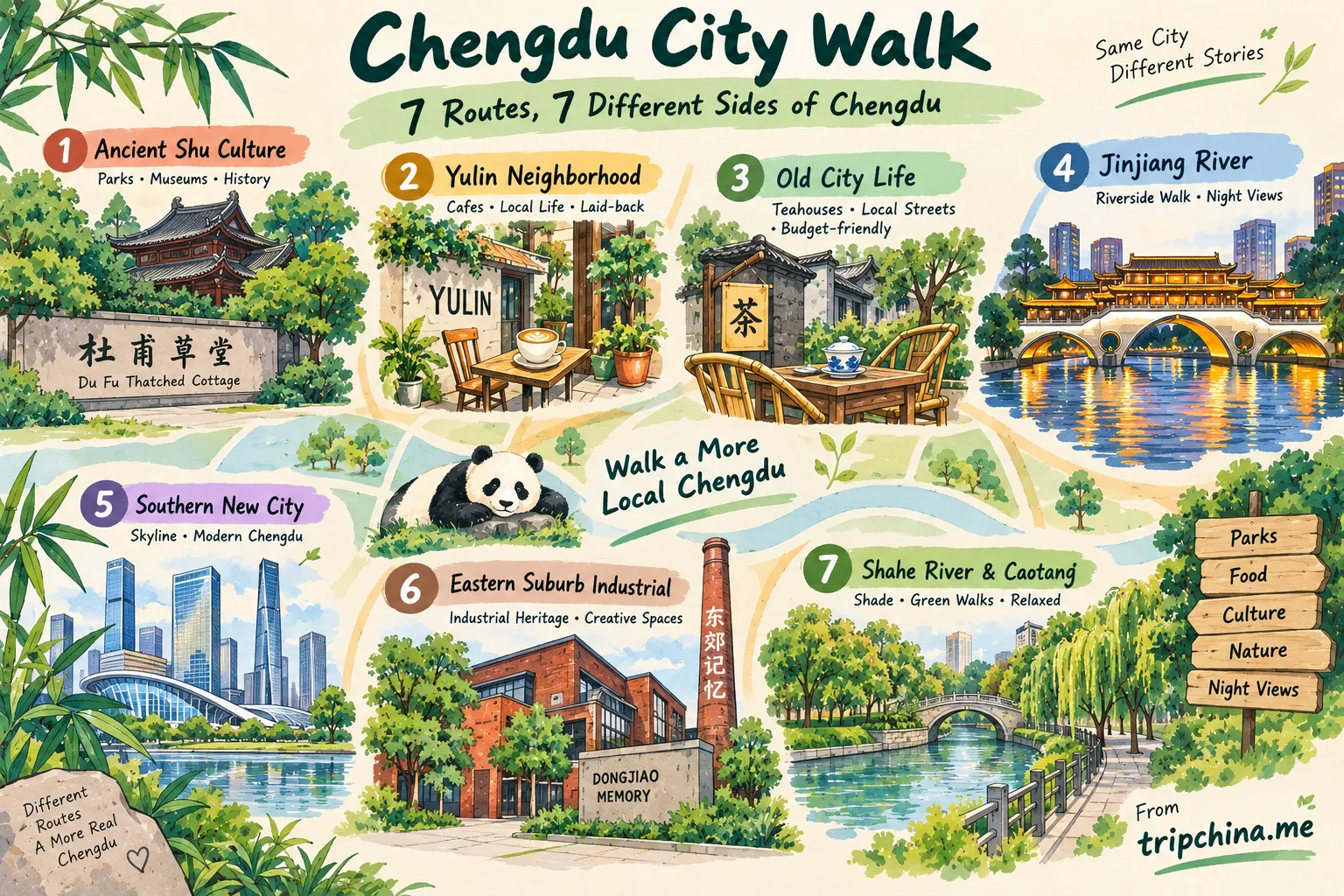
TripChina Verdict: If you only do one route, make it Ancient Shu Culture. But don't assume the most famous route is automatically the right one. Chengdu works particularly well as a walking city when you match the neighborhood to the time of day, weather and mood.
Route: People's Park → Citang Street → Kuanzhai Alley → Qingyang Palace → Sichuan Museum → Huanhuaxi Park → Du Fu Thatched Cottage
Time: 4–6 hours
Best for: First-time visitors, families, history
Skip if: You only have two hours or mainly want non-touristy neighborhoods
This is the strongest all-around introduction to central Chengdu. You begin with the city's park-and-teahouse culture, move through historic streets and Taoist architecture, pass a major museum, and finish among the bamboo, ponds and gardens surrounding Du Fu Thatched Cottage.
The first half feels busy. People's Park and Kuanzhai Alley can draw substantial crowds. From Sichuan Museum toward Huanhuaxi Park and Du Fu Thatched Cottage, the walk becomes greener and calmer.
If Kuanzhai is part of your plan, read how to visit Kuanzhai Alley without wasting money before you go.
Practical details, as of September 2026:
Local truth: Citang Street between People's Park and Kuanzhai is easy to rush past. Don't. Its restored historic buildings, galleries and cafes make it a useful transition between two much busier sights.
One thing to remember: Winter changes this route. Wax plum blossoms around Du Fu Thatched Cottage typically flower around January and February, and Chengdu's soft overcast winter light works surprisingly well with the garden architecture.
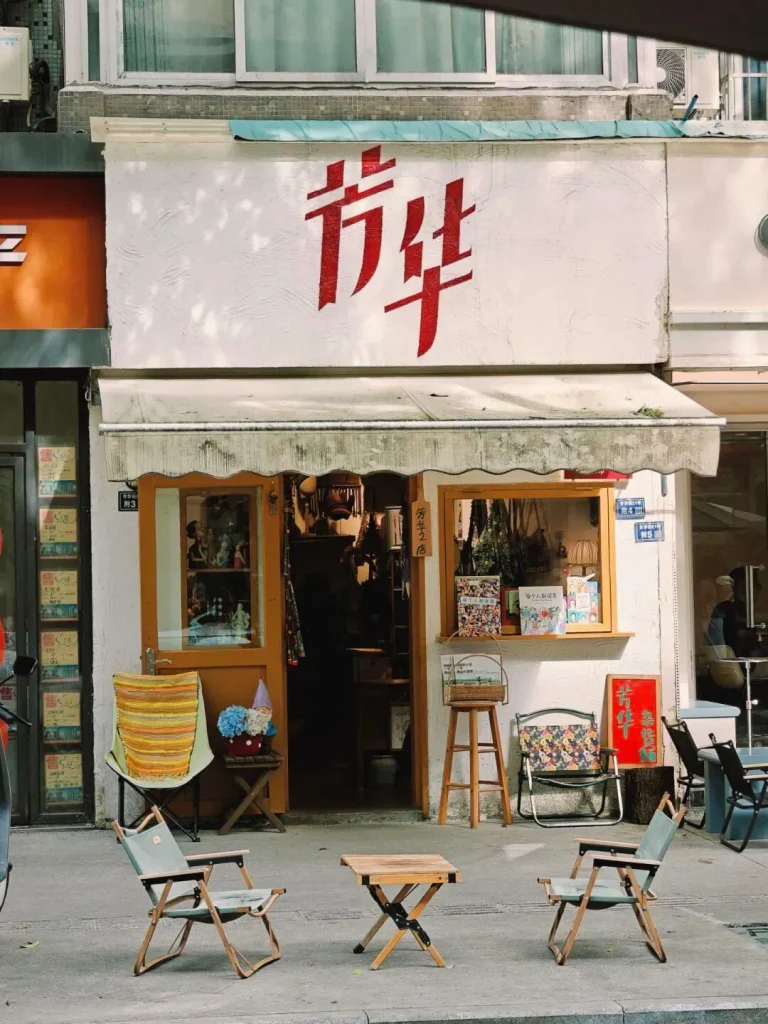
Route: Fangcao Street → Fanghua Street → Yulin Comprehensive Market → Yulin Fourth Alley → Yulin West Road
Time: 2–3 hours
Best for: Solo travelers, cafes, neighborhood wandering
Skip if: Your priority is major historical attractions
Yulin explains Chengdu's much-discussed 松弛感 — or relaxed way of living — better than any other monument does.
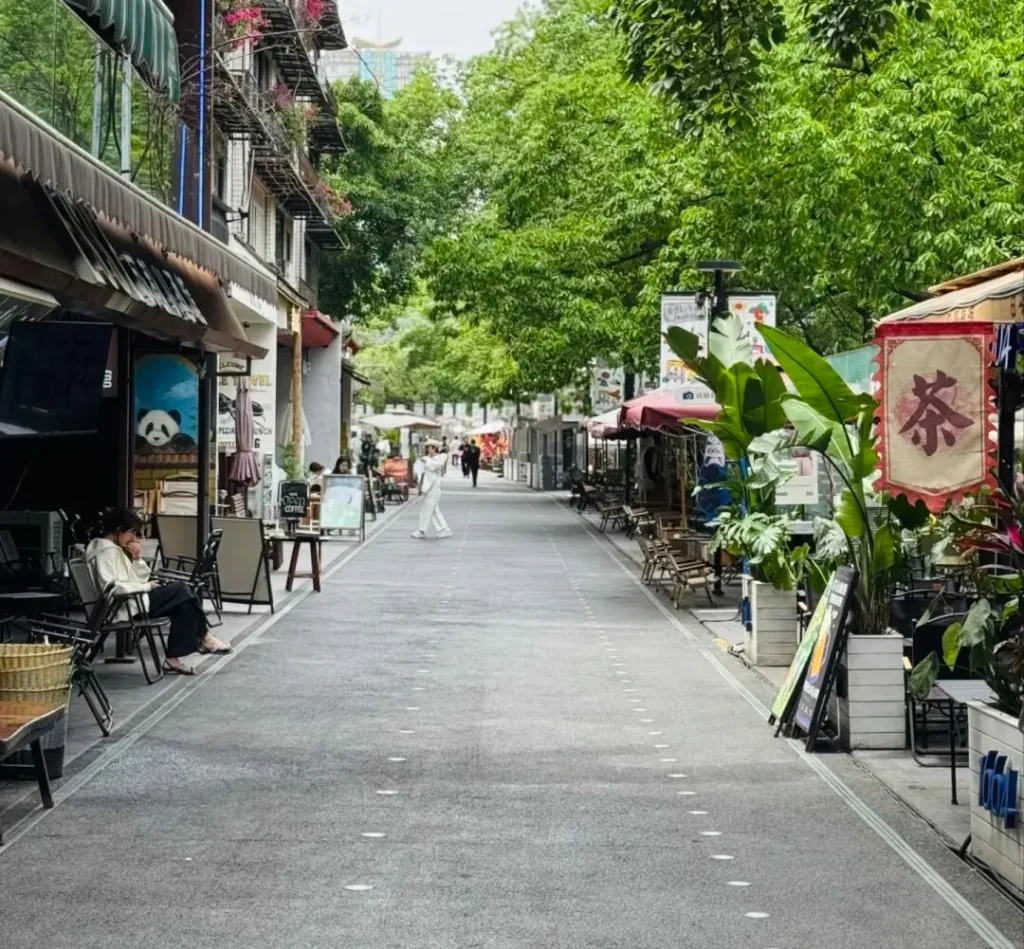
Walk down a tree-lined street and you may pass a specialty coffee counter, a hardware store that looks as though it has barely changed in decades, a vintage shop and a mahjong table within a few minutes.
Young people sit outside cafes on small stools. A few doors away, older residents play cards or mahjong. Nobody treats the contrast as unusual. That mixture is the point.
Practical details:
Yulin Comprehensive Market is worth walking through even if you don't need groceries. It puts everyday neighborhood Chengdu beside the area's newer cafes and bars without turning either into a staged attraction.
Yulin West Road becomes more food-and-drink oriented toward evening. If dinner is part of the walk, the Chengdu hot pot guide explains what to order and how to handle spice levels.
Route: Fuqin Street → Yongling Park → Huaishu Street → Wenshu Monastery → Yuquan Street → Beishuyuan Street
Time: 3–4 hours
Best for: Teahouses, local streets, budget travelers
Skip if: You mainly want polished photo locations
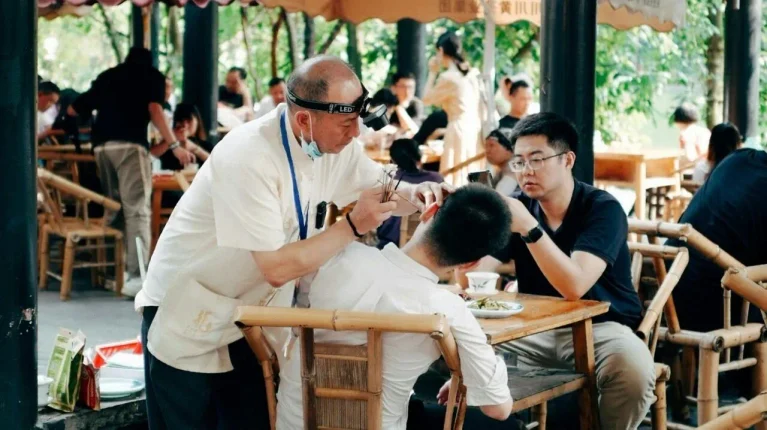
This walk is less about landmarks and more about the spaces between them: residential blocks, small noodle shops, bamboo chairs and older teahouses.
The Fuqin–Yongling section feels residential and relatively quiet. Around Wenshu Monastery and Beishuyuan Street, the streets become livelier.
If teahouses are the main reason you're walking this route, see TripChina's comparison of 7 Chengdu teahouses worth visiting.
Practical details:
Yes. The earlier advice that there is no vegetarian dining here is no longer accurate.
Xiangyuan (香园), within the Wenshu Monastery complex, serves vegetarian food, including a range of meat-free dishes. Menus, formats, prices and operating hours can change, so don't build your day around one particular low-price set meal unless you confirm it locally.
The vegetarian hotpot and buffet at Xiangyuan can draw queues on weekends; go early if either is a main reason for your visit.
The useful takeaway is simple: vegetarian food is available at Xiangyuan.
Local truth: The popular red-wall photo spot associated with Wenshu Monastery is outside the main temple compound. Go earlier in the day if the photo matters to you.
Route: Donghu Park → riverside path → Wangjianglou Park → Anshun Bridge → Hejiang Pavilion → Shuijingfang area → Wangping Street
Time: 2–3 hours
Best for: Evening walks, couples, riverside photography
Skip if: You need a heavily shaded midday route
This is Chengdu at its best transition point: late afternoon becoming night.
The Jinjiang riverfront moves from parks and bamboo to illuminated bridges, restaurants and nightlife. Chengdu’s 2026 cultural tourism push has also expanded walking tourism into themed formats including City Walk and Moonlit Walk, reflecting the growing role of street-level exploration in the city's visitor experience.
Practical details:
Aim for roughly 19:30–20:00 in summer, adjusting earlier as sunset moves earlier later in the year.
There isn't one reliable year-round switch-on time — the more useful rule is to arrive around dusk and stay until full darkness.
Anshun Bridge is free to visit and accessible around the clock.
Wangping Street works well as the endpoint for dinner or drinks. For a longer evening, compare it with other areas in the Chengdu nightlife guide.
Route: Jiaozi Park → Jiaozi Financial Museum → Chengdu SKP → Guixi Ecological Park → Tiexiang Temple Water Street → Jincheng Park
Time: 2–3 hours
Best for: Architecture, skyline photography, modern Chengdu
Skip if: You're looking for old streets or traditional teahouses
This route feels like a different city.
Narrow neighborhood streets give way to broad avenues, towers and large urban parks. The contrast is useful if you've spent the previous day around Kuanzhai, Wenshu Monastery or People's Park.
Practical details, as of September 2026:
Chengdu SKP's tall "Pillars of Life" water installations are the visual centerpiece after dark. Lighting schedules can change, so treat previously published 19:30–22:00 timings as a planning reference rather than a guaranteed daily schedule.
Local truth: Jiaozi Financial Museum gives this otherwise very modern walk historical context: Chengdu is closely associated with jiaozi, widely recognized as an early form of paper money from the Song period.
Suggested sequence: Eastern Suburb Memory → Red Building / former industrial areas → Erxianqiao Park → nearby converted creative spaces
Time: 2–3 hours or longer
Best for: Industrial history, architecture, photography
Skip if: You want a compact, straightforward attraction
The important distinction is not Eastern Suburb Memory versus industrial Chengdu. Think of them as two layers of the same story.
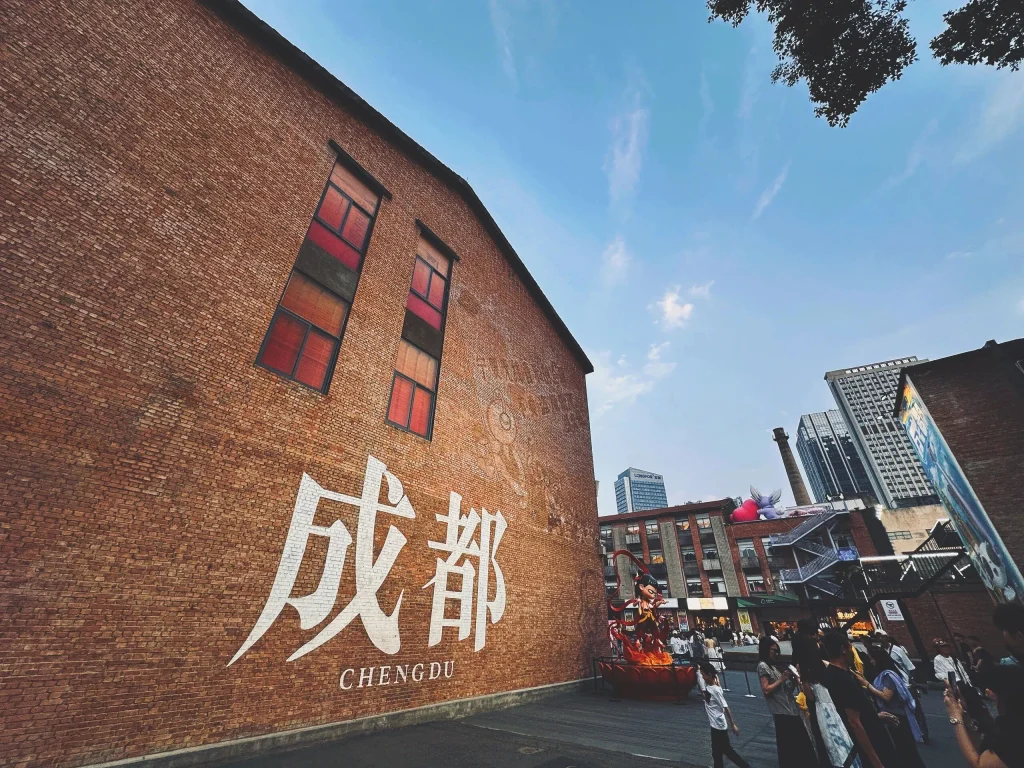
Eastern Suburb Memory (东郊记忆) is the polished, tourist-friendly introduction: compact, easy to navigate and filled with cultural venues, shops and reused industrial structures. The broader industrial walk takes that story outside the curated park and into less polished factory-era landscapes.
For the full history behind the site, read our guide to Factory 773 and Dongjiao Memory.
Use Line 8, Dongjiao Memory Station (东郊记忆站). Exit B1 is the practical exit for the Dongjiao Memory area.
For a straightforward first visit, start with TripChina's Dongjiao Memory guide. If you enjoy the industrial architecture, extend the walk beyond the main cultural park rather than treating the less-developed sites as a substitute for it.
Local truth: This is one route where exploration is more important than completing a fixed checklist. Redevelopment can change access around former industrial properties, so don't assume every warehouse or compound visible on an old map is publicly accessible.
The Red Building sits slightly farther from the metro station, so set aside extra walking time if you continue beyond the main Eastern Suburb Memory park.
The original combined “Shahe/Caotang” grouping is better framed as two independent walks.
They are not geographically continuous: Shahe is in north Chengdu, while Caotang is west of the center. They belong together here only because they solve the same travel problem — an easy, shaded walk when you don't want another attraction-heavy day.
This reflects a distinctly local way of planning a walk: locals prioritize comfort over landmark count when summer heat arrives.
Route: Beihu Ningcui Park area → Shahe riverside → Shengxianhu Park
Distance: About 3 km for the commonly shared section
Time: Around 1.5–2 hours at an easy pace
Cost: Free
Best for: Shade, riverside walking, low-effort exercise
This is the quieter option.
The path follows the river through green space toward Shengxianhu, with bridges, benches and everyday neighborhood activity rather than major attractions.
Bring water if you're walking on a hot day. Commercial facilities are less dense than on the Caotang route.
Best for: People who want to walk rather than browse, shop or eat.
Route: Du Fu Thatched Cottage North Gate → Caotang North Road → Qingjiang South Street → Chengjiang Street → Mingcui Road → Xiling Road → Xieyang Road → Qinghua North First Street
Time: Around 1.5–2 hours
Cost: Free unless you stop for food or tea
Best for: Shade + neighborhood details + snack stops
Caotang is the more urban of the two.
Leave Du Fu Thatched Cottage through the north side and you quickly move into tree-lined residential streets. The pleasure is in small details: neighborhood shops, shaded sidewalks, tea, bakeries and older storefronts.
Local truth: In summer, three relaxed hours under mature tree canopy often beat a shorter walk hopping between sun-exposed landmarks.
The Caotang route also connects naturally with Route 1, making those two the easiest walks in this guide to combine.
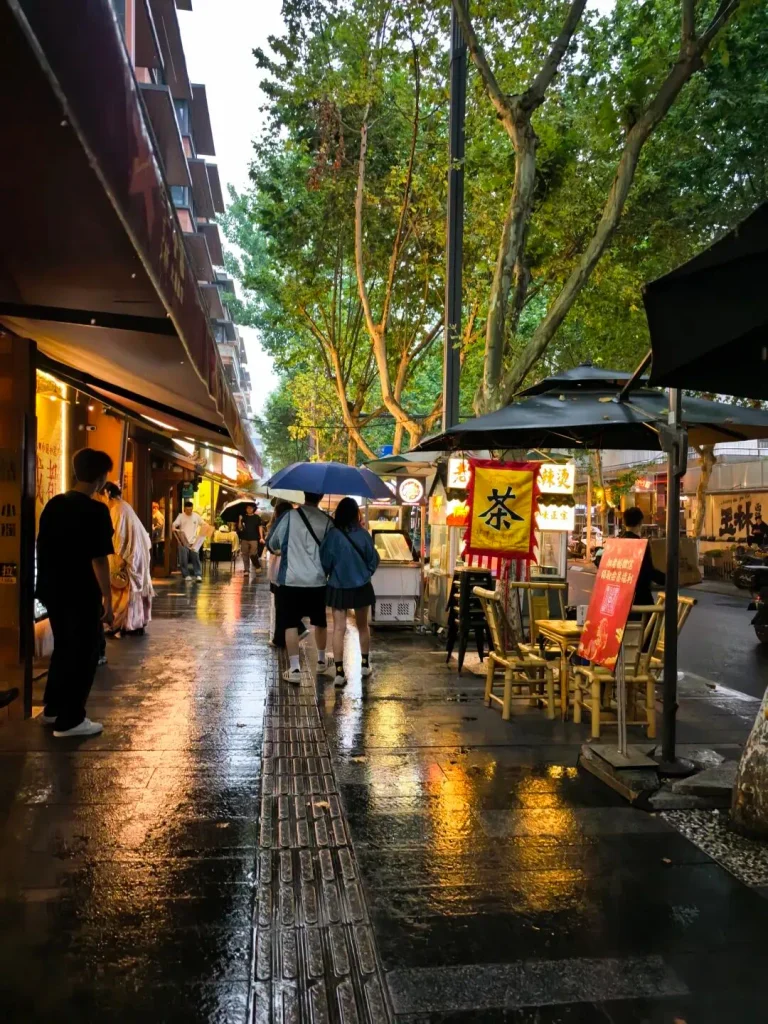
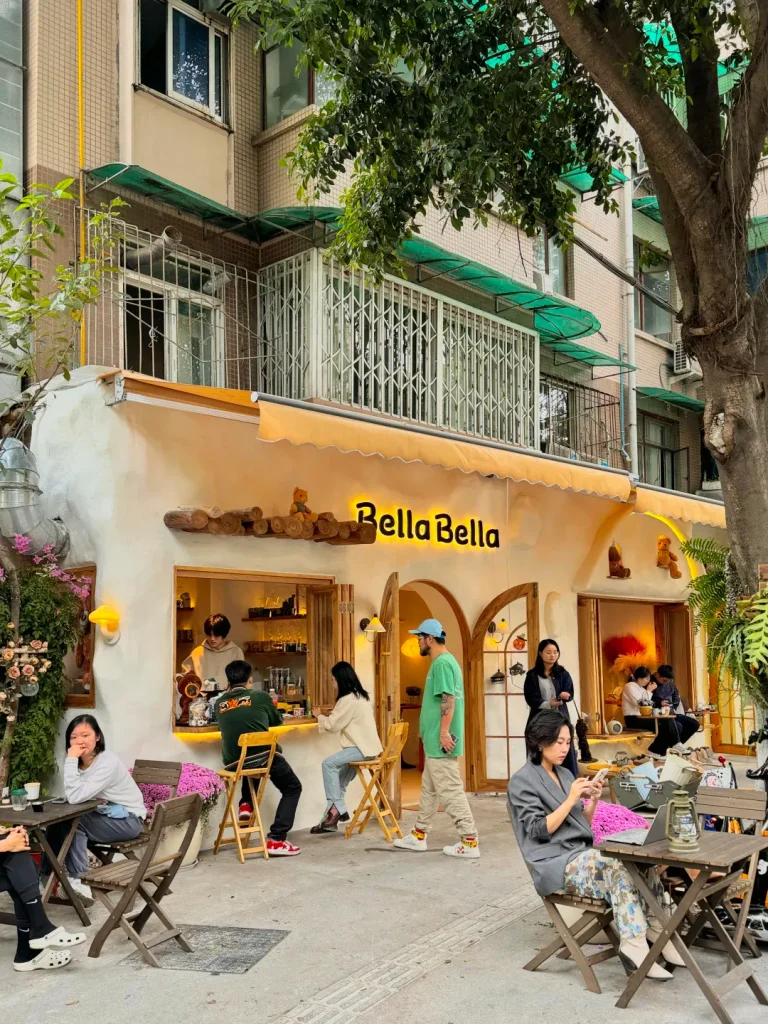
Citywalking in Chengdu requires very little planning, but China's digital basics can create more friction than the walking itself.
Before arriving, prepare mobile payment options. Start with our guide on using Alipay for foreign visitors or the broader China payment guide for overseas travelers.
For navigation, avoid relying solely on the Google Maps version you use at home. Our guide to the best navigation apps for foreign tourists in China covers practical alternatives.
Also confirm your mobile connectivity before departure: review our eSIM and SIM card guide for travel in China.
| Your Priority | Best Match |
|---|---|
| First Chengdu trip | Route 1 — Ancient Shu Culture |
| Cafe + neighborhood afternoon | Route 2 — Yulin |
| Teahouses + low budget | Route 3 — Old City Life |
| Romantic evening walk | Route 4 — Jinjiang River |
| Modern night photography | Route 5 — Southern New City |
| Industrial history | Route 6 — Eastern Suburb |
| Maximum shade, north Chengdu | Route 7A — Shahe River |
| Maximum shade + food stops | Route 7B — Caotang |
Some sections are much easier than others. Modern parks such as Jiaozi Park and long stretches of the Jinjiang and Shahe greenways generally offer flatter surfaces, while older neighborhoods may have uneven paving, curbs and shopfront obstructions. For accessibility-critical trips, verify the exact route segment before setting out.
Generally yes around parks, metro stations, museums and major commercial districts. They become less predictable on smaller residential streets, so use facilities when you pass a park, mall or metro station rather than waiting until you urgently need one.
Busy central areas such as the Jinjiang riverfront, Yulin and major commercial districts remain active well into the evening. Normal urban precautions still apply: watch traffic when crossing streets, keep track of your belongings and plan your return transport before the metro closes.
A small backpack is fine; a rolling suitcase will make most of these routes unpleasant. Older sidewalks, crowds, stairs and long walking distances are the problem rather than formal luggage restrictions. Leave large bags at your hotel or a legitimate luggage-storage facility first.
No. All seven are designed as self-guided walks. A guide adds the most value on history-heavy routes such as Ancient Shu Culture or industrial heritage, but for Yulin, Shahe and Caotang, wandering independently is part of the experience.
For a first visit, Ancient Shu Culture remains the safest all-around choice. After that, let the day decide: Yulin for neighborhood life, Jinjiang for an evening by the river, Dongjiao for industrial history, or Shahe and Caotang when you want a slower walk.
The useful principle is simple: choose the route that fits the Chengdu you want to experience that day.
This article is part of the Chengdu Travel Guide Hub.
Chengdu Culture & Tourism — 2026 Walking Tourism Program
Chengdu News — Anshun Bridge Night Views
Chengdu Natural History Museum — Visitor Information
Anshun Bridge Visitor Information
This guide was reviewed in September 2026 against current Chengdu tourism information, transport data and recent local and traveler reports while preserving TripChina's original route-testing framework and neighborhood observations. Route 7 distinguishes Shahe and Caotang as geographically separate walks; Dongjiao Memory access, Wenshu vegetarian dining and Anshun Bridge information were also rechecked. Prices, restaurant menus, exhibitions and lighting schedules may change. Neighborhood paving, public toilet availability and route accessibility may change due to local road renovations.
TripChina.me creates practical China travel guides shaped by real local experience, helping independent travelers navigate transport, payments, food, neighborhoods, and the cultural details that make traveling in China easier and more meaningful. Find the guide for your destination at tripchina.me.

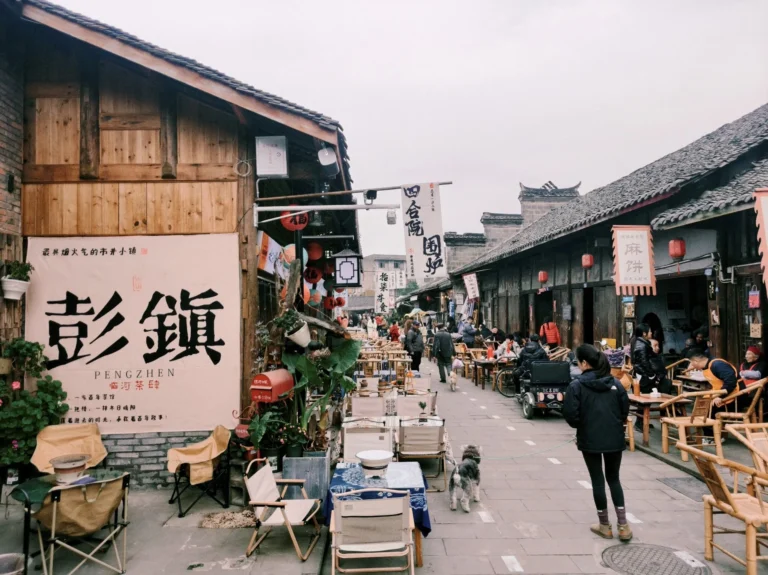
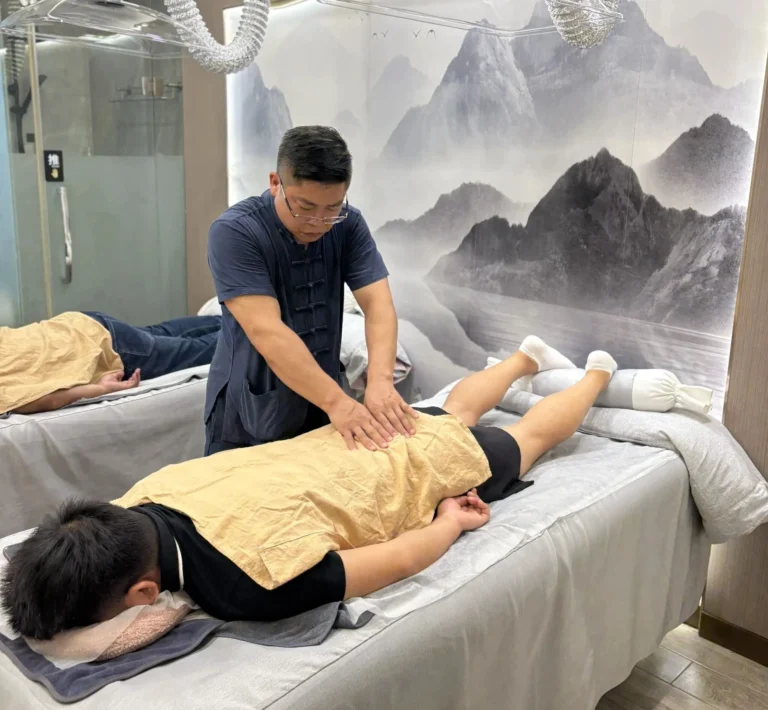


[…] hotpot, or explored the city center. If you are still deciding how to spend your limited time, our Chengdu Citywalk Guide can help you choose a route before committing half a day to a craft […]