Our Location:
No. 99, Jiazi Road, Chengdu

 authorChris Lee
In Jingdezhen, porcelain isn't just something you admire behind museum glass. You can shape your own bowl, paint blue-and-white ceramics, browse independent artist studios, and discover centuries of craftsmanship in a city still making porcelain today. This guide helps you choose the right workshops, markets, and historic kilns, plan a relaxed two-day visit, and avoid costly mistakes with bookings and shipping.
Jingdezhen is worth visiting for its combination of historic porcelain craftsmanship and contemporary ceramic culture. Two days are ideal for most first-time visitors, particularly if you want to make pottery rather than only visit museums.
| Experience | Best place | Suggested time |
|---|---|---|
| Make your own pottery | Sculpture Porcelain Factory or a booked Sanbao studio | 1–2 hours |
| Explore imperial porcelain | Taoyangli and Imperial Kiln Museum | 2–3 hours |
| Understand ceramic history | China Ceramics Museum | 2–3 hours |
| Shop contemporary designs | Taoxichuan | 2–3 hours |
| Browse affordable ceramics | Sculpture Porcelain Factory | 2–3 hours |
| Discover independent artists | Sanbao Ceramic Art Village | Half-day |
Suggested times are planning estimates. Studio availability, temporary markets, and museum admission arrangements should be checked before visiting.
The best approach: Start with Jingdezhen's porcelain history, experience the craft yourself, and leave time to explore artists' studios and ceramic markets without rushing.


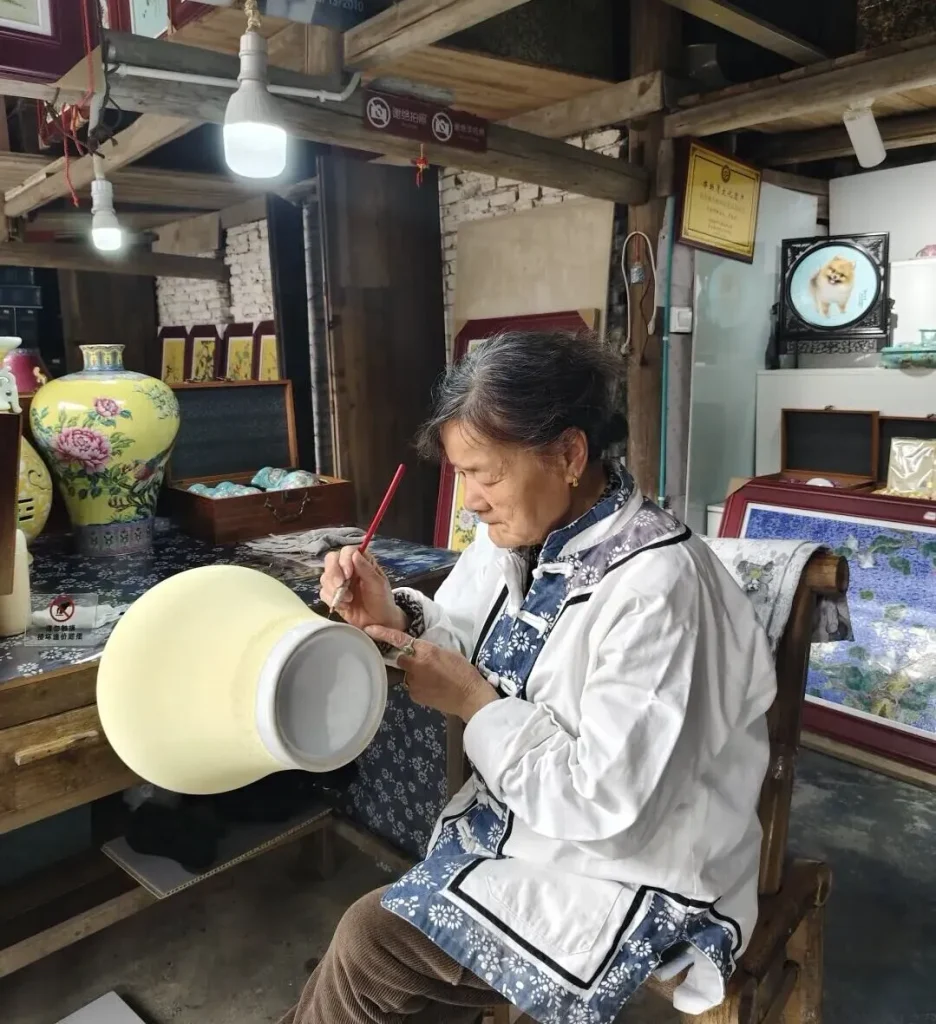
Absolutely—especially if you enjoy art, independent shops, hands-on crafts, and slower travel.
Jingdezhen, in Jiangxi Province, has been associated with porcelain production for more than a thousand years. Its ceramics became prized internationally, influencing decorative arts and trade far beyond China.
In July 2026, the Jingdezhen Handicraft Porcelain Industry Sites were added to the UNESCO World Heritage List. The five designated components document porcelain production from the 10th to the 19th centuries, including raw-material extraction, kiln technology, workshops, and transportation systems.
But Jingdezhen's appeal isn't limited to history.
Former factories now house ceramic designers. Independent artists sell original pieces in creative markets. Visitor-friendly workshops introduce traditional techniques to beginners.
You might spend the morning admiring imperial porcelain fragments and the afternoon trying to shape a cup that refuses to stay symmetrical.
That's part of the experience.
Jingdezhen is less suitable for travelers interested only in major landmarks or dramatic natural scenery. It rewards curiosity, patience, and time spent discovering small creative spaces.
Pottery-making is one of Jingdezhen's most distinctive travel experiences.
Beginner workshops are available around the Sculpture Porcelain Factory, Taoxichuan, and Sanbao, although not every studio accepts walk-in visitors.
| Experience | What you'll do | Typical duration |
|---|---|---|
| Wheel throwing (拉坯) | Shape clay into a cup or bowl | 30–90 minutes |
| Blue-and-white painting (青花彩绘) | Paint cobalt-blue designs on prepared ceramics | 45–90 minutes |
| Hand-building (手捏陶) | Shape clay without using a wheel | 1–2 hours |
| Ceramic decoration | Apply colors or decorative finishes | 1–2 hours |
Times are approximate and depend on the provider.
Wheel throwing is my first recommendation for newcomers. It's surprisingly challenging, but creating something with your hands is often more memorable than purchasing another souvenir.
Blue-and-white painting is a good alternative if you prefer detailed artistic work.
The right workshop depends on your budget, available time, and whether you need English instruction.
| Workshop option | Best for | Important consideration |
|---|---|---|
| Independent local studios | Budget-conscious beginners | Language support and firing costs vary |
| The Pottery Workshop (PWS) | Visitors seeking structured instruction in English | Custom workshops require advance booking and quotation |
| Organized pottery day tours | Travelers who prefer arranged logistics | Check the operator, itinerary, and shipping terms |
The Pottery Workshop (PWS) is an established ceramics organization offering workshops in Jingdezhen. Its official website describes customizable three-hour classes taught by local craftspeople, with English translation included.
Materials, tools, and firing or glazing for most classes are included, but each booking should be confirmed individually. Sessions are generally arranged by request rather than through a fixed daily timetable.
See the official PWS workshop information and booking form.
Organized day tours can be convenient if you don't want to contact individual studios. For example, HelloChinaTrip advertises a Jingdezhen pottery experience at US$125 per person, including international delivery arrangements for completed pieces.
That is a published operator offer, not a guarantee of availability, suitability, or successful shipping. Confirm the current inclusions and cancellation terms before paying.
Independent studios remain a good choice for visitors comfortable using translation apps and contacting businesses through WeChat.
Local visitor information commonly suggests approximately ¥50–100 for short wheel-throwing sessions and ¥80–150 for introductory painting.
However, these are indicative prices, not independently verified current quotes from individual studios.
A low advertised price may cover only the workshop activity, while a more expensive class may include materials, glazing, firing, and instruction.
| Cost component | What to check |
|---|---|
| Workshop session | Teaching, duration, clay, tools |
| Glazing | Included or charged separately |
| Firing | Included, per-piece charge, or unavailable |
| Delivery within China | Packaging, destination, delivery fee |
| International shipping | Country eligibility, tracking, insurance, customs |
| English instruction | Included, available at extra cost, or unavailable |
Demand and prices may vary during public holidays and popular travel periods. Confirm the complete price rather than relying on a session-only quotation.
Search Amap or Chinese local listings using these terms:
| Chinese search term | Meaning |
|---|---|
| 景德镇陶艺体验 | Jingdezhen pottery experience |
| 拉坯体验 | Pottery wheel experience |
| 青花彩绘体验 | Blue-and-white painting experience |
Check recent photographs and reviews, then contact the studio using the listed phone number, WeChat, or booking form.
You can copy this message:
你好,我是外国游客,想预约陶艺体验。请问可以接待初学者吗?有英文教学吗?价格包含烧制和邮寄吗?
Hello, I'm an international visitor interested in a pottery workshop. Do you accept beginners? Is English instruction available? Does the price include firing and shipping?
For navigation and translation support, see TripChina.me's essential China travel apps.
Usually not when you've made an object from wet clay.
Your piece may need drying, firing, glazing, and additional firing before it is ready. Completion can take days or weeks, depending on the technique and studio.
Some studios ship within China, while international delivery may only be available to selected destinations.
Before You Book a Pottery Workshop
Confirm these five details:
Import VAT, customs duties, and carrier handling fees may apply in your destination country. Responsibility for these charges depends on the agreed shipping terms and local rules.
If you're traveling around China for several more weeks, delivery to a later hotel may be possible with advance agreement.
A completed class does not mean a finished ceramic piece. Confirm the entire process before paying.
Jingdezhen's ceramic districts offer different kinds of shopping and artistic experiences.
Best for: Contemporary designs, art galleries, creative shopping, and evening atmosphere.
Taoxichuan (陶溪川) occupies a former porcelain factory complex transformed into a creative cultural district.
Its industrial buildings, chimneys, galleries, and ceramic shops are part of its appeal.
Here, you'll find modern tableware, sculptural cups, experimental glazes, and objects that look as much like contemporary art as functional ceramics.
Prices are often higher than at informal souvenir stalls, particularly for original artist-designed work.
Late afternoon and evening are attractive times to visit, especially when a creative market is operating.
Weekend creative markets can be seasonal, rescheduled, or cancelled. Check current event announcements rather than assuming stalls appear every weekend.
Best for: Independent studios, varied price ranges, pottery experiences, and casual browsing.
The Sculpture Porcelain Factory (雕塑瓷厂) has a more informal atmosphere than Taoxichuan.
Founded in 1956, the former industrial complex now combines ceramic shops, studios, creative spaces, and visitor activities.
Expect everything from affordable everyday cups to original artistic pieces.
The Mingqing Garden (明清园) area is worth visiting for its traditional-style architecture and ceramic shops.
The Lotte Creative Market (乐天陶社创意集市) is another attraction, but published recurring-market schedules are inconsistent. Confirm the organizer's current dates and admission arrangements before traveling specifically for the market.
For a first visit, allow time to explore the open shops rather than concentrating only on one popular market.
Best for: Budget shopping, informal stalls, and a livelier local-style atmosphere.
Taoyang Xincun (陶阳新村) is associated with inexpensive ceramics, decorative items, tea accessories, and evening browsing.
Some stalls sell mass-produced items, while nearby shops may offer more distinctive pieces.
Don't assume an inexpensive ceramic cup was individually handmade.
Compare similar products at several stalls, check for cracks or uneven finishes, and ask about packaging before purchasing.
Evening stalls are a common attraction, but actual operating times depend on individual vendors and local conditions.
These two areas are among Jingdezhen's most interesting ceramic districts, but they suit different travelers.
| Feature | Taoxichuan | Sculpture Porcelain Factory |
|---|---|---|
| Atmosphere | Contemporary, curated, industrial heritage | Informal, varied, studio-oriented |
| Best for | Modern ceramic design and evening visits | Browsing, affordable ceramics, workshops |
| Products | Designer pieces, experimental ceramics, decorative art | Everyday tableware, studio work, souvenirs |
| General price character | Often mid-range to premium | Budget to premium |
| Shopping style | Galleries and creative retail | Independent shops and mixed stalls |
| Best visit time | Late afternoon or evening | Daytime |
| Main caution | Temporary markets may not operate daily | Lotte Market dates need confirmation |
Choose Taoxichuan if you are interested in contemporary design, galleries, and atmospheric evening shopping.
Choose the Sculpture Porcelain Factory if you prefer browsing a broader mix of studios, functional ceramics, and affordable souvenirs.
If you have two days, visit both. They represent different sides of Jingdezhen's creative culture.
Sanbao Ceramic Art Village (三宝村) offers a quieter experience, with studios, galleries, cafés, and guesthouses spread through a green valley.
Rather than following a fixed sightseeing route, choose a few places you want to visit and leave room for discoveries.
Some studios focus on ceramic production, while others offer galleries, retail spaces, or visitor workshops.
Sanbao is not a compact pedestrian district. Walking between every location can take considerable time.
Ride-hailing is often more practical than relying on electric scooters if you're unfamiliar with local roads and licensing requirements.
A relaxed half-day could include a booked ceramic activity, two or three nearby creative spaces, and a café stop.
Sanbao is particularly rewarding for visitors who want to meet artists, experience contemporary craft culture, and travel at a slower pace.
For most visitors, two carefully chosen heritage attractions are enough to understand Jingdezhen's porcelain history without spending the entire trip in museums.
The Jingdezhen China Ceramics Museum (景德镇中国陶瓷博物馆) is an excellent starting point.
Its collections explain porcelain production and artistic development across different periods of Chinese history.
The widely photographed Speechless Bodhisattva (无语菩萨) is a popular exhibit, but the museum's broader collection deserves time.
Visitor information, as of October 2026:
| Item | Details |
|---|---|
| Address | 1 Zijing Avenue (紫晶大道1号) |
| Admission | Free, advance reservation required |
| Opening hours | Tuesday–Sunday, 9:00 a.m.–5:00 p.m. |
| Last entry | 4:30 p.m. |
| Monday | Generally closed, except designated holidays |
| Official booking | 畅游景德镇 WeChat mini-program |
| Reservation window | Up to five days ahead when available |
The museum's March 2026 official notice identifies 畅游景德镇 as its authorized booking channel. A later municipal tourism listing also mentions another mini-program, so the museum's own current instructions should take priority.
How to reserve:
Foreign passport holders should confirm that the current interface supports their document type. If registration fails, contact the museum through its official channels before visiting.
Bring the original passport used for the reservation.
Yes, particularly for travelers interested in architecture.
The Imperial Kiln Museum (御窑博物馆) is located within the Taoyangli historic area and features dramatic brick-vaulted architecture alongside archaeological exhibits connected to imperial porcelain production.
The museum provides a different experience from the China Ceramics Museum, emphasizing imperial manufacturing and archaeological discoveries.
Allow approximately 1–2 hours, plus additional time for the surrounding historic streets.
Admission to Taoyangli and access to the museum may involve different ticketing or reservation arrangements. Check the latest official instructions rather than assuming one ticket automatically covers everything.
The Ancient Kiln Folk Customs Area (古窑民俗博览区) is best for visitors interested in traditional kiln structures and ceramic production techniques.
Its exhibitions and craft demonstrations help explain how ceramics were made before modern industrial production.
This is mainly a heritage and demonstration experience rather than a substitute for a hands-on pottery class.
The attraction generally charges admission, and performances may operate on scheduled times.
| Attraction | Best for | Suggested duration |
|---|---|---|
| China Ceramics Museum | Historical collections and ceramic development | 2–3 hours |
| Imperial Kiln Museum | Imperial porcelain and architecture | 1–2 hours |
| Ancient Kiln Folk Customs Area | Traditional techniques and kiln demonstrations | 2–3 hours |
First-time visitor recommendation: Choose the China Ceramics Museum and Imperial Kiln Museum. Substitute the Ancient Kiln area if watching traditional production is your main interest.
Jingdezhen is better experienced through a combination of historic sites, hands-on activities, and relaxed market browsing.
A two-day itinerary lets you explore the city's different ceramic districts without turning the trip into a race between attractions.
| Time | Stop | What to do |
|---|---|---|
| 9:00–11:30 a.m. | China Ceramics Museum | Explore porcelain history and representative collections |
| 12:00–1:00 p.m. | Fuzhou Lane (抚州弄) | Try local noodles and Jiangxi snacks |
| 1:30–3:30 p.m. | Taoyangli and Imperial Kiln Museum | Visit the historic kiln area and brick-vaulted museum |
| 4:00–5:30 p.m. | Old-town streets | Browse ceramic shops and rest |
| 6:00–8:30 p.m. | Taoxichuan | Explore contemporary designs, galleries, and any scheduled market |
The day moves from historic porcelain craftsmanship to contemporary ceramic creativity.
Check museum closures before choosing your travel dates.
| Time | Stop | What to do |
|---|---|---|
| 9:30–11:30 a.m. | Sculpture Porcelain Factory | Browse shops, studios, and creative spaces |
| 11:30 a.m.–12:30 p.m. | Nearby restaurant | Lunch |
| 1:00–3:00 p.m. | Pre-booked pottery workshop | Wheel throwing or ceramic painting |
| 3:30–6:00 p.m. | Sanbao Village | Visit selected galleries, studios, and cafés |
| Evening | Central Jingdezhen | Dinner or additional shopping |
If your workshop is located in Sanbao, arrange the afternoon around that booking instead of traveling unnecessarily between districts.
The following are approximate journey-planning estimates under ordinary road conditions, not live traffic quotations.
| Route | Approximate travel time by car |
|---|---|
| Jingdezhen North Station → Taoxichuan | 15–30 minutes |
| Jingdezhen North Station → Taoyangli | 15–30 minutes |
| Taoxichuan → Sculpture Porcelain Factory | 5–15 minutes |
| Central Jingdezhen → Sanbao Village | 20–40 minutes, depending on the studio |
| Jingdezhen North Station → Sanbao Village | 25–45 minutes |
Allow more time during weekends, public holidays, and periods of heavy traffic.
Save each destination's Chinese name in Amap before traveling. Some ceramic districts have several entrances, so check the ride-hailing pickup pin carefully.
Prioritize three experiences: Taoyangli and the Imperial Kiln Museum, a pre-booked pottery workshop, and Taoxichuan in the evening.
For three days, consider a separate excursion to Yaoli Ancient Town (瑶里古镇), known for traditional architecture, scenery, and connections to the region's ceramic heritage.
Don't squeeze Yaoli into an already busy two-day itinerary.
Shopping in Jingdezhen is enjoyable because the selection ranges from practical everyday ceramics to distinctive works by individual artists.
For original contemporary designs, start with Taoxichuan. For a broader range of affordable pieces and studio work, visit the Sculpture Porcelain Factory.
Don't assume a higher price guarantees a handmade object.
Ask whether the piece was wheel-thrown, hand-built, or mold-made, and whether its decoration was painted by hand.
These simple Chinese questions can help:
| English | Chinese |
|---|---|
| Is this handmade? | 这是手工制作的吗? |
| Did you make this yourself? | 这是您自己做的吗? |
| Is it food-safe? | 这个可以装食物吗? |
| Is the price fixed? | 这个是固定价格吗? |
| Can you ship this overseas? | 这个可以寄到国外吗? |
| Can I have a receipt? | 可以给我收据吗? |
Bargaining may be appropriate at informal stalls, but independent artists often have fixed prices.
Compare pieces before purchasing, check for cracks, and ask about protective packaging.
Small contemporary ceramic objects can generally be packed in carry-on or checked luggage, subject to airline security and baggage rules.
For delicate cups and small sculptures, carry-on luggage may reduce handling risks. Wrap pieces individually and protect their rims, handles, and lids.
Larger ceramics may require professional packing.
If purchasing an expensive piece, request a receipt showing the seller, price, and object description.
Avoid assuming that antique or archaeological ceramics can be exported like ordinary modern souvenirs. Genuine cultural relics may be subject to export restrictions and examination requirements.
High-speed rail is a practical way to reach Jingdezhen from many Chinese cities.
Jingdezhen North (景德镇北站) is an important high-speed rail station, with connections to cities such as Hangzhou, Shanghai, Nanchang, and Huangshan depending on the current timetable.
For passport booking and ticket verification, see TripChina.me's China train ticket booking guide for foreigners.
Jingdezhen Luojia Airport is another option, although flight choices can be limited. Nanchang Changbei International Airport may work as an alternative when combined with onward transport.
Within Jingdezhen, ride-hailing is generally the easiest choice for transfers between ceramic districts.
For app setup, overseas phone numbers, payment methods, and pickup arrangements, use the DiDi guide for foreigners in China.
For a first two-day visit, staying around Taoyangli, People's Square, or Taoxichuan makes exploring the main attractions more convenient.
Choose Sanbao if you're planning a slower trip centered on studio visits and creative activities.
If staying in a private guesthouse, confirm its foreign-guest registration arrangements before booking. The China hotel and private-stay registration guide explains what visitors should check.
Jingdezhen's food is another enjoyable part of the trip.
Three local specialties worth trying are:
Fuzhou Lane is a convenient snack area near the old town.
If you prefer mild food, say 不要辣椒 (bú yào là jiāo) — no chili, please.
Spring and autumn are generally comfortable for exploring studios, walking through historic districts, and browsing outdoor markets.
| Season | What to expect |
|---|---|
| April–May | Often comfortable for walking, with occasional rain |
| June–August | Hot, humid weather and possible heavy rain |
| September–November | Generally pleasant outdoor conditions, with holiday crowd risks |
| December–February | Cooler weather, suitable for museums and indoor workshops |
Weekdays may be quieter for regular studio visits, but some temporary creative markets are associated with weekends.
Choose your travel days based on the experiences you value most rather than assuming weekdays are always better.
Most practical difficulties can be reduced with a little preparation.
Payments: Set up Alipay or WeChat Pay before arrival. Some independent studios and small stalls cannot process foreign credit cards directly, while foreign-linked mobile payments may fail for certain QR-code transactions.
For payment setup, see TripChina.me's WeChat Pay guide for foreigners.
Language: Save Chinese attraction names and use a translation app for conversations with workshop owners.
Booking: Confirm studio availability and museum reservations before the visit, particularly during Chinese public holidays.
What to pack: Comfortable shoes, a charged phone, portable power bank, original passport, and some protective space in your luggage for small ceramics.
Safety: Use normal precautions around traffic, crowded markets, and workshops with hot equipment or sharp tools. Ask before touching unfinished work or photographing artists in private studios.
Yes. You can explore the main attractions using translation and navigation apps. English instruction is available at selected workshops, but don't assume every studio or museum offers it.
For English-supported or specialized classes, contact the provider several days ahead when possible. Private workshop schedules and holiday demand vary, so there is no universal booking window.
Some beginner classes accommodate children, but minimum ages and supervision requirements differ. Confirm the activity, tools, and safety arrangements with the studio beforehand.
Taoxichuan is appealing for industrial architecture and evening light, while the Imperial Kiln Museum is known for its dramatic brick arches. Sanbao offers valley scenery and creative spaces. Follow photography restrictions and ask before photographing artists at work.
Yes. The museums, creative districts, and cafés are practical for independent exploration. Use licensed transportation, keep your belongings secure, and avoid entering unfamiliar private workspaces without permission.
Policies vary by studio and accommodation. Don't assume pets are permitted in production spaces, museums, or workshops; confirm directly before visiting.
Jingdezhen isn't a city you need to conquer with a sightseeing checklist.
Its charm lies in the contrast between imperial kilns and contemporary studios, carefully displayed museum treasures and the small bowl taking shape beneath your hands.
Spend two days discovering that connection.
Explore the history, meet today's makers, try a pottery workshop, and browse ceramic markets without rushing.
You may leave with a beautiful handmade cup—or simply a deeper appreciation of how much patience and skill goes into making one.
Either way, Jingdezhen offers something more personal than an ordinary sightseeing stop.
This guide combines UNESCO heritage documentation, official museum and municipal information, ceramic workshop listings, and local visitor accounts. Official sources were prioritized for heritage status and museum reservations. Workshop pricing, English instruction, firing arrangements, market schedules, and international shipping are operator-dependent and should be confirmed before booking. Travel times and itineraries are planning estimates rather than live quotations. The studios discussed have not all been independently visited or tested by the author.
TripChina.me creates practical China travel guides shaped by real local experience, helping independent travelers navigate transport, payments, food, neighborhoods, and the cultural details that make traveling in China easier and more meaningful. Find the guide for your destination at tripchina.me.