Our Location:
No. 99, Jiazi Road, Chengdu

 authorChris Lee
Xi'an has 160 museums. If you visited one every day, it would take half a year. But you don't have half a year. You have 72 hours.
The real question isn't "which museums are good?" It's "which ones are worth your limited time, and which will leave you frustrated, bored, or out of luck?" This guide cuts through the noise with the logic a local uses: what do you want to feel, and how much hassle are you willing to accept?
Direct answer: Match your interest and tolerance for crowds. The Terracotta Warriors and Shaanxi History Museum are world-class but require serious planning. Xi'an Museum and Shaanxi Archaeology Museum offer high value with less frustration. Niche museums reward specific interests but disappoint casual visitors.
Direct answer: The booking system is a deliberate gate. Shaanxi History Museum tickets vanish within minutes. If you fail, don't waste your trip trying again. Go to Xi'an Museum immediately, the experience gap is smaller than the frustration gap.
Direct answer: Two to three, maximum. The Terracotta Warriors takes half a day including travel. Shaanxi History Museum needs 3-4 hours. Xi'an Museum plus the Small Wild Goose Pagoda grounds is another half day. Pacing matters more than coverage.
| Museum | Core Vibe | Booking Difficulty | Time Needed | Cost | Best For | Key Drawback |
|---|---|---|---|---|---|---|
| Terracotta Warriors | Awe and scale | Easy (buy online) | Half day | ¥120 | Everyone, first-timers | Far from city, crowded |
| Shaanxi History Museum | National treasure vault | Extremely hard | 3-4 hours | Free | History enthusiasts | Booking nightmare |
| Xi'an Museum | Serene and local | Medium (free) | 2-3 hours | Free | Value seekers | Less "wow" factor |
| Shaanxi Archaeology | Interactive and new | Medium (free) | 3-4 hours | Free | Curious minds | Far south, bring food |
| Beilin Museum | Scholarly and ancient | Easy | 2 hours | ¥65 | Calligraphy, history lovers | Boring for non-enthusiasts |
| Gold and Silver Museum | Dazzling and niche | Very easy | 1-1.5 hours | ¥50 | Art and craft lovers | Small, specialized |
If you have 2 days: Visit the Terracotta Warriors (half day) and Xi'an Museum plus the Small Wild Goose Pagoda (half day). Skip Shaanxi History Museum unless you secure tickets in advance.
If you have 3-4 days: Add Shaanxi History Museum (if you get tickets) or Shaanxi Archaeology Museum. Add one niche museum that matches your interest, the Gold and Silver Museum for art lovers, Beilin Museum for history enthusiasts.
If you have 5+ days: You can explore deeper. Add the Hanguang Gate Site Museum for the city wall experience, the Xi'an Film Studio Museum for something modern, and the Qin Brick and Han Tile Museum for true specialization.
The Terracotta Warriors at Emperor Qinshihuang's Mausoleum Site Museum (秦始皇帝陵博物院) is a cliché for a reason. Standing in front of Pit 1, facing thousands of life-sized soldiers, each with a different face, is genuinely overwhelming. The Bronze Chariots in the main museum building are even more impressive, intricate details that reveal the craftsmanship of the Qin dynasty.
The logistics matter more than the experience. The museum is in Lintong District, about 1.5 hours from central Xi'an by metro and bus or taxi. Budget 5-6 hours total including travel.
Best time to go: Arrive at 3:30 PM. Tour buses leave at 4:00 PM, so you get the last 1.5 hours with significantly fewer people.
Cost: ¥120 for adults, ¥60 for students, free for children under 16.
Booking: Easy. Book through the official website (www.bmy.com.cn) or the WeChat accounts "秦始皇帝陵博物院" or "兵马俑票务在线." Tickets go on sale 5 days in advance.Foreign visitors should check passport requirements and booking steps before purchasing tickets.
The museum includes two parts: thepits and the Lishan Garden (丽山园), the actual mausoleum site. A free shuttle bus connects them. Most visitors skip Lishan Garden, but locals say it's worth an hour.
Shaanxi History Museum (陕西历史博物馆) holds over 1.7 million artifacts spanning from prehistoric times to the Qing dynasty. The must-see items include the gold-inlaid beast-head agate cup (镶金兽首玛瑙杯), the silver pot with dancing horse design (舞马衔杯纹银壶), and the Tang dynasty mural gallery with nearly 600 paintings.
This is the hardest ticket in Xi'an. The museum releases tickets at exactly 10:00, 11:00, 18:00, and 19:00 on the WeChat mini-program "陕西历史博物馆." You must be logged in 5 minutes before. Tickets are for 5 days in advance. They vanish within 2 minutes.Planning popular attractions in Xi’an often requires advance reservations, not just museum tickets.
If you fail: Do not waste your trip refreshing the page. Go to Xi'an Museum instead. The collection is smaller, but the experience is far less stressful.
Cost: Free, but you need a ticket.
Time needed: 3-4 hours minimum.
Location: Metro Line 2 or 3 to Xiaozhai Station (小寨站), then walk about 10 minutes.
Local truth: The museum recently eliminated its Monday closure during summer. Check the official account for current hours.
Xi'an Museum (西安博物院) is what locals visit when they can't get Shaanxi History Museum tickets. It's not a compromise, it's a different experience. The museum is part of a complex that includes the Small Wild Goose Pagoda (小雁塔) and the Jianfu Temple (荐福寺) gardens. You walk out of the exhibition hall and into a Tang dynasty pagoda and a classical Chinese garden. No extra ticket, no extra queue.
The collection is strong. The Tang dynasty three-color glazed horse (唐三彩腾空马) is a standout. The gold-backed animal-and-grape mirror (金背瑞兽葡萄镜) and the Western Han seal of Zhang Tang (张汤印) are also worth stopping for.
Best time to go: March for the cherry blossoms. Any weekday morning for fewer crowds.
Cost: Free, but you need to reserve through the WeChat account "西安博物院." Tickets are released at 18:00 for 5 days in advance.
Time needed: 2-3 hours for the museum plus 1 hour for the pagoda and gardens.
Location: Metro Line 2 or 5 to Nanshaomen Station (南稍门站), then walk about 10 minutes.
Local truth: The Small Wild Goose Pagoda is the only Tang dynasty building in Xi'an that retains its original appearance. Climb it for a view of the city.
Shaanxi Archaeology Museum (陕西考古博物馆) is the newest major museum in Xi'an, and it's designed differently. Instead of just displaying artifacts, it shows you how they were found, excavated, and restored. The exhibition is organized into four sections: the history of archaeology, cultural lineages, major discoveries, and conservation technology.
The hands-on elements are the draw. You can touch a 3,000-year-old pottery shard from the Western Zhou dynasty. You can see a Yuan dynasty tomb that was moved into the museum intact. You can watch conservators at work through glass walls.
The artifacts are mostly first-time displays. Over 90% of the 5,000 items on display have never been shown publicly before. The highlights include the epitaph of Shangguan Wan'er (上官婉儿墓志铭), a Tang dynasty female official, and the epitaph written by Yan Zhenqing (颜真卿书丹墓志铭), a Tang dynasty calligraphy master.
Cost: Free, but you need to reserve through the WeChat account "陕西考古博物馆." Tickets are available 5 days in advance.
Time needed: 3-4 hours.
Location: South of the city in Chang'an District. Take Metro Line 2 to Hejiaying Station (何家营站), then take a taxi for about 10 minutes (around ¥10). Or take bus 738 from Weiqu South Station (韦曲南站).
Local truth: Bring food. There are limited options near the museum, and you'll want to stay for the full experience.
Xi'an Beilin Museum (西安碑林博物馆) is a top-5 museum in China for specialists. It holds nearly 3,000 stone steles, epitaphs, and sculptures spanning from the Han dynasty to the modern era. The collection includes the Six Steeds of Zhao Mausoleum (昭陵六骏), the Kaicheng Stone Classics (开成石经), and the Nestorian Stele (大秦景教流行中国碑).
For the general tourist, this can be a disaster. If you can't read Chinese characters or don't care about ancient texts, you will be bored. The museum is essentially a forest of stones with writing on them.
The museum recently completed a major renovation. The new exhibition spaces are more engaging, with interactive elements like rubbing games and seal carving demonstrations. The gift shop has excellent calligraphy-themed souvenirs.
Cost: ¥65 for adults (¥85 during peak season), ¥42 for students. A combined ticket with Xi'an City Wall costs ¥100.
Time needed: 2 hours minimum.
Location: Near Yongning Gate (永宁门) on the city wall. Walk from the gate.
Best for: Anyone who loves calligraphy, ancient texts, or stone carving. Skip if you're looking for a general history museum.
Xi'an Haojin Ancient Gold, Silver and Bronze Museum (西安镐金古金银铜器博物馆) is the most surprising museum in Xi'an. It's a small, private museum located right next to the Big Wild Goose Pagoda, specializing in Warring States and Han dynasty gold and silver inlay work.
The collection is extraordinary. The museum holds nearly 500 pieces, all of which were repatriated from overseas. Each artifact's label lists the countries it passed through, looted in 1900, sold in London, returned in 2015. The story of repatriation is as impressive as the gold itself.
The craftsmanship is world-class. The techniques include gold and silver inlay (错金银), gilding (鎏金), and granulation. The detail on the small pieces, belt hooks, chariot fittings, jewelry, rivals anything in the big museums.
Even the bathroom is gilded. Locals joke that the toilet is the most expensive one in Xi'an.
Cost: ¥50.
Time needed: 1-1.5 hours. The museum is two floors, dense with artifacts.
Location: Exit B of Big Wild Goose Pagoda Metro Station (大雁塔站), then walk straight. It's right there.
Best for: Art lovers, craft enthusiasts, and anyone tired of crowds. Skip if you're short on time or not interested in metalwork.
Xi'an Tang Imperial City Wall Hanguang Gate Site Museum (西安唐皇城墙含光门遗址博物馆) is built directly on top of the Tang dynasty Hanguang Gate. You walk on glass floors that reveal the original Tang dynasty gate passage, city wall cross-section, and drainage system.
This is the best way to experience Xi'an City Wall. The museum is included in the city wall ticket, and you can walk from the museum directly onto the wall. It adds context to the wall that most visitors miss.
Cost: Included in the Xi'an City Wall ticket (¥54 for adults, ¥27 for students).
Time needed: 1 hour for the museum, plus 2-3 hours if you walk or bike on the wall.
Location: Metro Line 2 to Yongning Gate Station (永宁门站), Exit D2, then walk about 7 minutes.
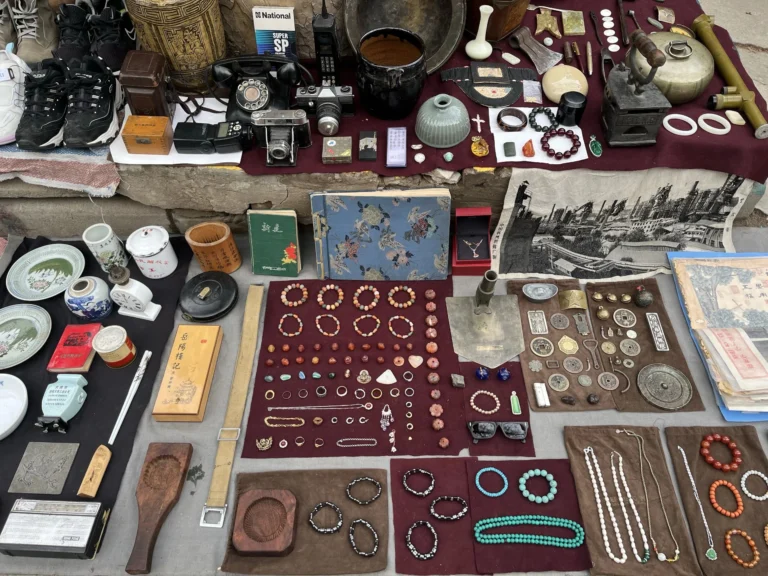
Xi'an City Memory Museum (西安城市记忆博物馆) is not about emperors or dynasties. It's about everyday life in Xi'an from the 1950s to the 1980s. The collection includes enamel cups, thermos bottles, bamboo baskets, aluminum lunch boxes, and old record players.
This is a 30-minute stop, not a half-day visit. It's located in the Huimin Street food area, so you can combine it with lunch. It's free and requires no reservation.
Location: Near Metro Line 1 to Sajinqiao Station (洒金桥站), then walk about 10 minutes.
Xi'an's museum system reflects the city's relationship with its own history. The big state-run museums, Shaanxi History Museum, the Terracotta Warriors, are designed for prestige and scale.The booking system for Shaanxi History Museum is not an accident; it manages demand for a space that would be overwhelmed if everyone could walk in.
The smaller museums, Xi'an Museum, the Archaeology Museum, the niche collections, fill the gaps. They offer experiences that the big museums cannot: quiet, context, and the chance to see artifacts up close without a crowd.
The private museums, the Gold and Silver Museum, the Qin Brick and Han Tile Museum, exist because collectors and enthusiasts wanted to share what the state system does not prioritize. They are smaller, but they are often more passionate.
The local logic is simple: Choose the museum that matches your tolerance for hassle, not just your interest in history. A great museum you can actually enter is better than a perfect one you cannot.
This article is part of the Xi'an Travel Guide Hub.
Explore all Xi'an travel guides here → Xi'an Hub
Go to Xi'an Museum. It's free, easier to book, and combined with the Small Wild Goose Pagoda gardens. The collection is smaller but still excellent, and the experience is far less stressful.
Yes, but only if you have at least 3 full days in Xi'an. If you have 2 days, skip it and focus on city museums. The travel time and crowds make it a half-day commitment.
Xi'an Film Studio Museum (西影电影博物馆) for interactive exhibits and classic film props. Shaanxi Natural Museum (陕西自然博物馆) for science and dinosaurs. Xi'an City Memory Museum for a nostalgic look at everyday life.
Shaanxi Natural Museum for hands-on science exhibits. Xi'an Banpo Museum (西安半坡博物馆) for the prehistoric village and life-size models of ancient people. Shaanxi Archaeology Museum for the chance to touch real artifacts.
Use the WeChat mini-program "陕西历史博物馆." Tickets are released at exactly 10:00, 11:00, 18:00, and 19:00, 5 days in advance. Log in 5 minutes before, have your ID information ready, and refresh at the exact time. If you fail, book a tour that includes a ticket.
If you love art and hate crowds, yes. The Gold and Silver Museum is a 1-hour stop that rivals the big museums in beauty. The Qin Brick and Han Tile Museum is for true enthusiasts of ancient architecture. Both are small and specialized.
For more Xi'an travel tips, visit our Xi'an Travel Guide Hub.
TripChina.me creates practical China travel guides shaped by real local experience, helping independent travelers navigate transport, payments, food, neighborhoods, and the cultural details that make traveling in China easier and more meaningful. Find the guide for your destination at tripchina.me.