Our Location:
No. 99, Jiazi Road, Chengdu

 authorChris Lee
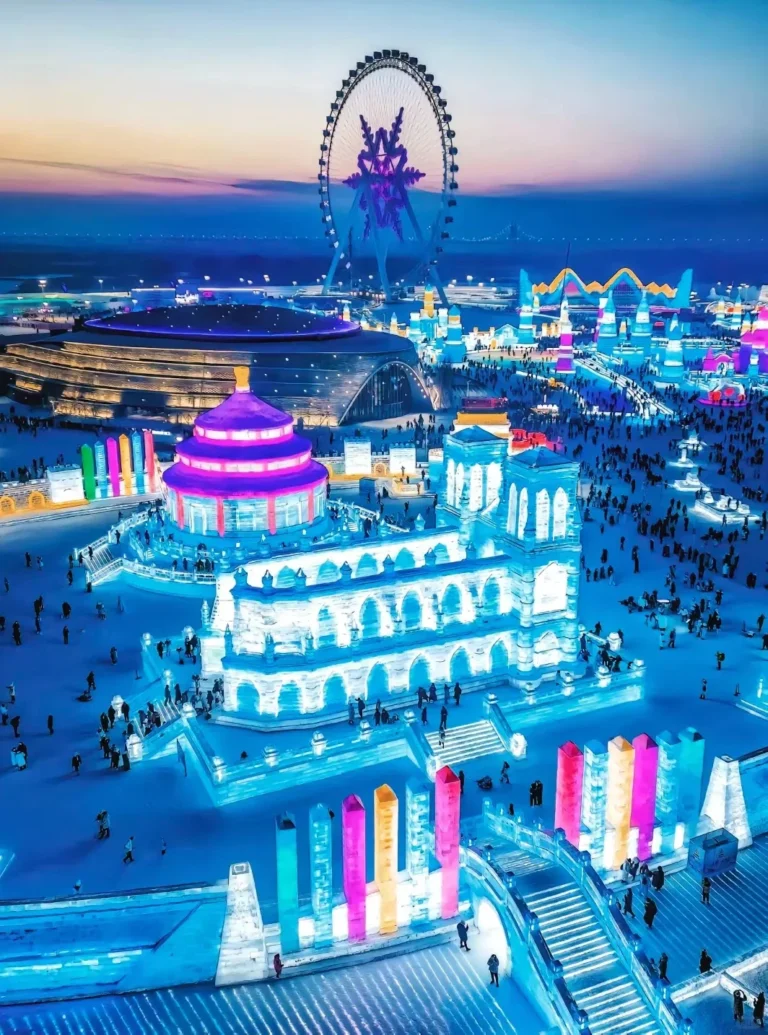
Every winter, travelers ask the same question: “I want to see Ice and Snow World, but how do I dress for Harbin when temperatures can fall toward -30°C?”
The practical answer is not “bring everything you own.” It is to use a proven layering system, protect the parts of your body that lose heat fastest, and decide wisely which gear to bring and which to buy locally.
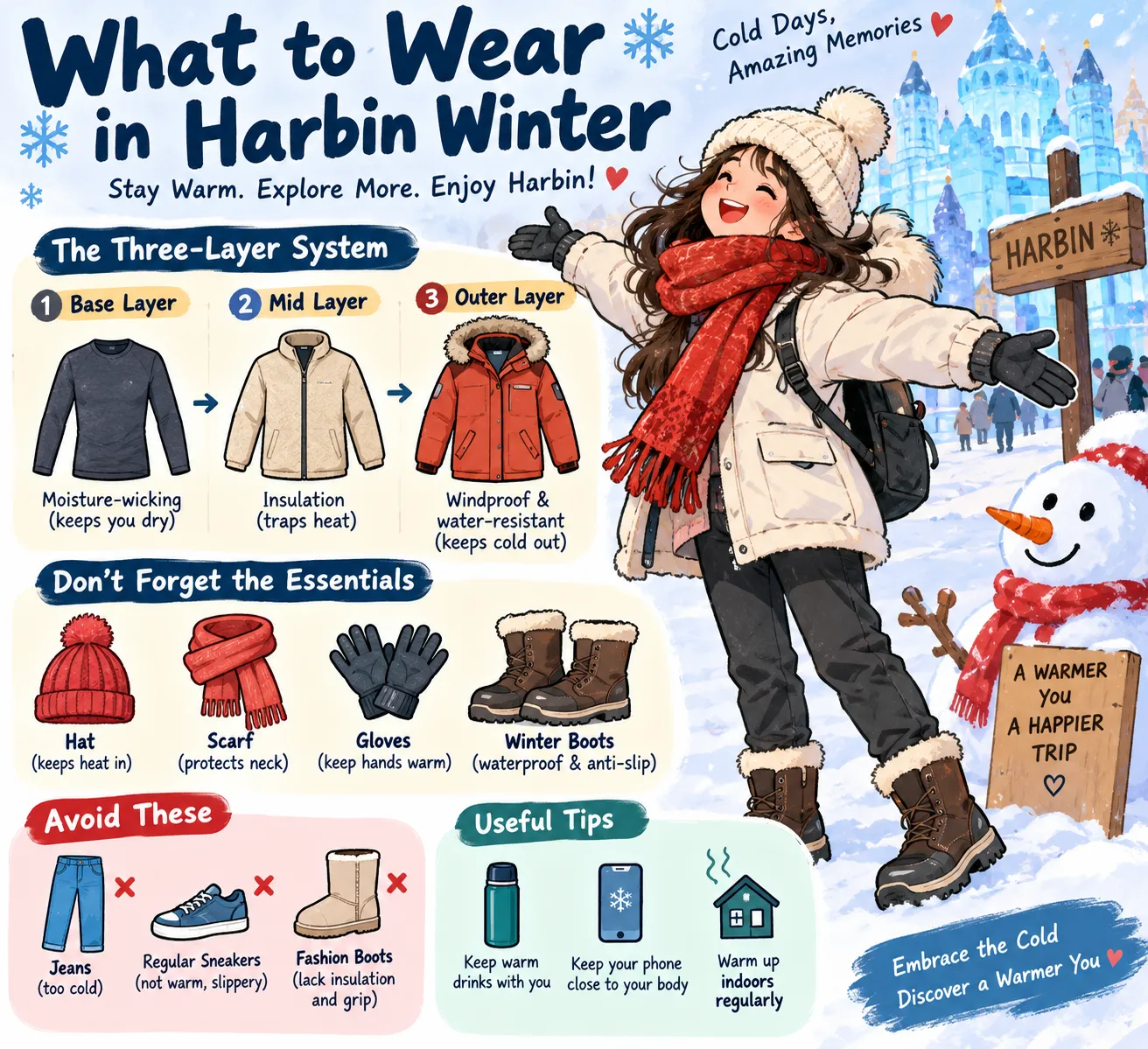
Use three adjustable layers: moisture-managing base layer → insulating mid-layer → wind-resistant insulated outer layer. Then protect your feet, hands, ears, face and neck.
Avoid relying on one enormous coat.
For most international travelers, a hybrid strategy works best.
Bring fit-sensitive essentials such as base layers, your main down jacket and any difficult-to-find shoe sizes from home. Buy replaceable accessories or extra cold-weather items locally if needed.
Do not plan around one fixed temperature.
During the 2025–26 winter season, official Harbin tourism guidance for Ice and Snow World described typical winter conditions around -20°C to -30°C. Colder nighttime or windy conditions can make it feel substantially colder.
Prepare for prolonged outdoor exposure, not just the number shown on your weather app.
There are three reasonable ways to prepare for a Harbin winter trip.
| Approach | Best For | Main Advantage | Main Risk |
|---|---|---|---|
| Bring everything from home | Specific sizing, late arrivals, short trips | Known fit and quality | More luggage |
| Buy most gear in Harbin | Light packers, flexible travelers | Easy to add gear after feeling the cold | Size and stock may vary |
| Hybrid approach | Most first-time visitors | Best balance of fit, luggage and flexibility | Requires some shopping time |
I would use the hybrid approach.
Bring from home:
• thermal base layers
• your main insulated jacket
• prescription eyewear
• power bank and electronics
• boots if you have unusually large, wide or difficult sizing
Consider buying locally:
• extra gloves
• hats
• neck gaiters
• warm packs
• spare socks
• an additional fleece or winter accessory
This keeps the most important fit-dependent gear under your control without turning your suitcase into an expedition supply crate.
Harbin's winter air is generally cold and dry.
For travelers, however, the harder problem is often not the outdoor temperature by itself.
It is repeatedly moving between:
very cold streets → heated metro → freezing attraction → warm restaurant → cold street again
That means temperature management matters almost as much as insulation.
If your clothing system cannot be opened, removed or adjusted easily, you may become uncomfortable indoors and then feel colder when you return outside.
Choose a close-fitting thermal layer designed to move moisture away from your skin.
Good options include:
• merino wool
• synthetic thermal fabric
• moisture-managing thermal underwear
Avoid using ordinary cotton as your primary next-to-skin layer for long outdoor sessions.
Cotton can retain moisture when you sweat. Damp clothing increases heat loss and can make prolonged cold exposure much more uncomfortable; wet conditions also increase the risk of cold-related illness.
The middle layer traps warm air.
Useful options include:
• fleece jacket
• wool sweater
• light insulated jacket
• thin down vest for colder conditions
You do not need the bulkiest possible mid-layer.
You need something warm that can be removed or unzipped easily when you enter a heated building.
For prolonged outdoor sightseeing, prioritize:
• insulation
• wind resistance
• enough length to protect your hips or upper legs
• room for the layers underneath
A long insulated coat or winter down jacket is usually more practical than a fashion coat for several hours outside.
Water resistance is also useful around snow.
A practical lower-body system is:
thermal leggings → warm insulating layer → wind-resistant outer pants when conditions demand it
Ski or winter shell pants can be particularly useful for Ice and Snow World, snow activities or windy days.
The goal is warmth without making your lower-body layers so bulky that walking becomes uncomfortable.
Your boots need to solve two different problems:
cold + slippery surfaces
Look for:
• insulation
• water resistance
• substantial tread
• enough room for warm socks
• a secure fit that does not crush your toes
For Harbin sightseeing, traction matters almost as much as warmth.
Take shorter steps and avoid rushing.
Keep your feet relatively flat when the surface looks polished or icy, and use handrails where available.
Major visitor areas receive winter snow and ice management, but slippery surfaces can still remain a normal part of winter sightseeing.
Your hat should protect your ears.
A warm beanie can work well when it fully covers them.
A fur-lined ear-flap or Lei Feng-style hat provides more coverage around the ears and sides of the face and can be useful on very cold or windy days.
The style matters less than the coverage.
Yes.
For extended outdoor sightseeing in severe cold, gloves or mittens are basic protection rather than an optional accessory.
A useful system is:
thin liner or touchscreen gloves → insulated outer gloves or mittens
Mittens generally retain heat better because your fingers share warmth.
Make sure you can still operate your phone or camera without leaving your hands exposed for long periods.
They can be useful, particularly during long outdoor visits.
Use them according to the manufacturer's instructions.
Do not place very hot disposable warmers directly against bare skin for prolonged periods because low-temperature burns can occur.
Useful options include warmers designed for:
• clothing or pockets
• gloves
• footwear
Treat warm packs as extra comfort—not as a substitute for proper insulation.
No, they are not essential for everyone.
They can help travelers whose feet become cold easily, but good insulated boots and appropriate socks are usually the first priority.
If you use battery-powered heated insoles, test them before a long sightseeing day to make sure they remain comfortable while walking.
Dress for one of your longest and coldest outdoor sessions of the trip.
As of the 2025–26 winter season, official Harbin tourism guidance for Ice and Snow World recommended:
• moisture-managing merino or synthetic inner layer
• fleece or lightweight down mid-layer
• thick wind- and snow-resistant down outerwear
• snow boots
• thick gloves
• scarf
• hat
The same official guidance described typical Harbin winter conditions around -20°C to -30°C.
For most visitors, I would also bring spare warm accessories rather than assuming you can comfortably stay outside for hours without adjusting anything.
For opening dates, ticket rules and the best daylight-to-night visiting strategy, see our full Harbin Ice Festival timing & ticket guide.
You do not need to panic if you discover after arrival that one item is inadequate.
Harbin has extensive winter retail because cold-weather clothing and equipment are normal local needs.
Yes, especially if you want predictable retail rather than bargaining.
Decathlon has locations in Harbin, but store availability and opening hours can change. Check the official Decathlon China website or app for the nearest current location before heading there.
Typical categories include:
• winter sports clothing
• fleece
• gloves
• outdoor pants
• hiking and winter footwear
• socks and accessories
Exact winter stock and prices vary, so check current inventory rather than relying on an old product price.
Toulong Light Industry Wholesale Market, usually shortened here to Toulong Market, is a large wholesale-style market in Daoli District near Harbin's central tourist area.
It can be useful for inexpensive small accessories and everyday winter goods, but individual stalls vary.
If you shop there:
• compare more than one stall
• inspect quality before paying
• keep RMB cash or Chinese mobile payment available
• do not assume an international-card-linked payment method will work at every vendor
For accessories such as hats, gloves and inexpensive winter extras, this type of local market can be more useful than packing every small item from home.
I would not make one obscure independent store central to your winter plan unless you have recently confirmed that it is still operating.
Small shops change faster than major retail chains.
For a foreign traveler with limited time, established sporting-goods stores or large central markets are easier long-term recommendations.
| Avoid Relying On | Why |
|---|---|
| Jeans alone for long outdoor sessions | Limited insulation and uncomfortable if damp |
| Smooth-soled fashion boots | Poor traction on ice |
| Thin gloves only | Insufficient for prolonged cold exposure |
| Short fashion coat as your only outer layer | Less protection from wind and prolonged cold |
| Alcohol as a way to “stay warm” | Can increase heat loss and impair judgment |
| One enormous non-adjustable outfit | Hard to manage between heated interiors and freezing outdoor conditions |
Many travelers also wonder about everyday face-covering items during winter sightseeing.
Not necessarily.
Any face covering can become damp from your breath during prolonged use in severe cold.
If you need a mask for health or personal reasons, continue using it appropriately. Carrying a spare dry mask can be useful.
For pure cold protection, a scarf, neck gaiter or winter face covering can provide additional warmth around exposed skin.
Cold can temporarily reduce battery performance.
Apple states that iPhones are designed for use at ambient temperatures from 0°C to 35°C. In colder environments, battery life can decrease temporarily, and some functions can become limited until the device warms again.
That means -20°C or -30°C Harbin weather is far outside the device's normal operating range.
• keep the phone in an inner pocket between uses
• start the day with a full charge
• carry a power bank
• minimize unnecessary outdoor screen time
• save critical travel information offline
You do not need a specific “20,000mAh minimum.”
Choose a reliable power bank with enough capacity for your own phone and expected usage.
The rapid move from very cold air into a warm interior can create condensation on cold equipment.
For cameras in particular, allow equipment to warm gradually inside a closed camera bag or sealed bag before exposing it directly to warm indoor air.
The principle is more important than a single ritual:
avoid sudden condensation on very cold electronic equipment.
Let it warm gradually indoors first.
Apple notes that charging can slow or pause when an iPhone is too cold and recommends charging within its normal temperature range.
There is no universal “maximum 1–2 hours” rule.
How long you can comfortably remain outside depends on:
• actual temperature
• wind
• clothing
• activity level
• age
• health
• whether your clothes are damp
• how much exposed skin you have
A better strategy is to build indoor warm-up opportunities naturally into your day.
Harbin makes this fairly easy because malls, restaurants, metro stations and many visitor facilities are heated.
For the broader cold-weather strategy beyond clothing, see our complete Harbin winter survival guide covering transport, scams and itinerary planning.
Frostbite is a genuine cold-weather injury.
Warning signs can include:
• numbness
• unusually pale, white or gray-yellow skin
• firm or waxy skin
Get into a warm place and seek medical care.
Do not rub frostbitten skin with snow or massage it.
CDC travel guidance recommends rapid rewarming in water around 37°C–39°C when appropriate and when refreezing can be prevented.
Do not use direct high heat such as a stove, heat lamp or very hot water on numb skin.
When you enter a heated space:
• unzip your coat
• remove your hat if you are becoming hot
• loosen or remove your outer layer
• replace damp socks or gloves when necessary
Before returning outside:
• make sure damp clothing has dried or been replaced
• close your insulating layers
• put gloves and face protection back on before prolonged exposure
This simple rhythm matters because sweat and damp clothing increase heat loss.
They can be very useful.
Snow and ice reflect sunlight, increasing glare and UV exposure.
For long daytime sessions on snow:
• wear UV-protective sunglasses
• use sunscreen on exposed skin
• apply lip balm if your lips become dry
• use moisturizer if dry winter air irritates your skin
Ski goggles are useful for snow sports or strong wind, but normal city sightseers do not automatically need technical goggles.
Warm-looking footwear is not enough if the sole has poor grip or the upper becomes wet.
Small exposed areas can become painful much earlier than your torso feels cold.
Replace wet socks or gloves when you can.
This can cause additional tissue damage. Move indoors and rewarm appropriately instead.
Official 2026 Harbin Ice and Snow World family guidance specifically recommends spare underwear and socks for children who may become sweaty or wet while playing.
Harbin is not continuously -30°C. Much of your day involves moving between heated interiors and cold outdoor environments.
Not necessarily. If your existing jacket is genuinely insulated, wind-resistant and roomy enough for a mid-layer, it may be sufficient.
Test the complete clothing system before travel rather than judging the coat by thickness alone.
Most travelers only need one reliable pair.
A second pair is useful mainly if your primary boots become wet, you are traveling with children, or your trip includes snow sports where drying time becomes an issue.
Generally, yes.
The bigger nuisance for many travelers is glasses fogging when moving between cold outdoor air and warm interiors. If you wear contacts, carry your normal eye-care supplies and keep liquids from prolonged exposure to freezing temperatures.
Children need good protection, but simply adding more and more layers can make them sweat.
Use adjustable layers, protect hands, feet, ears and face carefully, and bring spare dry socks or base layers for long snow-play sessions.
Not automatically.
Major visitor areas receive winter maintenance, but icy patches can still occur. Good winter boots with traction are the first priority; removable traction aids may be useful for travelers with balance concerns or itineraries involving less-managed snowy areas.
Some waterproof, high-traction winter-specific sheepskin-style boots can work well.
Fashion-focused UGG-style boots with smooth, low-grip soles or inadequate water resistance are not recommended for prolonged outdoor sightseeing on icy pavement. Check the actual sole, insulation and waterproofing rather than judging the boot by its style or brand.
You do not need expedition clothing simply because a weather forecast shows -25°C or -30°C.
You do need a system.
Use adjustable layers, protect your feet, hands, ears, face and neck, and choose footwear for traction as well as warmth.
Bring fit-sensitive gear from home. Buy simple accessories locally if needed. Keep electronics warm, replace damp clothing, and use heated indoor spaces as part of your winter rhythm.
Harbin's cold deserves respect—but with the right clothing, it does not have to dominate your trip.
Heilongjiang Department of Culture and Tourism — Harbin Ice and Snow World Winter Clothing Guide
Apple Support — If Your iPhone or iPad Gets Too Hot or Too Cold
CDC Yellow Book — Heat and Cold Illness in Travelers
Last reviewed: September 6, 2026. TripChina checked current Harbin and Heilongjiang winter-tourism guidance, including official Ice and Snow World clothing advice, alongside Apple cold-temperature guidance and CDC cold-injury recommendations. Exact temperatures, wind conditions, store inventory and opening hours vary, so these are planning references rather than guarantees. Gear-shopping and layering recommendations reflect practical editorial guidance for independent international travelers.
TripChina.me creates practical China travel guides shaped by real local experience, helping independent travelers navigate transport, payments, food, neighborhoods, and the cultural details that make traveling in China easier and more meaningful. Find the guide for your destination at tripchina.me.