Our Location:
No. 99, Jiazi Road, Chengdu

 authorChris Lee
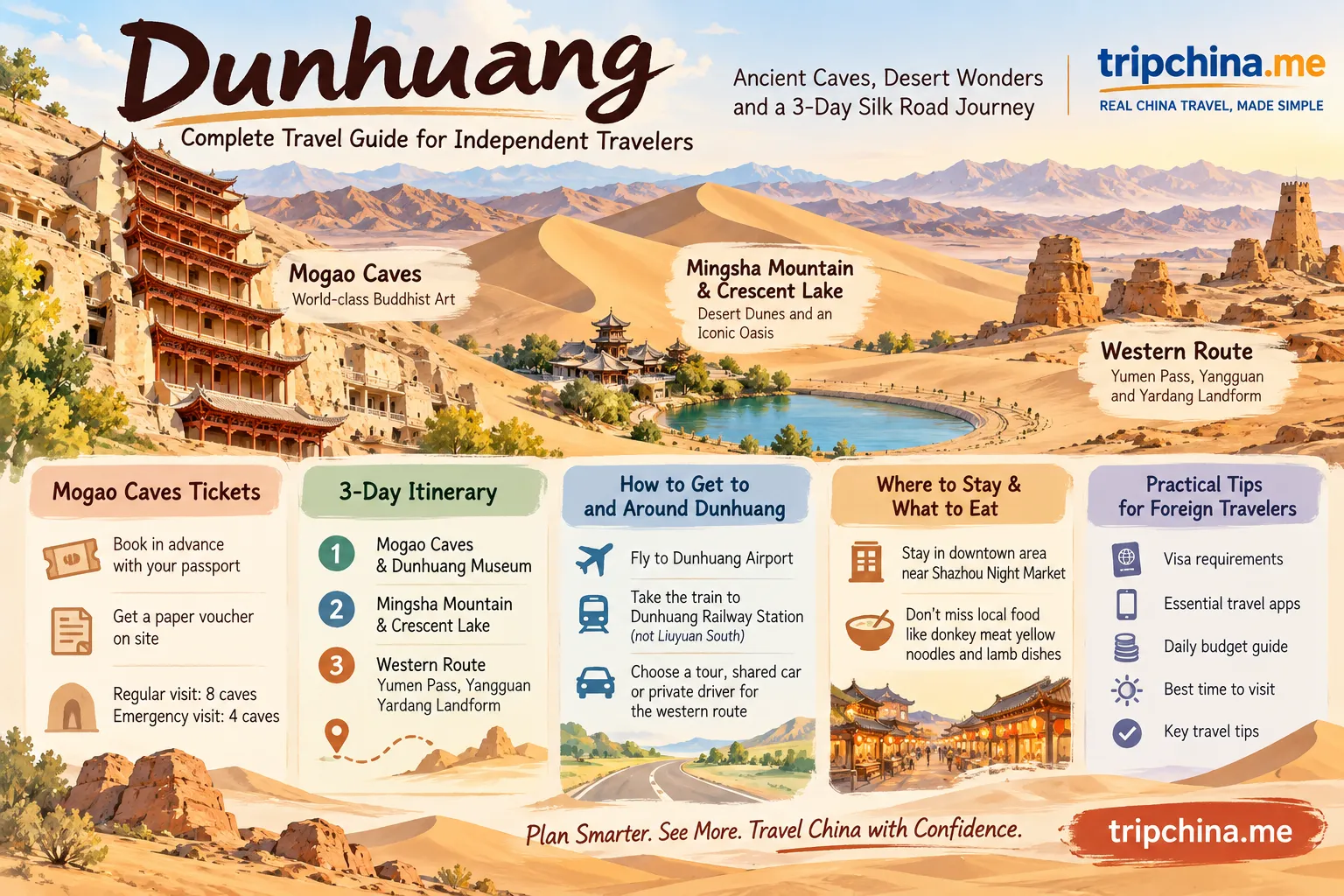
Dunhuang may look straightforward on a map: the Mogao Caves, rolling sand dunes, Shazhou Night Market and remote Silk Road ruins. But planning the details makes a real difference. Mogao Caves tickets for foreigners require advance planning, the best time for a Mingsha Mountain sunset changes with the season, and the Dunhuang Western Route tour involves long drives through the Gobi Desert.
This Dunhuang travel guide explains how to visit the city's major attractions independently, how to book Mogao Caves tickets with a foreign passport, what to budget for entrance fees and transport, where to stay, and how to avoid common transport and booking mistakes. It also covers the practical details that many short destination guides overlook, from English-language sightseeing arrangements to camel riding, remote-road logistics and onward travel along the Hexi Corridor.
| Question | Practical Answer |
|---|---|
| How many days in Dunhuang? | Allow around 2–3 days for the main attractions; add time if you want a slower visit or more remote sites. |
| What should you book first? | Check Mogao Caves ticket availability before committing to other time-sensitive plans. |
| How much is a regular Mogao ticket? | The published 2026 peak-season full-price ticket is ¥238 and includes the digital program and eight physical caves. |
| How much is the emergency visit? | The published full-price emergency ticket is ¥100 and covers four physical caves without the regular digital program. |
| When is the best time for Mingsha Mountain? | Late afternoon is a practical choice for softer light and a sunset visit; the exact timing changes throughout the year. |
| Do you need a car? | Not for central Dunhuang, but organized transport or a pre-arranged vehicle is usually more practical for the western route. |
| Where should you stay? | Shazhou Night Market is convenient for food and evening walks; the Danghe River area can offer a quieter base. |
| What is the biggest Mogao mistake? | Driving directly to the cave zone instead of starting at the Digital Exhibition Center. |
| What is the main western-route risk? | Underestimating driving distances and leaving return transport until too late. |
For everyday logistics, prepare your phone before arriving. TripChina's guide to essential apps for foreigners in China covers the tools that help with maps, translation, ride-hailing and mobile payments.
The best time to visit Dunhuang depends on your priorities: comfortable outdoor weather, quieter attractions, desert photography or fewer crowds. Dunhuang is a year-round destination, but the conditions can feel dramatically different from one season to another.
| Season | What to Expect | Best For | Main Trade-Off |
|---|---|---|---|
| Spring | Dry weather, warming temperatures and bright desert light | Sightseeing and photography | Wind and occasional dust or sand |
| Summer | Long daylight hours and a busy visitor atmosphere | Evening activities and extended sightseeing hours | Heat, crowds and stronger demand for tickets and hotels |
| Autumn | Cooler days and attractive desert light | Outdoor sightseeing and desert photography | Busy periods around China's National Day holiday |
| Winter | Cold weather and a quieter atmosphere | Cultural sightseeing and a slower pace | Cold desert mornings, shorter days and seasonal opening arrangements |
Spring can be a good compromise between winter's quieter atmosphere and summer's busier travel season. Temperatures gradually rise, and longer days create more opportunities for sightseeing.
Wind is the main uncertainty. Dusty conditions can affect comfort and photography, so bring sunglasses and a wind-resistant layer if you travel during this season.
Not necessarily, but timing matters. The exposed dunes can be uncomfortable during the hottest part of the day, particularly when there is little shade. Late afternoon is generally more practical for walking on the sand and enjoying the changing light.
Summer is also a popular period for visiting Mogao Caves. Check ticket availability early and avoid assuming that accommodation and attraction bookings can all be arranged after arrival.
Autumn often offers a good balance of outdoor comfort and desert scenery. September and October can work well for visiting Mogao Caves, Mingsha Mountain and the western route.
The main exception is China's National Day holiday period, when demand for accommodation, transport and popular attractions can increase significantly. If your dates are flexible, consult this guide to the best time to visit China before fixing your travel dates.
Yes, particularly if Mogao Caves is your main reason for visiting. Winter can offer a quieter experience, but temperatures in the desert may be very low in the morning and after dark.
Mogao Caves operates on a seasonal schedule. Under the published 2026 arrangements, the regular opening period from December 1 to March 31 differs from the April–November schedule. Check the official opening information for your travel date before booking.
The key is to choose your season based on the experience you want, not temperature alone.
For travelers interested in history, art and desert landscapes, Dunhuang is worth visiting. Its appeal comes from three distinct experiences:
Dunhuang may be less appealing if your main priorities are nightlife, extensive shopping or big-city dining. Its strength is the combination of cultural heritage, desert scenery and a sense of distance from China's major urban centers.
The most rewarding things to do in Dunhuang range from world-famous heritage sites to everyday local experiences. These are the main attractions and activities worth considering.
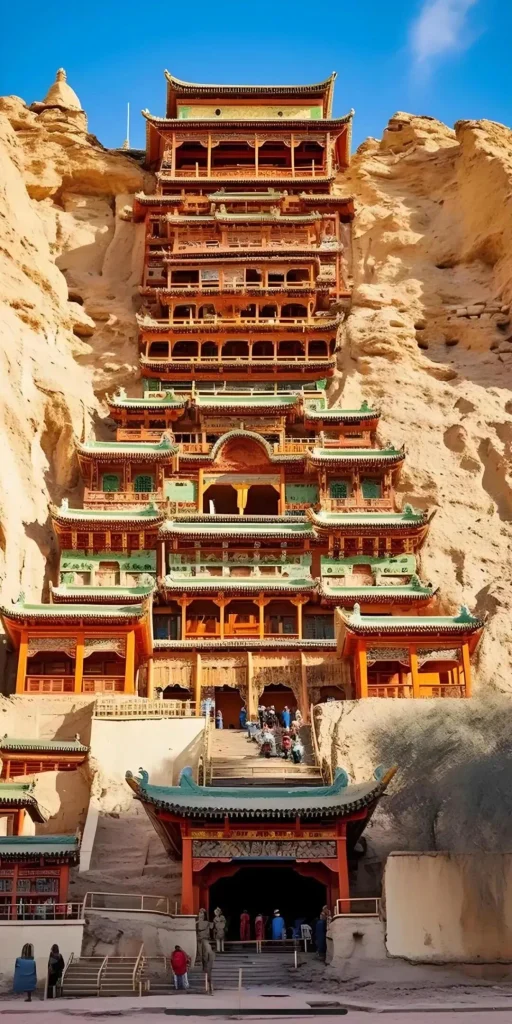
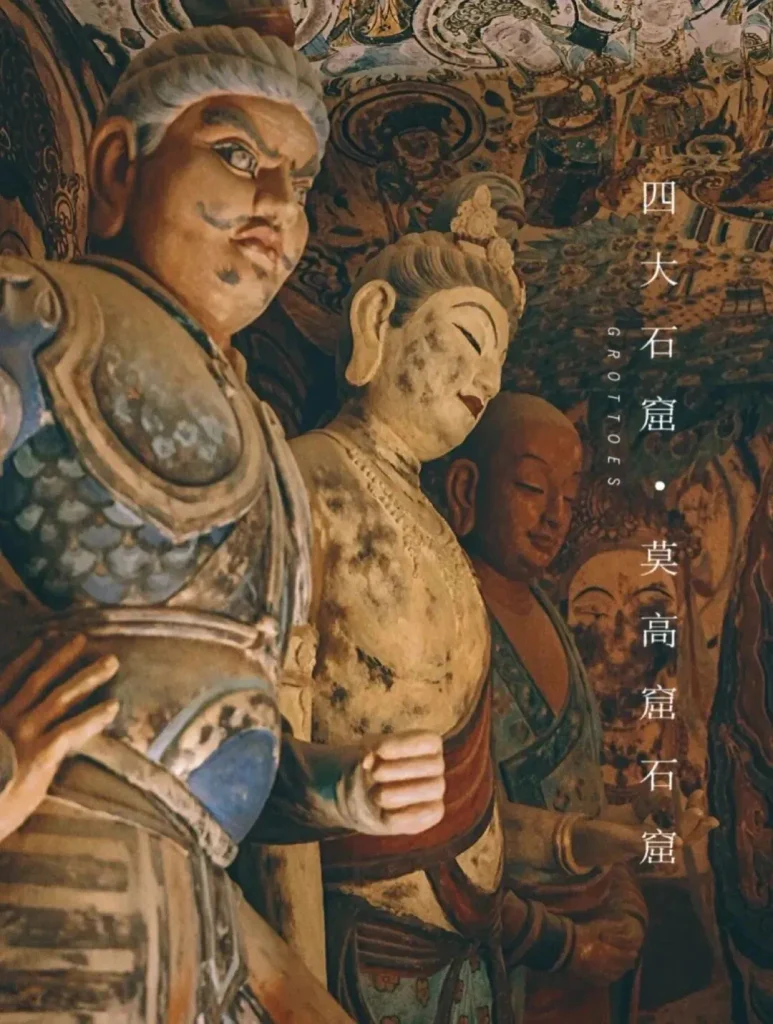
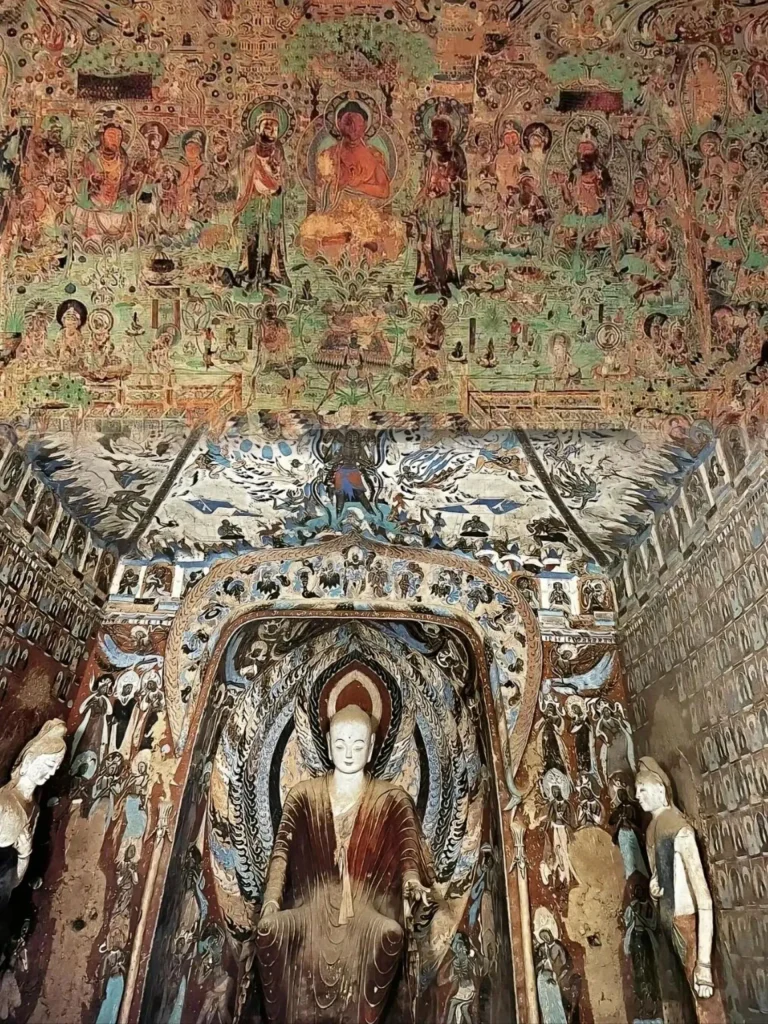
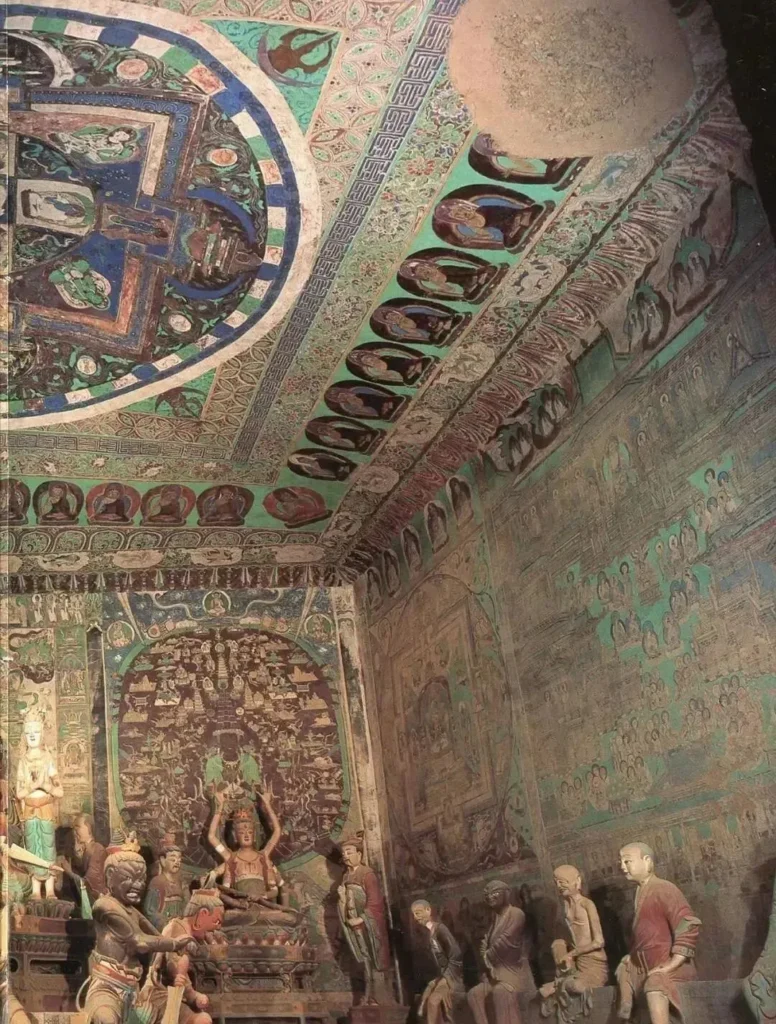
Mogao is the essential stop for travelers interested in Buddhist art and Silk Road history. Its murals, sculptures and cave architecture reflect centuries of religious and cultural exchange. The visit is controlled by a reservation system, so ticket availability should be one of your first planning considerations.
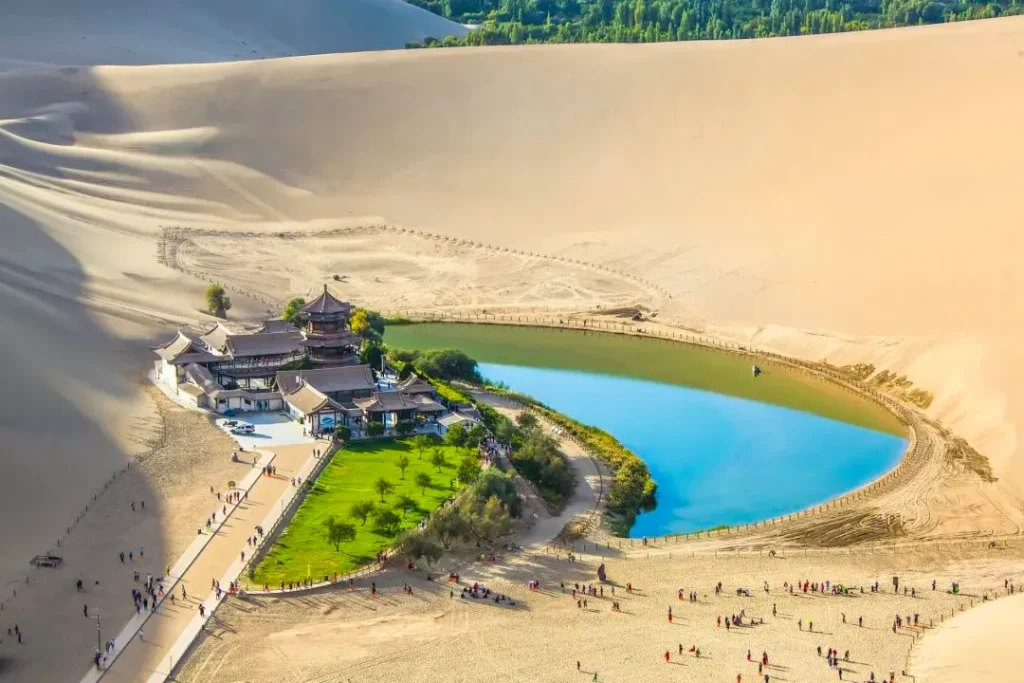
Mingsha Mountain offers a dramatic desert landscape within easy reach of downtown Dunhuang. Crescent Moon Spring is the area's most recognizable landmark, while the dunes provide opportunities for walking, photography and optional camel rides.
The museum provides useful context for understanding Dunhuang's history and its role in Silk Road trade and cultural exchange. It is particularly valuable for visitors who want to understand the region beyond its most photographed attractions.
Shazhou Night Market is a convenient place to try local food, browse souvenir stalls and experience Dunhuang after dark. It is tourist-oriented, but it can still be an enjoyable introduction to local flavors and evening life.
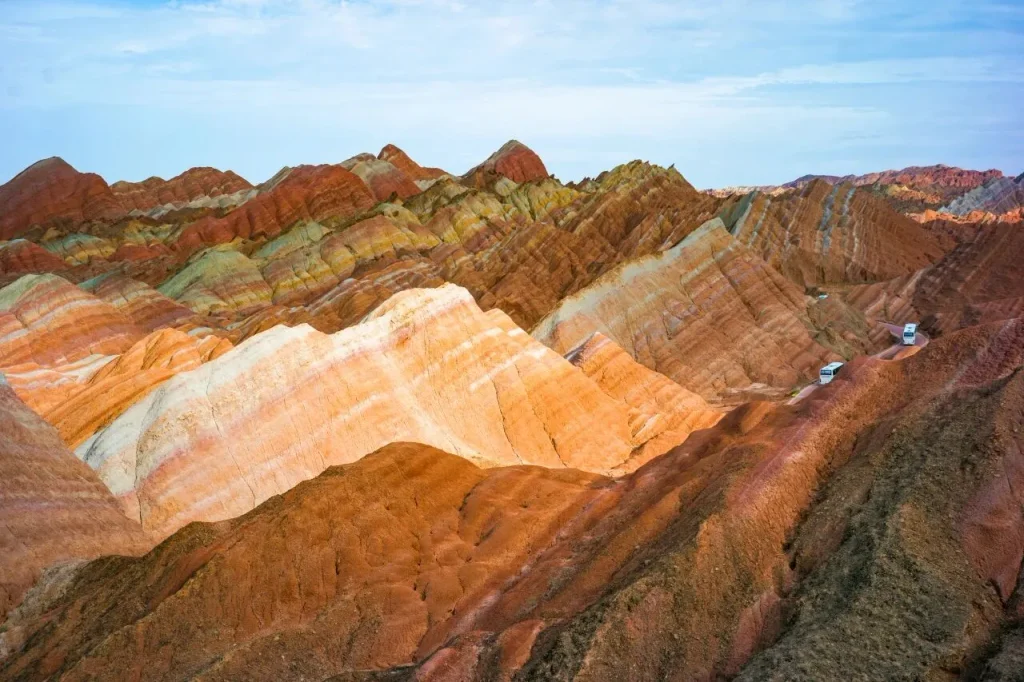
The western route takes visitors beyond the city to historic passes, sections of the Han Great Wall and Yadan's wind-eroded Gobi formations. The landscapes are striking, but the distances make transport planning essential.
Your Dunhuang travel cost depends mainly on accommodation, attraction tickets, transport and optional activities. The figures below are planning estimates, not guaranteed prices. Hotel rates, private-car quotations and tour prices vary with season, demand and the exact services included.
| Budget Level | Approximate Daily Budget | Typical Travel Style |
|---|---|---|
| Budget | ¥400–600 | Hostel or simple guesthouse, local meals and economical transport |
| Mid-range | ¥800–1,200 | Comfortable hotel, restaurant meals, taxis and major attractions |
| Comfort | ¥1,500+ | Higher-end accommodation, more private transport and optional activities |
These totals are indicative and may not include every long-distance transfer or optional experience. A traveler booking a private vehicle for the western route will generally spend more on that day than on sightseeing around central Dunhuang.
| Attraction or Visit Type | Published Full-Price Reference | What to Know |
|---|---|---|
| Mogao Caves regular visit, peak season | ¥238 | Digital program and eight physical caves |
| Mogao Caves emergency visit | ¥100 | Four physical caves; no regular digital program |
| Mingsha Mountain and Crescent Moon Spring | ¥110 | Confirm the current ticket and repeat-entry terms |
| Yumen Pass and Yadan National Geopark | Varies by ticket and transport arrangement | Check whether shuttle buses and other fees are included |
| Yangguan Pass | Confirm current price | Verify the ticket price when arranging the western route |
The Mogao prices above follow the Dunhuang Academy's published 2026 ticket information. The ¥110 Mingsha Mountain figure is a planning reference, not a guarantee of the price or ticket terms on your visit date.
The western route is usually the largest local transport expense. As an indicative planning range, shared transport may cost around ¥120 per person, while a private vehicle may be approximately ¥400–800 per vehicle, depending on the route, vehicle, season and inclusions. These are not official fixed fares.
Before paying, establish whether the quotation covers transport only or also includes attraction tickets, shuttle buses, waiting time and the return journey. A low headline price can be misleading if several important costs are excluded.
Local noodle shops and ordinary restaurants can keep meal costs manageable. Accommodation costs depend on season and location, with demand often rising during major Chinese holidays.
For a more useful estimate, calculate accommodation and meals separately from the major attraction tickets and western-route transport. This makes it easier to compare a shared tour with a private vehicle without confusing the transport quotation with the total cost of the day.
Mogao Caves tickets for foreigners deserve special attention because the site uses real-name reservations, timed entry and daily visitor limits. The regular visit is the more complete option for most first-time visitors, but availability is not guaranteed.
The Dunhuang Academy's 2026 announcement sets out the following peak-season arrangements for April 1–November 30.
| Feature | Regular Visit | Emergency Visit |
|---|---|---|
| Published peak-season full price | ¥238 | ¥100 |
| Physical caves | 8 | 4 |
| Digital program | Included | Not included |
| Daily capacity | 6,000 tickets | Up to 12,000 when activated |
| Availability | Subject to reservation and capacity | Activated under official arrangements |
| Best for | Visitors seeking the more complete standard experience | A more limited alternative when offered |
Prioritize the regular visit if it is available for your date. The digital program provides historical and artistic context before visitors enter the cave complex, helping them understand what they see inside.
Foreign passport holders can book through the official Mogao Caves Visit Booking WeChat service account. The Dunhuang Academy's 2026 notice directs foreign-passport holders to select Ticket Booking in the account's booking menu.
Use the following process:
The official booking system determines which dates and ticket types are available. Do not assume that a particular booking window, release time or ticket quota will remain unchanged; follow the current instructions shown by the official channel.
The Dunhuang Academy states that it has not authorized third-party organizations or individuals to act as ticket agents. Be cautious of anyone promising guaranteed entry outside the official system.
The official booking notice confirms the foreign-passport booking route, but visitors should not assume that every visit automatically includes a dedicated English-speaking guide or that a separate foreign-visitor quota is guaranteed.
The standard visit includes the official digital program and access to the physical caves covered by the ticket. The actual guiding arrangements available on your date should be confirmed through the official visitor service or at the venue.
If an English explanation is important to you, ask about language availability when arranging your visit rather than relying on claims from an unofficial reseller. A translation app or a little background reading can also help you understand the historical context.
Special-cave visits are subject to limited availability, conservation requirements and the site's operating arrangements. According to the Dunhuang Academy's 2026 notice, visitors must first complete their regular or emergency visit on the same day, then go to the special-cave service point in the cave area during the special-cave opening period to arrange the visit.
Do not assume that special caves can be added to a standard ticket in advance, that they will be open on every date, or that a particular price applies year-round. Ask the official service point about the available caves, fees and procedures on the day.
Start at the Mogao Digital Exhibition Center, not directly at the cave zone.
The Digital Exhibition Center is at 8899 Yangguan East Road in Dunhuang. The Dunhuang Academy asks visitors to arrive about 30 minutes before their reserved time.
The protected cave zone does not have a visitor ticket office or tourist parking. Regular-ticket visitors also need to follow the ticket-exchange and inspection instructions for their visit. Keep the ticket information slip if one is issued to you.
Keep checking the official booking system for availability and check whether an emergency visit has been activated for your date. Do not assume emergency tickets will be available in advance or that they provide the same experience as the regular visit.
The official 2026 notice specifies a particular inspection procedure for full-price emergency visitors using a Chinese second-generation ID card. Foreign passport holders should follow the instructions given in their booking confirmation or by official staff instead of assuming that every ticket type uses the same entry procedure.
Mingsha Mountain sunset is one of Dunhuang's signature experiences. The dunes and Crescent Moon Spring are close to the city, but arriving at a suitable time makes a significant difference to comfort and photography.
Late afternoon is a practical starting point for many visitors. It allows time to explore Crescent Moon Spring, walk around the lower dunes and choose a viewpoint before the light changes. The best arrival time depends on the season, sunset time and how much walking you want to do.
| Visit Time | Best For | Practical Approach |
|---|---|---|
| Early morning | A quieter atmosphere and softer light | Useful for travelers who prefer an early start |
| Late afternoon | First-time visitors | Explore Crescent Moon Spring and climb gradually |
| Sunset | Desert photography | Reach your chosen viewpoint before the final light |
| Evening | Night scenery or scheduled activities | Check current opening and activity arrangements |
Sunset times change throughout the year, so do not rely on a fixed arrival time copied from an older guide. Check the local sunset time for your date and leave enough time to enter the scenic area and walk to your chosen viewpoint.
Walking uphill on loose sand is more tiring than it looks. You do not need to reach the highest dune to enjoy the landscape, and rushing to the top can leave less time to appreciate the changing light.
Dunhuang camel riding is an optional experience, not a requirement. Camel rides follow a structured route and pace, which may appeal to visitors who want a traditional desert activity. Walking gives you more flexibility if your priority is photography or exploring at your own speed.
Before joining the queue, check the posted price, route and duration. Do not rely on an old social-media post for a current fare.
Protect your phone and camera from fine sand. A sealed pouch is useful around charging ports, lens rings and bag openings. Bring water, sunscreen and sunglasses, and wear comfortable shoes suitable for walking on sand.
Mingsha Mountain and Crescent Moon Spring have had repeat-entry arrangements associated with ticket validity and registration. If you want to visit at both sunrise and sunset, confirm the current ticket terms and any required registration with the scenic area before planning around repeat entry.
Do not assume that the ticket price alone guarantees multiple entries without completing the required procedure.
A Dunhuang Western Route tour takes visitors beyond the city to historic Silk Road frontier sites and the wind-eroded landscapes of the Gobi. It is not a casual half-day excursion: the sites are spread across a remote area, and the driving distances can be substantial.
The route may include:
Yadan National Geopark is roughly 180 km northwest of Dunhuang, according to the scenic area's official English-language information. A route combining several sites can involve approximately 300–400 km of driving in total, depending on the stops and return route. Allow a full day rather than assuming that the distance between individual attractions tells the whole story.
| Transport Option | Best For | Main Advantage | Main Trade-Off |
|---|---|---|---|
| Organized day tour | Solo travelers and visitors who want less planning | Transport and stops arranged together | Fixed schedule |
| Shared vehicle | Travelers trying to reduce transport costs | Shares the cost of a long driving day | Less control over stops and timing |
| Private driver | Couples, families or small groups | Greater flexibility | Higher total cost |
| Self-drive | Experienced drivers comfortable with local requirements | More control over the day | Navigation, long distances and remote-road planning |
For many overseas visitors, an organized tour or pre-arranged driver is the simplest option. This is primarily about transport logistics and the distances involved, not necessarily the need for a guide at every stop.
The Yadan landscape can look very different as the light changes. Sunset may be attractive for photography, but the best experience depends on the season, weather, opening arrangements and how much time your transport plan allows.
Confirm the scenic area's closing arrangements and your driver's departure time before setting out. Do not assume that you can remain inside until any chosen time simply because sunset is later.
A tour that leaves the geopark too early may miss the light you hoped to see; one that stays late needs a clear return plan. The correct balance is to agree on the schedule in advance, not to assume every tour offers the same sunset window.
Before paying, establish four details:
Bring water, snacks, a charged power bank and suitable layers. Desert temperatures can fall after sunset, even when the afternoon has been warm.
Do not build your return plan around finding a ride-hailing car at a remote Gobi attraction after dark. Arrange your transport before leaving Dunhuang.
Choosing where to stay in Dunhuang affects how easily you can find dinner, return to your hotel in the evening and arrange local transport.
| Area | Best For | Main Advantage | Potential Drawback |
|---|---|---|---|
| Shazhou Night Market area | First-time visitors | Convenient for restaurants and evening walks | Some streets and rooms may be noisy |
| Danghe River area | Couples, families and light sleepers | A potentially quieter base | You may need a short ride to the busiest dining area |
| Mingsha Mountain area | Travelers focused on desert scenery | Convenient for visits to the dunes | Less convenient for central-city dining and services |
For a first visit, the Shazhou Night Market area is practical if convenience matters most. If you prefer quieter evenings, compare accommodation near the Danghe River.
Before paying, confirm that the hotel accepts foreign passports. Front-desk experience with international travel documents can vary between properties. TripChina's guide to how foreigners can book hotels in China covers the main points to consider.
Dunhuang can be reached by air or rail, but station names matter when planning your final transfer.
Flying to Dunhuang Mogao International Airport may be convenient when schedules and fares work for your trip. If you are planning how to get to Dunhuang by train, check the exact station printed on your ticket.
Liuyuan South Railway Station is not downtown Dunhuang. It is outside the city and requires an additional road transfer. Do not assume that a result showing Liuyuan South means you will arrive near your hotel.
Before paying for a train ticket, verify the station name, arrival time, onward transfer and estimated transfer cost. For long-distance rail travel, consult the China train ticket booking guide and allow enough time between your arrival and any onward connection.
Dunhuang is often part of a wider Hexi Corridor journey. Jiayuguan and Zhangye are useful onward destinations, but they have their own attractions and transport logistics.
The Dunhuang to Jiayuguan connection works well for travelers who want to continue east along the Hexi Corridor and explore Jiayuguan's fortifications and Great Wall heritage. Check the current train or road-transfer options and plan around the actual schedule rather than assuming the connection is quick.
A Dunhuang to Zhangye itinerary is better treated as a separate travel leg than as an extra attraction squeezed into a Dunhuang sightseeing day. Zhangye and the surrounding region have their own landscapes and transport requirements, so compare the available rail and road options before fixing accommodation.
Dunhuang is manageable for independent travelers, but it is inconvenient to discover that your phone setup is incomplete after you arrive.
Mobile data: Decide between roaming, a travel eSIM and a mainland SIM before the trip. TripChina's China eSIM vs. SIM card guide explains the main differences.
Payments: Set up Alipay and/or WeChat Pay, and carry a physical card and some RMB cash as backups. Read the official China payment guide for foreigners before arrival.
WeChat: You may need it for official accounts, attraction booking and hotel communication. The official Mogao service account is especially relevant for foreign-passport ticket booking.
Maps and translation: Save your hotel's Chinese name and address, attraction names, booking confirmations and pickup locations. Prepare a China-compatible mapping option and a translation app before setting off.
Offline information: Save essential details before leaving town, especially if you are visiting remote areas. A charged power bank and accessible copies of your transport and booking details can prevent avoidable delays.
Dunhuang's food reflects its location in northwest China and its history as an oasis along the Silk Road. Some dishes may be unfamiliar to overseas visitors, so knowing what the names mean can make ordering easier.
| Food | What It Is | What to Expect |
|---|---|---|
| Donkey meat with yellow noodles | Sliced donkey meat served with noodles and savory sauce | A local specialty; donkey is the meat, not a style of noodle |
| Lamb menbing | Lamb cooked with broad pieces of dough | A substantial, savory dish |
| Sha cong | A local desert chive | Often served with eggs, meat or in cold dishes |
| Grilled lamb | Northwest-style lamb skewers | Often seasoned with cumin and chili |
| Apricot drink | A sweet-tart fruit drink | A refreshing option with rich or grilled food |
Shazhou Night Market is convenient and atmospheric, but it is not the only place to eat. Treat the market as an evening experience rather than assuming the busiest stall serves the best version of every local dish. Walk beyond the most souvenir-focused section and compare ordinary noodle shops and local restaurants.
If you order grilled meat or food sold by weight, confirm whether the displayed price is per skewer, per portion or by weight.
Vegetarian options may require more effort than in larger cities. Tomato-and-egg dishes, vegetable noodles, tofu and local greens may be useful choices, but explain dietary restrictions clearly.
Dunhuang's desert climate makes sun protection and protection from dust more useful than packing for a typical city break. Your exact clothing depends on the season, but these items are useful for many visits:
Spring travelers should prepare for wind and dust. Summer travelers need sun protection and sufficient water. Autumn evenings can be cool, while winter visitors should pack genuinely warm layers.
For a western-route day, carry water and snacks. Do not rely on being able to buy everything when you reach a remote stop.
Do not assume that China's 240-hour visa-free transit policy automatically permits a visit to Dunhuang.
The policy applies only to eligible travelers who meet the transit conditions and remain within the designated permitted areas. The National Immigration Administration publishes the current eligible ports and permitted-area rules, which should be checked against your nationality, itinerary and entry point.
Before booking non-refundable transport to Dunhuang, confirm whether your travel plans qualify under the current transit policy or whether you need a Chinese visa or another entry arrangement. A visa-free policy that applies to one part of a China itinerary does not automatically authorize travel everywhere in the country.
If you are unsure which rule applies to your passport and route, consult the current official guidance and TripChina's China visa application guide.
The most frustrating mistakes are often easy to prevent:
Dunhuang rewards travelers who plan the important logistics but leave room to enjoy the destination. A little preparation makes it easier to appreciate the cave art, the changing desert light, the local food and the vast landscape beyond the city.
Foreign passport holders can use the official Mogao Caves WeChat service account and select Ticket Booking. Follow the current instructions, enter passport information accurately and bring the original passport used for the reservation.
Allow around 2–3 days for the main attractions, including Mogao Caves, Mingsha Mountain and the western route. Add more time if you want to explore at a slower pace or include additional cultural sites.
You do not necessarily need a guide at every stop, but the route's distance and remote location make transport planning important. An organized tour, shared vehicle or pre-arranged driver can simplify connections between the sites and the return to Dunhuang.
Sunset can be a rewarding time for photography, but the actual experience depends on the season, opening arrangements and your transport schedule. Confirm the permitted visiting hours and the driver's departure time before setting out.
Yes, but preparation helps. Save the Chinese names and addresses of your hotel and attractions, keep a translation app available and prepare your mobile data and payment options in advance. For transport outside the city, confirm pickup and return arrangements before departure.
Do not plan to take a large suitcase into the cave area. Check the current visitor rules for luggage restrictions, leave your main luggage at your accommodation where possible and bring a compact day bag with your passport, phone, water and sun protection.
Mogao visits may be suspended when severe weather, including heavy rain or strong sandstorms, threatens visitors or the caves. The official visitor rules provide for refunds of unused reservations when weather forces a closure. Check the Dunhuang Academy's official channels if severe weather is forecast.
Not for most central-city sightseeing. The western route is different because the attractions are far apart and public transport options are limited. An organized tour or pre-arranged vehicle is usually the more practical choice for that area.
It depends on your interests. Camel riding is a recognizable desert experience, but it follows a structured route and pace. Walking offers more flexibility for photography and exploring the dunes independently. Check the posted price and route before paying.
Do not rely on a single international mapping app for a remote driving day in China. Save the Chinese names of your stops, prepare offline information and have a China-compatible mapping option available before leaving town.
Mogao ticket prices, visit types, daily capacity, foreign-passport booking instructions and special-cave arrangements are based on the Dunhuang Academy's published 2026 information. Ticket prices, scenic-area entry rules, transport quotations and seasonal opening arrangements may change. Confirm the details for your visit date through the official channels.
TripChina.me creates practical China travel guides shaped by real local experience—helping independent travelers navigate transport, payments, food, neighborhoods, and the cultural details that make traveling in China easier and more meaningful. Find the guide for your destination at tripchina.me.