Our Location:
No. 99, Jiazi Road, Chengdu

 authorChris Lee
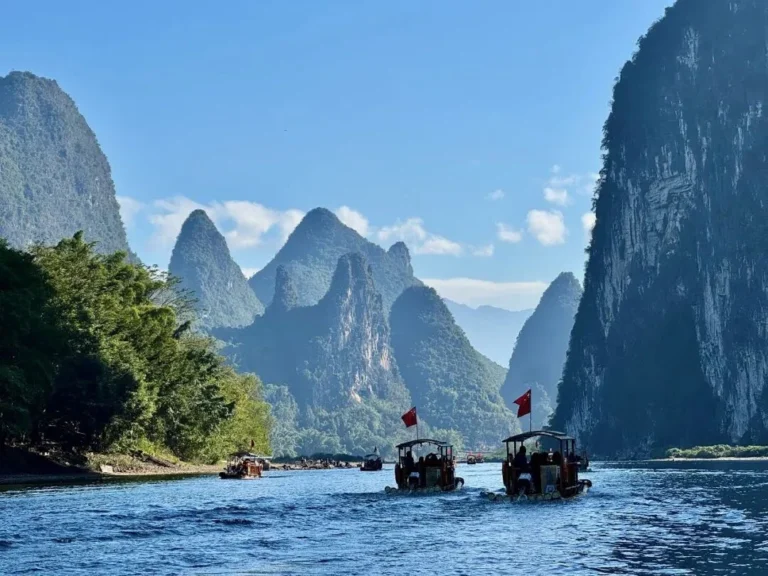
Planning Guilin and Yangshuo is less about collecting attractions and more about choosing the right experiences. The famous Li River cruise shows you the karst peaks from a boat; Yangshuo lets you move through that landscape by bamboo raft, e-bike and village road. This guide helps first-time independent travelers decide where to stay, what is worth paying for, what to skip, and how to avoid the mistakes that can turn a slow scenic trip into a rushed tourist circuit.
Stay mainly in Yangshuo. Guilin works well as an arrival, departure or short city stop, while Yangshuo puts you closer to the rural karst scenery and experiences most travelers come for.
It depends on how you like to travel. The Guilin-to-Yangshuo cruise gives you a comfortable, seated overview of the Li River and can suit travelers with limited mobility. If you prefer a quieter, closer-to-the-water experience, prioritize the Yulong River bamboo raft instead.
For a shorter trip, Shui’edi → Gongnong Bridge is the practical choice. For a longer, more scenic experience through countryside and villages, consider Jinlong Bridge → Jiuxian.
Official raft routes, operating arrangements and prices can change, so verify the live booking information before paying.
Plan 3 days for a Yangshuo-focused trip. With 5 days, you can comfortably add Guilin city and Longji Rice Terraces without compressing the core Yangshuo experience.
Put the Yulong River, rural Yangshuo and e-bike exploration ahead of trying to tick off every attraction. This region rewards slower travel more than checklist sightseeing.
| Travel Decision | Option A | Option B | Best For |
|---|---|---|---|
| Water experience | Li River Cruise | Yulong River bamboo raft | Cruise for comfort; raft for immersion |
| Yangshuo base | West Street area | Yulong River area | Convenience vs scenery |
| Rafting route | Jinlong Bridge → Jiuxian | Shui’edi → Gongnong Bridge | Longer scenery vs shorter itinerary |
| Rural exploration | Taxi / organized tour | E-bike / bicycle | E-bike for flexibility |
| Extra day trip | More Yangshuo time | Longji Rice Terraces | Longji if you have 4–5+ days |
| Guilin city | Full city stay | Short stopover | Short stop for most scenery-focused travelers |
TripChina Verdict: Base most of your trip in Yangshuo, prioritize the Yulong River and countryside, and treat Guilin city and Longji as additions rather than the center of the itinerary.
Once you have decided to base yourself in Yangshuo, the more useful question is how to get there.
If you arrive at Guilin Liangjiang International Airport, check the current airport-bus timetable for direct or connecting services to Yangshuo. Bus schedules and fares can change seasonally, so do not build a tight itinerary around an old timetable from a travel blog.
If you arrive by high-speed rail, pay attention to the station name: Yangshuo Railway Station is near Xingping rather than central Yangshuo. Allow additional transfer time between the station and your accommodation.
If your flight or train arrives late, staying one night in Guilin can be more sensible than forcing a late transfer.
For many first-time visitors, yes. It offers a very different experience from the larger sightseeing boats on the Li River: you are lower on the water, closer to the rice fields and limestone peaks, and moving at a slower pace.
The rafting system uses designated routes and docks, so choose your section before booking rather than simply buying whatever a roadside seller offers.
Shui’edi → Gongnong Bridge
This shorter section works well when your schedule is tight. Expect roughly an hour on the water, depending on current operating conditions.
Jinlong Bridge → Jiuxian
Choose this if the raft itself is one of the highlights of your trip. The route is longer and passes more rural scenery.
Some raft products are configured for two passengers per raft, but passenger rules, route combinations and prices can be adjusted by the operator.
Traveling with children? Some Yulong River rafting sections may apply minimum age, height or other safety restrictions, particularly where the route includes small weir drops. These rules can vary by section and may change with river conditions, so families should check the current official eligibility rules before buying tickets.
Use the official local booking channel where available or a well-established booking platform. Avoid buying an unspecified “Yulong River rafting package” from roadside touts without knowing the exact dock, route and included services.
Keep your original passport with you when traveling to ticketed attractions. Guangxi's official tourism guidance recognizes passports as valid identity documents for real-name scenic-area ticketing.
An e-bike is one of the easiest ways to explore independently because it lets you stop at bridges, rice fields and village roads that are difficult to appreciate from a tour bus.
Rental prices vary by season, vehicle quality and battery capacity. As a planning estimate, basic e-bikes commonly fall around ¥30–50 per day, while bicycles can be cheaper. Treat these as local price estimates rather than fixed tariffs.
A useful route is:
Yangshuo Town → Shili Gallery → Gongnong Bridge → Yulong River countryside → Jiuxian area
Shili Gallery is a road corridor through the landscape rather than one single attraction requiring you to buy a universal “Shili Gallery ticket.”
Before leaving the shop, record a quick video showing the bodywork, existing scratches, tires and battery level. Confirm the return time and any deposit before paying.
Wear a helmet when available, avoid stopping in traffic lanes for photographs, and be particularly careful around larger vehicles.
Local traffic controls can vary by road and scenic area. Follow posted signs and do not assume an e-bike is permitted on every road or path simply because other riders are using it. Avoid high-speed or restricted motor-vehicle roads and use designated local or scenic routes wherever possible.
| Area | Best For | Main Advantage | Main Drawback | Typical Planning Range |
|---|---|---|---|---|
| West Street | First-time visitors without transport | Restaurants and nightlife nearby | Noise and crowds | ¥200–400+ |
| Yulong River area | Couples, scenery, relaxation | Rural views and quieter setting | Less convenient without transport | ¥300–1,500+ |
| Xingping | Photography and slower trips | Easy access to Xingping scenery | Farther from central Yangshuo | ¥200–600+ |
Prices are planning ranges only. Weekends, Chinese public holidays and peak travel periods can raise rates substantially.
The important issue is not whether a property describes itself as “foreign-friendly,” but whether it can properly handle your passport and accommodation registration.
When foreigners stay in hotels, the hotel is responsible for registering their accommodation information. For stays outside hotels, registration is generally required within 24 hours; Guangxi is also included in the 2026 pilot for online registration of non-hotel accommodation.
For the broader practical side of staying in China, see TripChina’s guide to hotel check-in and accommodation for foreign travelers.
Longji is worth considering, but not automatically.
The biggest cost is time. From Yangshuo, a Longji day trip can consume much of the day in transportation. That trade-off makes sense on a longer itinerary, but less so if you only have two or three days.
Longji Rice Terraces is officially listed as a national 4A scenic area by the Guangxi culture and tourism authorities.
Food and drinks inside the scenic area can also be significantly more expensive than in Guilin city—roughly three to four times higher in our experience for some tourist-area purchases, although this is an observation rather than an official price comparison.
Go: if you have at least 4–5 days and specifically want terraced agricultural landscapes.
Skip: if adding Longji means sacrificing your only full day around the Yulong River.
Consider staying overnight: If Longji is a priority rather than a checklist stop, one night near the terraces can make more sense than rushing there and back from Yangshuo in a single day. It gives you more time in the landscape and can also make sunrise or early-morning photography possible.
Yes, if you already have a few hours in Guilin. Elephant Trunk Hill is the city's best-known visual landmark and works well as a short stop rather than a reason to add an entire extra day.
As of September 2026, check the current admission and reservation arrangements shortly before visiting rather than relying on older screenshots or booking instructions. The official Two Rivers and Four Lakes–Elephant Hill site provides current scenic-area announcements and visitor information.
It makes more sense after dark, when Guilin's lakes, bridges and waterfront lighting become the attraction.
The scenic area's official site provides current cruise ticketing and publishes temporary closures or changes, making it more reliable than old price tables in travel articles.
Use it as a short evening walk rather than a major sightseeing block. It is convenient for combining local food with central Guilin sightseeing.
One of the simplest local experiences is also one tourists frequently overcomplicate.
Look for a neighborhood noodle shop busy with local customers. Portions may be ordered by weight—erliang (二两) for a smaller portion or sanliang (三两) for a larger one.
A basic local bowl can still be inexpensive, while restaurants in heavily touristed areas may charge substantially more. Eat the seasoned noodles first; broth is often added afterward according to local preference.
The useful rule is simple: confirm the price unit and fish weight before the fish is cooked.
Beer fish is commonly priced by jin (斤), equal to 500 grams. If a menu only says “market price” (时价), ask for the current price and estimated total cost before ordering.
You do not need to avoid beer fish; you need to avoid ordering a live or whole fish without knowing how the bill will be calculated.
Look for stuffed river snails (田螺酿), bamboo rice (竹筒饭), local vegetables and simple Guilin-style dishes away from the busiest tourist strips.
If you cannot eat spicy food, say “bu yao la” (不要辣) before ordering.
Transport: Ignore aggressive offers from unofficial drivers around transport hubs. Confirm the destination and fare before using informal transport.
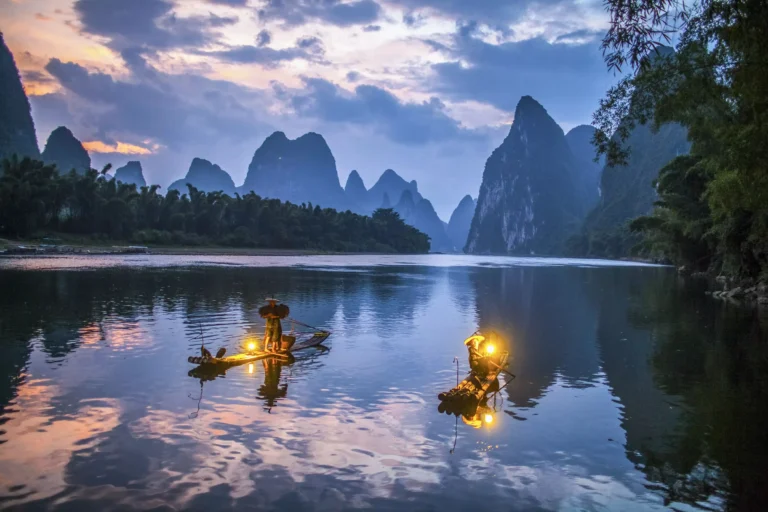
Photo offers: Be cautious about paid photo spots around the ¥20 banknote viewpoint in Xingping. Many are unofficial or poor value; plenty of good viewpoints require no special photography fee. Some paid setups mainly provide props or a slightly elevated shooting angle rather than access to a fundamentally different view. If you want a staged photo with a fisherman, cormorants or another prop, agree on the full price first.
The same principle applies on the Yulong River: if a boatman or photographer offers to take pictures, ask whether there is a charge before accepting.
Shopping: Treat jade, silver, tea and supposed antiques sold at tourist attractions as souvenirs unless you have independent expertise. Avoid making high-value purchases based only on a seller's verbal authenticity claim.
Food: Ask how dishes sold by weight are priced before ordering.
The goal is not to assume everyone is trying to scam you. It is to remove ambiguity before money changes hands.
Set up mobile payments before arrival rather than trying to solve them while standing at a restaurant counter.
For step-by-step setup, see TripChina’s guides to using Alipay in China as a foreign visitor and setting up WeChat Pay with a foreign card.
Carry some RMB as backup for small vendors and situations where mobile payment or connectivity fails.
If your phone depends on international services while traveling, also prepare your connectivity before arrival with TripChina’s China eSIM vs SIM guide.
• Transfer from Guilin or your arrival station to Yangshuo
• Check in
• Rent an e-bike
• Explore Shili Gallery and the Yulong River countryside
• Have dinner in Yangshuo
• Start with Yulong River bamboo rafting
• Travel to Xingping Ancient Town in the afternoon
• Allow 3–4 hours including travel there and back from Yangshuo
• See the ¥20 banknote landscape viewpoint
• Return to Yangshuo with enough buffer before any evening performance
Trying to combine rafting, Xingping, a serious mountain hike and an evening show can make this day unnecessarily rushed. Drop one activity if transport or weather slows you down.
• Photography, café time or a cooking activity
• Final countryside walk
• Transfer to your railway station or Guilin
• Elephant Trunk Hill
• East-West Alley
• Two Rivers and Four Lakes at night
• Transfer to Yangshuo
• Check in
• Explore Shili Gallery by e-bike
• Evening in central Yangshuo
• Morning bamboo rafting
• Afternoon Xingping
• Relaxed evening in Yangshuo
• Full-day Longji excursion
• Carry water and snacks
• Allow a generous transport buffer
If you care more about Longji than maximizing your time in Yangshuo, consider staying overnight near the terraces instead of returning the same day.
Use the final morning for scenery rather than squeezing in another major attraction.
Yangshuo is generally straightforward for independent solo travel, but normal precautions still apply. The practical problems visitors are more likely to encounter are unclear pricing, unofficial transport offers and tourist-oriented sales pressure; the scam section above covers how to reduce those risks.
Yes, but translation and payment apps make independent travel much easier. Save hotel names, stations and key destinations in Chinese on your phone so you can show them to drivers or staff when English is unavailable.
Not necessarily for ordinary sightseeing, but reliable mobile data is extremely useful for maps, ride-hailing, payments and booking mini-programs. Set up your connectivity before reaching smaller scenic areas rather than depending entirely on public Wi-Fi.
Light rain can create dramatic mist around the karst peaks, but sustained rain may affect outdoor activities, river conditions and visibility. Keep at least one day flexible if bamboo rafting or photography is a priority.
Yes, particularly on days involving booked attractions, transport or real-name ticketing. Guangxi's official scenic-area guidance recognizes passports for real-name admission at participating attractions.
Do not try to turn Guilin and Yangshuo into a race between attractions.
For a first trip, the strongest itinerary is usually simple: sleep in Yangshuo, spend real time around the Yulong River, explore the countryside independently, eat local food with prices confirmed in advance, and add Guilin or Longji only when your schedule genuinely has room for them.
The landscape is the attraction here. Give yourself enough time to actually be in it.
Guangxi Department of Culture and Tourism — A-Level Scenic Areas
Guangxi Department of Culture and Tourism — Scenic-Area Ticketing Guidance
Guilin Two Rivers and Four Lakes · Elephant Hill Official Website
National Immigration Administration — Foreign Accommodation Registration
This guide was reviewed in September 2026 using current Guangxi tourism information, official scenic-area resources, National Immigration Administration guidance and practical traveler-focused research. Particular attention was given to separating official rules from local observations and avoiding fixed claims for prices or operating arrangements that can change. Elephant Trunk Hill admission arrangements, Yulong River rafting eligibility, routes and live prices should be rechecked before travel. Local price estimates are planning ranges, not guaranteed quotations. No sponsored content or paid partnerships influenced the recommendations.
TripChina.me creates practical China travel guides shaped by real local experience, helping independent travelers navigate transport, payments, food, neighborhoods, and the cultural details that make traveling in China easier and more meaningful. Find the guide for your destination at tripchina.me.