
Our Location:
No. 99, Jiazi Road, Chengdu

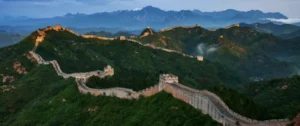
I’ve been to the Great Wall more times than I can count, and I’ve made almost every mistake you can make. I showed up at Badaling on a Saturday in October and spent 45 minutes shuffling shoulder-to-shoulder between North 4 and North 8. I took a tour bus that promised “skip the line” and ended up at a jade factory for two hours. I once wore canvas sneakers on the Simatai east section and spent the descent clinging to the railing like my life depended on it.
The problem isn’t the Great Wall. It’s that most visitors pick the wrong section for their situation. Badaling is famous. Mutianyu is beautiful. Jinshanling is photogenic. But they’re not interchangeable. Each one demands a different amount of time, physical ability, and tolerance for crowds. And the choice you make determines whether you spend your day fighting for space on a stairway or standing alone on a watchtower watching the sun set over the mountains.
Here’s what I’ve learned after visiting all of them.
| Section | Best For | Crowds | Difficulty | Travel Time |
|---|---|---|---|---|
| Badaling | First-time visitors who want the iconic experience | Very crowded | Moderate | 30 min by high-speed rail |
| Mutianyu | Families, photographers, anyone wanting a relaxed day | Moderate | Easy to moderate | 1.5–2 hours by car/bus |
| Jinshanling | Hikers, photographers, people who want solitude | Low | Moderate to hard | 2.5–3 hours by car |
| Simatai | Night tours, couples, visitors combining with Gubei Water Town | Low to moderate | Hard | 2–3 hours by car |
| Huanghuacheng | Nature lovers, those wanting something unique | Low | Easy | 1.5 hours by car |
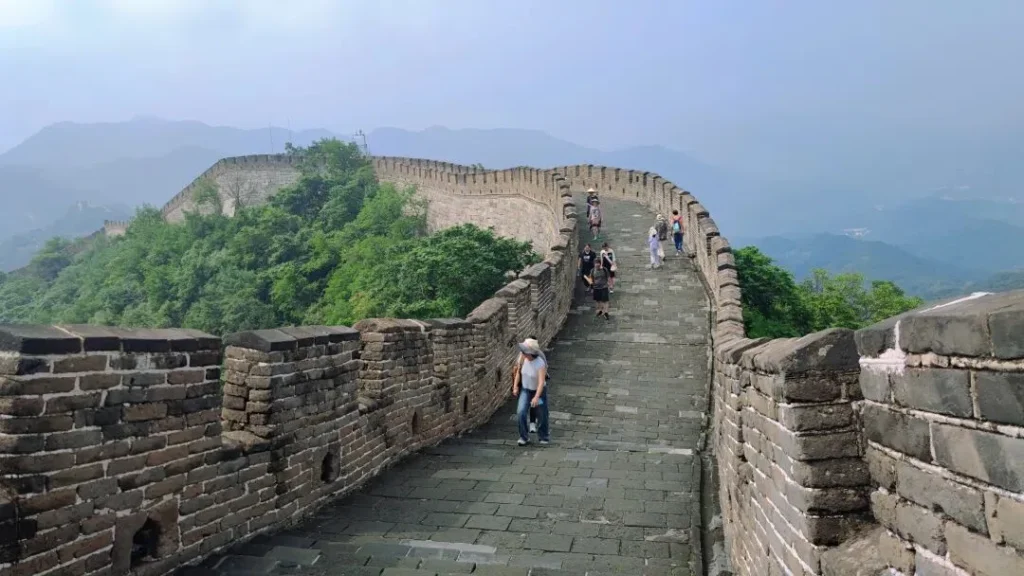
Badaling is the most famous Great Wall section for a reason. It’s the best-preserved, most accessible, and most heavily promoted. It’s where every textbook photo was taken, where world leaders have posed, and where the phrase “不到长城非好汉” (“You’re not a real man until you’ve climbed the Great Wall”) was popularized.
But here’s the reality: Badaling is also the most crowded section by a wide margin. On peak days, the walkway between North 4 and North 8 becomes a slow-moving river of people. I’ve stood in line for 20 minutes just to climb a set of stairs. The experience stops being about the wall and starts being about navigating a crowd.
The smart move: Go on a weekday, arrive before 8:00 AM, and skip the north section entirely. The south section (South 1 to South 7) has far fewer people and gentler slopes. You’ll still get the iconic views without the shoulder-to-shoulder shuffle.
The logistics: Take the high-speed rail from Beijing North or Qinghe Station to Badaling Great Wall Station — it’s about 30 minutes and drops you right at the cable car entrance. The cable car (round trip 140 RMB) takes you to North 7, from where it’s a short walk to North 8 (the highest point at 888 meters). If you’re fit, walk from the entrance to North 4 and back — it takes about 2 hours and avoids the cable car queue.
Honest take: Badaling is fine if you plan it right. But most people don’t plan it right, and they leave disappointed. If you’re only coming to Beijing once, I’d recommend Mutianyu instead.
Mutianyu is the section I recommend most often, and not just because it’s beautiful. It’s because it solves the three biggest problems visitors face: crowds, accessibility, and variety.
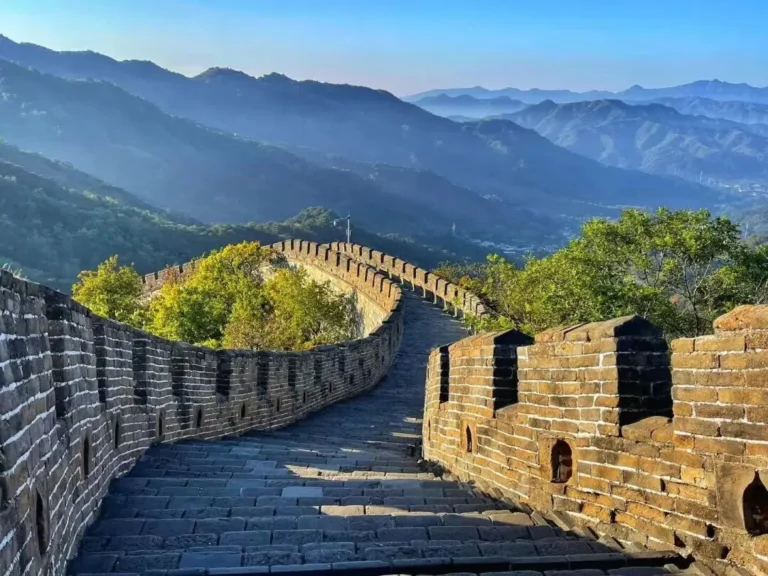
The vegetation coverage here is over 90%, which means the wall feels embedded in the landscape rather than just sitting on top of it. In spring, the mountainside is covered in peach and apricot blossoms. In autumn, the red and yellow leaves create a contrast against the grey stone that’s genuinely stunning. The wall itself has a unique design feature — crenellations on both sides, which is rare among Beijing sections.
The real advantage: Mutianyu has three different ways up and down. You can take the enclosed cable car to Tower 14, walk west to Tower 20 (the highest point), and return by cable car. Or you can take the open chairlift to Tower 6, walk east to Tower 1 (the famous Zhengguan Tower with three watchtowers on one platform), and ride the toboggan down. The toboggan is a 10-minute slide that twists through the forest — it’s genuinely fun and a highlight for kids and adults alike.
The logistics: From central Beijing, it’s about 1.5–2 hours by car. The direct bus from Dongzhimen (慕巴士 or 赞巴士) costs around 80 RMB round trip and includes the shuttle bus ticket. Entry is 40 RMB. The cable car round trip is 140 RMB.
Honest take: Mutianyu is the safest choice for first-time visitors. But it’s not empty — weekends can still get busy, especially around Tower 14 and Tower 20. The trick is to go in the afternoon. Most tour groups arrive in the morning and leave by 2:00 PM. From 2:30 onward, the wall empties out significantly.
Jinshanling is 155 kilometers from Beijing — farther than Badaling or Mutianyu — and that distance is exactly why it’s better. Fewer tourists, more original wall, and a landscape that feels genuinely wild.
This section was built under the supervision of General Qi Jiguang in the late 16th century, and it shows. The wall here has more variety than any other section near Beijing: brick walls, stone “tiger-skin” walls, watchtowers with wooden interiors, and towers where the door is on a different level than the walkway — a defensive design you won’t see elsewhere. The障墙 (barrier walls) on the walkway are unique to Jinshanling, creating a layered defense system that’s fascinating to walk through.
The real advantage: Jinshanling is half-restored and half-wild. The western section is fully restored and easy to walk. The eastern section is rougher, with crumbling sections and steeper climbs. This means you can choose your experience. Most visitors stick to the restored section between Brick Kiln Pass and General Tower, which takes about 2 hours. Hikers can continue east toward Simatai — the full Jinshanling-to-Simatai traverse is one of the best day hikes in China.
The logistics: From Beijing, it’s 2.5–3 hours by car. There’s a direct bus from Dongzhimen on weekends and holidays (120 RMB round trip, including entry and one-way cable car). Entry is 65 RMB. The cable car runs from the entrance to Small Jinshan Tower.
Honest take: Jinshanling is my personal favorite, but it requires more planning. The sunrise is spectacular — the light hits the wall at an angle that makes the stone glow golden. But you need to stay overnight nearby (there are decent guesthouses at the base) and be at the wall by 5:00 AM in summer. The trade-off is worth it: I’ve had entire sections to myself at sunrise.
Simatai is the only section of the Great Wall that’s open for night tours, and that alone makes it worth considering. The wall is lit with subtle amber lights that follow the ridgeline, creating a completely different atmosphere from the daytime experience.
The section itself is steep — the east side climbs from the reservoir to Wangjing Tower at nearly 1,000 meters, with some sections at a 70-degree angle. It’s the only section near Beijing that retains its original Ming Dynasty appearance, with no major restoration. The watchtowers are original, the walkway is uneven, and the whole thing feels ancient in a way that the polished sections don’t.
The real advantage: The night tour runs from late afternoon until about 9:00 PM. You take the cable car up, walk a short section of the wall, and watch the lights come on as the sun sets. Below, Gubei Water Town lights up like a miniature Jiangnan water village. The combination is genuinely beautiful.
The logistics: Simatai is part of the Gubei Water Town complex, about 120 kilometers from Beijing. Entry to the wall is 40 RMB, but you also need a Gubei Water Town ticket (140 RMB) unless you’re staying at one of the resort hotels. The cable car is 80 RMB one way, 120 RMB round trip. Night tours require advance reservation.
Honest take: Simatai is more of an experience than a hike. The walkable section at night is short — maybe 500 meters — and you’re guided by staff. It’s more about the atmosphere than the exercise. If you want to actually hike the wall, come during the day. If you want a romantic evening with a view, the night tour delivers.
Huanghuacheng Water Great Wall is the odd one out, and that’s exactly why I like it. Three sections of the wall dip into the reservoir, creating a “长城戏水” (wall playing with water) effect that you won’t see anywhere else.
The wall here was built during the Ming Dynasty and submerged when the reservoir was created in the 1970s. You can see the original stonework underwater on clear days. The surrounding landscape is more garden than mountain — there’s a 500-year-old chestnut orchard at the base, planted by Ming Dynasty soldiers, and the lake adds a softness that other sections lack.
The real advantage: It’s the easiest section to walk. The main path follows the lakeshore, with short sections of wall accessible by stairs. You can combine a wall visit with a boat ride on the reservoir. It’s also the closest to Beijing among the less-crowded sections — about 1.5 hours from the city center.
The logistics: Entry is 60 RMB. The boat ride is 50 RMB. There’s a direct bus from Dongzhimen on weekends. On weekdays, take bus 916 to Huairou and transfer to the H21 bus to the scenic area.
Honest take: Huanghuacheng is not the place to go if you want the classic “wall stretching to the horizon” view. The wall sections are short and disconnected. But if you want something different — a peaceful lakeside walk with wall views — it’s a great option, especially with kids or elderly family members.
I’ll say it plainly: most first-time visitors should skip Badaling. Not because it’s bad, but because the crowds ruin the experience for the majority of people who go there. The high-speed rail makes it convenient, but that convenience means everyone else has the same idea. On a Saturday in October, the queue for the cable car at Badaling was 90 minutes. The walkway from North 7 to North 8 was so packed that I couldn’t stop to take a photo without someone bumping into me.
If you must go to Badaling — because you’re on a tight schedule, or you want the “official” experience — go on a weekday, arrive before 8:00 AM, and walk the south section instead of the north. The south section has fewer people and gentler slopes, and you’ll still get the iconic views.
When to go: Spring (April–May) and autumn (September–October) are the best seasons. Summer is hot and crowded. Winter is cold but empty — the wall in snow is spectacular.
What to bring: Wear hiking shoes or at least sneakers with good grip. Bring water (at least 1 liter per person), snacks, and a light jacket — it’s windier on the wall than at the base. Sunscreen and a hat are essential in summer.
What not to do: Don’t buy the “Great Wall tour” from street vendors or hotel concierges — they’re almost always scams that include shopping stops. Don’t wear sandals or dress shoes. Don’t plan to eat at the wall — the food is overpriced and mediocre. Bring your own.
Getting around: For Mutianyu and Badaling, direct buses and high-speed rail are reliable. For Jinshanling, Simatai, and Huanghuacheng, a private car or rental is more practical. Didi (China’s Uber) works well for day trips — expect to pay 400–600 RMB round trip from central Beijing.
Which Great Wall section near Beijing is the least crowded?
Jinshanling has the fewest visitors among the major sections, especially on weekdays. Huanghuacheng is also quiet. Badaling is the most crowded by a wide margin.
Is Mutianyu or Badaling better for first-time visitors?
Mutianyu is better for most first-time visitors. It has fewer crowds, more scenic variety, and the toboggan ride adds a fun element. Badaling is only better if you’re extremely short on time and can take the high-speed rail.
Can you hike between Jinshanling and Simatai Great Wall?
Yes, the Jinshanling-to-Simatai traverse is a popular 10-kilometer hike that takes 4–6 hours. It’s moderately difficult with some steep sections. You need to arrange transportation at the Simatai end.
What is the best time of year to visit the Great Wall?
Late April to early June and mid-September to late October. Spring brings blossoms, autumn brings clear skies and colorful foliage. Summer is hot and hazy. Winter is cold but offers empty walls and occasional snow.
How long does it take to hike the Mutianyu Great Wall?
A typical visit takes 3–4 hours including transportation from the parking area. The wall walk itself (Tower 14 to Tower 20 and back) takes about 2 hours at a relaxed pace.
Is the Great Wall open at night?
Only Simatai Great Wall offers regular night tours. Badaling has occasional night events, but they’re not guaranteed. Mutianyu and Jinshanling close at sunset.
Which Great Wall section is best for photography?
Jinshanling is the best for photography, especially at sunrise and sunset. The combination of restored and wild sections, varied watchtower styles, and distant mountain views creates more compositional variety than other sections.
How do I get to Jinshanling Great Wall from Beijing?
By car: 2.5–3 hours via the Jingcheng Expressway. By bus: a direct tourist bus runs from Dongzhimen on weekends and holidays (April–November). By public transport: take bus 980 from Dongzhimen to Miyun, then a taxi (about 50 RMB) to the scenic area.
If you want the full picture before you go, TripChina publishes insider travel guides written by people who actually live and travel in China — no filler, no sponsored content. Find the guide for your destination at tripchina.me.